
3 min walk
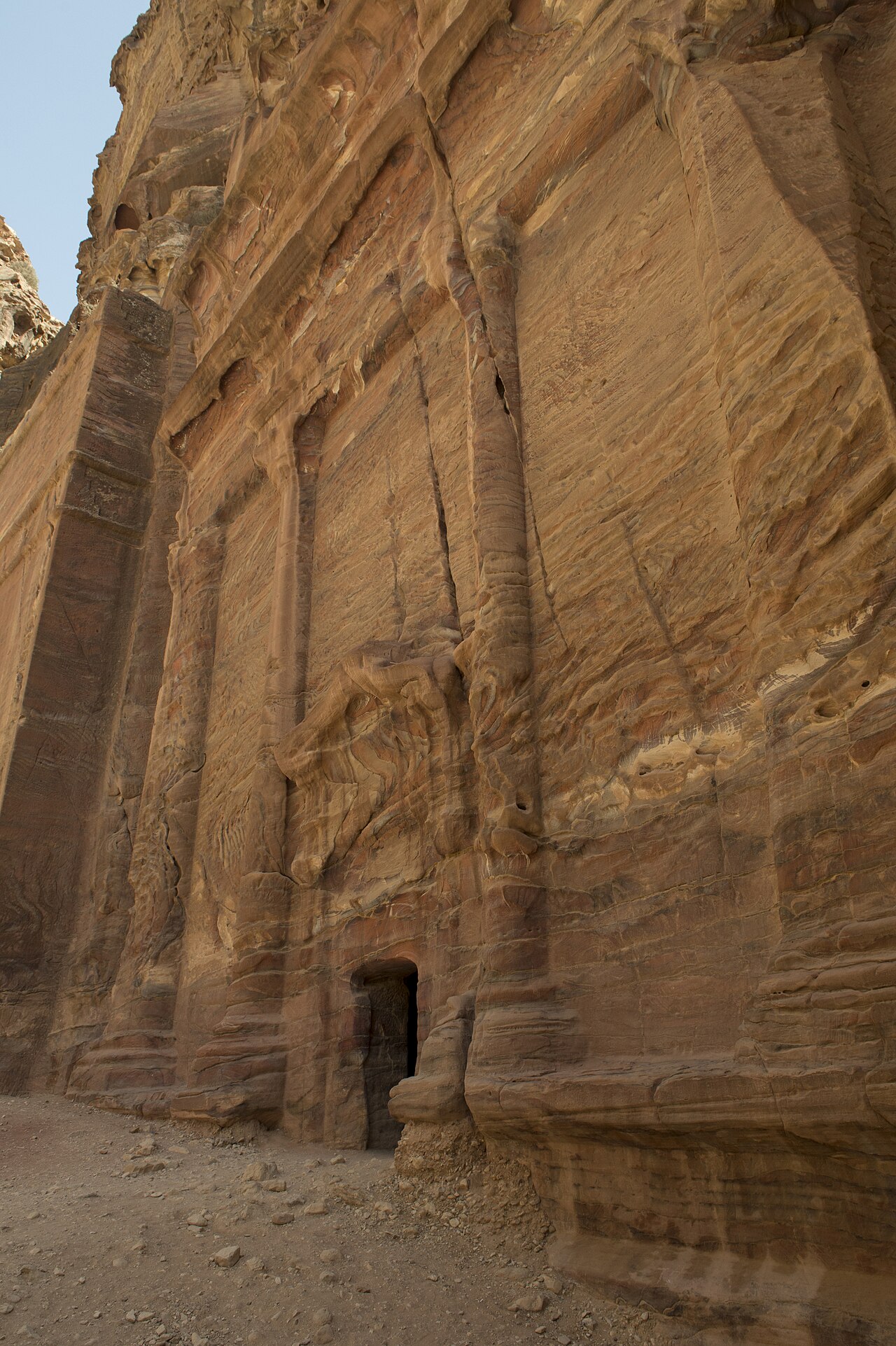
Street of Facades
- Must see
- Historic monument
Language · 11 published
Historic monument · Wadi Musa
Al-Khazneh

| Monday | 06:00 – 18:00 |
|---|---|
| Tuesday | 06:00 – 18:00 |
| Wednesday | 06:00 – 18:00 |
| Thursday | 06:00 – 18:00 |
| Friday | 06:00 – 18:00 |
| Saturday | 06:00 – 18:00 |
| Sunday | 06:00 – 18:00 |
Checked 2026-08-31 · Source
Read from the OpenStreetMap access tags; anything not listed has no tag recorded.
Set the group type to family in the planner and the day window contracts to about three quarters of a solo day.
Al-Khazneh, known as the Treasury, is a monumental rock-cut tomb in Petra, Jordan. Nabataean builders carved its elaborate façade directly into rose-pink sandstone, creating one of the ancient city’s most recognisable sights. Its popular name suggests hidden wealth, but the building served as a royal mausoleum rather than a treasury. The façade combines Hellenistic forms with local Nabataean craftsmanship, showing how Petra’s architects adapted Mediterranean visual language to the desert landscape. Its dramatic setting at the end of the Siq makes the first view especially memorable. Al Khazneh, known locally as الخزنة, is a monumental rock-cut tomb in Petra, Jordan. Carved directly into pink sandstone cliffs, this iconic facade stands as one of the most recognizable monuments of Nabataean civilization. Despite its popular nickname the Treasury, archaeological evidence indicates it served as a royal mausoleum rather than a repository for treasure. Despite the popular name Treasury, Al Khazneh functioned as a royal tomb. Archaeological evidence supports its identification as a mausoleum rather than a building for storing valuables.
Checked 2026-08-26 · Source
The central doorway leads into a comparatively simple group of rock-cut chambers. The interior is much less ornate than the monumental exterior, because the building’s funerary purpose placed emphasis on the tomb and its sacred setting rather than on a richly furnished public hall. Visitors can look into the main chamber and deeper rooms, seeing how the spaces were cut into the sandstone. The contrast between the sculpted façade and plain interior is one of the clearest ways to understand Al-Khazneh as a royal tomb.
Checked 2026-08-26 · Source
Most visitors spend roughly thirty minutes to one hour at the monument itself, allowing time to enter the chambers, study the façade and take photographs from the plaza. The approach adds considerably more time: the Siq is about one kilometre long and the walk takes approximately twenty to thirty minutes each way. Once rest stops and nearby Petra sights are included, Al-Khazneh works best as part of a several-hour visit within the archaeological zone rather than as an isolated short stop.
Checked 2026-08-26 · Source
Early morning is a strong choice for cooler walking conditions and a calmer first approach through the Siq. The Treasury plaza has little shade, so midday sun can make a long stay uncomfortable. Late afternoon brings warm light to the sandstone and can emphasise the changing colours of the façade. Visitor numbers are often highest during popular periods, especially around the narrow Siq and the viewing area. The best timing balances light, heat, crowd movement and the energy you have for the wider Petra site.
Checked 2026-08-26 · Source
Al-Khazneh lies inside the Petra Archaeological Park, so reaching it forms part of a Petra park visit rather than a separate monument-only outing. Jordanian authorities set the park’s admission arrangements, which may distinguish between one-day and multi-day access and between visitor categories. Guided tours, horse-drawn carriages and horse services are separate arrangements from simply walking to the Treasury. Plan for the park as a substantial archaeological visit: the Treasury is an early highlight, not the entirety of Petra.
Checked 2026-08-26 · Source
Begin at the Petra visitor centre near Wadi Musa and follow the established route into the Siq. The gorge extends for approximately one kilometre before opening suddenly onto the plaza and the Treasury façade. Walking surfaces are uneven stone, with a gradual descent on the way in and an uphill return. Horse-drawn carriages and horses provide alternatives to completing the approach entirely on foot. Comfortable footwear and a steady pace make the route easier, especially when the wider archaeological park is included afterward.
Checked 2026-08-26 · Source
The Siq is narrow and can become congested, while the Treasury plaza concentrates visitors, vendors and animal handlers in a small area. Agree clearly on any paid service before accepting it. Stone surfaces are uneven and may become slippery when wet. The walk is exposed to an arid climate, and shade at the Treasury is limited. Carry water, pace yourself and protect yourself from the sun. Keep belongings secure in crowded areas, and remember that the monument is a funerary site deserving quiet and respectful conduct.
Checked 2026-08-26 · Source
The Treasury is most dramatic from the plaza, where the Siq frames the façade before suddenly revealing its full height. Morning light can illuminate the carved sandstone directly, while afternoon light creates deeper shadow and warmer tones. The first opening of the gorge, the central doorway and the detailed upper façade all offer different compositions. Crowds make tripods difficult to use. Keep equipment and movement considerate, avoid obstructing the approach, and treat the tomb and surrounding visitors with appropriate respect.
Checked 2026-08-26 · Source
No. Despite its popular name, Al-Khazneh was a royal mausoleum carved into the sandstone cliffs of Petra.
Visitors can enter through the central doorway and view the relatively simple rock-cut chambers behind the elaborate façade.
Walk from the Petra visitor centre through the Siq, a narrow gorge approximately one kilometre long, until it opens directly before Al-Khazneh.
Allow thirty minutes to one hour at the monument, plus roughly twenty to thirty minutes each way for the walk through the Siq.
Water, sun protection and sturdy walking shoes are important because the route uses uneven stone surfaces and the plaza has limited shade.
Morning light illuminates the façade directly, while late afternoon gives the rose sandstone warmer tones and stronger shadow.
Loading the interactive map…
The interactive map could not be loaded.

Last updated:
Source: OpenStreetMap contributors, Wikidata ·