


_(13250712905).jpg)
.jpg)
1 min walk
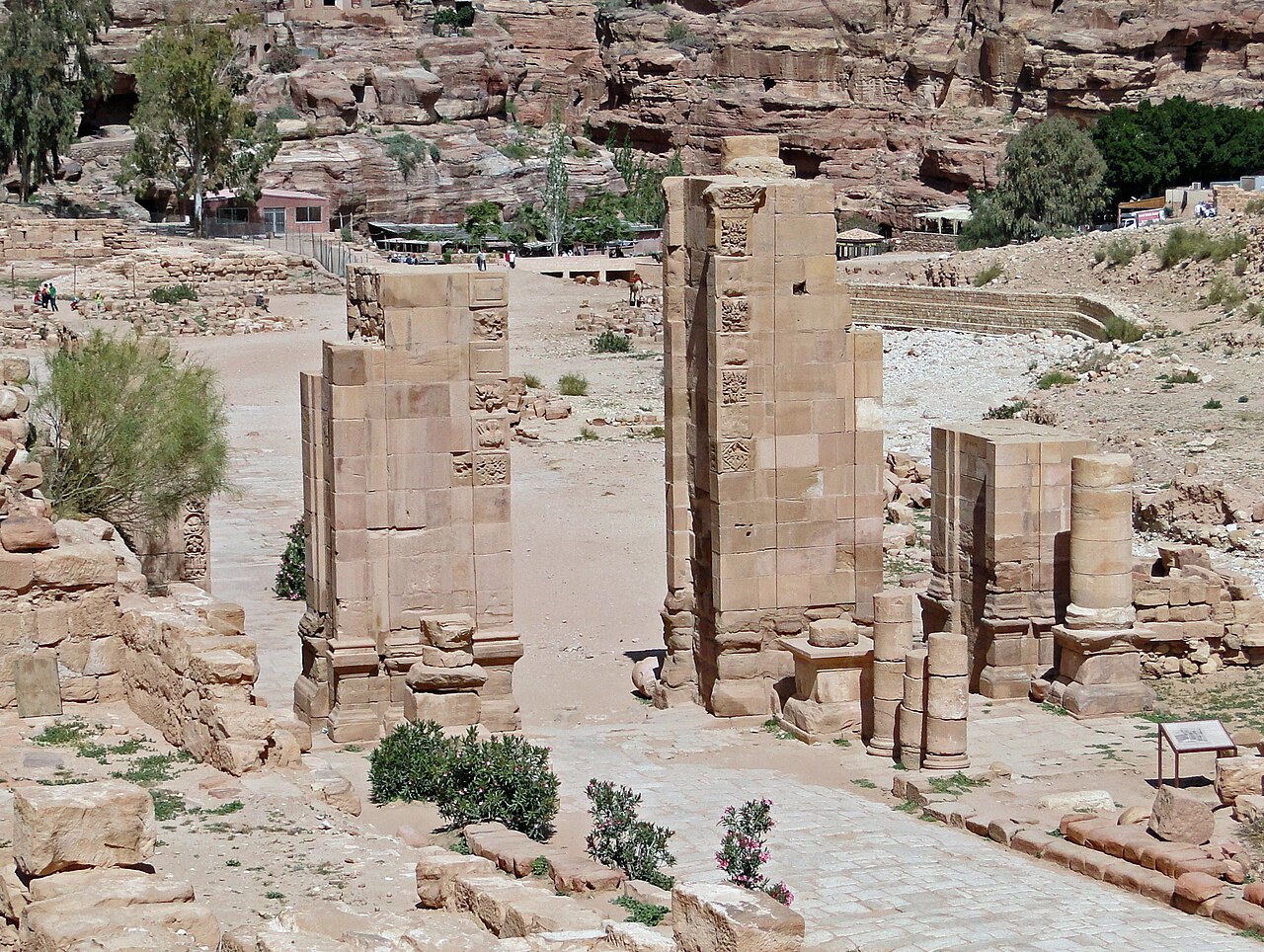
Temenos Gate
- Must see
- Historic monument
Language · 11 published
Historic monument · Wadi Musa

| Monday | 06:00 – 18:00 |
|---|---|
| Tuesday | 06:00 – 18:00 |
| Wednesday | 06:00 – 18:00 |
| Thursday | 06:00 – 18:00 |
| Friday | 06:00 – 18:00 |
| Saturday | 06:00 – 18:00 |
| Sunday | 06:00 – 18:00 |
Checked 2026-08-31 · Source
Read from the OpenStreetMap access tags; anything not listed has no tag recorded.
Set the group type to family in the planner and the day window contracts to about three quarters of a solo day.
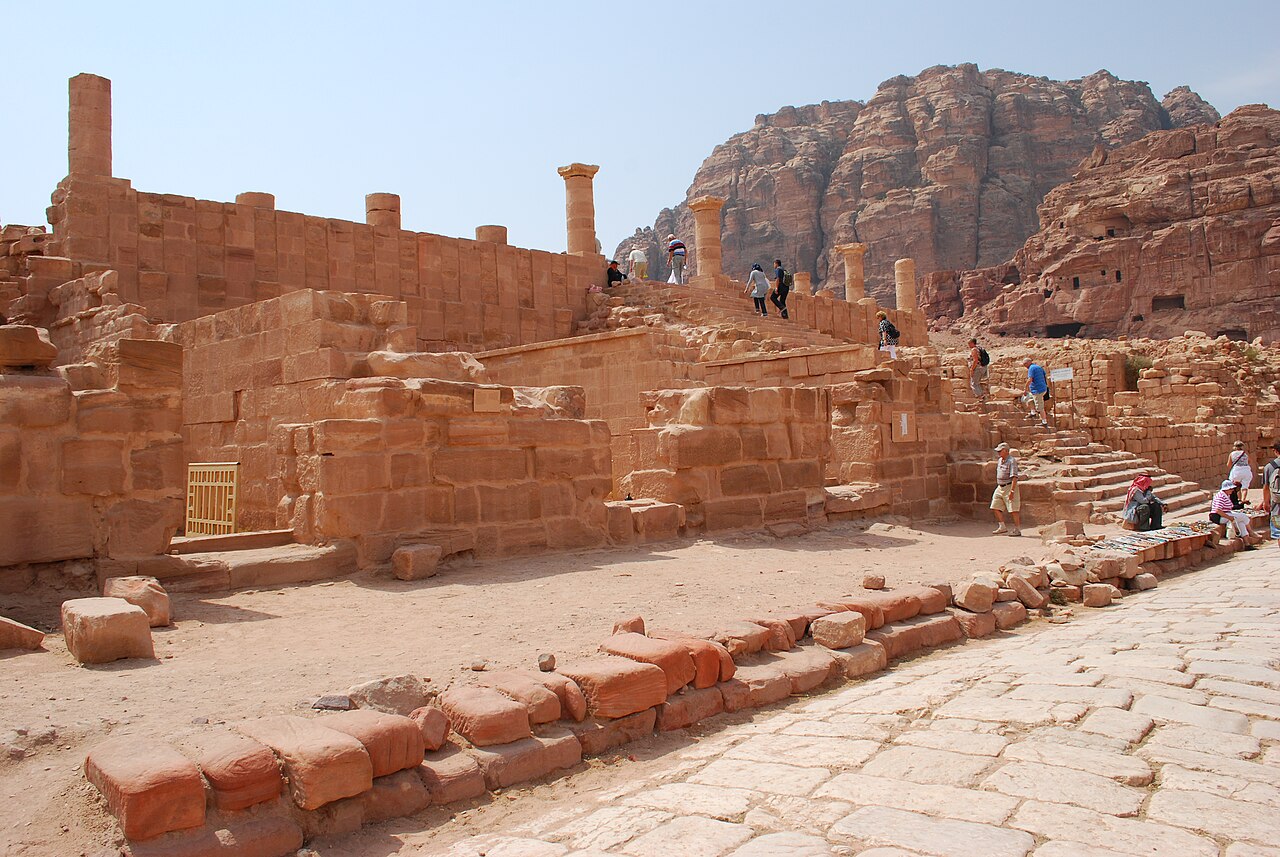
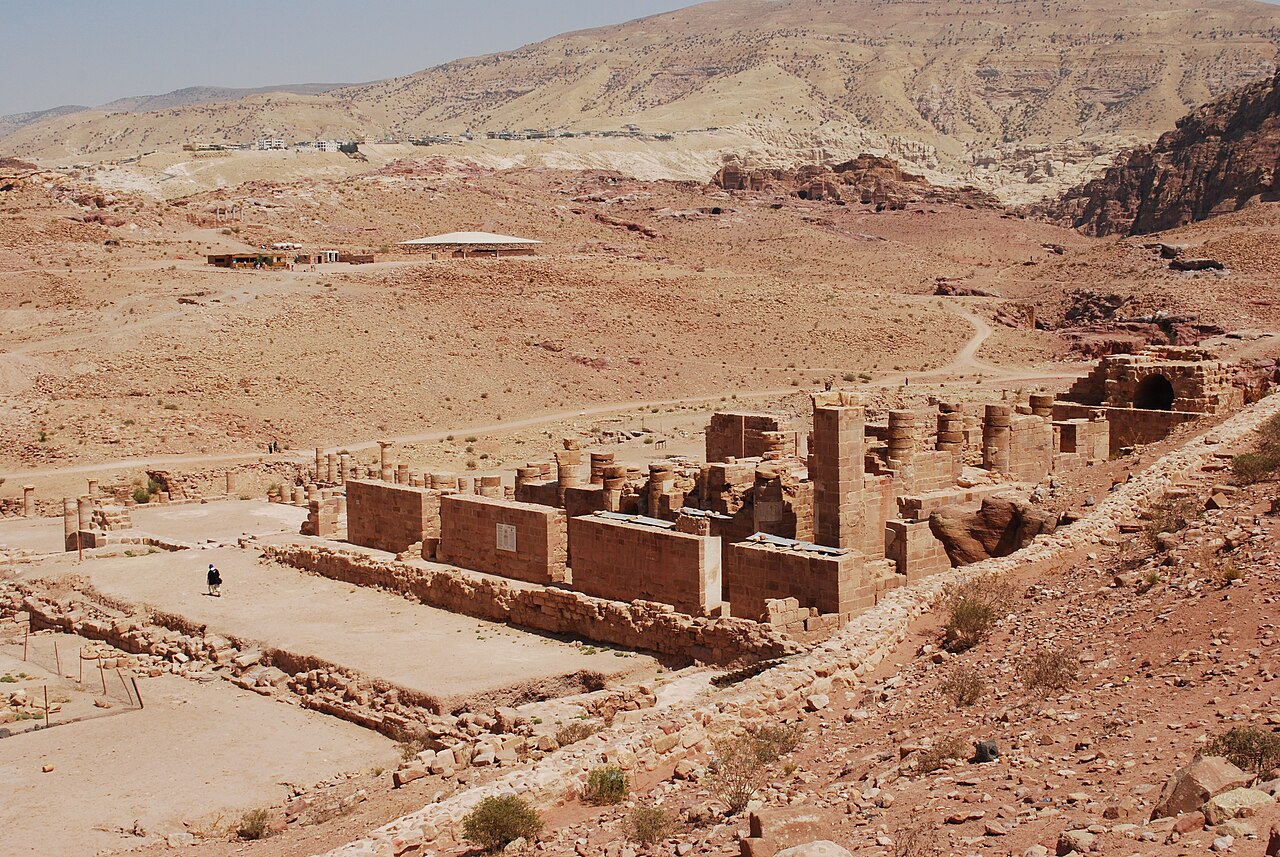
The Great Temple of Petra is a major monumental complex within the Nabataean capital, situated near the city centre along the Colonnaded Street. Archaeological excavations have revealed a large terraced structure with a propylaeum, lower and upper temenos, and a theatron. The Jordanian Department of Antiquities has conducted extensive research at this site. Its precise religious function remains debated among scholars, though its monumental scale indicates significant civic or ceremonial importance in Nabataean society. The local name is المعبد الكبير.
Checked 2026-08-26
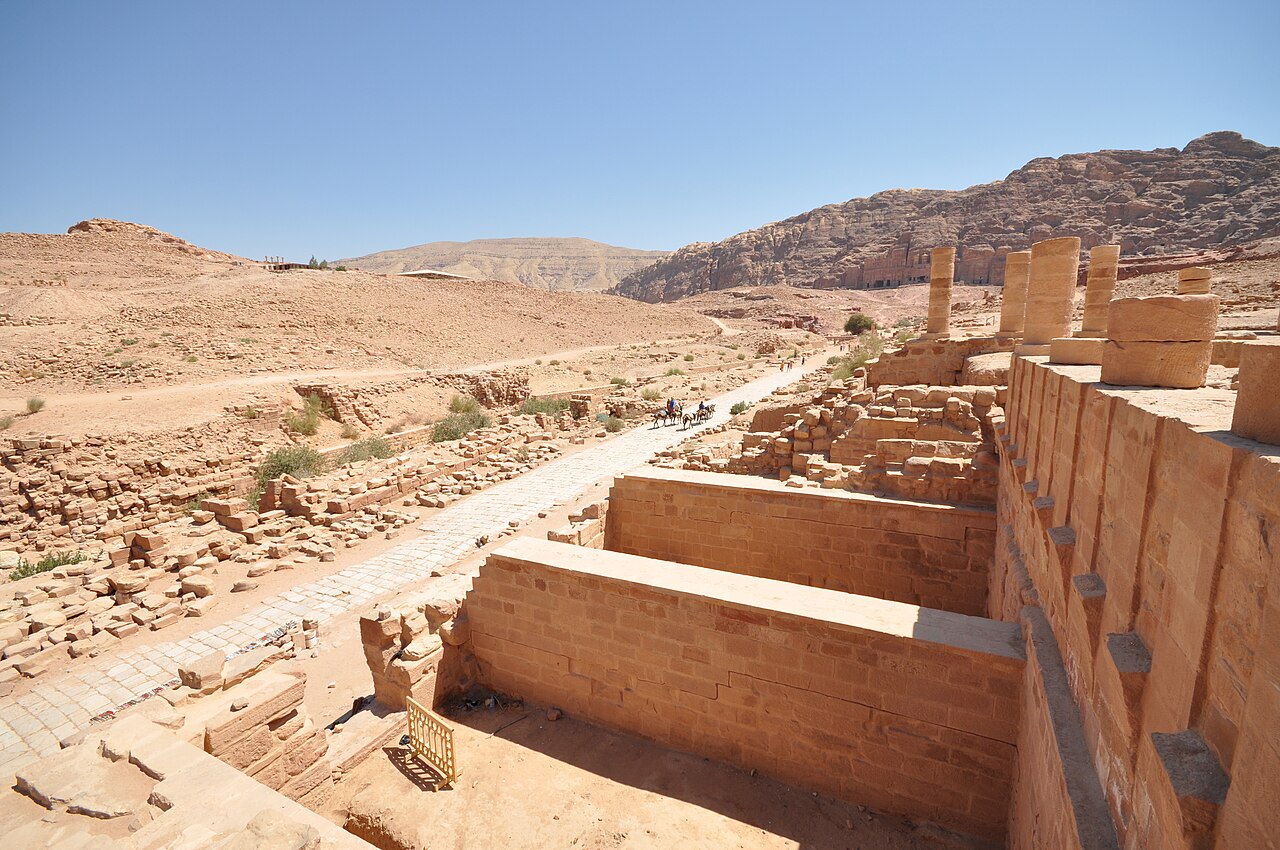
Excavations have uncovered substantial architectural elements including columns, stairways, and paved courtyards arranged across multiple terraces. The complex features a distinctive theatron or semi-circular seating area. Archaeological work has revealed decorative and structural fragments suggesting elaborate original construction. The lower temenos and upper temenos represent distinct functional zones within the overall design. Visitors can observe the foundational layout and remaining standing architecture. Ongoing and past archaeological investigations continue to refine understanding of this monument's original appearance and purpose through the Department of Antiquities publications.
Checked 2026-08-26

A thorough visit to the Great Temple requires careful observation of its multi-terrace layout and architectural details. Most visitors will spend approximately thirty to sixty minutes examining the visible remains, depending on individual interest in archaeological features. Those with particular interest in Nabataean construction techniques or comparative ancient architecture may wish to allocate additional time. The site rewards slow walking to appreciate the scale and terraced design. Combined with nearby monuments along the Colonnaded Street, visitors typically integrate this stop within a broader Petra itinerary rather than making an isolated dedicated visit.
Checked 2026-08-26
Petra's archaeological zone experiences extreme seasonal variation in temperature and visitor density. Summer months bring intense heat that makes extended outdoor examination uncomfortable. Spring and autumn generally offer more moderate conditions for walking and observation. Winter can bring cold temperatures and occasional rainfall. Early morning visits typically provide softer light for visual appreciation of architectural details. Visitors should consult current official sources before planning. The site's open-air nature means weather conditions significantly affect visit quality regardless of season chosen for travel to the Petra archaeological park. Check the operator's own site for the travel date before relying on a schedule or fare.
Checked 2026-08-26
Access to the Great Temple of Petra requires standard entry to the Petra Archaeological Park. The temple itself has no separate admission fee beyond the park ticket. Ticket structures may vary based on duration of visit, with options for single-day or multi-day passes potentially available. International visitors typically face different pricing than Jordanian nationals or residents. Visitors should verify current fee structures through official Jordanian tourism channels or at park entry points. Any supplementary charges for guided services or special access would be additional to base archaeological park admission costs. Check the operator's own site for the travel date before relying on a schedule or fare.
Checked 2026-08-26
The Great Temple lies within the main Petra archaeological zone, accessible on foot from the visitor centre through the Siq or via alternative routes for those staying at interior accommodations. The monument sits adjacent to the Colonnaded Street, making it readily locatable within the central area of ancient Petra. Signage and standard visitor maps identify its position relative to other major monuments including the Treasury and the Qasr al-Bint. The terrain involves uneven surfaces and steps typical of archaeological sites. Appropriate walking footwear is essential. No vehicular access exists within the core archaeological zone itself.
Checked 2026-08-26

The terraced architecture presents uneven walking surfaces with steps and changes in level that require attention to footing. No protective barriers separate visitors from all drop edges. Sun exposure is substantial with minimal shade across the monument's open areas. Water and sun protection are necessary provisions. The archaeological nature of the site means loose stones and eroded surfaces present trip hazards. Visitors should remain on established paths to protect fragile remains and personal safety. Crowding may occur during peak visitor periods along the narrow terrace walkways. Physical demands of the overall Petra visit should be considered in pacing.
Checked 2026-08-26

The Great Temple offers substantial photographic interest through its monumental scale, terraced composition, and juxtaposition with surrounding Petra landscape. Morning and late afternoon light produces shadows that emphasise the architectural depth and column remains. The semi-circular theatron creates distinctive geometric forms. Wide-angle lenses accommodate the expansive layout while detail shots capture stonework textures. The open setting permits unobstructed views though midday harsh light reduces visual depth. Tripod use may face restrictions as common in Jordanian archaeological sites. Visitors should observe any posted regulations. Respectful photography of ongoing archaeological work or other visitors maintains appropriate site conduct.
Checked 2026-08-26
No. The Great Temple is an archaeological monument of ancient Nabataean origin. It does not serve active religious purposes today.
The monument consists primarily of open-air terraced courts and foundations. Substantial roofed interior spaces are not part of the preserved remains.
Specific guided services dedicated solely to the Great Temple are not documented in available sources. General Petra guides typically include this monument within broader itineraries.
The terraced design with steps and uneven surfaces presents significant challenges. Standard archaeological site conditions apply without evident specialised accessibility provisions.
Archaeological investigation has been extensive but research and conservation activities may continue. The Department of Antiquities maintains involvement with this site.
Evening lighting specific to the Great Temple is not documented in available sources. Petra offers some night programming at other locations but applicability to this monument is unverified.
Loading the interactive map…
The interactive map could not be loaded.

Last updated:
Source: OpenStreetMap contributors, Wikidata ·