

1 min walk
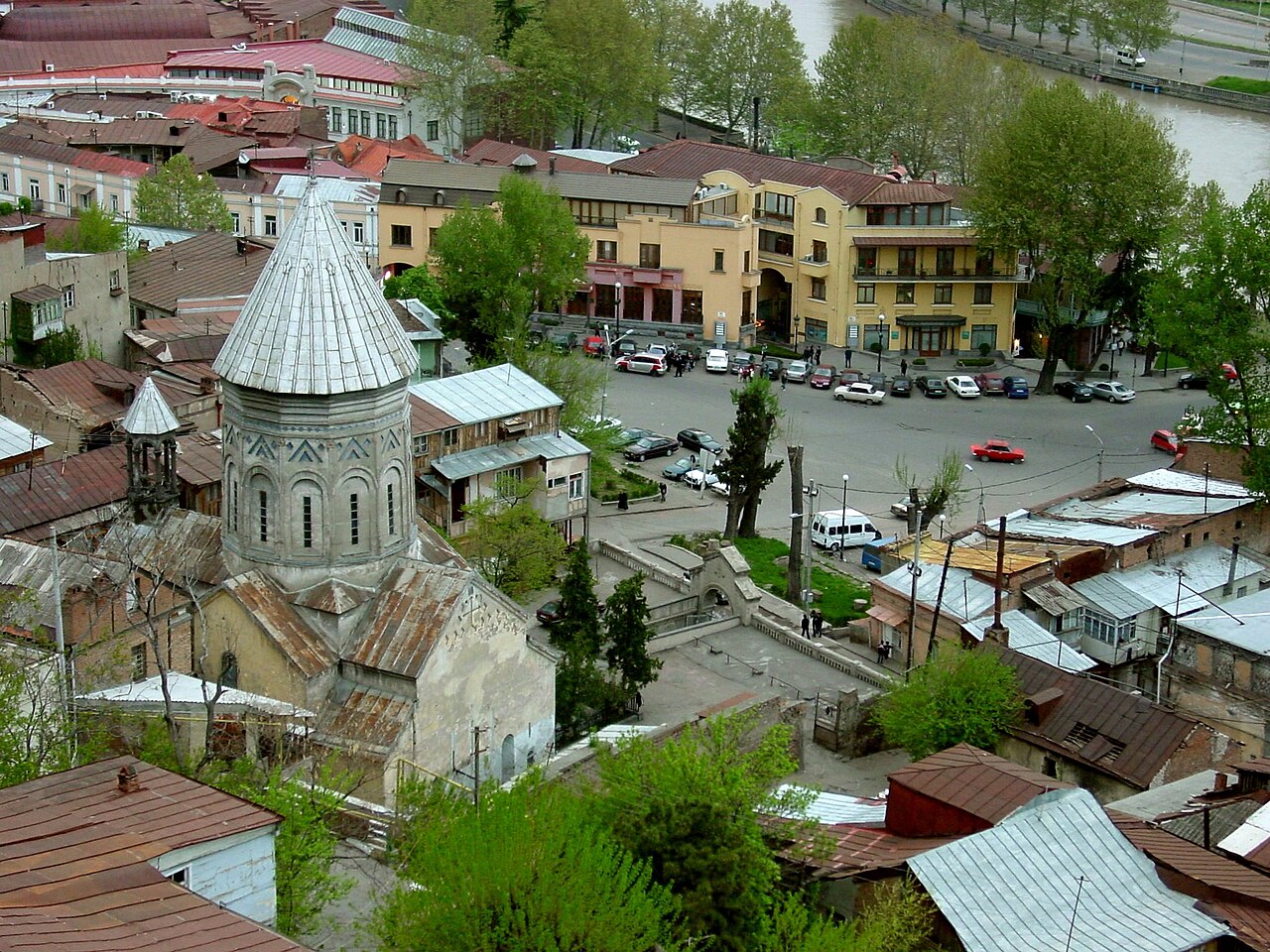
Sioni Cathedral
- Must see · Heritage site
- Historic monument
Language · 11 published
Museum · Tbilisi
თბილისის ისტორიულ-ეთნოგრაფიული მუზეუმი

| Monday | Closed |
|---|---|
| Tuesday | 10:00 – 18:00 |
| Wednesday | 10:00 – 18:00 |
| Thursday | 10:00 – 18:00 |
| Friday | 10:00 – 18:00 |
| Saturday | 10:00 – 18:00 |
| Sunday | 10:00 – 18:00 |
Checked 2026-08-31 · Source
Read from the OpenStreetMap access tags; anything not listed has no tag recorded.
Set the group type to family in the planner and the day window contracts to about three quarters of a solo day.
Tbilisi History Museum occupies a restored caravanserai, the kind of roadside inn that once served merchants and travellers. The building gives the museum a direct connection to the city's commercial past, while the collections explain how Tbilisi developed as an urban centre shaped by trade and different communities. This is a useful stop for visitors who want the capital's story at city scale: streets, commerce, settlement, and cultural diversity rather than one isolated monument. The Georgian name, თბილისის ისტორიის მუზეუმი, may help when reading local references or identifying the institution in the historic centre. The Tbilisi History Museum is a city museum housed in a restored caravanserai, a historical roadside inn for merchants and travellers. Yes, the museum occupies a restored caravanserai, which provides an authentic historical setting for interpreting Tbilisi's commercial and urban heritage.
Checked 2026-08-26 · Source
The museum's dedicated collection focuses on Tbilisi's urban, commercial, and multiethnic history. Exhibitions connect the city's physical growth with its role as a place where trade routes, communities, and traditions met. The restored caravanserai is part of the experience rather than a neutral container: its historical atmosphere helps visitors imagine the movement of merchants and travellers through the city. Take time to look at the relationship between the displays and the building itself. The museum works best as a context-setting visit before or after walking through Tbilisi's old streets, where the themes of commerce and cultural mixture remain visible.
Checked 2026-08-26 · Source
Give the museum a flexible visit rather than treating it as a fixed-length attraction. A focused walkthrough can fit comfortably into a city day, while visitors who enjoy urban history may want more time for the collection and the caravanserai setting. The ideal duration depends on how closely you read the displays and how much attention you give to Tbilisi's commercial and multiethnic story. Because the museum sits within the historic city fabric, it combines naturally with a walking route through nearby streets, religious buildings, and other central landmarks.
Checked 2026-08-26 · Source
The museum offers an indoor cultural stop that fits well into a walking day in central Tbilisi, especially when you want a pause from the streets. Morning or afternoon both work for the subject matter; choose the time that leaves room to explore the historic surroundings at an unhurried pace. The restored caravanserai is central to the visit, so the building itself deserves attention rather than being treated only as an entrance. Place the museum alongside the old-city streets to connect its themes of trade, settlement, and diverse communities with the city outside.
Checked 2026-08-26 · Source
Plan this stop as part of a central cultural route and carry a practical payment option for a museum visit. The main value is the combination of a restored caravanserai and a focused account of Tbilisi's urban life, so the stop remains worthwhile even when your day is built around walking rather than a single large attraction. Allow room in the schedule for the collection and the surrounding historic streets.
Checked 2026-08-26 · Source
The museum is embedded in central Tbilisi's historic urban fabric, making it suitable for a walking itinerary through the old city. City buses, the metro, minibuses, taxis, and ride-hailing services connect the central districts; the nearby streets are best understood as part of the destination rather than merely a transfer point. From a central hotel, walking may be the most rewarding approach because the route introduces the commercial and architectural character that the museum interprets. Use the museum's Georgian and English names when asking for the entrance.
Checked 2026-08-26 · Source
A historic caravanserai can include architectural features that differ from a modern gallery, such as changes in level, narrow passages, or uneven flooring. Move at a comfortable pace and give yourself time to orientate inside the building. The museum's subject is broad enough to reward reading, so rushed browsing can flatten the story into isolated objects. Keep personal belongings close in busy central streets and follow the institution's directions around exhibits.
Checked 2026-08-26 · Source
The caravanserai provides the most distinctive photographic setting, with historic architectural details framing a visit focused on Tbilisi's urban story. In the galleries, keep the collection and other visitors in mind and follow any displayed instructions. Exterior images can connect the museum to the surrounding old-city streets, where the relationship between commerce, movement, and architecture becomes easier to show. A small camera or phone suits the stop well because the value lies in details and atmosphere rather than in a single panoramic viewpoint. Photograph the building as a historical setting, not only as a backdrop.
Checked 2026-08-26 · Source
The museum is housed in a restored caravanserai, a historic inn associated with merchants and travellers.
It explores Tbilisi's urban, commercial, and multiethnic history through a dedicated city collection.
The building connects the museum's story of trade and travel with a historic setting once associated with merchants and travellers.
No. Its focus is Tbilisi as a diverse commercial city shaped by urban growth and multiple communities.
Yes. Its central historic setting pairs naturally with walks through Tbilisi's old streets and nearby landmarks.
The Georgian name is თბილისის ისტორიის მუზეუმი.
Loading the interactive map…
The interactive map could not be loaded.
Last updated:
Source: OpenStreetMap contributors, Wikidata ·