
3 min walk
Bassiani
- Must see
- Nightlife venue
Language · 11 published
Museum · Tbilisi
აბრეშუმის სახელმწიფო მუზეუმი
| Monday | Closed |
|---|---|
| Tuesday | 11:00 – 18:00 |
| Wednesday | 11:00 – 18:00 |
| Thursday | 11:00 – 18:00 |
| Friday | 11:00 – 18:00 |
| Saturday | 11:00 – 18:00 |
| Sunday | Closed |
Checked 2026-08-31 · Source
Read from the OpenStreetMap access tags; anything not listed has no tag recorded.
Set the group type to family in the planner and the day window contracts to about three quarters of a solo day.
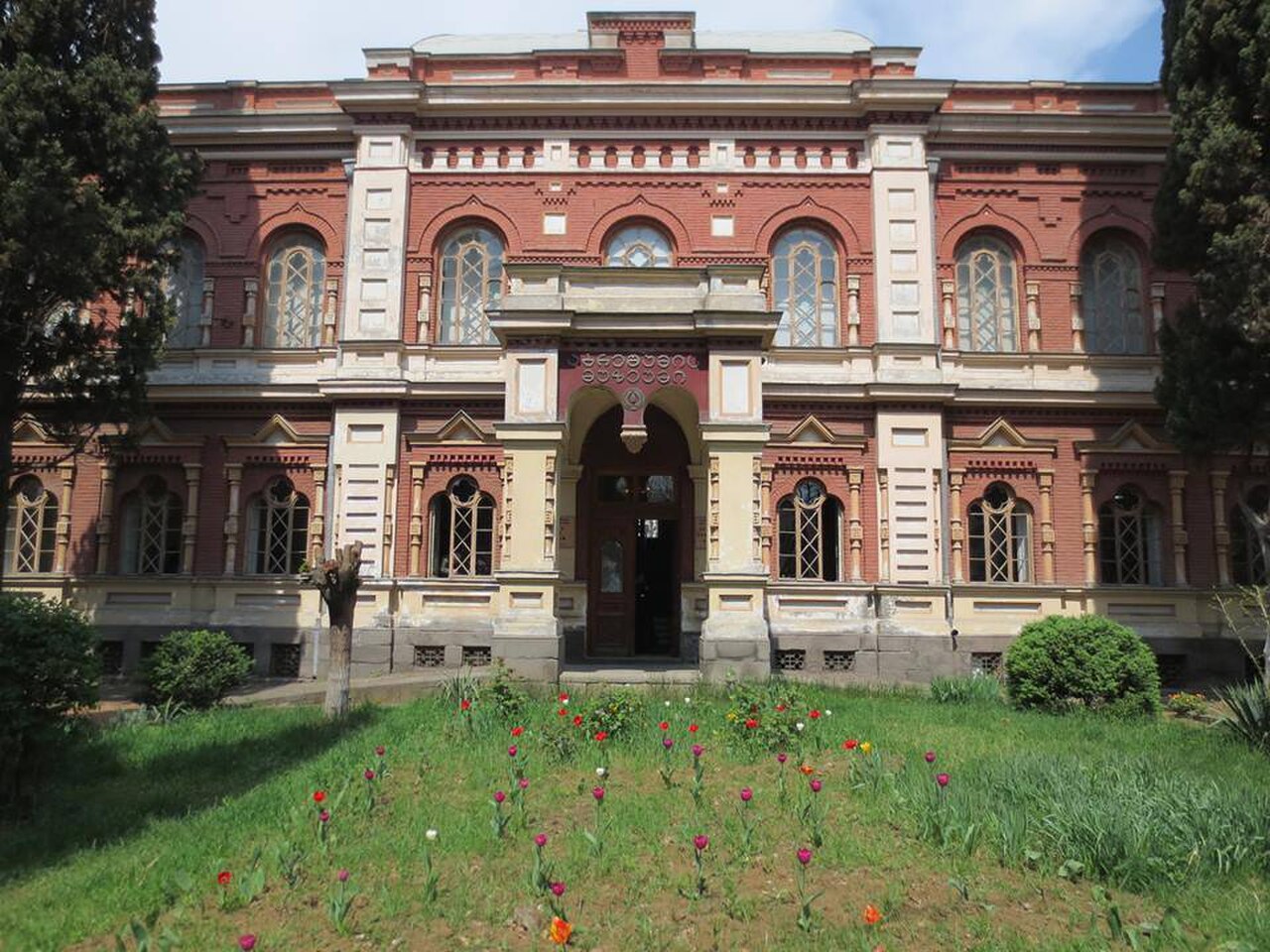
State Silk Museum occupies a purpose-built institution in Tbilisi that formerly served as the Caucasian Sericulture Station. The museum connects the history of silk with science, industry, textiles, and architecture. Its setting is part of the experience: visitors encounter a building created for specialist work rather than a later gallery conversion. This makes the stop particularly rewarding for travelers who enjoy museums where the collection and the structure explain one another. The State Silk Museum is a purpose-built institution that formerly served as the Caucasian Sericulture Station. It stands as a significant heritage site in Tbilisi, Georgia, preserving scientific, industrial, textile, and architectural collections related to sericulture. The building itself represents an important example of purpose-built institutional architecture from its era. Visitors must verify opening status directly through https://silkmuseum.ge/en or by contacting the museum before traveling.
Checked 2026-08-26 · Source
The collection brings together scientific material, industrial equipment, textile examples, architectural elements, specimens, and documentation connected with sericulture. Read the displays as a chain: silk begins with biological knowledge, develops through cultivation and processing, and reaches the finished textile. The former station gives those subjects a practical setting. Look closely at the relationship between tools and materials, because the museum's interest lies in the complete production culture rather than in decorative fabric alone. The museum preserves an unusual collection spanning scientific, industrial, textile, and architectural domains. Visitors can expect to encounter materials related to sericulture history, including equipment, specimens, and documentation from the former Caucasian Sericulture Station. The collections reflect the interdisciplinary nature of silk production, encompassing scientific research tools, industrial machinery, textile samples, and architectural elements of the building itself.
Checked 2026-08-26 · Source
Allow enough time to move through the scientific, industrial, textile, and architectural themes without rushing. A focused visit can concentrate on the objects and the former station's role, while a slower visit rewards attention to process, materials, and the building. The museum suits travelers who prefer close looking to a rapid checklist. Pairing it with another Tbilisi cultural stop works well when the rest of the day leaves room for an unhurried indoor visit. Visitor duration depends on individual interest in sericulture history and the depth of collections on display. Those with strong interest in scientific, industrial, or textile heritage may spend considerable time examining exhibits. Casual visitors typically require less time. Visitors should plan flexibly and consult the museum's official website at silkmuseum.ge for any available guidance on typical visit length or scheduled activities.
Checked 2026-08-26 · Source
The museum is an indoor cultural stop, so it can anchor a Tbilisi day in any season and offers a useful change of pace from outdoor sightseeing. Spring and autumn are comfortable for combining museums with walks, while hot or cold weather makes the interior setting especially welcome. Plan the visit when you can give the displays attention rather than fitting them between hurried appointments. The former station's atmosphere is best enjoyed at a calm pace.
Checked 2026-08-26 · Source
Treat State Silk Museum as a focused heritage visit built around its collections and institutional setting. Keep the stop in your cultural itinerary for its content rather than planning around a particular ticket arrangement. If you are combining several museums, give this one a separate place in the day because its sericulture theme is distinct from a general art collection.
Checked 2026-08-26 · Source
The museum is in Tbilisi, Georgia, and belongs on a city cultural route rather than a countryside excursion. Use the mapped location to set the final walking or vehicle approach. Tbilisi's hills and changing street levels can make a short distance feel more demanding, so leave a little time between this stop and the next. The purpose-built institutional character is a useful visual cue once you reach the museum's immediate surroundings.
Checked 2026-08-26 · Source
Scientific and industrial objects may reward patient reading and comparison. The building itself deserves attention alongside the cases: its institutional design explains why the collections belong there. Move carefully around displays and preserve the quiet atmosphere. Travelers interested mainly in monumental art should set expectations toward material, technical, and architectural history.
Checked 2026-08-26 · Source
The museum offers several photographic subjects: the purpose-built institutional architecture, scientific objects, industrial equipment, textile details, and the relationship between the collection and its rooms. Photograph as a way of recording textures, forms, and working methods rather than only taking wide room views. Keep the camera work unobtrusive in a specialist interior, and follow any signs or staff directions around sensitive objects. Architectural details can be as memorable as the silk-related displays.
Checked 2026-08-26 · Source
It is a museum in a former Caucasian Sericulture Station, presenting scientific, industrial, textile, and architectural material connected with silk production.
The museum covers sericulture through specimens, scientific material, industrial equipment, textile examples, documentation, and the architecture of its purpose-built setting.
The building was created for the Caucasian Sericulture Station, so its institutional architecture forms part of the museum's historical story.
It suits travelers interested in science, industrial heritage, textiles, architecture, and the material processes behind silk production.
Yes. Its indoor setting and specialist subject make it a useful cultural stop alongside walks and other museums in Tbilisi.
Compare the scientific tools, industrial objects, textile material, documentation, and rooms to understand silk as a complete cultural and technical process.
Loading the interactive map…
The interactive map could not be loaded.

Last updated:
Source: OpenStreetMap contributors, Wikidata ·