
3 min walk
Sioni Cathedral
- Must see · Heritage site
- Historic monument
Language · 11 published
Activity · Tbilisi
მშვიდობის ხიდი
| Monday | 00:00 – 23:59 |
|---|---|
| Tuesday | 00:00 – 23:59 |
| Wednesday | 00:00 – 23:59 |
| Thursday | 00:00 – 23:59 |
| Friday | 00:00 – 23:59 |
| Saturday | 00:00 – 23:59 |
| Sunday | 00:00 – 23:59 |
Checked 2026-08-31 · Source
Read from the OpenStreetMap access tags; anything not listed has no tag recorded.
Set the group type to family in the planner and the day window contracts to about three quarters of a solo day.
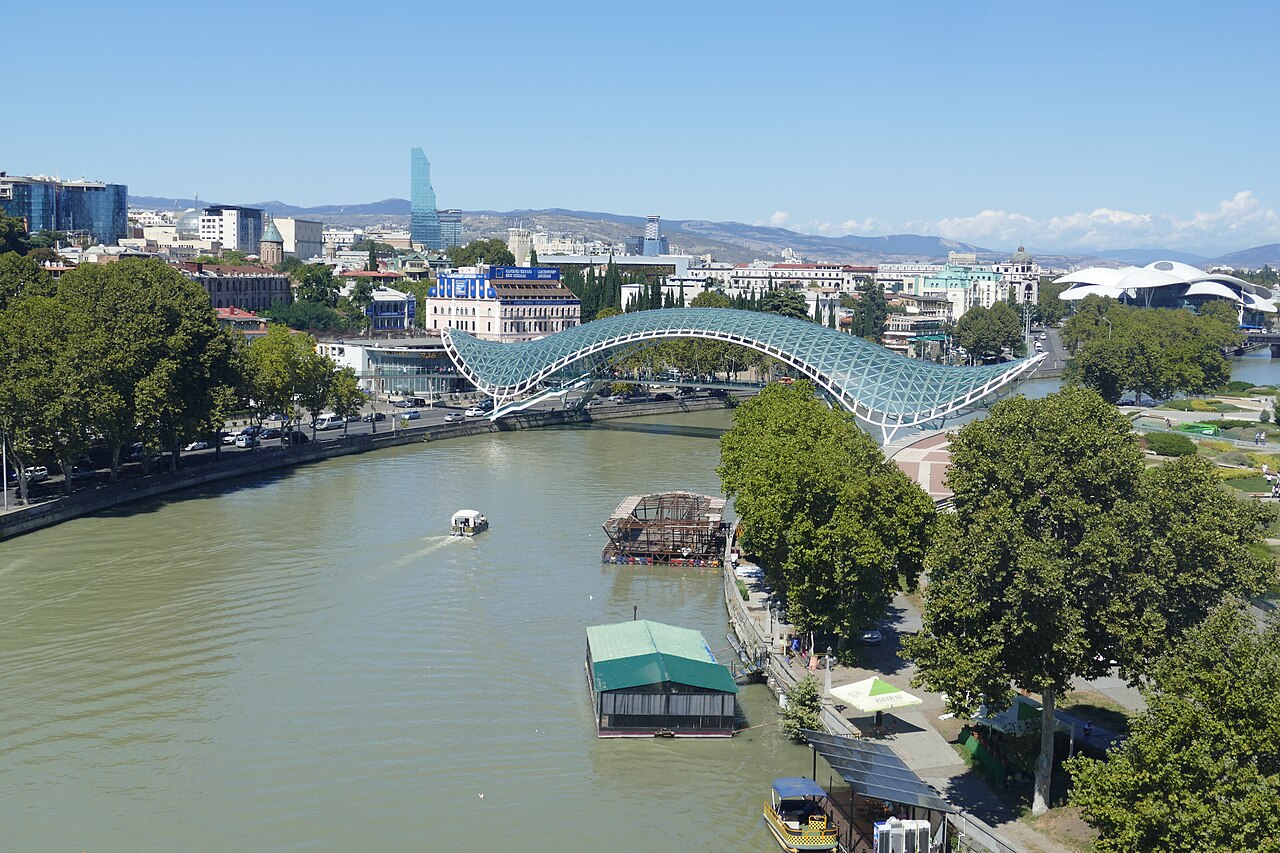
The Bridge of Peace is an illuminated glass-and-steel footbridge spanning the Kura River in central Tbilisi. Designed by Italian architect Michele De Lucchi, it opened as a contemporary landmark connecting the historic old town with the modern Rike Park district. The structure features a distinctive curved canopy roof with integrated lighting. Its local name is მშვიდობის ხიდი. The bridge serves as Tbilisi's signature contemporary structure and functions as the primary pedestrian link between these two areas of the city.
Checked 2026-08-26
The bridge contains no enclosed interior spaces or commercial facilities. It is an open pedestrian thoroughfare with a glass-and-steel walking surface and curved overhead canopy. The integrated lighting system illuminates the structure after dark. Visitors walk across the river on a level pathway with protective side barriers. The architectural design emphasizes transparency and modern engineering. There are no shops, restaurants, or visitor centers located on or within the bridge structure itself. The experience consists entirely of the crossing and the views available from the span.
Checked 2026-08-26
A straightforward crossing of the Bridge of Peace takes approximately five to ten minutes at a normal walking pace. Many visitors pause to observe the river views and surrounding cityscape, particularly the contrast between old town architecture and modern developments. Photographers and those admiring the structure's design may spend fifteen to twenty minutes on the bridge. Evening visits often extend longer due to the illuminated canopy. The bridge connects directly to Rike Park on one side and the old town on the other, allowing visitors to integrate the crossing into broader exploration of either area.
Checked 2026-08-26
The Bridge of Peace can be visited at any time as an open public pedestrian route. The illuminated canopy is most visually striking after dark, making evening hours popular for visitors seeking the full aesthetic effect. Daytime crossings offer clearer views of the Kura River and surrounding architecture. Seasonal weather conditions in Tbilisi affect comfort but not access. The bridge likely remains accessible continuously, though visitors should exercise standard caution during late-night hours in any urban environment. Weather conditions including rain or ice may affect surface traction on the glass-and-steel walkway. Check the operator's own site for the travel date before relying on a schedule or fare.
Checked 2026-08-26
The Bridge of Peace is a free public pedestrian crossing with no admission charge. No tickets are required to walk across the structure. There are no ticket offices, turnstiles, or entry control points. Prices for any nearby commercial services in Rike Park or the old town are separate from bridge access. Visitors should be aware that surrounding areas may contain paid attractions, restaurants, or transportation options, but the bridge itself functions as unrestricted public infrastructure. No advance booking or reservation system exists for crossing the bridge. Check the operator's own site for the travel date before relying on a schedule or fare.
Checked 2026-08-26
The Bridge of Peace connects the old town and Rike Park in central Tbilisi. The old town side is accessible by foot from numerous historic district locations. Rike Park is reachable by the Tbilisi aerial tramway, which connects to Narikala Fortress, and by various city streets. The bridge's central location makes it walkable from many Tbilisi accommodations and attractions. Public transportation options serve the general area, though specific routes and stops should be verified with current local sources. The bridge's position as a main pedestrian link means it features prominently in walking routes through the city center. Riverbank paths on both sides provide approach options.
Checked 2026-08-26
The glass-and-steel walking surface may become slippery in wet or icy conditions, requiring appropriate footwear and caution. The bridge has no weather protection aside from the overhead canopy, leaving sides exposed to wind and precipitation. Crowding occurs during peak tourist periods and evening illumination hours. The open design means personal belongings are exposed and should be secured. Standard urban awareness applies regarding traffic when approaching either end of the bridge. The transparent glass sections of the walkway may disorient some visitors or those with vertigo. Nighttime visibility of surface conditions is reduced despite overhead lighting. No staff or security presence is evident on the structure itself.
Checked 2026-08-26
The Bridge of Peace offers prominent photography subjects including the illuminated canopy after dark, the curved architectural lines against sky backgrounds, and river reflections. The span provides vantage points for photographing both old town architecture and modern Rike Park structures. The transparent glass walkway creates opportunities for downward river shots. Evening illumination produces the most dramatic images, though daytime allows capture of structural details and surrounding context. Tripod use may be practical during less crowded periods but could impede pedestrian flow. The contrast between historic and contemporary Tbilisi visible from the bridge offers compositional variety. Weather and lighting conditions significantly affect photographic outcomes.
Checked 2026-08-26
The bridge functions as a public pedestrian route and appears to remain accessible continuously, though visitors should exercise standard urban caution during late-night hours.
No, the bridge is free to cross as public infrastructure with no admission charge or ticket requirement.
The bridge connects directly to the old town on its western end and is reachable by foot from numerous locations within the historic district.
The bridge has a level walking surface, though the glass-and-steel material may present traction concerns; specific accessibility confirmations are not recorded.
Evening hours when the integrated lighting illuminates the canopy produce the most dramatic photographic conditions, though daytime offers clearer structural and surrounding detail.
No, the bridge contains no commercial facilities; it is solely a pedestrian thoroughfare connecting old town and Rike Park.
Loading the interactive map…
The interactive map could not be loaded.
Last updated:
Source: OpenStreetMap contributors, Wikidata ·


