

12 min walk
Srah Srang
- Must see
- Historic monument
Language · 11 published
Historic monument · Siem Reap
ប្រាសាទបន្ទាយក្តី
| Monday | 07:30 – 17:30 |
|---|---|
| Tuesday | 07:30 – 17:30 |
| Wednesday | 07:30 – 17:30 |
| Thursday | 07:30 – 17:30 |
| Friday | 07:30 – 17:30 |
| Saturday | 07:30 – 17:30 |
| Sunday | 07:30 – 17:30 |
Checked 2026-08-31 · Source
Read from the OpenStreetMap access tags; anything not listed has no tag recorded.
Set the group type to family in the planner and the day window contracts to about three quarters of a solo day.
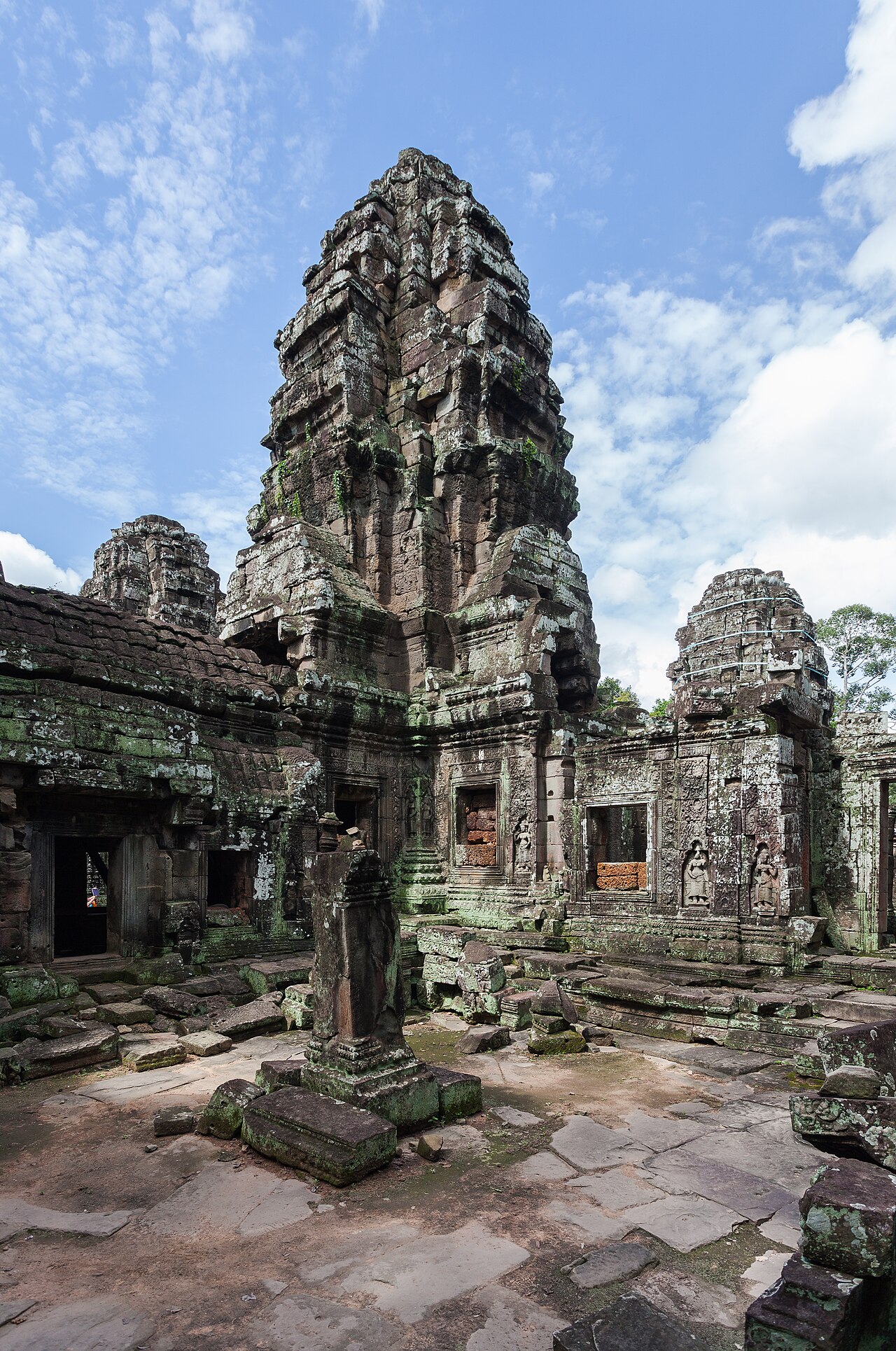
Banteay Kdei is a Buddhist temple in the Angkor Archaeological Park, built during the reign of Jayavarman VII in the late twelfth or early thirteenth century. Its name means Citadel of Chambers, a fitting description of the galleries, doorways, and enclosed rooms. The temple offers a quieter, more atmospheric experience than the largest Angkor monuments and is especially rewarding for travelers who enjoy weathered stone and layered spaces. Banteay Kdei is a Buddhist temple within the Angkor Archaeological Park, a UNESCO World Heritage Site. Constructed during the Bayon period in the late 12th to early 13th centuries under King Jayavarman VII, it exemplifies the architectural transition of that era. The temple's name translates to 'Citadel of Chambers,' referencing its labyrinthine interior corridors. It remains a meaningful visitor landmark in Siem Reap, recognized among significant archaeological attractions despite the absence of a precise city POI ranking pool. Many Small Circuit itineraries incorporate Banteay Kdei due to its proximity to Ta Prohm and Srah Srang, though priority varies by operator.
Checked 2026-08-26 · Source
Explore concentric galleries, narrow corridors, libraries, chambers, and a central sanctuary arranged around the temple core. Doorways and reduced-scale face-tower motifs reflect the Bayon period. Laterite and sandstone give the complex a varied texture, while large silk-cotton and strangler fig roots grow through sections of the masonry. The combination of enclosed passages, damaged galleries, and vegetation makes Banteay Kdei feel intimate and exploratory rather than monumental. The temple complex features a compact, enclosed design with concentric galleries and numerous doorways leading through narrow passages. Visitors encounter face-tower motifs characteristic of Bayon-style architecture, though on a reduced scale. Interior spaces include meditation chambers, library structures, and a central sanctuary. Laterite and sandstone comprise primary construction materials. Extensive tree root systems, notably from silk-cotton and strangler fig species, intertwine with masonry throughout the compound, creating distinctive atmospheric conditions that distinguish this monument from more restored neighboring sites.
Checked 2026-08-26 · Source
Plan on forty-five minutes to one hour for a steady circuit through Banteay Kdei. Add time if you want to pause at the galleries, study the face towers, or photograph roots and masonry. Its location makes it easy to combine with Ta Prohm and Srah Srang, creating a half-day sequence with short transfers between stops. The compact layout also suits travelers who want a substantial temple visit without a long internal walk.
Checked 2026-08-26 · Source
Morning is a good choice for cooler conditions and light entering through the eastern doorways. Later visits can bring different shadows across the galleries and a quieter rhythm after the busiest stops. During wet weather, vegetation becomes especially vivid, but roots and stone surfaces may be harder to cross safely. Use Banteay Kdei as part of a flexible Small Circuit day, leaving enough time for both Ta Prohm and Srah Srang.
Checked 2026-08-26 · Source
Banteay Kdei is inside the Angkor Archaeological Park, so visit it with valid park admission and carry the ticket while moving between monuments. The admission is for the archaeological park experience rather than a separate Banteay Kdei reservation. It is practical to group the temple with other Small Circuit sites, since the same park visit covers a sequence of nearby monuments and avoids arranging a separate entry for each one.
Checked 2026-08-26 · Source
Banteay Kdei lies on the Small Circuit, about two kilometers east of Ta Prohm. From Siem Reap, travelers commonly arrive by tuk-tuk, motorbike, bicycle, private vehicle, or organized tour. The established park roads connect it with Ta Prohm and Srah Srang, making a circuit route straightforward. Cycling requires stamina because the temples are spread across the park. A hired driver is useful when you want to cover several monuments in one morning.
Checked 2026-08-26 · Source
Expect uneven floors, worn thresholds, low doorways, roots, and dim sections inside the galleries. Move slowly through corridors and keep your head lowered at low entrances. Heat can build up in enclosed areas, so carry water and take breaks outside when needed. Stay clear of unstable masonry and do not climb on the temple. The surrounding vegetation can contain insects and wildlife, so keep food and belongings secured while walking.
Checked 2026-08-26 · Source
Banteay Kdei offers strong compositions of roots crossing weathered walls, aligned doorways, face towers, and shadowed galleries. Morning light can enter the eastern passages, while afternoon light changes the mood of western-facing spaces. A wide lens helps in tight corridors, but leave room for other visitors. Flash is unnecessary in the naturally atmospheric interiors. Frame both close details and wider views that show how vegetation and architecture share the same space.
Checked 2026-08-26 · Source
It is on Angkor’s Small Circuit, about two kilometers east of Ta Prohm and near Srah Srang.
The name means Citadel of Chambers and refers to the temple’s galleries, passages, and enclosed rooms.
Most visitors need about forty-five minutes to one hour for a steady exploration of the complex.
Yes. Their close position makes Banteay Kdei a natural companion stop on a Small Circuit temple day.
Its narrow galleries, face-tower motifs, weathered masonry, and large tree roots create an intimate temple atmosphere.
Wear sturdy shoes with good grip because roots, worn stone, uneven floors, and low thresholds occur throughout the temple.
Loading the interactive map…
The interactive map could not be loaded.
Last updated:
Source: OpenStreetMap contributors, Wikidata ·