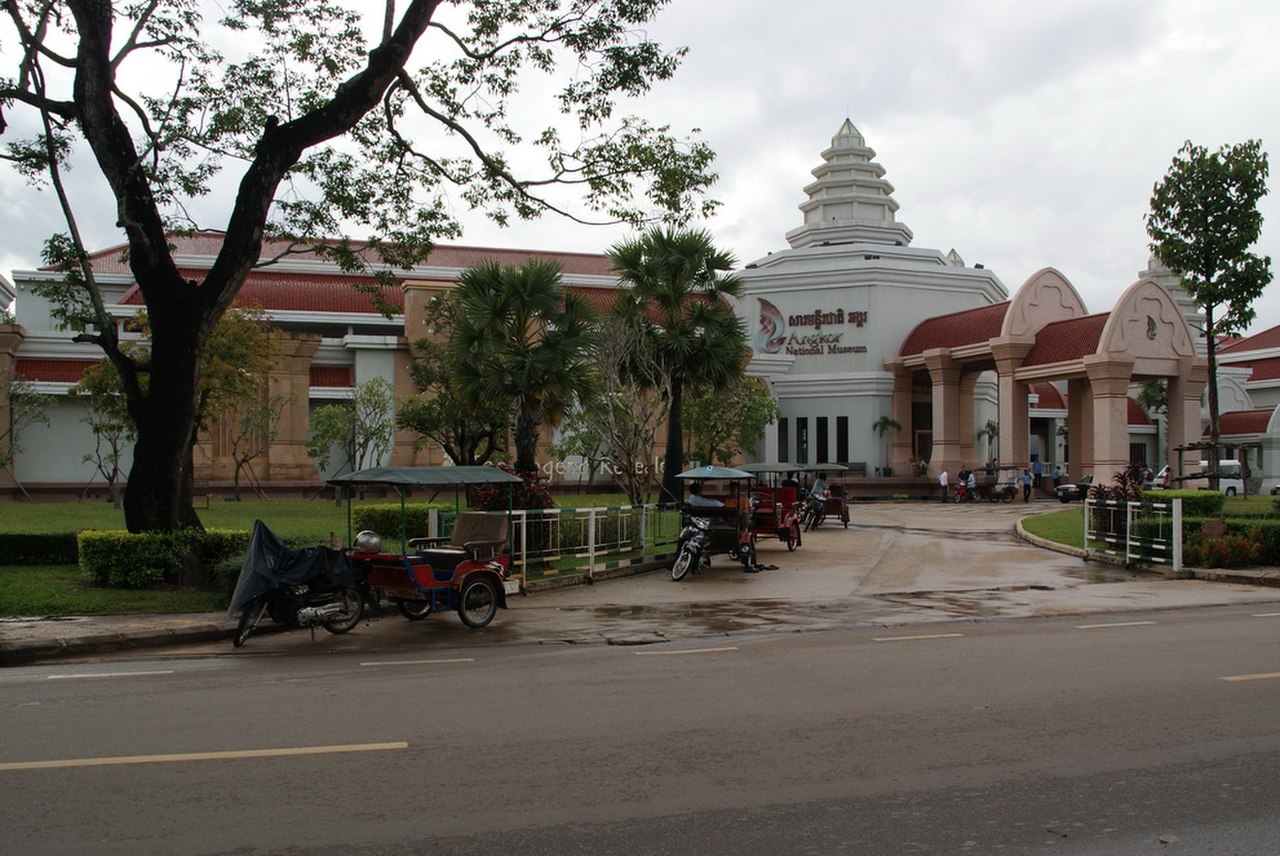
36 min walk
Angkor National Museum
- Must see
- Museum
Language · 11 published
Museum · Siem Reap
Reviewed by Elena Voss · SSMTour Travel Editor
| Monday | Closed |
|---|---|
| Tuesday | 08:00 – 17:00 |
| Wednesday | 08:00 – 17:00 |
| Thursday | 08:00 – 17:00 |
| Friday | 08:00 – 17:00 |
| Saturday | 08:00 – 17:00 |
| Sunday | 08:00 – 17:00 |
Parsed from OpenStreetMap opening hours on 2026-08-26.
Preah Norodom Sihanouk-Angkor Museum is a cultural institution in Siem Reap devoted to artefacts and interpretation connected with Angkor heritage. Named for King Norodom Sihanouk, it gives visitors a way to explore Khmer history and artistic traditions beyond the temple grounds themselves. The museum complements time spent at the Angkor Archaeological Park by placing sculpture, architecture, and cultural history into a more concentrated educational setting. It suits travelers who want context before or after visiting the monuments, as well as visitors seeking an indoor cultural activity in Siem Reap. The institution belongs to the city’s broader heritage landscape, linking museum-based learning with the ancient sites that make the region internationally known.
Checked 2026-08-26 · Source
The museum’s subject is Angkorian cultural heritage, so visitors should focus on the relationship between objects, architecture, religion, and the history of the Khmer world. Displays may include sculpture, architectural fragments, and interpretive material that help explain the artistic and political setting represented by the temples around Siem Reap. The museum is valuable because it allows travelers to study heritage in a concentrated indoor environment rather than trying to understand every detail while walking through large ruins. Look for connections between the forms, images, and materials shown inside and the monuments encountered outside. A visit can deepen appreciation of Angkor by encouraging closer attention to carved stone, sacred imagery, and the cultural ideas that shaped the region’s historic architecture.
Checked 2026-08-26 · Source
The museum works well as a focused cultural visit within a larger Siem Reap itinerary. Allow enough time to read interpretive material and examine objects carefully, especially if you are using the museum to prepare for or reflect on a day at Angkor. Travelers with a strong interest in Khmer art and history may want a slower visit, while those combining the museum with several temples can treat it as a concentrated indoor introduction. The most useful pace is deliberate rather than hurried: compare related forms, notice architectural details, and connect museum displays with the monuments you have seen or plan to see. Because the museum complements rather than replaces the temple experience, place it where it strengthens the story of your wider heritage day.
Checked 2026-08-26 · Source
An indoor heritage museum is particularly useful during the hottest part of the day or when rain makes extended temple walking less comfortable. It can provide a thoughtful pause between outdoor visits, helping you exchange direct exposure to ruins for close study of objects and interpretation. Morning or late afternoon can work well when the museum is paired with temple exploration, because the indoor visit gives structure to the transition between different parts of a Siem Reap day. The museum is also a good choice for travelers who want cultural context before visiting Angkor or a reflective activity after returning from the archaeological park. Its relevance is not limited to one season because the main experience takes place indoors.
Checked 2026-08-26 · Source
Plan the museum as a distinct cultural attraction that complements, rather than automatically replaces, time at the Angkor Archaeological Park. Travelers building a heritage itinerary should keep museum entry and temple visits as separate planning elements unless a clearly stated arrangement joins them. The institution is well suited to visitors who want a concentrated introduction to Angkorian art and history, including those who prefer reading and object study to extended outdoor walking. A museum visit can also add value for travelers who have already seen the major temples and want to revisit the region’s artistic traditions from another perspective. Organize the day so that the museum’s indoor, educational setting balances the heat, distance, and physical demands of temple exploration.
Checked 2026-08-26 · Source
The museum is in Siem Reap, the principal base for visits to the Angkor Archaeological Park. Travelers staying in the city can use a tuk-tuk, remork, bicycle, walking route, or private vehicle depending on accommodation location and weather. Include the museum in a city-based cultural day or place it between outdoor heritage stops so that transport remains simple. If using a driver for the temples, agree on the museum as part of the route and keep the transition between stops clear. Siem Reap’s transport is well suited to combining several attractions, but the most comfortable option depends on heat, distance, and the time available. Treat the museum as a city destination rather than as another remote temple.
Checked 2026-08-26 · Source
Approach the museum with the same respect you would show to Angkor’s sacred and historic spaces. Give sculptures and religious imagery careful attention, follow visitor rules, and keep your conduct quiet around other people studying the displays. Siem Reap’s heat and humidity can feel intense when moving between outdoor streets and an indoor museum, so plan a comfortable transition and carry water for the wider day. The museum is most rewarding when treated as a place for context and reflection rather than a quick shelter from the weather. Combine it thoughtfully with temple visits, leaving enough energy to read and observe. Cultural sensitivity matters because the objects relate to Cambodia’s religious, artistic, and historical identity.
Checked 2026-08-26 · Source
Use photography to remember the museum’s objects and the connections they create with Angkor’s temples. Sculptural forms, architectural fragments, and carved details can be recorded as visual references for the outdoor monuments you visit later. Follow every posted rule and staff instruction, especially around sacred imagery and fragile artefacts. A flash-free approach is considerate of collections and other visitors, while a slower composition can capture form and texture without interrupting the viewing experience. Avoid letting photography replace reading the interpretation, since the museum’s value lies in the context around the objects as much as in their appearance. The strongest images will support your understanding of Khmer art and heritage rather than simply documenting a room.
Checked 2026-08-26 · Source
It is a Siem Reap cultural institution devoted to artefacts and interpretation connected with Angkorian and Khmer heritage.
The museum is named after King Norodom Sihanouk of Cambodia.
It provides concentrated indoor context for sculpture, architecture, religion, and Khmer history that can deepen understanding of the temple sites.
It is located in Siem Reap, the principal base for visiting the Angkor Archaeological Park.
Visitors can reach city attractions by tuk-tuk, remork, bicycle, walking route, or private vehicle, depending on distance, weather, and accommodation location.
It works well before temple visits for historical context, after them for reflection, or during the hottest or wettest part of the day as an indoor cultural stop.
Loading the interactive map…
The interactive map could not be loaded.

Last updated:
Source: OpenStreetMap contributors ·