
2 min walk
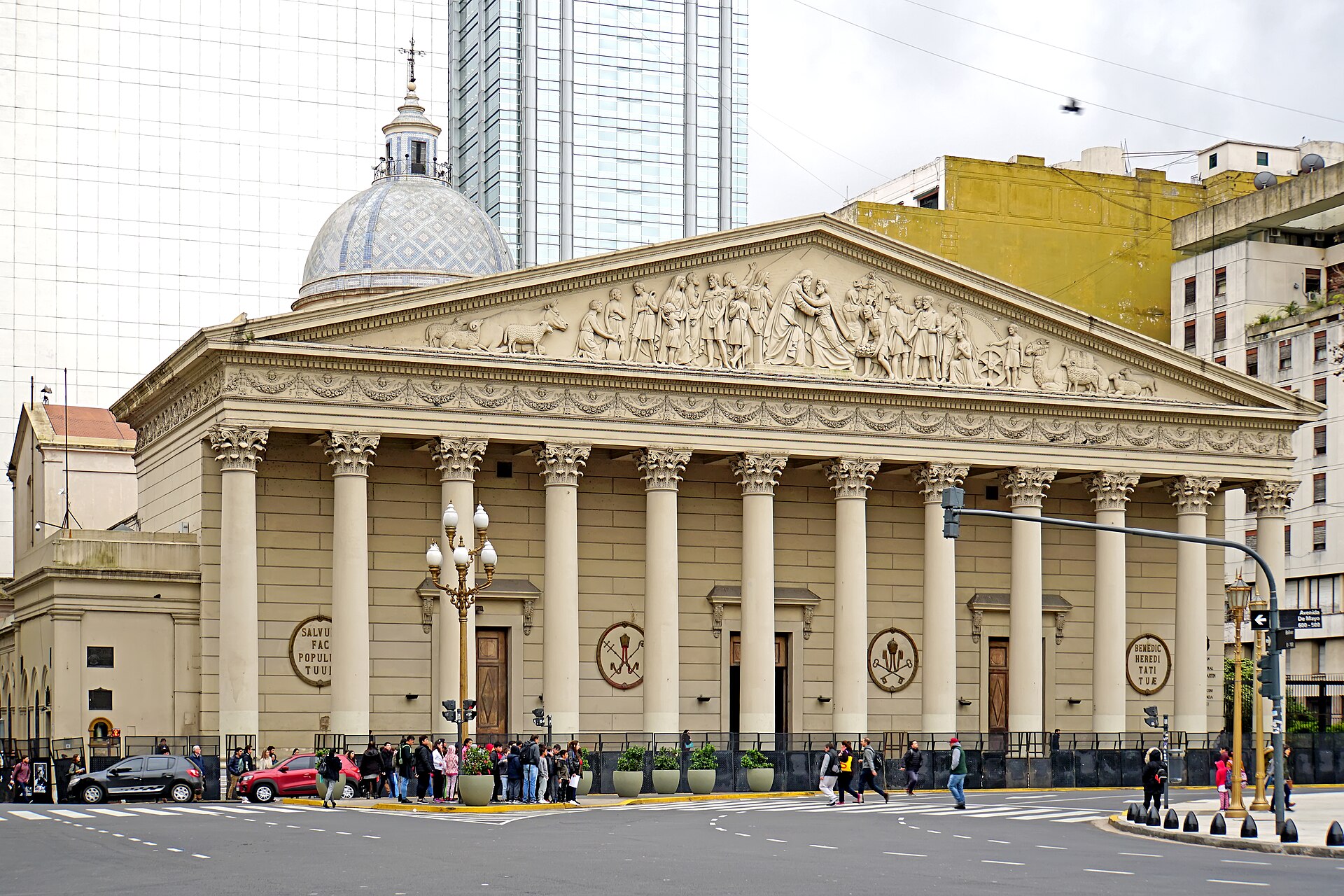
Buenos Aires Cathedral
- Must see
- Place of worship
Language · 11 published
Nature site · Buenos Aires

| Monday | 00:00 – 23:59 |
|---|---|
| Tuesday | 00:00 – 23:59 |
| Wednesday | 00:00 – 23:59 |
| Thursday | 00:00 – 23:59 |
| Friday | 00:00 – 23:59 |
| Saturday | 00:00 – 23:59 |
| Sunday | 00:00 – 23:59 |
Checked 2026-08-31 · Source
Read from the OpenStreetMap access tags; anything not listed has no tag recorded.
Set the group type to family in the planner and the day window contracts to about three quarters of a solo day.
Plaza de Mayo is Buenos Aires' oldest public square and the civic setting in which several defining episodes of the city and nation unfolded. The official tourism service traces the square from Buenos Aires' second founding in 1580 through the independence revolution and later political demonstrations. Its present name commemorates the revolution that began on 25 May 1810. Plaza de Mayo also hosted Argentina's first political rally in 1890 and later crowds who gathered to hear Eva Perón speak from the Casa Rosada balcony in the late 1940s. Bull running continued in the plaza until shortly after the revolution.
Checked 2026-08-31 · Source
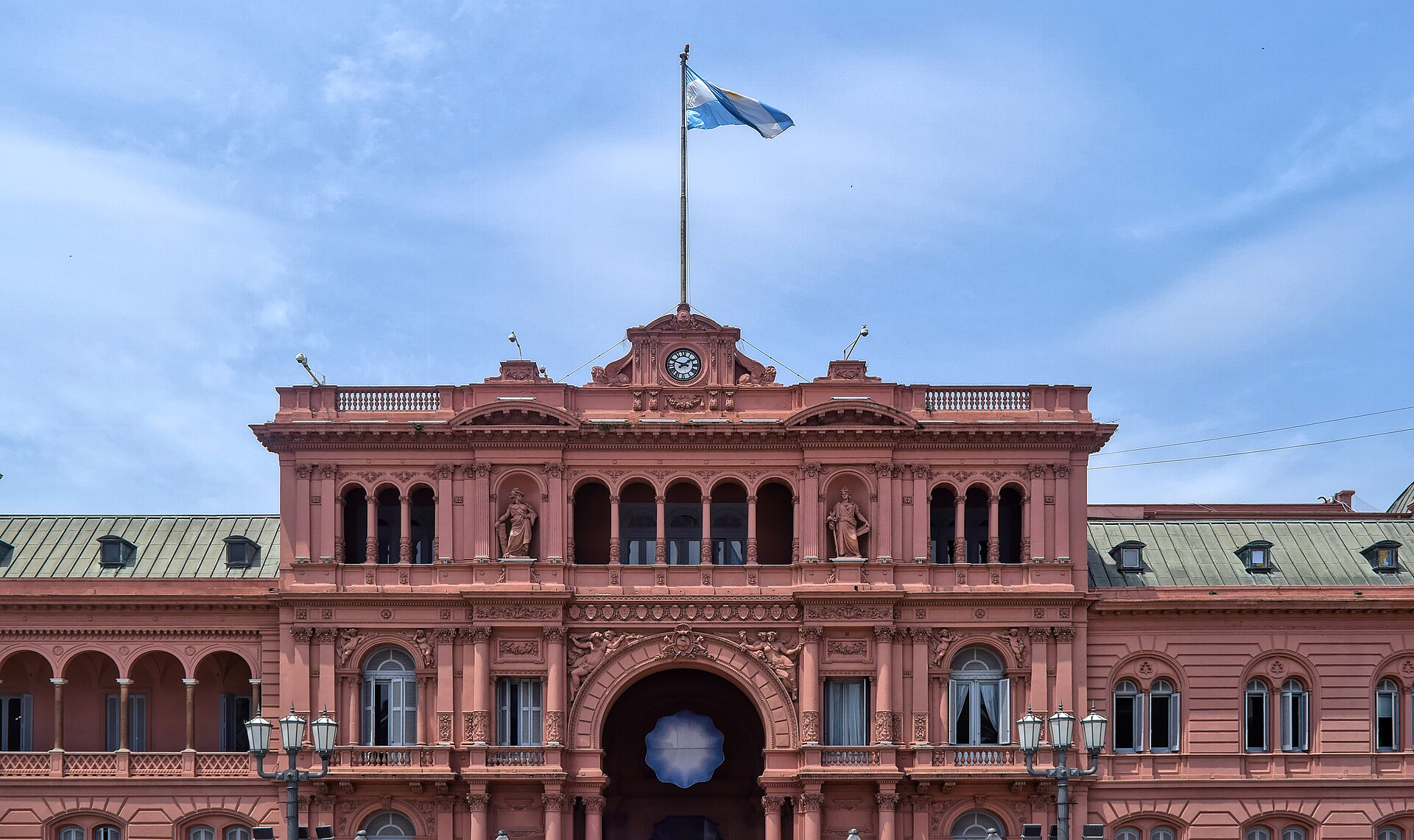
Plaza de Mayo is an open civic space centred on the May Pyramid, the monument around which the Mothers of Plaza de Mayo march. The square is framed by institutions that explain its continuing public role: the Cabildo, the Metropolitan Cathedral, the Casa Rosada, the national revenue office, the national bank and the intelligence secretariat. The official city page notes that Pope Francis conducted mass at the cathedral for 20 years. Treat those surrounding buildings as distinct destinations rather than as rooms or exhibits included in the square itself.
Checked 2026-08-31 · Source
A crossing of the square and a deliberate look at the May Pyramid require less time than a historical visit that pauses at each surrounding facade. The Cabildo, Metropolitan Cathedral and Casa Rosada are separate places and can extend the itinerary substantially if entered. Decide in advance whether Plaza de Mayo is a short orientation stop or the centre of a longer walk through the city's civic history.
Checked 2026-08-31 · Source
Daily Buenos Aires’ official tourism itinerary lists the outdoor public square for every day and gives no fixed gate hours. There is no weekly closure day. The page does record a recurring civic event: the Mothers of Plaza de Mayo meet in the square and march around the May Pyramid every Thursday at 3:30pm. That gathering is part of the square's living political history, not a staged attraction. Plaza de Mayo remains a focal point for demonstrations and gatherings, so consult current official notices when the timing or atmosphere of a visit matters.
Checked 2026-08-31 · Source
Free entry; Plaza de Mayo is a public outdoor square, not a ticketed attraction. The city’s official guided Plaza de Mayo walk is also free, but that optional tour requires advance booking. Do not treat that absence as a published promise of free access. The Cabildo, Metropolitan Cathedral, Casa Rosada and other institutions around the square are separate destinations with their own access arrangements; the tourism listing does not present them as one combined visit. Check each building's official information independently before relying on entry, tours, reservations or prices.
Checked 2026-08-31 · Source
The square occupies the block bounded by Rivadavia, Balcarce, Hipólito Yrigoyen and Bolívar in Monserrat. Arrive via Plaza de Mayo station on Subte Line A, Catedral on Line D or Bolívar on Line E. For a step-free Subte arrival, use Plaza de Mayo or Catedral, both designated accessible by the network operator. Plaza de Mayo is listed at Avenida Hipólito Yrigoyen and Balcarce in Buenos Aires' central area. The city's official tourism service describes the Subte as especially useful for downtown travel and notes that lines A, B, C, D and E converge in the centre. Bus and Subte journeys require a rechargeable SUBE card. The same service recommends its BA Cómo llego route planner for comparing public transport, driving and walking options.
Checked 2026-08-31 · Source
The city’s inclusive Historic Quarter walking circuit includes Plaza de Mayo as two of its stops. Assistance dogs are permitted on the city’s accessible guided circuit. Plaza de Mayo station on Subte Line A is designated accessible by the network operator. Catedral station on Subte Line D, beside the square, is also designated accessible. Plaza de Mayo is an active civic space as well as a historic site. The official tourism page identifies it as a continuing focus for gatherings in support of or protest against national governments, and records the Mothers' Thursday march around the May Pyramid. Crowd conditions can therefore differ from an ordinary sightseeing stop. Respect demonstrations as political activity, keep routes flexible and verify access to every surrounding government or religious building separately.
Checked 2026-08-31 · Source
The square's principal composition places the May Pyramid within a ring of nationally important buildings, including the Casa Rosada, Cabildo and Metropolitan Cathedral, so changing position reveals different civic and architectural relationships rather than a single prescribed viewpoint. The listing does not confirm tripod, drone, commercial-shoot or demonstration photography rules. Ask the relevant authority before specialised work, do not obstruct a gathering, and treat photography inside any surrounding building as a separate policy question.
Checked 2026-08-31 · Source
The name commemorates the revolution that began here on 25 May 1810 and initiated Argentina’s independence process.
Yes. The city tourism authority identifies it as Buenos Aires’ oldest public square.
Juan de Garay carried out the city’s second founding at this site on 11 June 1580.
The Cabildo, Metropolitan Cathedral, Casa Rosada, former city government palace, banks and government ministries border Plaza de Mayo.
The Pirámide de Mayo was erected in 1811 for the first anniversary of the May Revolution, remodelled in 1856 and moved to its present position in 1912.
The equestrian monument to the creator of Argentina’s flag stands between the Pirámide de Mayo and Casa Rosada.
Loading the interactive map…
The interactive map could not be loaded.

Last updated:
Source: OpenStreetMap contributors, Wikidata ·