
1 min walk
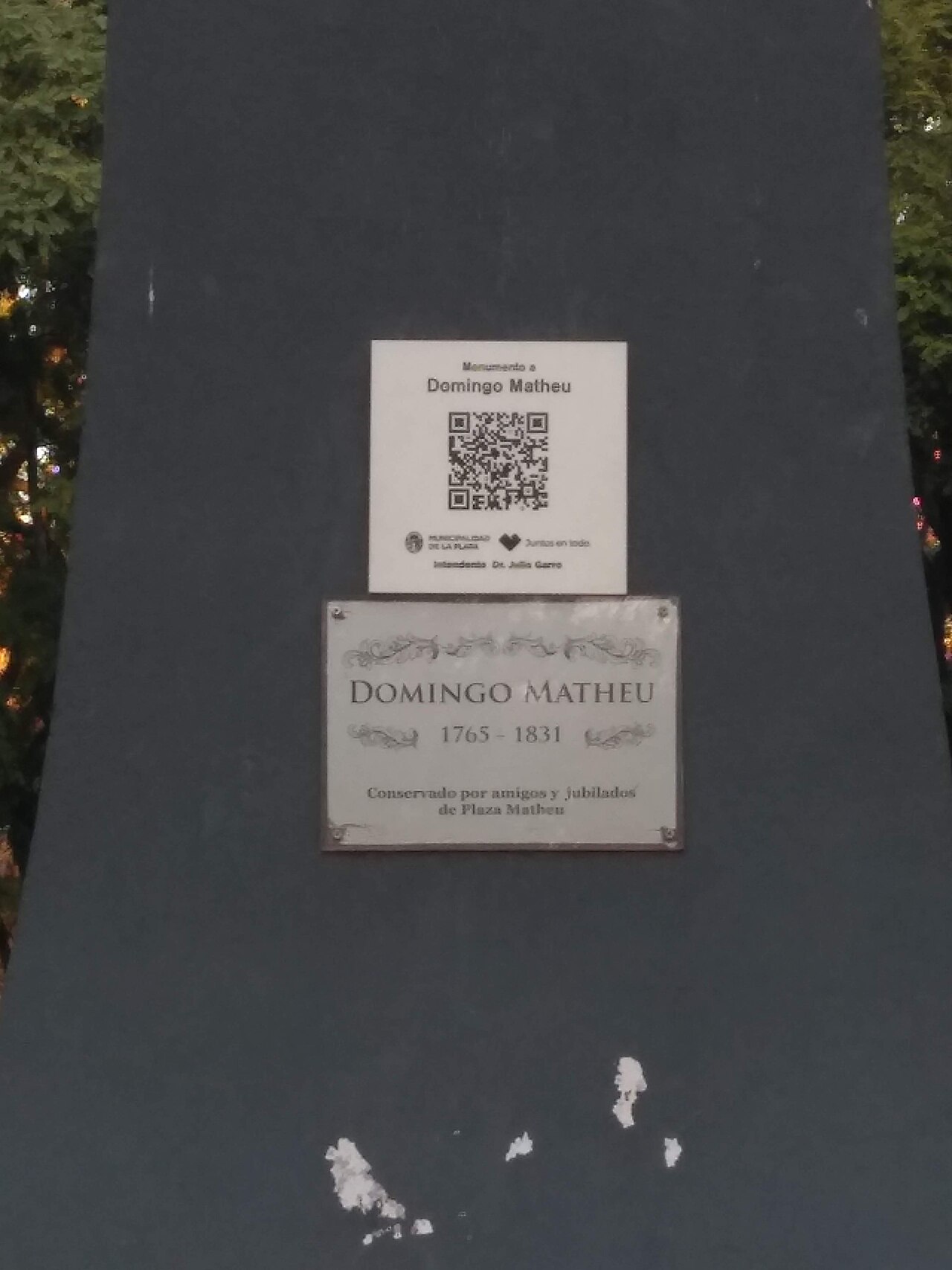
Domingo Matheu
- High
- Historic monument
Language · 11 published
Place of worship · Buenos Aires
Cementerio de la Recoleta
| Monday | 09:00 – 17:00 |
|---|---|
| Tuesday | 09:00 – 17:00 |
| Wednesday | 09:00 – 17:00 |
| Thursday | 09:00 – 17:00 |
| Friday | 09:00 – 17:00 |
| Saturday | 09:00 – 17:00 |
| Sunday | 09:00 – 17:00 |
Checked 2026-08-31 · Source
Read from the OpenStreetMap access tags; anything not listed has no tag recorded.
Set the group type to family in the planner and the day window contracts to about three quarters of a solo day.
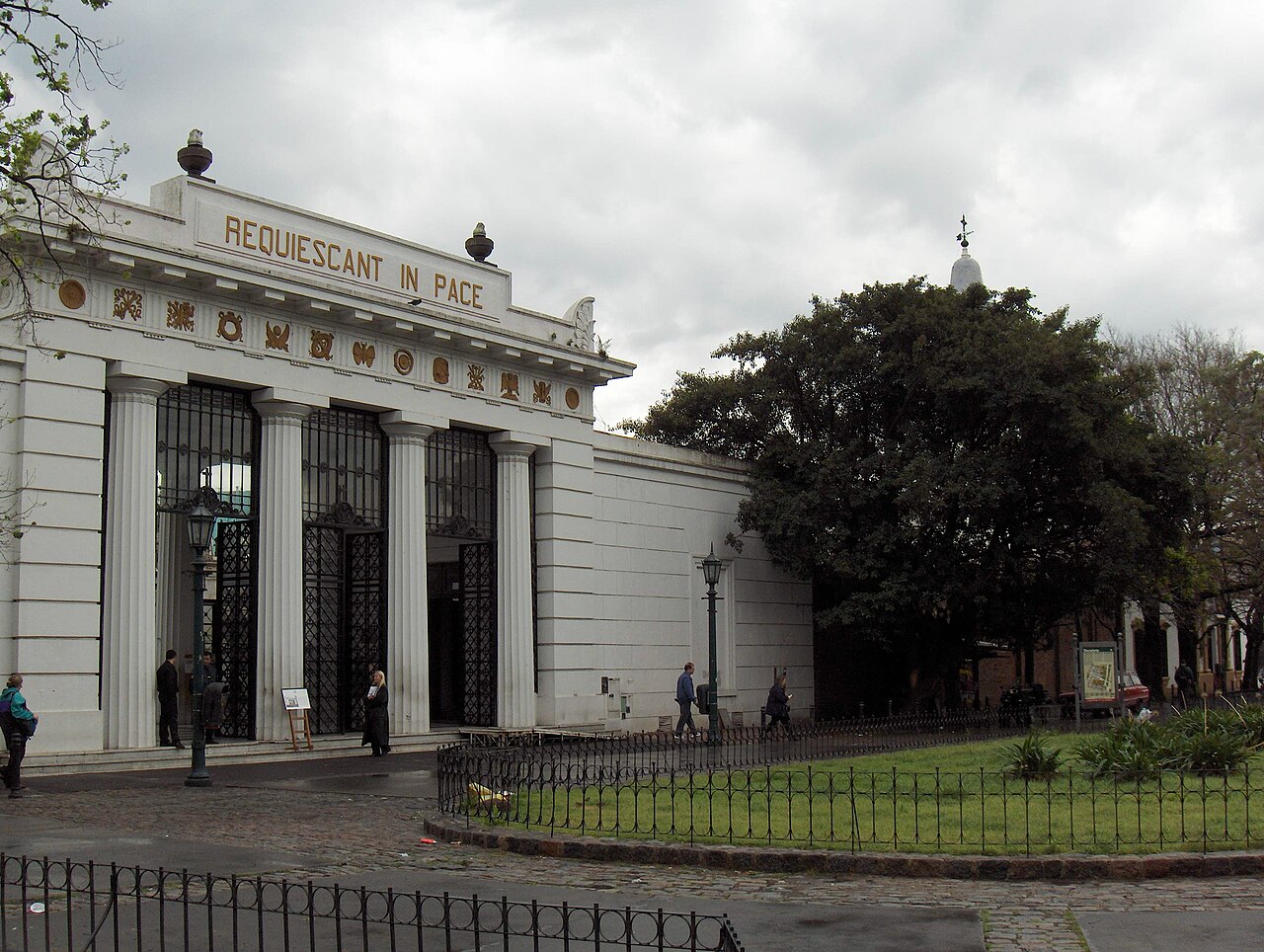
Cementerio de la Recoleta is Buenos Aires' defining monumental cemetery and a core record of national political and social history. Located in the upscale Recoleta neighbourhood, this necropolis contains elaborate mausoleums, statues and architectural monuments that reflect Argentina's elite families and historical figures. The cemetery occupies a significant footprint in the city and serves as both an active burial site and a major cultural destination. Its labyrinthine passages and diverse architectural styles make it a distinctive urban landmark with no comparable production match elsewhere.
Checked 2026-08-31 · Source
The cemetery contains thousands of mausoleums ranging from simple family vaults to elaborate marble and bronze monuments designed in Art Deco, Art Nouveau, Baroque and Neo-Gothic styles. Notable tombs include those of Eva Perón, multiple Argentine presidents, military leaders, literary figures and wealthy socialite families. Many mausoleums feature sculptural works, stained glass and intricate ironwork. The narrow pathways create an atmospheric environment where visitors encounter cats that reside among the tombs, adding an unexpected living element to this city of the dead.
Checked 2026-08-31 · Source
Visitors typically spend between one and two hours exploring the cemetery's grid of pathways, though enthusiasts of architecture, history or sculpture may extend their visit significantly. The site's compact but dense layout rewards wandering without a fixed route, as notable tombs appear throughout. Those seeking specific graves, particularly Eva Perón's frequently visited tomb, should allow additional time for navigation. The atmospheric quality encourages unhurried exploration. A comprehensive visit examining architectural details and reading inscriptions could occupy half a day.
Checked 2026-08-31 · Source
Tourist visits: daily 09:00–17:00. There is no scheduled weekly closure day. The cemetery’s broader visiting hours are daily 07:00–18:00; the 09:00–17:00 schedule applies specifically to tourist visits. The cemetery's outdoor corridors and marble surfaces reflect and intensify sunlight, making midday summer visits potentially uncomfortable. Morning and late afternoon light creates dramatic shadows across sculptures and mausoleum facades, enhancing photographic opportunities and atmospheric experience. Weekends may see increased visitor numbers due to proximity to the Recoleta weekend craft market. Rain transforms pathways into reflective surfaces but may complicate navigation of narrow passages between tombs.
Checked 2026-08-31 · Source
National residents entering without agency or guide intermediation are admitted free. International tourists pay 28 UT, equivalent to ARS 25,371.36 at the Q3 2026 value of ARS 906.12 per UT. Children under 6 are exempt. National residents entering through an agency or guide pay 7 UT, equivalent to ARS 6,342.84. Visitors should verify current admission policies through official channels before visiting. Some historical sources indicate the cemetery has operated with free entry, though guided tours may involve separate arrangements. The surrounding Recoleta neighbourhood commands premium prices at cafes and restaurants, so visitors should budget accordingly for associated expenses. Any donation boxes or voluntary contribution systems should be evaluated individually. Commercial photography permits may involve separate considerations not confirmed here.
Checked 2026-08-31 · Source
The main visitor entrance is at Junín 1760; step-free entry is at Junín 1750. Las Heras station on Subte Line H serves the area. Bus routes listed around Las Heras include 10, 37, 41, 59, 60, 61, 62, 92, 93, 95, 102, 108, 110 and 118. The named Ecobici station “Cementerio de la Recoleta” is on Vicente López between Junín and Uriburu. The cemetery sits within the Recoleta neighbourhood, accessible via multiple public transport options including bus lines and the Subte underground system. The nearest Subte stations require walking through the neighbourhood's grid of streets. Taxis and ride services serve the area reliably. The cemetery's perimeter faces onto Plaza Francia, where the weekend craft market operates, creating a natural orientation point. Street signage in the surrounding area marks the entrance clearly. Visitors arriving on foot from nearby cultural institutions including the National Museum of Fine Arts can incorporate the cemetery into a broader neighbourhood circuit.
Checked 2026-08-31 · Source
The main entrance is not accessible to visitors with mobility disabilities. The step-free entrance is at Junín 1750; security staff must be asked to open it. Wheelchairs can be borrowed free of charge from the cemetery administration. The city classifies motor access as accessible, while access for blind and low-vision visitors is practicable with assistance. Narrow pathways between mausoleums create bottlenecks when visitor numbers peak, requiring patience and spatial awareness. Uneven surfaces, worn marble steps and threshold transitions between tombs present trip hazards, particularly in low light conditions. Some mausoleums show deterioration with loose elements; visitors should maintain respectful distance. The resident cat population, while generally passive, should not be fed or handled. Active burial ceremonies occasionally occur; visitors must yield priority and maintain appropriate demeanour. Summer heat intensifies within the stone corridors. Personal belongings require attention in crowded conditions near popular tombs.
Checked 2026-08-31 · Source
The cemetery presents exceptional photographic subjects including architectural details, sculptural works, light patterns through narrow passages and the contrast of stone monuments against sky. Morning and late afternoon provide optimal directional lighting. Tripods may attract attention or restrictions; visitors should observe any posted guidelines or staff direction. Respect for active mourning and burial activities takes absolute precedence over photographic opportunity. Interior spaces of private family mausoleums accessible through glass or iron doors may present exposure challenges. The monochrome palette of weathered stone rewards both colour and black-and-white approaches.
Checked 2026-08-31 · Source
Yes. Free Spanish-language tours leave hourly from the main entrance: Monday–Friday from 10:00 to 16:00, and Saturdays, Sundays and public holidays from 09:00 to 16:00.
No. Tourist visitors under 18 must be accompanied by an adult.
Yes. Eva Perón is among the prominent people buried in Recoleta Cemetery, and her tomb is one of its most visited.
It was built in 1822 as Buenos Aires’s first public cemetery; French engineer Próspero Catelin designed its original layout.
The cemetery covers approximately five hectares and contains more than 4,500 vaults and mausoleums.
Yes. More than 90 vaults are designated National Historic Monuments.
Loading the interactive map…
The interactive map could not be loaded.

Last updated:
Source: OpenStreetMap contributors, Wikidata ·