
1 min walk
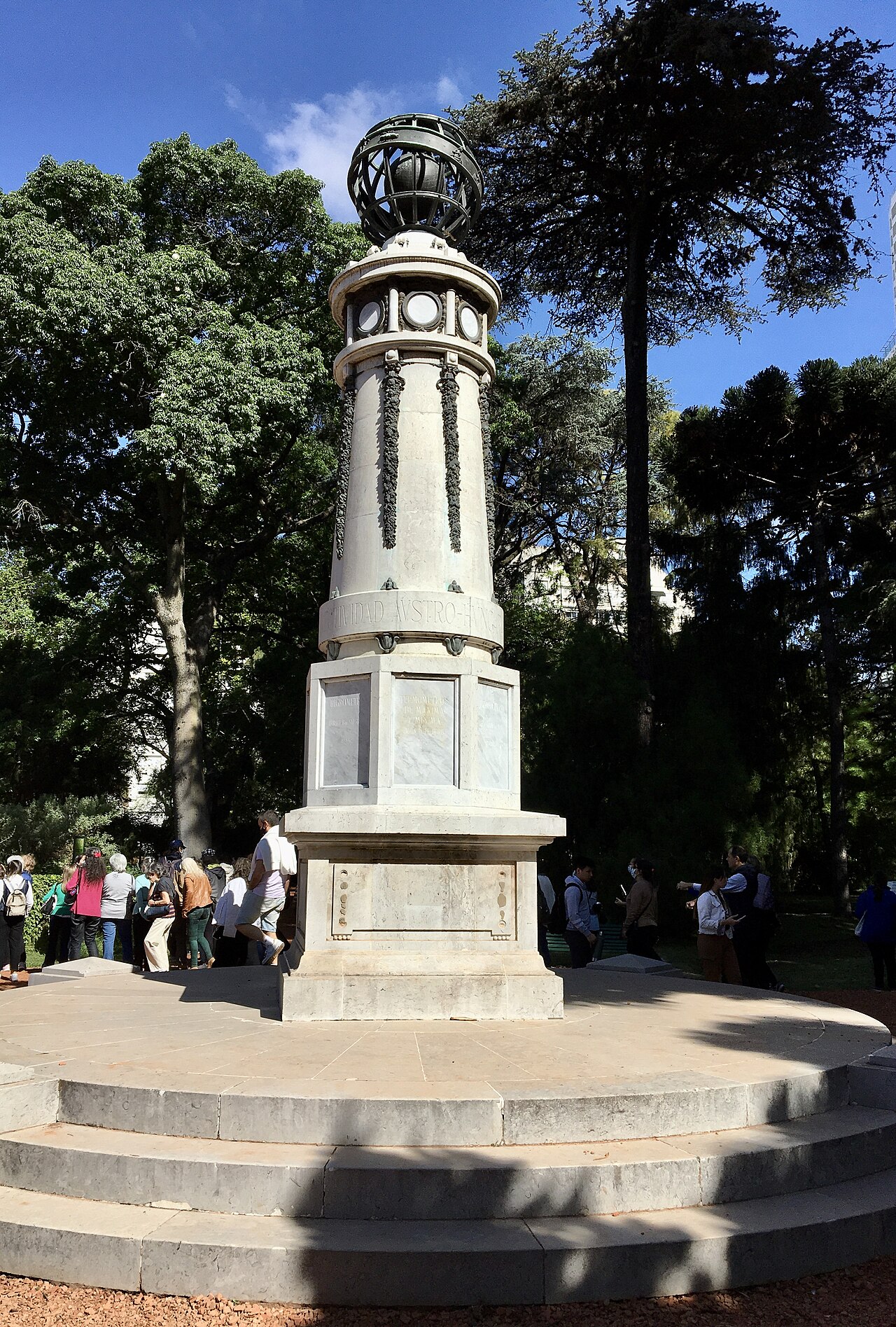
Meteorological Column
- Notable
- Art and culture venue
Language · 11 published
Nature site · Buenos Aires
Jardín Botánico Carlos Thays

| Monday | Closed |
|---|---|
| Tuesday | 08:00 – 18:00 |
| Wednesday | 08:00 – 18:00 |
| Thursday | 08:00 – 18:00 |
| Friday | 08:00 – 18:00 |
| Saturday | 09:30 – 18:00 |
| Sunday | 09:30 – 18:00 |
Checked 2026-08-31 · Source
Read from the OpenStreetMap access tags; anything not listed has no tag recorded.
Set the group type to family in the planner and the day window contracts to about three quarters of a solo day.
Jardín Botánico Carlos Thays is a historic botanical garden in Buenos Aires, Argentina. Located in the Palermo neighbourhood, it was designed by French-Argentine landscape architect Carlos Thays and opened in 1898. The garden occupies a city block and serves as both a public park and a scientific institution. It is named after its creator, who was responsible for many of Buenos Aires' green spaces. The garden holds national historic monument status and contains diverse plant collections arranged in landscaped grounds with architectural features.
Checked 2026-08-31 · Source
The garden contains historic glasshouses including an Art Nouveau winter garden and a central conservatory. Numerous sculptures are placed throughout the grounds, including works by Argentine and international artists. The living collection features plants from around the world organised in thematic sections. Notable areas include the Roman garden, the French garden, and collections of native Argentine flora. A central lake and various pathways connect the different sections. The garden also contains a botanical library and herbarium for research purposes, though public access to these facilities may be restricted.
Checked 2026-08-31 · Source
Visitors typically spend between one and two hours exploring the garden's main pathways and collections. Those with particular interest in botany, sculpture, or architectural history may wish to allocate additional time for detailed examination. The compact city-block layout allows for efficient circulation without extensive walking distances. Photography enthusiasts and those seeking peaceful retreat from urban surroundings often extend their visit. The garden's central location in Palermo makes it convenient to combine with nearby attractions. Personal pace and seasonal conditions will influence individual visit duration significantly.
Checked 2026-08-31 · Source
22 March–21 September: Tuesday–Friday 08:00–18:00; Saturday, Sunday and public holidays 09:30–18:00. 22 September–21 March: Tuesday–Friday 08:00–19:00; Saturday, Sunday and public holidays 09:30–19:00. Closed Monday. Last entry is 30 minutes before closing. Closed on 1 January, Good Friday, 1 May, 21 September, Municipal Workers’ Day and 25 December. The garden also closes during strong winds, rain or persistent drizzle for safety. Buenos Aires experiences four distinct seasons, with hot humid summers from December to February and mild winters from June to August. Spring and autumn generally offer comfortable temperatures for outdoor garden exploration. Weekend visits may be busier with local residents. Morning hours typically provide calmer conditions and better light for photography. Rainfall occurs throughout the year, so carrying appropriate weather protection is advisable regardless of season. Checking current conditions before departure remains prudent.
Checked 2026-08-31 · Source
Free general admission; no advance registration is required. Visitors should verify current admission policies through official channels before visiting. Many public gardens in Buenos Aires have historically offered free entry, though this may change without notice. Special exhibitions or events may incur separate charges. Guided tour availability and pricing should be confirmed directly with garden administration. Some botanical institutions offer concessions for students, seniors, or residents, though specific categories and requirements vary. Group visits may require advance booking. Budget-conscious travellers should prepare for possible charges despite free-entry traditions.
Checked 2026-08-31 · Source
The visitor address is Av. Santa Fe 3951 in Palermo. Take Subte Line D to Plaza Italia station; the garden entrance is beside Plaza Italia on Avenida Santa Fe. The garden sits in Palermo, accessible via Buenos Aires' extensive public transport network. The nearby Plaza Italia station on Subte Line D provides underground rail connection. Numerous bus routes serve the surrounding area with stops within walking distance. Taxis and ride-hailing services operate throughout the city. Cycling is possible via Buenos Aires' bike lane network, with bike-sharing stations potentially available nearby. The garden's central location makes it reachable from most tourist accommodation areas. Walking from nearby Palermo attractions is feasible. Visitors should verify current transport conditions and any service disruptions before travelling.
Checked 2026-08-31 · Source
Accessible adapted toilets are available on the ground and upper floors of the garden’s historic house. A tactile orientation map near the entrance uses contrasting colours, Braille, large print and raised lettering, with a QR code for additional information. Accessibility work on the historic house was still in progress in 2026; planned improvements include entrance ramps and an internal lift, so complete step-free access throughout the building is not yet established. The garden contains open water features requiring caution, particularly for visitors with young children. Pathways may become slippery after rainfall. Historic glasshouse structures may have restricted access areas clearly marked for preservation purposes. Some plant collections are protected by barriers or signage requesting visitors remain on designated paths. Wildlife including birds and insects inhabits the garden naturally. Personal belongings should be secured as in any public urban space. Visitors should respect all posted regulations regarding plant collection, climbing, or entering restricted zones.
Checked 2026-08-31 · Source
The garden offers numerous photographic subjects including architectural glasshouses, diverse plant specimens, sculptures, and landscaped compositions. Morning and late afternoon light typically provides favourable conditions. Tripod use may be restricted or require permission; visitors should observe posted policies. The central lake and conservatory provide popular vantage points. Seasonal variations in flowering and foliage create changing visual opportunities throughout the year. Visitors should be considerate of others when positioning for photographs in narrow pathways. Drone operation would require appropriate permissions and compliance with Argentine aviation regulations.
Checked 2026-08-31 · Source
No. General admission is free and does not require registration.
Yes. The garden closes for safety during strong winds, rain or persistent drizzle.
No. The garden’s official visitor regulations prohibit bringing animals onto the grounds.
No. Bicycles, skateboards and sporting activities are prohibited within the garden.
Yes. Several themed self-guided circuits are available through QR codes displayed on the activity board near the entrance.
The seven-hectare garden includes about five hectares of Argentine flora and two hectares of species from temperate forests across five continents, alongside palm and cactus collections.
Loading the interactive map…
The interactive map could not be loaded.

Last updated:
Source: OpenStreetMap contributors, Wikidata ·