

6 min walk
Galileo Galilei Planetarium
- Must see
- Historic monument
Language · 11 published
Nature site · Buenos Aires

| Monday | Closed |
|---|---|
| Tuesday | 10:00 – 18:00 |
| Wednesday | 10:00 – 18:00 |
| Thursday | 10:00 – 18:00 |
| Friday | 10:00 – 18:00 |
| Saturday | 10:00 – 18:00 |
| Sunday | 10:00 – 18:00 |
Checked 2026-08-31 · Source
Read from the OpenStreetMap access tags; anything not listed has no tag recorded.
Set the group type to family in the planner and the day window contracts to about three quarters of a solo day.
The Palermo Rose Garden, known locally as Rosedal de Palermo, is a formal rose garden situated within the larger Parque Tres de Febrero in the Palermo neighbourhood of Buenos Aires. It occupies a section of this extensive urban parkland in the Argentine capital. The garden is a designed landscape dedicated to rose cultivation and display, serving as a recreational destination for residents and visitors. It forms part of one of Buenos Aires's most significant green spaces, contributing to the city's park system and offering a structured horticultural environment amid the urban surroundings.
Checked 2026-08-31 · Source
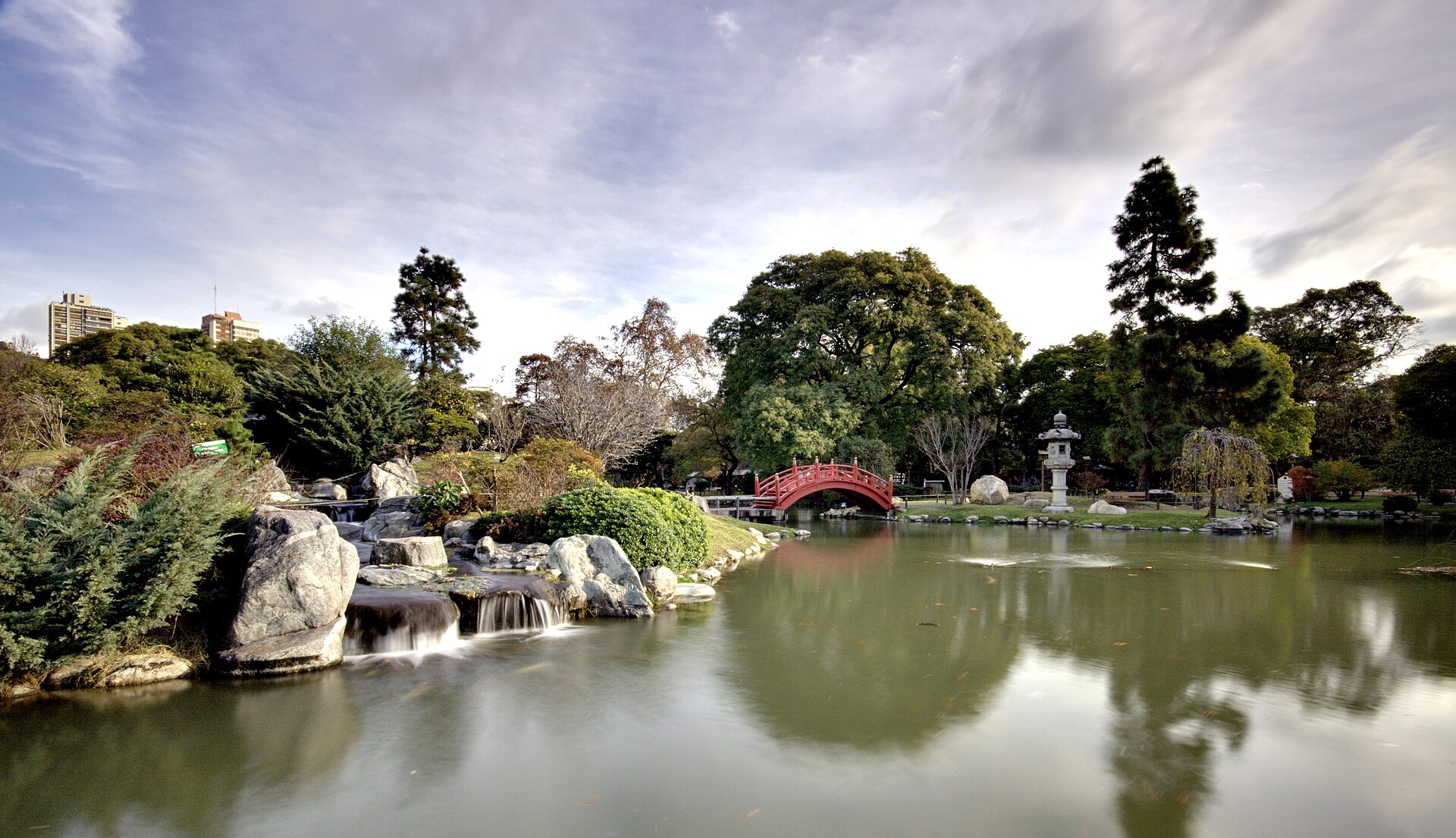
The Rosedal de Palermo contains arranged rose beds with numerous rose varieties, forming the central feature of the garden. A notable architectural element within the garden is the Poets Garden, containing sculptures of literary figures. The Andalusian Patio represents another distinct area with Spanish-influenced design. A lake or pond feature is present within the garden grounds, contributing to the landscape composition. Paths and walkways connect these elements, allowing visitor circulation. The overall design follows formal garden principles with geometric planting arrangements, ornamental features, and structured sightlines typical of European-influenced public gardens in South American capitals.
Checked 2026-08-31 · Source
Visitor duration at the Palermo Rose Garden varies considerably depending on individual interests and purposes. Casual visitors typically spend between thirty minutes and one hour walking through the main paths and viewing the central rose displays. Those with specific horticultural interests, photography intentions, or seeking rest in the garden setting may extend their visit to two hours or more. The garden's compact formal layout permits efficient viewing, though the surrounding Parque Tres de Febrero offers extensive additional parkland for those wishing to combine visits.
Checked 2026-08-31 · Source
Tuesday–Sunday 10:00–18:00; last entry 17:00. Closed Monday. Also closed on 1 January, Good Friday, 1 May, 20 July, 21 September, 8 November, and 24, 25 and 31 December. The garden closes during strong winds, rain or persistent drizzle for safety. The Palermo Rose Garden operates as an outdoor public garden with seasonal variations in appeal. Weather considerations for Buenos Aires suggest mild autumn and spring days offer comfortable conditions for garden walking. Summer heat and winter coolness may affect visitor comfort.
Checked 2026-08-31 · Source
Free general admission. The Palermo Rose Garden functions as a public park facility within the broader municipal park system of Buenos Aires. Based on standard practice for Argentine urban parks and the public nature of Parque Tres de Febrero, no entrance fee is typically charged for garden access. Visitors should carry personal funds for incidental expenses such as refreshments, rental equipment, or transportation to and from the Palermo neighbourhood regardless of garden entry costs.
Checked 2026-08-31 · Source
Take the Mitre railway to Tres de Febrero station, served by the Retiro–José León Suárez and Retiro–Mitre branches. The official garden entrance is at Av. Iraola and Av. Presidente Pedro Montt. The Palermo Rose Garden is located within Parque Tres de Febrero in the Palermo district of Buenos Aires. The broader park area is accessible via multiple public transportation options serving the Palermo neighbourhood. The Buenos Aires underground system includes stations in the Palermo area, with walking connections to the park. Numerous bus routes serve the district. Taxis and ride-hailing services operate throughout Buenos Aires and can access park-adjacent streets. For visitors with private vehicles, street parking exists in surrounding areas though availability varies. The garden's specific entrance points within the larger park require on-site orientation or detailed mapping for first-time visitors.
Checked 2026-08-31 · Source
The City’s accessible-tourism guide classifies the Bosques de Palermo–Rosedal circuit as partially accessible and identifies rest areas. A haptic site map uses tactile features, large print, Braille and contrasting colours to assist orientation for visitors with visual impairments. Visitors to the Palermo Rose Garden should exercise standard urban park precautions appropriate to Buenos Aires. Personal belongings require attention in any public space within the metropolitan area. The garden's proximity to water features and formal landscaping with edges and steps suggests appropriate footwear for walking surfaces. Sun exposure is significant during midday hours given the open character of rose garden plantings with limited shade.
Checked 2026-08-31 · Source
The formal layout and floral displays of the Rosedal de Palermo present photographic opportunities typical of designed gardens. The geometric rose beds, architectural features including the Poets Garden sculptures, and water elements offer structured composition possibilities. Lighting conditions vary throughout the day with open sky exposure predominating. Morning and late afternoon periods generally provide softer illumination for garden photography. The Andalusian Patio and ornamental details may reward closer photographic examination beyond wide garden views.
Checked 2026-08-31 · Source
October is identified by the City tourism authority as the best month, when the roses reach peak bloom.
The garden covers 3.4 hectares and contains more than 18,000 roses.
The grounds include the Greek Bridge, an amphitheatre, the Andalusian Patio and the Garden of Poets.
It contains 26 busts honouring writers including Alfonsina Storni, Dante Alighieri, William Shakespeare and Jorge Luis Borges.
The landscape is associated with Carlos Thays and was completed by his disciple Benito Carrasco in 1914.
The World Federation of Rose Societies gave it the Garden Excellence Award in 2012.
Loading the interactive map…
The interactive map could not be loaded.

Last updated:
Source: OpenStreetMap contributors ·