.jpg)

7 min walk
Chùa Chantarangsay
- Notable
- Place of worship
Language · 11 published
Place of worship · Ho Chi Minh City
Chùa Vĩnh Nghiêm
Reviewed by Elena Voss · SSMTour Travel Editor
| Monday | 06:00 – 22:00 |
|---|---|
| Tuesday | 06:00 – 22:00 |
| Wednesday | 06:00 – 22:00 |
| Thursday | 06:00 – 22:00 |
| Friday | 06:00 – 22:00 |
| Saturday | 06:00 – 22:00 |
| Sunday | 06:00 – 22:00 |
Checked 2026-08-31 · Source
Read from the OpenStreetMap access tags; anything not listed has no tag recorded.
Set the group type to family in the planner and the day window contracts to about three quarters of a solo day.
This place is a Place of worship.
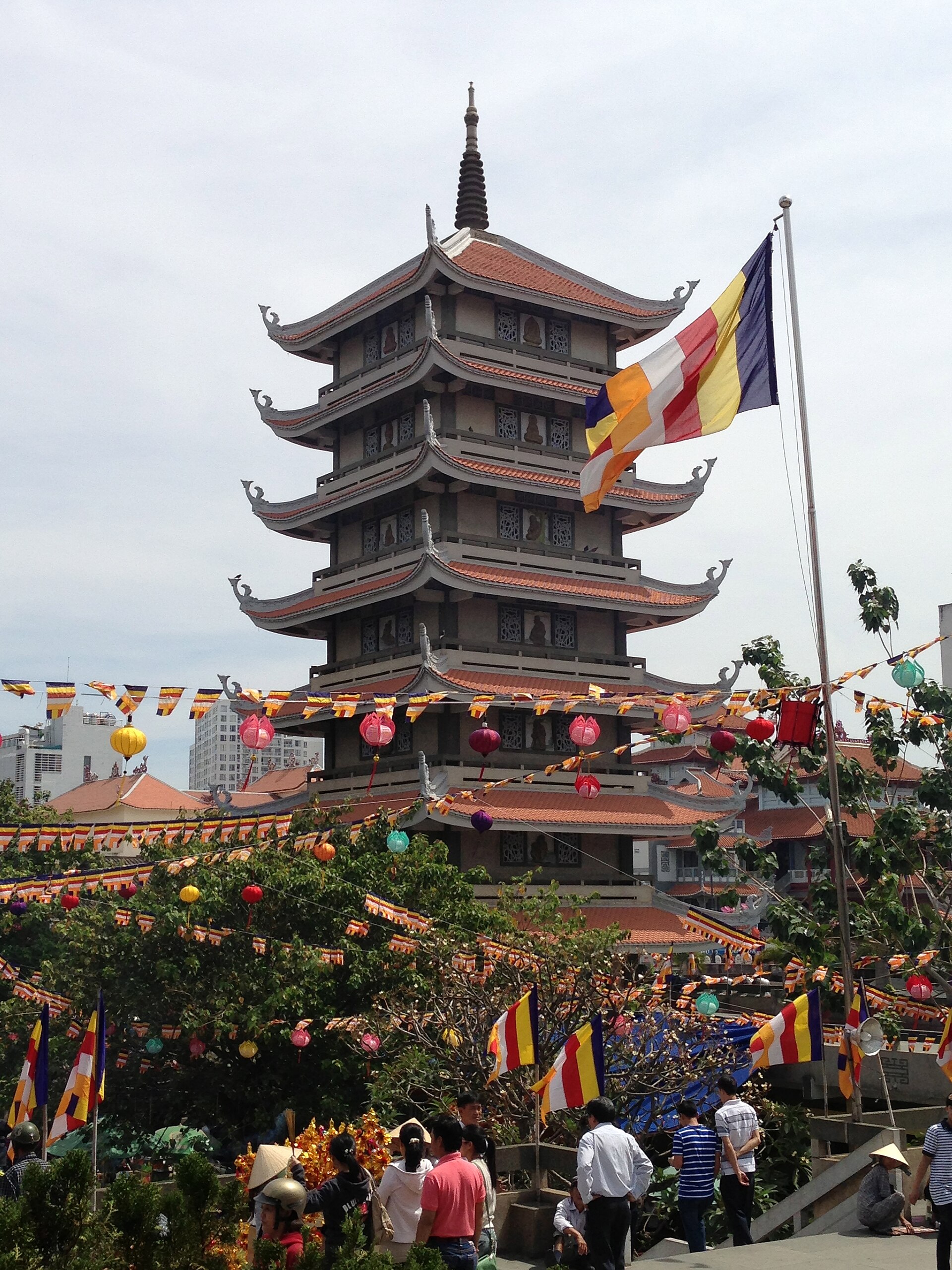
Vinh Nghiem Pagoda is a Buddhist temple in Ho Chi Minh City, Vietnam. It stands as a notable religious and architectural landmark within the urban landscape. The pagoda represents Mahayana Buddhist traditions and serves as an active place of worship for the local community. Its presence in the city reflects Vietnam's enduring Buddhist heritage amid rapid urban development. Visitors encounter a functioning religious site rather than a museum, requiring appropriate conduct and respectful observation of ongoing spiritual practices. Daily 06:00–22:00. The operator lists the pagoda as open every day of the week, with no regular closure day.
Checked 2026-08-31 · Source
The pagoda complex contains traditional Buddhist architectural elements including prayer halls, statues, and ceremonial spaces. Visitors can observe altars with offerings, incense burners, and decorative religious imagery. The structures incorporate Vietnamese Buddhist design conventions with tiered roofs and ornamental details. Monk quarters and community gathering spaces support religious functions. Gardens and courtyard areas provide contemplative settings. The operator lists the pagoda as open every day of the week, with no regular closure day. Free general admission. The operator describes the upper terrace, main worship hall and Avalokitesvara Tower as reached from the courtyard by three staircases of 23 steps.
Checked 2026-08-31 · Source
A respectful visit to Vinh Nghiem Pagoda typically requires between thirty minutes and one hour. This duration allows for circumambulation of the main structures, quiet observation of religious activities, and brief meditation or contemplation if desired. Devout practitioners or those with particular interest in Buddhist architecture may extend their stay. Visitors should remain sensitive to ongoing ceremonies, which may either lengthen the experience through observation or require temporary withdrawal from certain areas. The compact urban site does not demand extensive time commitment. Free general admission.
Checked 2026-08-31 · Source
Visitors should verify current opening times through direct contact with the pagoda administration or local tourism authorities before planning their visit. Buddhist temples in Vietnam typically maintain morning and afternoon access periods, though active religious sites may restrict entry during prayer sessions, meditation periods, or private ceremonies. Daily 06:00–22:00. The entrance is at 339 Nam Kỳ Khởi Nghĩa Street. Public bus route 109 runs along Nam Kỳ Khởi Nghĩa between Saigon Bus Station and Tân Sơn Nhất Airport; use the stop named Chùa Vĩnh Nghiêm beside the pagoda.
Checked 2026-08-31 · Source
Buddhist pagodas in Vietnam frequently operate without admission fees, relying instead on voluntary donations from worshippers and visitors. Any requested contributions typically support temple maintenance and monastic community sustenance. Visitors should carry small denomination Vietnamese currency for potential donation boxes. Commercial photography permits, if required, would constitute separate considerations. Free general admission. The operator describes the upper terrace, main worship hall and Avalokitesvara Tower as reached from the courtyard by three staircases of 23 steps. These stairs prevent step-free access to core upper-level visitor areas. 339 Nam Kỳ Khởi Nghĩa Street, Ho Chi Minh City.
Checked 2026-08-31 · Source
Vinh Nghiem Pagoda occupies a location within Ho Chi Minh City's dense urban fabric. The city's extensive motorbike taxi, ride-hailing, and bus networks provide standard access options. Visitors should obtain specific address details and local landmark references for navigation purposes. The entrance is at 339 Nam Kỳ Khởi Nghĩa Street. Public bus route 109 runs along Nam Kỳ Khởi Nghĩa between Saigon Bus Station and Tân Sơn Nhất Airport; use the stop named Chùa Vĩnh Nghiêm beside the pagoda. These stairs prevent step-free access to core upper-level visitor areas. 339 Nam Kỳ Khởi Nghĩa Street, Ho Chi Minh City.
Checked 2026-08-31 · Source
Visitors must observe Buddhist temple etiquette throughout their presence. Appropriate dress covering shoulders and knees demonstrates respect. Removal of footwear before entering interior spaces follows universal Vietnamese temple custom. Active worshippers deserve uninterrupted space. Incense smoke may affect respiratory sensitivity. Urban temple environments present standard city safety considerations including traffic upon entry and exit. The operator describes the upper terrace, main worship hall and Avalokitesvara Tower as reached from the courtyard by three staircases of 23 steps. 339 Nam Kỳ Khởi Nghĩa Street, Ho Chi Minh City. Venerable Thích Tâm Giác and Venerable Thích Thanh Kiểm initiated its construction after coming south to teach Buddhism.
Checked 2026-08-31 · Source
Photography at Vinh Nghiem Pagoda requires cautious visitor judgement and situational awareness. Exterior architectural photography of rooflines, courtyards, and garden elements generally encounters fewer restrictions. Interior spaces containing active altars, worshippers, or monks demand explicit permission or respectful abstention. Flash photography potentially disrupts meditation and prayer activities. Tripods and professional equipment may attract scrutiny or prohibition. The most prudent approach involves observing posted guidelines, following local worshipper behaviour, and requesting clarification from temple attendants when uncertainty exists. Venerable Thích Tâm Giác and Venerable Thích Thanh Kiểm initiated its construction after coming south to teach Buddhism.
Checked 2026-08-31 · Source
339 Nam Kỳ Khởi Nghĩa Street, Ho Chi Minh City.
Venerable Thích Tâm Giác and Venerable Thích Thanh Kiểm initiated its construction after coming south to teach Buddhism.
Construction began in 1964 after approximately 40,000 cubic metres of earth were used to fill the low-lying site.
Architect Nguyễn Bá Lăng prepared the design, assisted by Lê Tấn Chuyên and Cổ Văn Hậu.
Shakyamuni Buddha occupies the centre, with Manjushri Bodhisattva on the left and Samantabhadra Bodhisattva on the right.
The bell is 1.8 metres in diameter, was cast in 1971 and was donated by Japanese Sōtō Buddhists as a prayer for peace in Vietnam.
Loading the interactive map…
The interactive map could not be loaded.

Last updated:
Source: OpenStreetMap contributors, Wikidata ·