
4 min walk
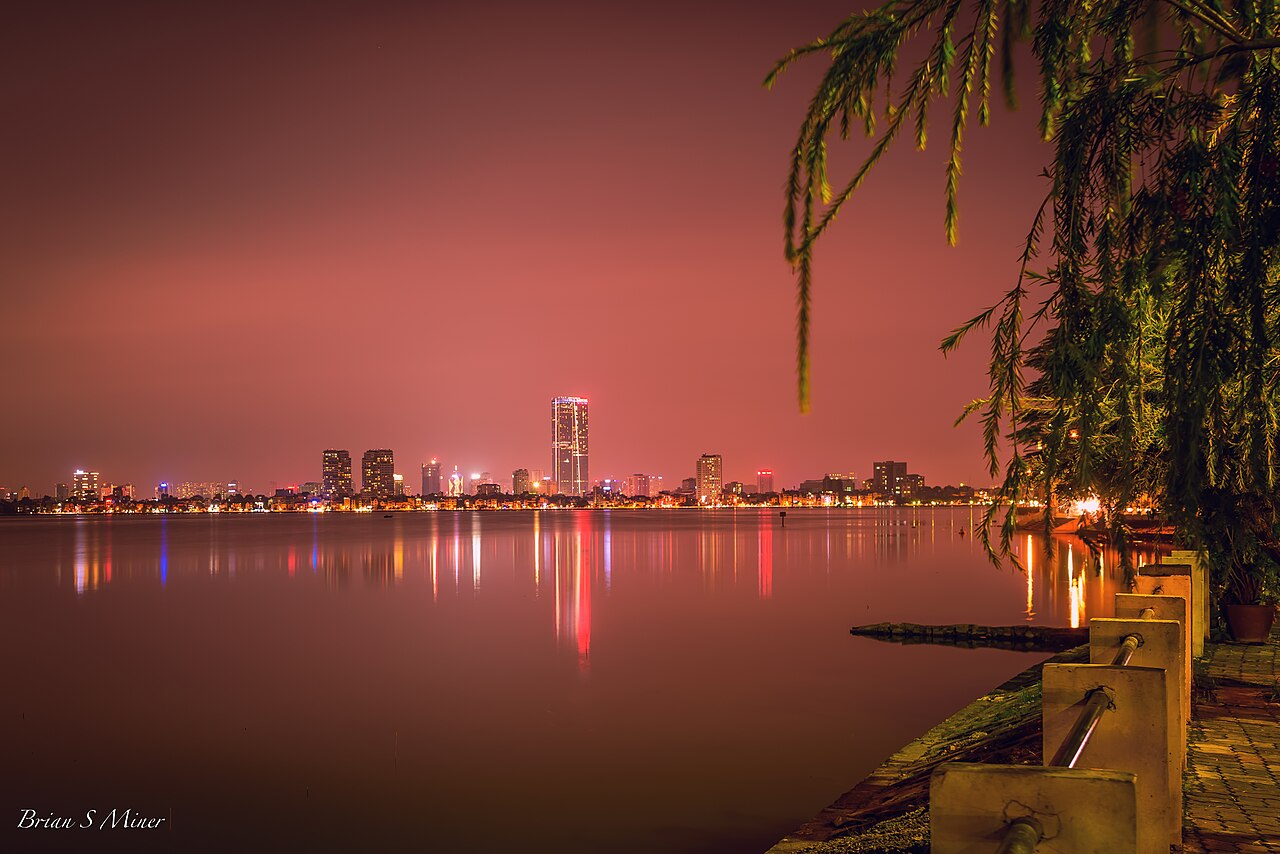
Trúc Bạch Lake
- Must see
- Nature site
Language · 11 published
Place of worship · Hanoi
Chùa Trấn Quốc
| Monday | 07:30 – 18:30 |
|---|---|
| Tuesday | 07:30 – 18:30 |
| Wednesday | 07:30 – 18:30 |
| Thursday | 07:30 – 18:30 |
| Friday | 07:30 – 18:30 |
| Saturday | 07:30 – 18:30 |
| Sunday | 07:30 – 18:30 |
Checked 2026-08-31 · Source
Read from the OpenStreetMap access tags; anything not listed has no tag recorded.
Set the group type to family in the planner and the day window contracts to about three quarters of a solo day.
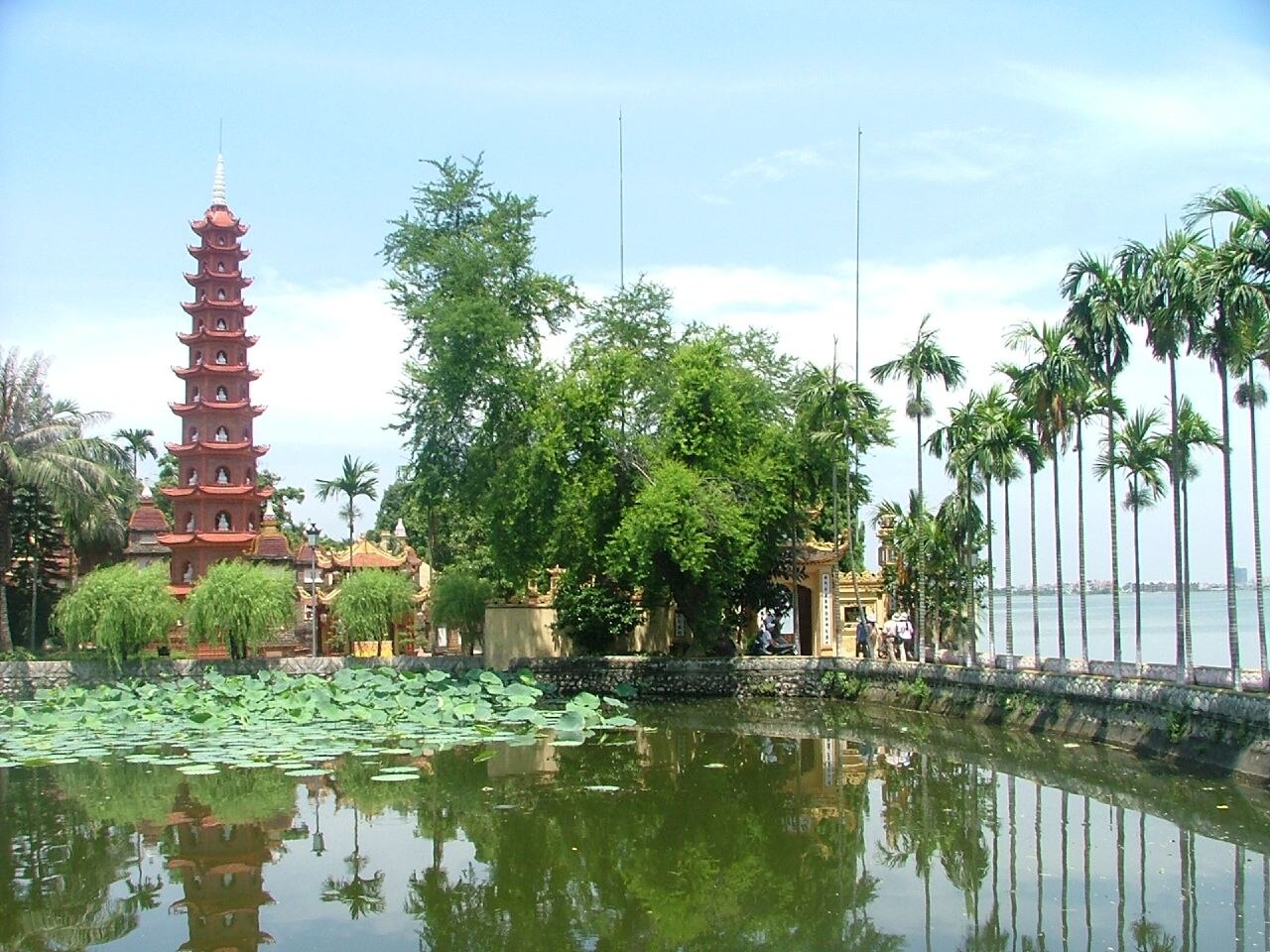
Tran Quoc Pagoda, known locally as Chùa Trấn Quốc, is a Buddhist temple situated on a small island near the southeastern shore of West Lake in Hanoi, Vietnam. The pagoda holds significance as one of the oldest religious sites in the capital region, with historical associations stretching across many centuries of Vietnamese Buddhist practice. Its waterside setting on West Lake provides a distinctive geographic character separating it from Hanoi's denser urban temple complexes.
Checked 2026-08-31 · Source
The pagoda complex contains multiple structures typical of Vietnamese Buddhist temple architecture, including a main worship hall and various subsidiary buildings. A prominent feature is the tall stupa visible from the lakeside, which dominates the skyline of the compound. The grounds include bodhi trees with religious significance, statues, and ornamental elements reflecting Buddhist iconography. Visitors will encounter incense-burning areas, altars with offerings, and spaces for devotional practice. The island location means water views frame much of the compound.
Checked 2026-08-31 · Source
A typical visitor might spend between thirty minutes and one hour at Tran Quoc Pagoda, depending on interest level in Buddhist architecture and photographic documentation. The compact island setting limits the physical area to explore, though contemplative visitors may linger longer. Those combining this stop with other West Lake attractions should allocate accordingly. Pilgrims or practitioners engaging in devotional activities may extend their stay. No guided tour duration or recommended visit length from official sources is documented. Visitors should assess their own pace against the visible scale of the compound upon arrival.
Checked 2026-08-31 · Source
Daily 07:30–11:30 and 13:30–18:30 Closed for the midday break from 11:30 to 13:30. No regular weekly closure day is listed. Visitors should verify current accessibility before travel, as religious sites in Vietnam may maintain variable schedules tied to monastic routines, lunar calendar observances, or seasonal adjustments. Early morning and late afternoon typically offer softer lighting for exterior photography and potentially reduced crowding at popular Hanoi attractions. Major Buddhist festivals could significantly alter both access and atmosphere. The West Lake location may provide marginally cooler conditions than central Hanoi during hot periods. Rainy season visits require appropriate preparation for exposed waterfront walkways.
Checked 2026-08-31 · Source
Free general admission; no entrance ticket is charged. Many Vietnamese pagodas operate without entrance fees, though voluntary donations are commonly accepted and culturally appropriate. Some sites may implement modest charges during periods of high tourism demand or for specific compound areas. Visitors should carry small denomination Vietnamese currency for donation boxes if inclined. Any claimed pricing from unverified sources should be treated cautiously until confirmed by on-site signage or official communication. Group tour inclusions may or may not cover this stop depending on specific package arrangements.
Checked 2026-08-31 · Source
Hanoi bus route 50 runs along Đường Thanh Niên and serves Tran Quoc Pagoda. The pagoda entrance is reached from Thanh Niên by a short causeway. Transerco identifies route 50 as Long Biên–Khu đô thị An Lạc and confirms its Thanh Niên stop. Tran Quoc Pagoda occupies an island position on West Lake's southeastern edge, accessible by road from Hanoi's urban core. The Lonely Planet source identifies this as a Hanoi destination without specifying detailed routing. Taxis, ride-hailing services, and rental bicycles represent common visitor transport modes in the capital. West Lake's circumference road provides logical approach routes. Walking from nearby lakeside accommodations is feasible for appropriately situated visitors. Traffic conditions in Hanoi vary substantially by time of day and should factor into planning.
Checked 2026-08-31 · Source
The short causeway and principal courtyard provide a mostly level approach. Raised thresholds and steps restrict step-free entry to some shrine buildings. The 11-storey stupa has no visitor lift or step-free upper-level route. Religious etiquette demands respectful dress covering shoulders and knees; revealing clothing may cause offense or restricted access. Active worship spaces require quiet demeanor and photography awareness around devotees. The waterfront location presents standard slip and trip hazards on potentially wet surfaces. Incense smoke concentration can irritate sensitive respiratory systems. Crowding peaks during Vietnamese holidays and Buddhist observances when devotional activity intensifies. Unofficial guides or persistent vendors may approach visitors near popular sites. The isolated island setting means limited immediate services; water, sun protection, and personal necessities should be carried. No specific safety incidents are documented for this location.
Checked 2026-08-31 · Source
The pagoda's stupa and lakeside positioning offer strong compositional opportunities, particularly at sunrise and sunset when directional light enhances the silhouette against water. Reflection possibilities depend on daily wind conditions disturbing West Lake's surface. Tripod use may attract attention or restrictions in active religious spaces; discretion is advised. Interior photography of worship halls typically requires explicit permission or may be prohibited entirely. Drone operation faces regulatory constraints in Vietnam and should not be assumed permissible. The bodhi trees and architectural details provide alternative subjects beyond the iconic stupa view. Respect for worshippers must override photographic objectives in all circumstances.
Checked 2026-08-31 · Source
Its foundation dates to the reign of Lý Nam Đế in the sixth century, traditionally given as 544–548.
Its original name was Khai Quốc; the name Tran Quoc became established under Emperor Lê Hy Tông.
Erosion along the Red River forced its relocation in 1615 to Kim Ngư islet beside West Lake.
The main axis comprises the front hall, incense-burning house and upper sanctuary, connected in the traditional chữ Công arrangement.
The Lục Độ Đài Sen stupa was built in 1998, rises 15 metres through 11 storeys and has six arched niches containing Amitābha images on each level.
Indian President Rajendra Prasad presented the tree in 1959; it was propagated from the sacred Bodhi tree associated with the Buddha’s enlightenment at Bodh Gaya.
Loading the interactive map…
The interactive map could not be loaded.
Last updated:
Source: OpenStreetMap contributors, Wikidata ·