
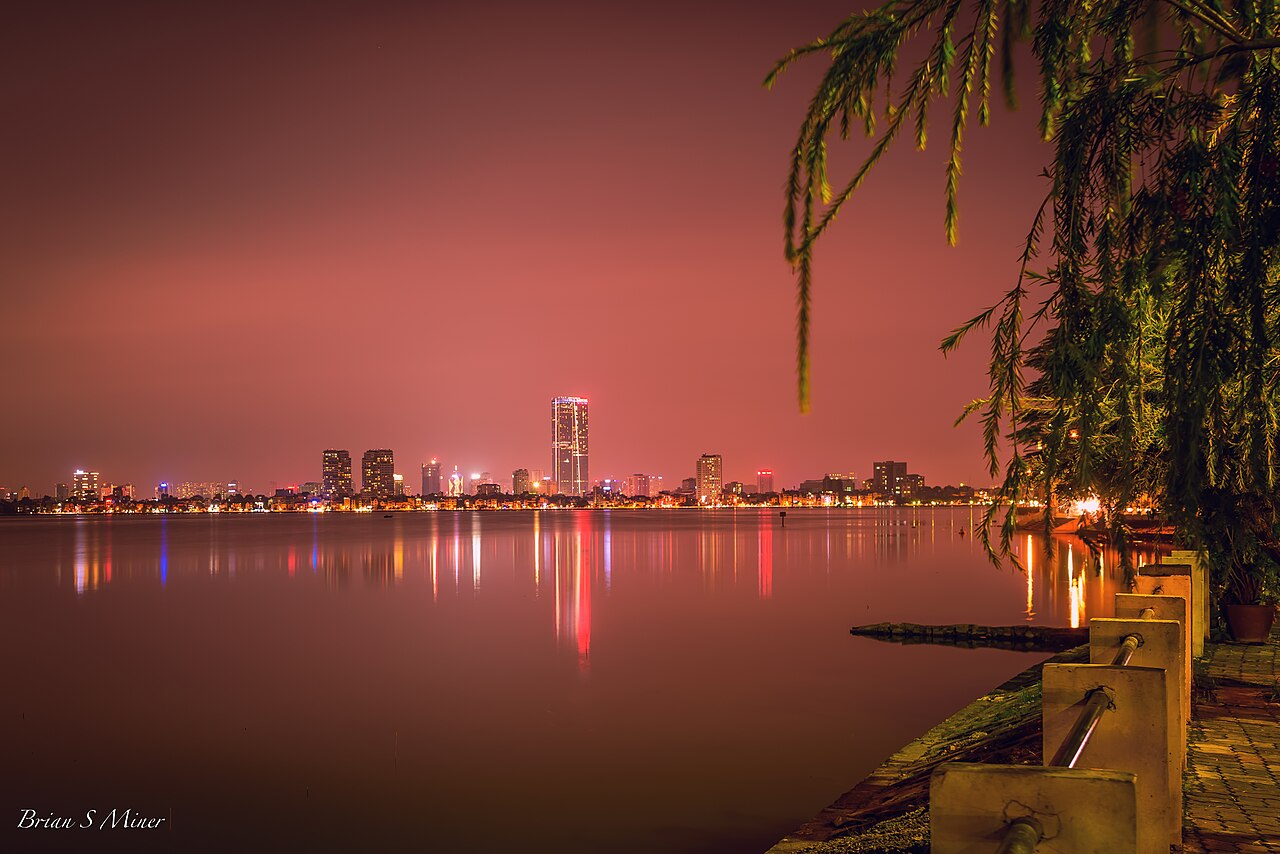
6 min walk
Trúc Bạch Lake
- Must see
- Nature site
Language · 11 published
Place of worship · Hanoi
Đền Quán Thánh
| Monday | 08:00 – 17:00 |
|---|---|
| Tuesday | 08:00 – 17:00 |
| Wednesday | 08:00 – 17:00 |
| Thursday | 08:00 – 17:00 |
| Friday | 08:00 – 17:00 |
| Saturday | 08:00 – 17:00 |
| Sunday | 08:00 – 17:00 |
Checked 2026-08-31 · Source
Read from the OpenStreetMap access tags; anything not listed has no tag recorded.
Set the group type to family in the planner and the day window contracts to about three quarters of a solo day.
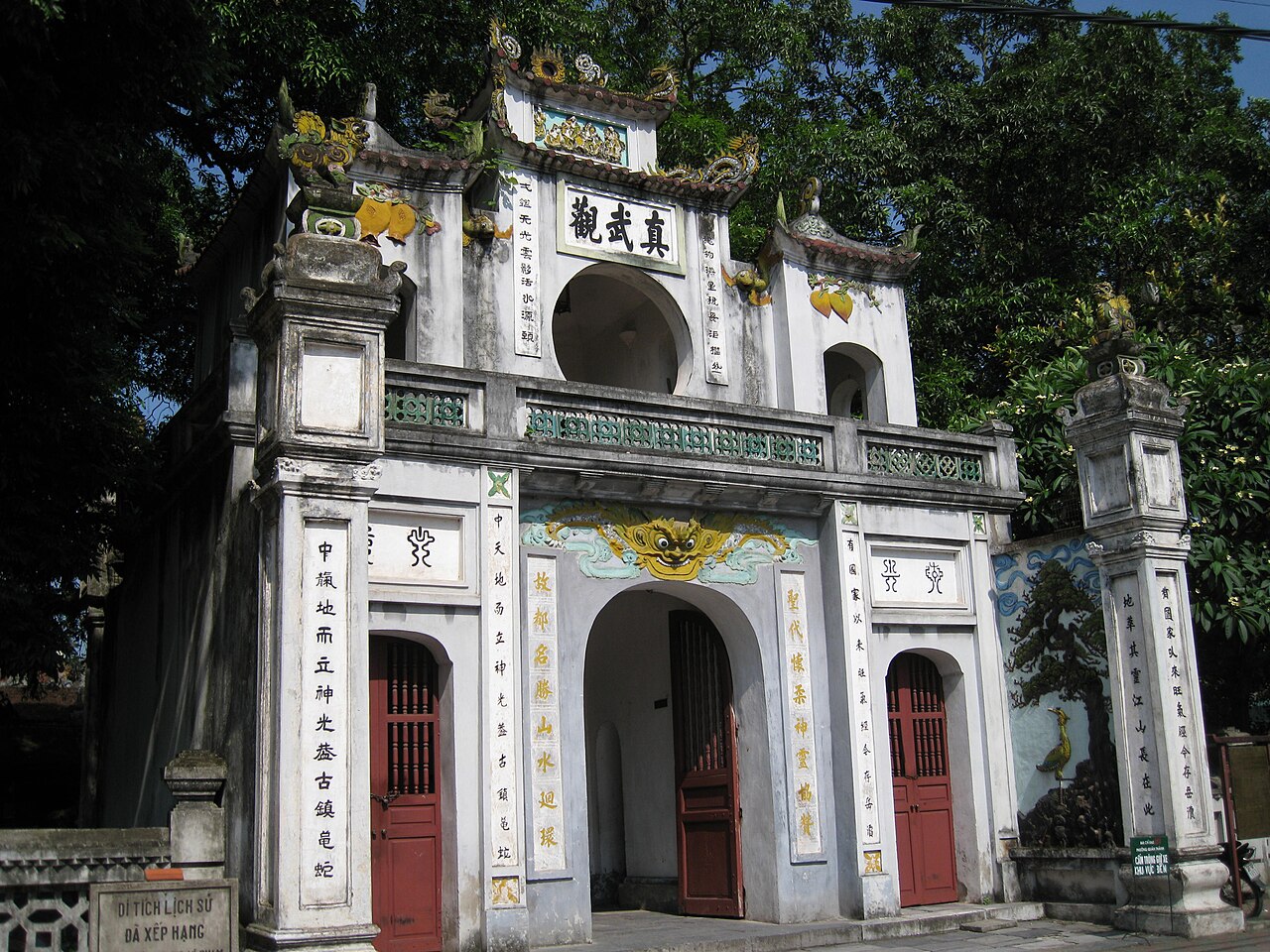
Quan Thanh Temple is a Taoist temple in Hanoi, Vietnam, dedicated to Tran Vu, a principal deity in Taoist mythology associated with the north. The temple stands near West Lake in the Ba Dinh district and dates to the Ly Dynasty period, with major renovations occurring across subsequent centuries. It ranks among Hanoi's significant religious and historical visitor places. The site serves as both an active place of worship and a cultural landmark. Its retained position in breadth-first top 100 rankings for Hanoi reflects sustained visitor interest despite the absence of an exact city POI pool match in production systems.
Checked 2026-08-31 · Source
The temple complex contains several notable features reflecting traditional Vietnamese religious architecture and craftsmanship. A prominent bronze statue of Tran Vu, cast in the seventeenth century, stands as a central devotional object. The temple buildings display typical elements of Vietnamese sacred construction including wooden structures, curved tile roofs, and decorative details. Courtyard spaces and incense-burning areas accommodate worshipper practices. Stone steles and other historical markers may be present. The overall arrangement follows conventions of Taoist temple planning with sequential spaces for ritual preparation, offering, and contemplation.
Checked 2026-08-31 · Source
Visitor duration at Quan Thanh Temple typically ranges from thirty minutes to one hour for general observation and brief circumambulation of the main structures. Those with particular interest in religious art, architectural history, or Taoist practice may extend their stay. The compact site layout permits efficient viewing. Visitors combining this temple with nearby West Lake attractions or other Ba Dinh district sites should allocate accordingly. Active worship participation would extend time spent. Personal pace, crowd conditions, and photographic interest influence individual experiences. No guided tour duration specifications are recorded. Visitors should exercise patience during active religious observances.
Checked 2026-08-31 · Source
Daily 08:00–17:00. No regular weekly closure day. Public-body notices may announce extended festival access or specific temporary free-entry periods. Visitors should verify current access times through direct inquiry before planning arrival. Early morning and late afternoon periods may coincide with reduced crowding and atmospheric lighting conditions. Lunar calendar dates particularly associated with Taoist observances may draw increased worshipper attendance, altering visitor experience. Seasonal weather patterns in Hanoi including hot humid summers and cool damp winters affect comfort. Tet holiday periods and other Vietnamese festival times typically generate elevated domestic visitation. Weekend patterns differ from weekdays. Advance confirmation remains essential given the absence of verified operational schedule information.
Checked 2026-08-31 · Source
General admission: 10,000 VND per person. The February 20–22, 2026 free-entry period was a temporary municipal waiver, not the standard tariff. Visitors should prepare for possible entrance fees consistent with comparable Hanoi religious and historical sites, while recognizing that active temples sometimes operate without charge or request voluntary contributions. Any applicable fees may differ for domestic and international visitors following Vietnamese tourism conventions. Photography permits, if required, may involve separate charges. Budget allocation should remain flexible pending on-site verification. Cash payment in Vietnamese dong is typically necessary. Receipt practices vary. Visitors should not rely on unverified pricing information and must confirm actual costs directly with temple administration or authorized representatives upon arrival.
Checked 2026-08-31 · Source
The entrance is at 190 Quán Thánh Street, at the Thanh Niên Street end beside West Lake and Trúc Bạch Lake. Transerco bus route 50 serves Thanh Niên Street specifically for access to Quan Thanh Temple and nearby lakeside sights. Quan Thanh Temple occupies a location near West Lake in Hanoi's Ba Dinh district, accessible by multiple transportation modes common to the city. Taxi and ride-hailing services provide direct access with Vietnamese address communication recommended. Motorbike taxi options operate extensively in Hanoi. Bicycle and walking approaches suit visitors in adjacent accommodations. Traffic conditions in central Hanoi demand temporal flexibility. Signage in Vietnamese predominates; map applications assist navigation. No dedicated parking facilities are confirmed. Visitors should allow buffer time for urban transit unpredictability.
Checked 2026-08-31 · Source
The entrance and open courtyard provide the most accessible parts of the complex. Steps and raised thresholds restrict step-free entry to the tiền tế, trung tế and inner sanctuary buildings. No lift or permanent ramp is shown in the responsible public body's visitor information or site imagery. Active worship spaces demand respectful conduct including subdued voices, appropriate attire covering shoulders and knees, and avoidance of disruptive behavior. Photography restrictions may apply in interior sanctuaries; observe posted guidance or request permission. Incense smoke concentration affects respiratory sensitivity. Uneven stone surfaces and threshold steps present trip hazards. Personal belongings require vigilance in any tourist-frequented location. Scam approaches by unofficial guides sometimes occur at religious sites. Weather exposure affects open courtyard areas. Construction or renovation activity may limit access to portions of the complex. Donation solicitations should be evaluated cautiously. Verify authenticity of any offered religious merchandise.
Checked 2026-08-31 · Source
Exterior architectural photography of traditional rooflines, courtyard structures, and gate elements is generally feasible during daylight hours. The bronze Tran Vu statue presents significant photographic interest though interior lighting conditions may challenge capture quality. Incense smoke creates atmospheric effects requiring exposure adjustment. Flash photography in interior spaces is typically inappropriate and potentially prohibited. Fellow worshippers should not be photographed without consent. Morning and late afternoon light angles enhance dimensional qualities of wooden and stone elements.
Checked 2026-08-31 · Source
The public visitor portal gives the address as 190 Quán Thánh Street, Ba Đình Ward, Hanoi.
Its formal Sino-Vietnamese name is Chân Vũ Quán; Đền Quán Thánh is its common Vietnamese name.
The temple dates from the early 11th century, during the reign of Emperor Lý Thái Tổ, who ruled from 1010 to 1028.
The temple is dedicated to Huyền Thiên Trấn Vũ, the Taoist guardian deity associated with the northern side of historic Thăng Long.
Its central bronze statue of Huyền Thiên Trấn Vũ was cast in 1677, stands approximately 3.72–3.96 metres high and weighs about 3.6–4 tonnes; it was recognized as a National Treasure in 2016.
Yes. QR codes installed at the monument provide automated audio interpretation in Vietnamese and English on visitors' internet-connected phones.
Loading the interactive map…
The interactive map could not be loaded.
Last updated:
Source: OpenStreetMap contributors, Wikidata ·