


_(4359941582).jpg)
.jpg)


2 min walk
Hỏa Lò Prison
- Must see
- Museum
Language · 11 published
Place of worship · Hanoi
Chùa Quán Sứ

| Monday | 07:30 – 17:30 |
|---|---|
| Tuesday | 07:30 – 17:30 |
| Wednesday | 07:30 – 17:30 |
| Thursday | 07:30 – 17:30 |
| Friday | 07:30 – 17:30 |
| Saturday | 07:30 – 17:30 |
| Sunday | 07:30 – 17:30 |
Checked 2026-08-31 · Source
Read from the OpenStreetMap access tags; anything not listed has no tag recorded.
Set the group type to family in the planner and the day window contracts to about three quarters of a solo day.
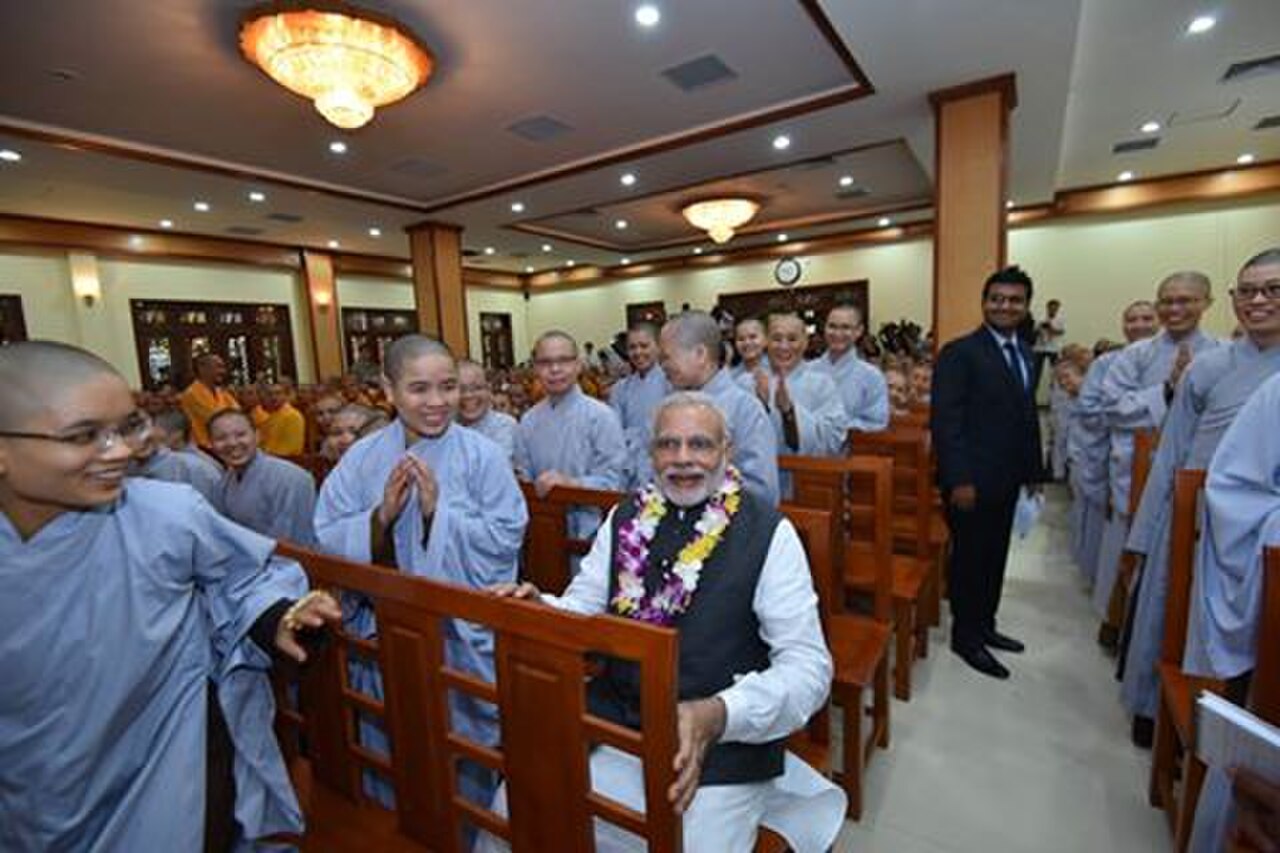
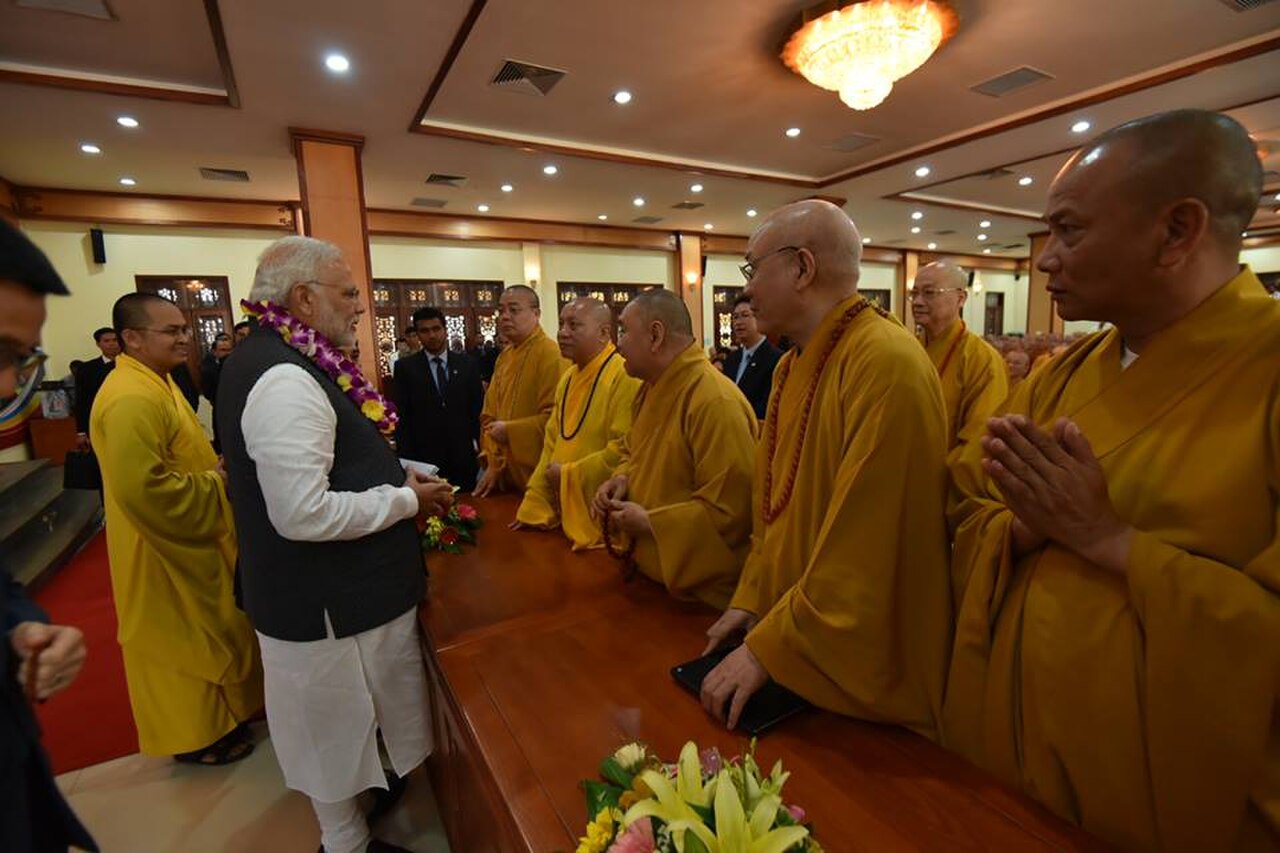
Quan Su Pagoda, known locally as Chùa Quán Sứ, is a Buddhist temple in Hanoi. It serves as the headquarters of the Vietnam Buddhist Sangha, the national Buddhist organization. The pagoda holds significant religious and administrative importance within Vietnamese Buddhism. Its architecture reflects traditional Vietnamese temple design. The site functions as both an active place of worship and a coordinating center for Buddhist activities throughout the country. Visitors encounter a working religious institution rather than a purely tourist-oriented attraction. Daily 07:30–11:30 and 13:30–17:30. No weekly closure day. Access hours may be extended for major Buddhist observances.
Checked 2026-08-31 · Source
The pagoda complex contains main worship halls, subsidiary shrines, and spaces for monastic residence and administrative functions. Traditional Buddhist iconography and ritual objects are present throughout. Decorative elements typical of Vietnamese religious architecture can be observed, including carved wooden details and ceremonial furnishings. The interior spaces serve the practical needs of resident monastics and visiting practitioners. The arrangement follows conventional Vietnamese Buddhist temple layout principles. Free entry; no general admission ticket is charged.
Checked 2026-08-31 · Source
A respectful visit to Quan Su Pagoda typically requires between thirty minutes and one hour. This duration allows for unhurried observation of the main structures and appreciation of the atmosphere without disrupting religious activities. Visitors engaged in prayer or meditation may choose to extend their stay. The compact nature of the temple grounds means extensive walking is unnecessary. Duration should be adjusted according to personal interest and the pace of ongoing ceremonies. Observing proper etiquette takes priority over thoroughness. The courtyard leads to the elevated main hall by 11 steps, so the principal worship space is not step-free. The official site does not describe a lift or ramp serving the main hall.
Checked 2026-08-31 · Source
Daily 07:30–11:30 and 13:30–17:30. No weekly closure day. Access hours may be extended for major Buddhist observances. Visitors should verify current opening times before planning their visit. Buddhist temples in Vietnam typically open during daylight hours, though specific schedules vary. Early morning and late afternoon often coincide with prayer sessions, offering atmospheric experiences for respectful observers. Major Buddhist festivals, particularly Vesak and lunar new year periods, may bring larger crowds and modified access. Visitors seeking quieter conditions may prefer mid-morning or mid-week timing. Weather in Hanoi features hot, humid summers and cool, damp winters.
Checked 2026-08-31 · Source
Free entry; no general admission ticket is charged. Many Vietnamese Buddhist temples do not charge formal admission fees, instead relying on voluntary donations. Visitors should prepare small denomination currency for contribution boxes if they wish to donate. Any required fees would typically be modest by international standards. Commercial photography permits, if implemented, would constitute a separate consideration. Financial arrangements should be confirmed on-site or through official channels prior to visiting.
Checked 2026-08-31 · Source

The entrance is at 73 Quán Sứ Street. Transerco bus route 01, operating between Gia Lâm and Yên Nghĩa bus stations, has stops on Quán Sứ Street; continue on foot to number 73. Quan Su Pagoda occupies a central location in Hanoi's urban fabric, accessible by multiple transportation modes. The address places it within the Hoan Kiem district vicinity, though exact street location should be verified through current mapping services. Walking from the Old Quarter area represents a feasible option for many visitors. Taxi and ride-hailing services operate throughout central Hanoi. Motorcycles constitute the predominant local transport; visitors unfamiliar with Hanoi traffic should exercise caution. Public bus routes serve the broader district, though specific stop proximity requires confirmation.
Checked 2026-08-31 · Source

The courtyard leads to the elevated main hall by 11 steps, so the principal worship space is not step-free. The official site does not describe a lift or ramp serving the main hall. Visitors must observe Buddhist temple etiquette throughout their stay. Appropriate dress covering shoulders and knees is expected. Footwear removal is standard practice before entering worship halls. Photography restrictions may apply in interior spaces; visitors should observe posted guidance or request clarification. Active prayer and meditation sessions deserve undisturbed respect. Monastics and devotees should not be interrupted. The temple functions as an administrative center, potentially restricting access to certain areas. Urban Hanoi traffic presents pedestrian hazards when approaching and departing the site. Petty theft precautions apply as in any city location.
Checked 2026-08-31 · Source

Photography policies at Quan Su Pagoda are not explicitly documented in available sources. Flash photography is generally inappropriate in religious settings regardless of formal rules. Tripods and professional equipment may attract scrutiny. When in doubt, visitors should seek permission from temple personnel. Respect for worshippers' privacy and spiritual focus must override documentary impulses. Images of monastics should not be captured without explicit consent. Commercial or promotional photography would require formal authorization.
Checked 2026-08-31 · Source
The pagoda is at 73 Quán Sứ Street in central Hanoi.
It is the headquarters of the Vietnam Buddhist Sangha; the Sangha selected it as its central headquarters when the organization was established in 1981.
The pagoda originated in the 15th century beside a state guesthouse used to receive diplomatic missions from neighboring Buddhist countries.
The pagoda was rebuilt in 1942 to plans by architects Nguyễn Ngọc Ngoạn and Nguyễn Xuân Tùng, approved by Venerable Thích Thanh Hanh.
Quan Su Pagoda is one of the few Vietnamese pagodas whose name and many parallel inscriptions are written in the modern Vietnamese Quốc ngữ script.
The ranges beside and behind the courtyard contain a library, lecture hall, guesthouse and monks’ quarters.
Loading the interactive map…
The interactive map could not be loaded.

Last updated:
Source: OpenStreetMap contributors, Wikidata ·