


2 min walk
Styckekranen
- Notable
- Historic monument
Language · 1 published
Museum · Stockholm
Moderna museet
| Monday | Closed |
|---|---|
| Tuesday | 10:00 – 20:00 |
| Wednesday | 10:00 – 18:00 |
| Thursday | 10:00 – 18:00 |
| Friday | 10:00 – 20:00 |
| Saturday | 10:00 – 18:00 |
| Sunday | 10:00 – 18:00 |
Checked 2026-08-26 · Source
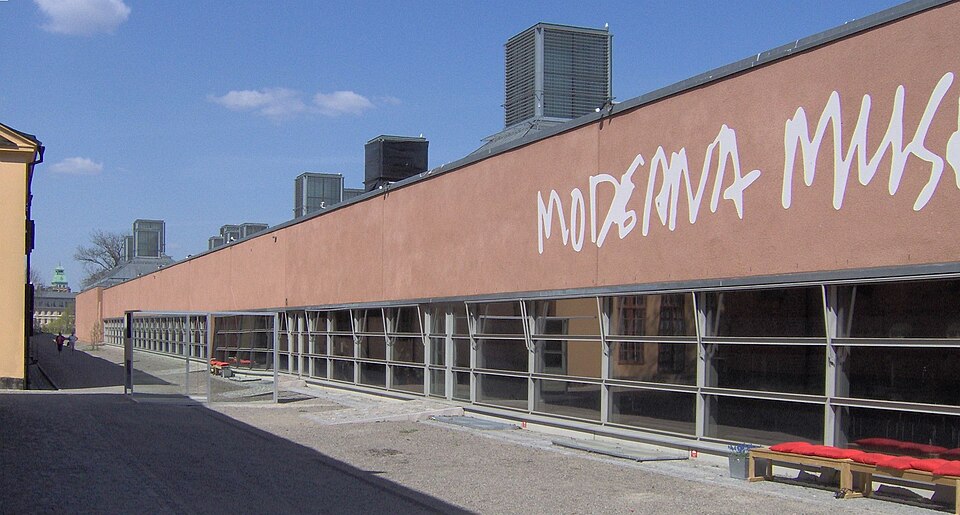
Moderna Museet is Sweden's national museum of twentieth- and twenty-first-century art, standing on the island of Skeppsholmen in the middle of Stockholm's harbour. It opened on 9 May 1958 in a former naval drill hall, after decades of argument about where the Nationalmuseum's modern holdings should live; the museum's own history pages date the pressure back to 1908, when the problem of showing new art was first raised seriously. The building a visitor walks into today is not that drill hall. A competition launched in the winter of 1990-91 drew 211 entries, the Spanish architect Rafael Moneo won it in April 1991 with a proposal called Telemachos, and the new museum was inaugurated on 12 February 1998. Mould and damp were found in it within a few years, the building was evacuated, and it reopened after repairs on 14 February 2004 with improved visitor flow and better use of the front entrance. The museum describes its holdings as one of Europe's finest collections of modern and contemporary art: roughly 6,000 paintings, sculptures and installations, 25,000 watercolours, drawings and prints, 400 art videos and films, and 100,000 photographs. It is a working national collection rather than a single-masterpiece stop, and it rewards a visitor who comes to browse a century rather than to tick off one painting.
Checked 2026-08-26 · Source
The museum runs across three public floors joined by two lifts, with collection displays and temporary exhibitions sharing the space rather than sitting in separate wings. The collection the museum names first includes key works by Pablo Picasso, Ljubov Popova, Salvador Dalí, Meret Oppenheim, Robert Rauschenberg, Donald Judd and Irving Penn, alongside living artists. Swedish and Nordic art is not a footnote here: Moderna Museet is the central national museum for Swedish art of the last hundred years and holds the largest bodies of work by Öyvind Fahlström, Vera Nilsson, Siri Derkert and Dick Bengtsson. The collection's shape was set by two deliberate buying campaigns the museum still talks about — The Museum of Our Wishes in 1963, funded with five million kronor from the government and used on Balla, Picabia, Schwitters and de Chirico, and a later repeat that bought only women artists, including Louise Bourgeois, Dorothea Tanning, Judy Chicago and Susan Hiller. Alongside the galleries there is a Study Gallery, whose doors are the only ones in the building that do not open automatically, and a Mini Cinema showing video works from the collection. Outdoors, Carsten Höller's Stockholm Slides runs two mirrored spiral slides 39 metres from the roof down to Slupskjulsvägen, a 15-metre drop, installed until 18 October 2026 and included in the admission fee.
Checked 2026-08-26 · Source
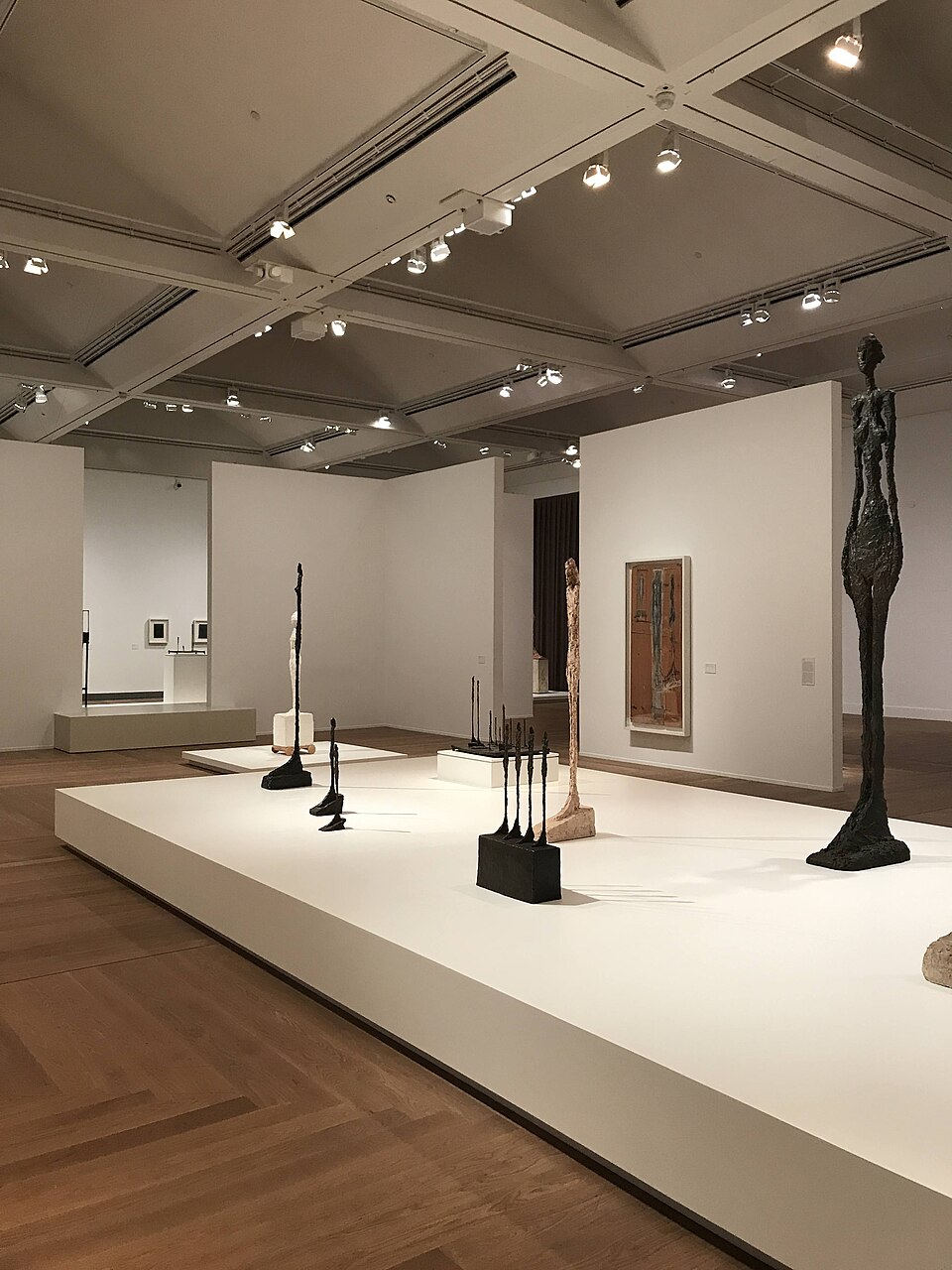
Allow two hours. Moderna Museet publishes no suggested visit length of its own, so two hours is this guide's judgement rather than a figure read off the museum's site, and it is built from what the museum does publish. Three public floors, two lifts between them, no thresholds anywhere in the building and a collection presented in themed displays rather than one long chronological march — that is a museum a visitor can cross without a route plan, which is what keeps the figure at two hours rather than the three a comparable national collection would need. A single temporary exhibition, of which five or six run at once, absorbs about forty minutes on its own. Two hours covers the collection displays on the upper floor and one temporary show at a pace that allows sitting down; folding chairs are available to borrow near the exhibitions, which is worth knowing because the building is longer than it looks from the entrance. Add thirty minutes if the Stockholm Slides are running and anyone in the group intends to ride, because the mat has to be collected on floor 1 and carried up to the roof. Add another thirty for lunch in the fourth-floor restaurant, where the window seats are the reason people linger.
Checked 2026-08-26
The museum is closed on Mondays, opens 10.00 to 18.00 on Wednesday, Thursday, Saturday and Sunday, and stays open to 20.00 on Tuesday and Friday. There is no midday break. Those two late evenings are the useful piece of information on this page: a Tuesday or Friday after 17.00 gives a visitor two quiet hours in a building most of the day's traffic has already left. Friday evening is quieter only in theory during the Free Friday season, because admission is free between 18.00 and 20.00 from 21 August to 18 December 2026 and the museum promotes it — the museum's own wording is that free admission runs every Friday evening in spring and autumn, so a summer Friday evening is a paying one. A visitor who wants space rather than savings should take the Tuesday late opening instead. Within the day, the first hour after opening at 10.00 is the emptiest, and weekday mornings outside Swedish school holidays are emptier still. Sunday afternoons carry the family programme and the drop-in tours, which is either the reason to come or the reason not to. Guided tours in English run several times a week and are listed on the museum's calendar; checking it before choosing a day costs nothing and often decides the day.
Checked 2026-08-26 · Source
A regular entrance ticket is 170 SEK. The reduced rate is 140 SEK, and a group ticket for a minimum of fifteen people is also 140 SEK per person. Tickets bought online are 10 SEK cheaper than tickets bought at the museum, which makes the online regular price 160 SEK. Admission is free for everyone aged 18 and under, free for personal assistants accompanying a visitor, and free for Klubb Moderna members. Between 18.00 and 20.00 on Fridays during the Free Friday season — 21 August to 18 December 2026 — admission is free to everything, collection displays and temporary exhibitions alike. One ticket covers the whole museum: the temporary exhibitions are not sold separately, and the Stockholm Slides are included in the admission fee, though anyone over 19 who wants to slide needs a ticket. Membership of Klubb Moderna starts at 400 SEK a year, or 325 SEK for under-30s, and gives unlimited free entry; a visitor spending three days in Stockholm and planning two visits should do the arithmetic. The museum is cash-free throughout, including the restaurant, so a card or a phone is not optional. Entry to the fourth-floor restaurant itself is free of charge and does not require a museum ticket.
Checked 2026-08-26 · Source
The address is Skeppsholmen, Stockholm, with the entrance at Exercisplan 4. No car is needed and none is wanted: the museum sits on a small island reached on foot over a bridge from Blasieholmen. The museum's own walking times are ten minutes from Kungsträdgården, and twenty minutes from either T-Centralen or Gamla Stan. The walk is the recommended approach — past the Grand Hotel and Nationalmuseum on Blasieholmen, opposite the Royal Palace, over the bridge, then up the hill, with the entrance to Moderna Museet and Arkitekturmuseet on the left. On the metro, the Blue Line station Kungsträdgården is about ten minutes away and the Red Line station Östermalmstorg about fifteen. Bus 65 stops at Moderna Museet on Skeppsholmen itself, which is the option to take in bad weather or with a pushchair. The Djurgården ferry from Slussen calls at Skeppsholmen and turns the journey into the best five minutes of the day when the water is calm. Bicycle parking sits outside both entrances. For those who do drive, there is general parking outside the entrance facing the water with a parking fee, disabled parking outside both the main entrance and the water-side entrance, and taxis may stop at the entrance.
Checked 2026-08-26 · Source
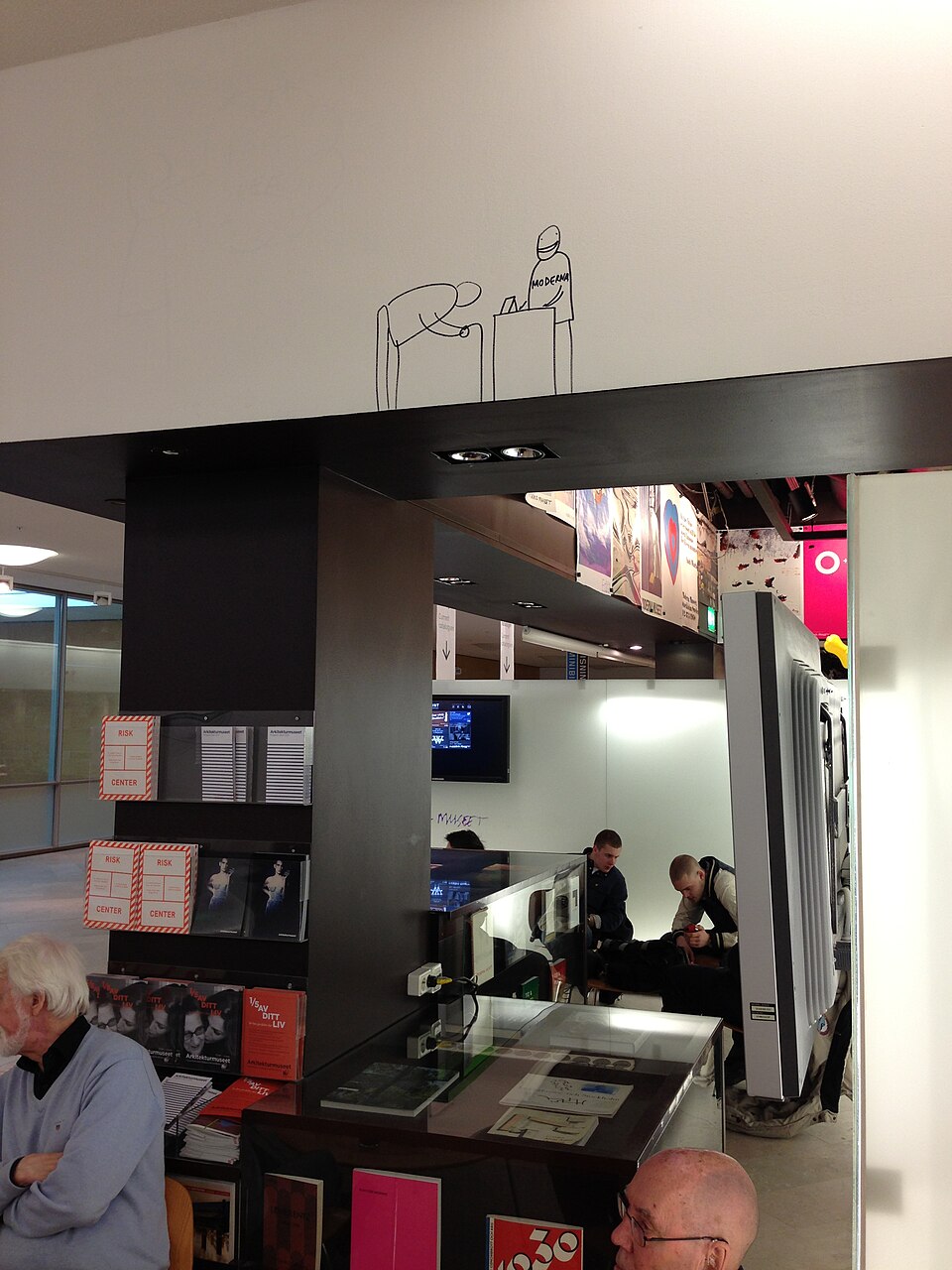
Monday is the trap, and on Skeppsholmen it is an expensive one: a visitor who has walked twenty minutes from Gamla Stan to a closed door has spent forty minutes on nothing. Check the day before setting out. The second trap is winter footwear. The museum does not permit shoe studs or studded shoes anywhere inside and asks visitors to bring a pair to change into — a rule that catches nobody in July and catches half the arrivals in January, when studded soles are ordinary Stockholm equipment. The third is money: the museum is cash-free everywhere, tickets and restaurant included, so cash left over from another trip is useless here. Lockers are on floors 4 and 1, the cloakroom on floor 4 is unattended, and loose items and bags must go into a locker before anyone rides the Stockholm Slides. The slides carry their own restrictions — minimum age six, minimum height 1.3 metres, one person per mat, and they close entirely in rain or snow, which in Stockholm is not a rare condition. Finally, exhibitions rotate constantly and several close within weeks of each other, so a visitor who has come for one named show should confirm its dates on the museum's site rather than on a guidebook.
Checked 2026-08-26 · Source
The one photography rule the museum publishes is about flash. Its Swedish visitor page carries the instruction not to photograph with flash — Fotografera inte med blixt — in the same list as the studded-shoe rule and the cash-free notice. That line does not appear on the English version of the page, which is worth knowing before assuming the English page is complete. Beyond the flash rule the museum publishes no general policy on hand-held cameras, tripods or selfie sticks in the galleries, so the sensible assumption is that the sign beside a particular work governs it; loan exhibitions in a national collection routinely carry their own restrictions. Copyright is a separate matter from taking the picture: the museum states that images of works in the collection are protected under Swedish copyright law and may only be used in connection with news reporting or art criticism, uncropped and with captions and credit. In practice the strongest picture at Moderna Museet is not a painting at all. It is the view out of the fourth floor over the water to Djurgården and Strandvägen, from the restaurant windows or the terrace beside them, and it is best in the last hour before an eight o'clock Tuesday or Friday closing.
Checked 2026-08-26 · Source
The museum is closed on Mondays. It opens 10.00 to 20.00 on Tuesday and Friday, and 10.00 to 18.00 on Wednesday, Thursday, Saturday and Sunday. There is no midday break. The fourth-floor restaurant keeps shorter hours than the galleries: 11.00 to 19.30 on Tuesday and Friday, 11.00 to 16.30 on Wednesday, Thursday, Saturday and Sunday, with hot food stopping half an hour before closing.
A regular ticket is 170 SEK, reduced 140 SEK, and a group ticket for fifteen or more is 140 SEK per person. Buying online saves 10 SEK. Entry is free for anyone aged 18 and under, for personal assistants, and for Klubb Moderna members. Admission is also free on Friday evenings between 18.00 and 20.00 during the Free Friday season, which for 2026 runs 21 August to 18 December. The museum is cash-free.
Allow two hours. Moderna Museet publishes no suggested visit length of its own, so two hours is this guide's editorial judgement: it covers the collection displays and one temporary exhibition at a pace that allows sitting down. Add thirty minutes to ride the Stockholm Slides and another thirty for lunch on the fourth floor.
The entrance is at Exercisplan 4 on Skeppsholmen, reached on foot across the bridge from Blasieholmen. The museum gives its own walking times: ten minutes from Kungsträdgården, twenty from T-Centralen or Gamla Stan. Bus 65 stops at the museum, the Djurgården ferry from Slussen calls at Skeppsholmen, and Kungsträdgården on the Blue Line is about ten minutes' walk. No car is needed; paid parking sits outside the water-side entrance for those who bring one.
The museum's Swedish visitor page instructs visitors not to photograph with flash. Beyond that it publishes no general rule on hand-held cameras, tripods or selfie sticks, so follow the signs beside individual works, which loan exhibitions often carry. Publishing an image of a work in the collection is governed separately: under Swedish copyright law such images may only be used in news reporting or art criticism, uncropped and credited.
Yes. The building has no thresholds or other barriers, two lifts serve all three public floors, and every door opens automatically except those to the Study Gallery, where staff assist. A wheelchair is available for loan at the information desk and folding chairs can be borrowed near the exhibitions. Large accessible toilets with 90 cm doors are on all three floors, hearing loops serve the Auditorium and Cinema, disabled parking sits outside both entrances, and personal assistants enter free.
Loading the interactive map…
The interactive map could not be loaded.
Last updated:
Source: OpenStreetMap contributors, Wikidata ·