


8 min walk
Södra Teatern
- High · Heritage site
- Art and culture venue
Language · 1 published
Museum · Stockholm
| Monday | 10:00 – 23:00 |
|---|---|
| Tuesday | 10:00 – 23:00 |
| Wednesday | 10:00 – 23:00 |
| Thursday | 10:00 – 23:00 |
| Friday | 10:00 – 23:00 |
| Saturday | 10:00 – 23:00 |
| Sunday | 10:00 – 23:00 |
Checked 2026-08-26 · Source
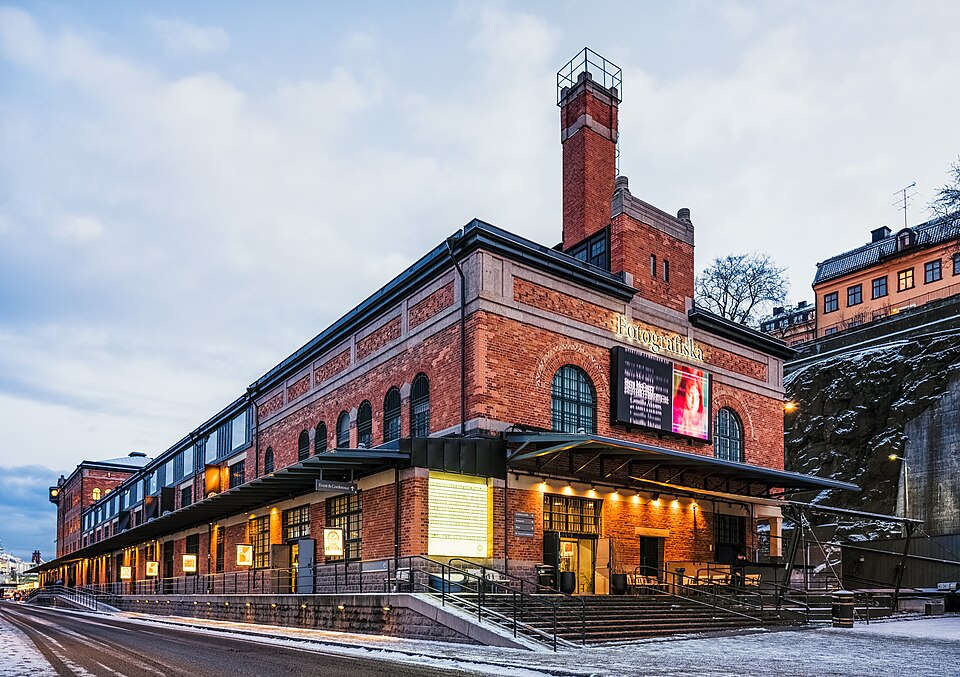
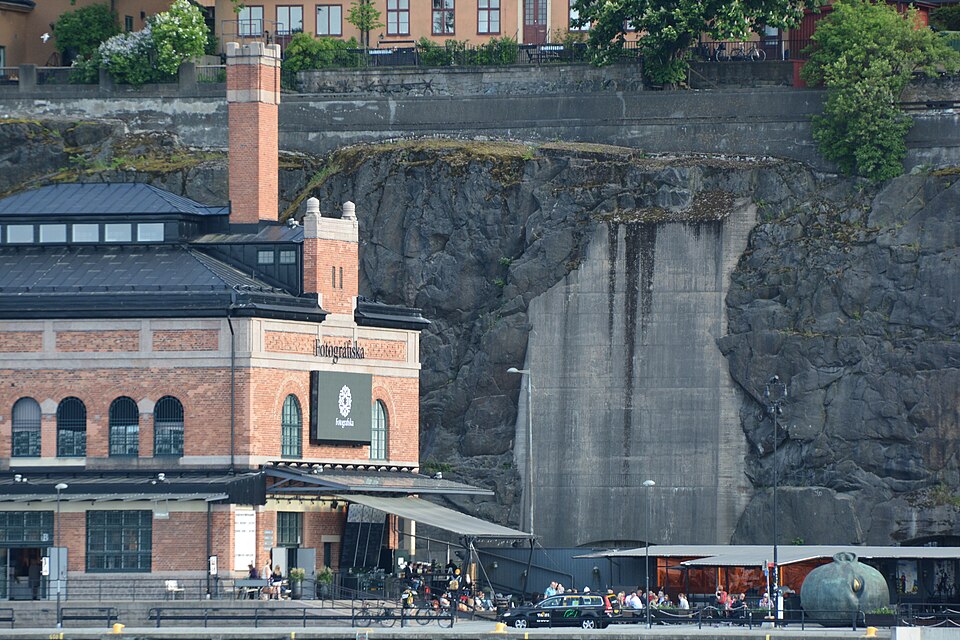
Fotografiska is a privately run museum of photography, art and culture on the Södermalm waterfront, founded in Stockholm in 2010 and now the original house of a group that also has venues in Berlin, Tallinn, Shanghai, Shenzhen, Oslo and New York. It occupies the Royal Customs House, Kungl. Tullhuset, at Stadsgårdshamnen 22, a heavy brick building standing on the quay below the Slussen bluff with the water and the old city directly in front of it. The name is simply the Swedish adjective for photographic. What separates it from Stockholm's state museums is the shape of the programme rather than the size of a collection: the museum says that around fifteen exhibitions open here every year, and one admission ticket covers every show hanging on the day of the visit. A visitor does not come for a single famous object the way one goes to the Vasa Museum for the ship. A visitor comes for whatever five or six shows happen to be up, which in the autumn of 2026 runs from Martin Parr's colour photography to a room about machine vision and a group show on water and light. The building also holds a bar, a bistro, a restaurant, a shop and a studio used for talks and screenings.
Checked 2026-08-26 · Source
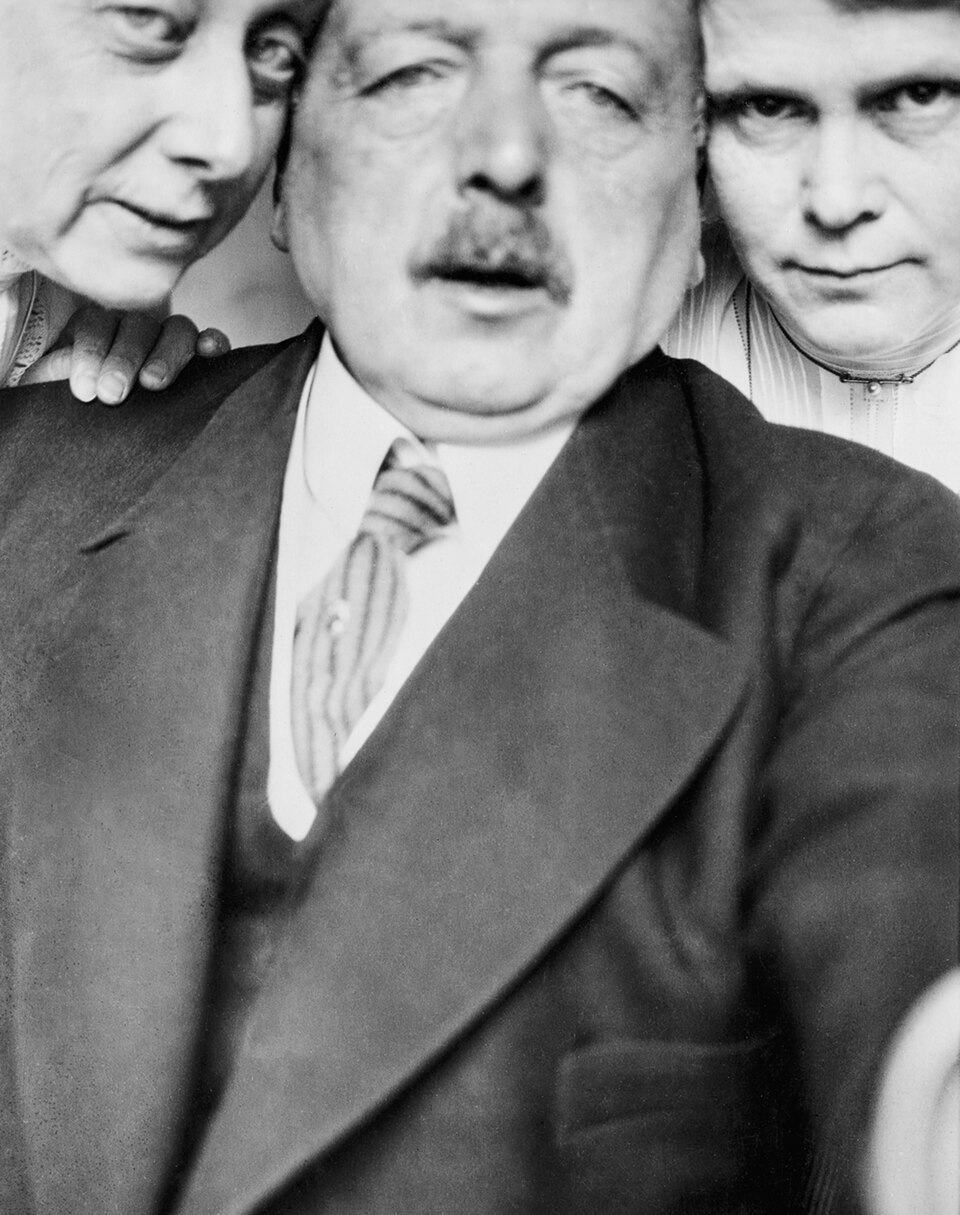
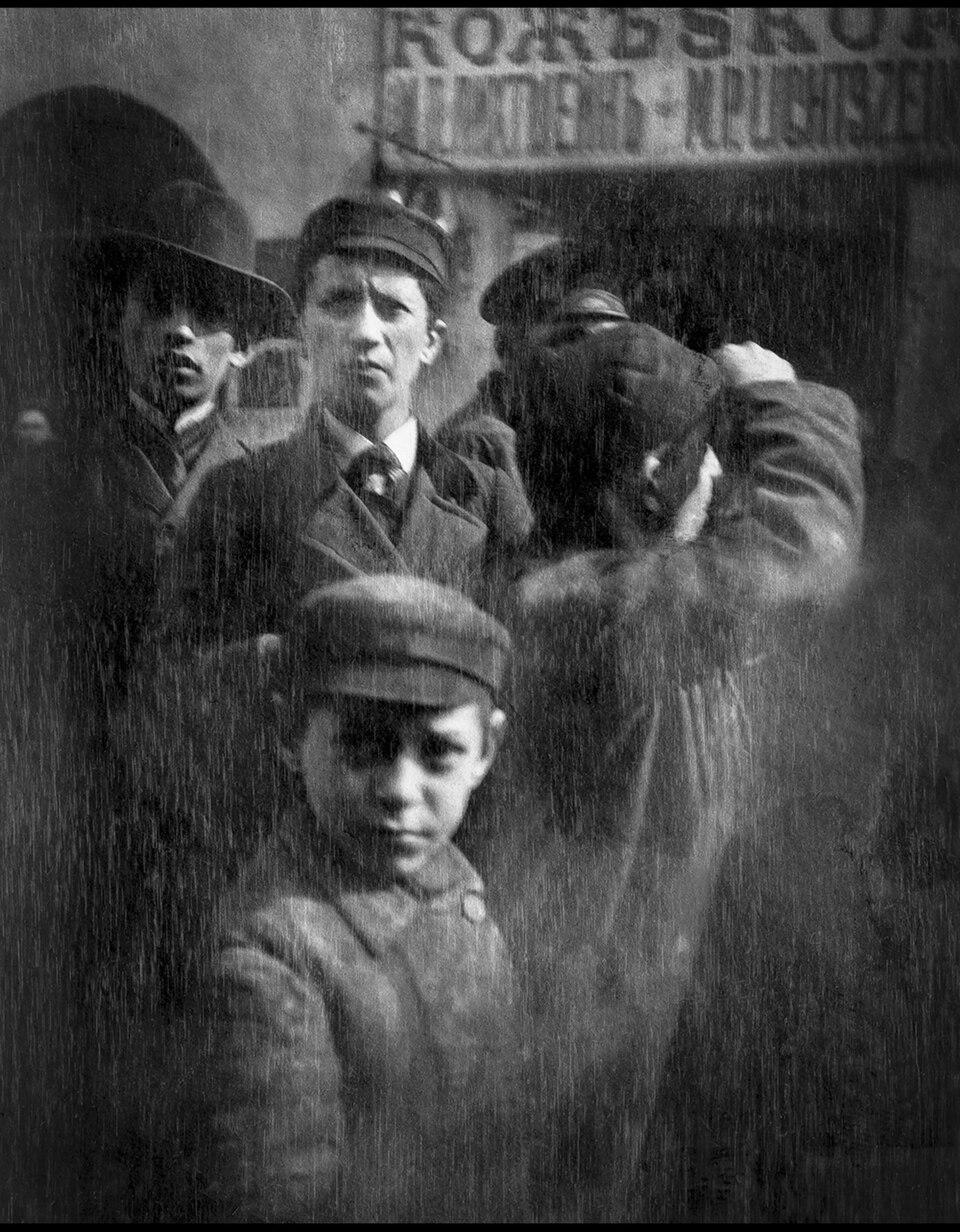
The exhibition floors are the whole point, and they change constantly. Five shows were listed as current on the day this guide was checked: a group exhibition called Water and Light, Martin Parr's Short and Sweet, The Machine's Eye in Human Hands, Lotta Antonsson's I Am Everything, and Lebohang Kganye's Le Sale ka Kgotso, with closing dates spread between late September and the end of November 2026. One ticket admits the holder to all of them, so the practical unit of a visit is the building rather than a single show, and a returning visitor a few months later finds a different museum. The building runs over several levels, with lifts in both stairwells reaching every floor. There are accessible toilets with changing tables on level minus one and again beside the cafe on level two, and pushchair parking on level minus one, though pushchairs may also be taken into the exhibitions themselves. An unattended cloakroom takes coats and bags. Food and drink occupy the upper part of the house: a bar open daily from ten in the morning until ten at night, a bistro, and a restaurant whose kitchen was awarded a Green Star by the Michelin Guide in 2021. The shop sells photo books, posters and prints.
Checked 2026-08-26 · Source
Fotografiska does not publish a suggested visit length, and this guide will not pretend otherwise: the only durations printed anywhere on its own booking pages belong to specific bookable things, a stroller tour at forty-five minutes and evening events at ninety minutes to three and a half hours. Two hours is the working figure used here, and it comes from the structure of the place rather than from the operator. Five concurrent exhibitions, all included in the same ticket, spread over several floors, gives roughly twenty minutes a show plus the movement between them. A visitor who reads wall texts properly and sits with one or two bodies of work will pass three hours without effort. A visitor who came for one named photographer and is willing to walk past the rest can be out in an hour. Add time deliberately if food is part of the plan, because the bar and the restaurant have the view that the exhibition floors do not, and nobody drinks quickly in front of it. The eleven o'clock closing means that unlike most museums Fotografiska is very hard to run out of time at; the constraint on an evening visit is usually the rest of the itinerary.
Checked 2026-08-26
The opening hours are the single most useful thing to know about this museum. It opens at ten every morning and closes at eleven at night, seven days a week, which is far later than any other major museum in Stockholm and makes it the obvious answer to an evening with nothing planned. Midsummer's Eve is stated by the museum to be the only day of the year it is closed. Christmas Eve is shortened to ten in the morning until eight at night. There is no weekly closing day and no midday break. Two days carry price offers that are worth planning around: on Tuesdays admission for seniors and pensioners drops to 135 SEK, and on Wednesdays from six in the evening a duo ticket gives two entries for the price of one. Season matters less here than at an outdoor site, since everything is inside, but a Stockholm winter afternoon is dark by three and the water view from the upper floors becomes a night view of lit quays. Anyone intending to eat should check the season first: the restaurant and the brunch service both take a summer break, in 2026 from 14 June and 15 June respectively.
Checked 2026-08-26 · Source
General admission is 225 SEK and covers every exhibition open on the day. Reduced entry is 195 SEK for seniors aged 65 and over and for students, and the museum states that both Swedish and foreign student identification are accepted. Seniors and pensioners pay 135 SEK on Tuesdays, an offer that cannot be combined with any other discount. On Wednesdays from six in the evening the duo ticket gives two admissions for the price of one, listed in the museum's own booking system at 112 SEK. Children of twelve and under enter free when accompanied by an adult, young people between thirteen and sixteen enter free, and LMA card holders enter free. Members enter free and without limit. A guided tour of the exhibitions, in Swedish or English, runs Tuesday to Sunday and is sold with general admission at 225 SEK. Tickets can be pre-booked online or bought on arrival. Holders of a free pass, including the Stockholm pass, do not need to pre-book at all. One thing catches visitors out at the counter: the house takes no cash anywhere, not at the entrance, not in the shop and not in the restaurant, so a card or phone is required.
Checked 2026-08-26 · Source
No car is needed and a car is arguably a nuisance. The metro reaches Slussen on both the red and the green lines, and buses stop at Södermalmstorg; from there the route is on foot, down the temporary steps at Slussen and along the waterfront footpath to the door. The museum gives that walk as 800 metres on its visit page and as about 500 metres in its own list of common questions, measured from the bus terminal, so expect somewhere between five and ten minutes. A blue line painted on the ground runs from Slussen the whole way and is more reliable than a phone, because the museum warns explicitly that Google Maps sometimes sends people the wrong way. In summer an electric boat run by the museum shuttles between Nybrokajen, Fotografiska and the Royal Palace and lands at the entrance. Driving is possible but thin: one designated space for visitors with reduced mobility at the front, a small number of signed spaces behind the entrance, and the Viking Terminal car park as the nearest fallback when those are taken. Cycle paths lead directly to the building and there are racks outside the entrance.
Checked 2026-08-26 · Source

The approach is the real hazard, not the museum. The Söderberg steps that used to drop from Katarinavägen down to the quay are gone, and a visitor coming from that side who trusts a mapping app will arrive at the top of a drop with no way down; the museum says so on its own pages. The correct move from Katarinavägen is to go round via Slussen or to take Folkungagatan to the waterfront instead. Slussen itself is still a building site, so signage and the temporary steps change from season to season. Inside, the cloakroom is unattended and has no lockable lockers, and the museum's own advice is to keep wallet, phone and valuables on the person. The house is entirely cash-free. Eating requires some care: the restaurant and brunch service need no admission ticket if a table is reserved, but the bistro and the bar are drop-in only, take no reservations, and do require an admission ticket. Both the restaurant and the brunch shut for a summer break. Dogs are allowed only if carried in a bag. Midsummer's Eve is the one day the doors do not open at all.
Checked 2026-08-26 · Source

A museum of photography that let no one photograph would be an odd thing, and Fotografiska does not: taking pictures for private purposes is explicitly allowed. The one restriction is flash, and the reason given is the obvious one, that light-sensitive prints on the walls are damaged by it. Anything intended for commercial use or for publication in any form has to go through the press department, which supplies press images rather than granting permission to shoot. In practice this means a phone or a camera at whatever ISO the exhibition lighting demands, which is usually low light, and no bracing a tripod in a gallery full of people on a Saturday. The better pictures at Fotografiska are often not of the art at all. The building sits directly on the quay looking north over the water at Gamla Stan, the Royal Palace and the ferries working Stadsgårdshamnen, and the upper floors and the bar face that view through large windows. Because the museum stays open until eleven, it is one of very few places in Stockholm where an interior viewpoint over the harbour is available after dark, and in winter the blue hour arrives in the middle of the afternoon.
Checked 2026-08-26 · Source
The museum is open every day from 10:00 to 23:00, with no weekly closing day and no midday break. Midsummer's Eve is the only day of the year it is closed, and on Christmas Eve it opens 10:00 to 20:00. The bar keeps slightly shorter hours, 10:00 to 22:00 daily.
General admission is 225 SEK. Reduced entry is 195 SEK for students and for seniors aged 65 and over, with Swedish and foreign student cards both accepted. On Tuesdays seniors and pensioners pay 135 SEK, and on Wednesdays from 18:00 a duo ticket gives two entries for the price of one. Children of twelve and under with an adult, young people aged 13 to 16, and LMA card holders enter free.
Yes. The museum states that an admission ticket gives access to every current exhibition in the building, with nothing charged separately. Around fifteen exhibitions open across a year, and five were running on 26 August 2026. Eating is a separate matter: the restaurant and brunch need no admission ticket if a table is booked, but the bar and bistro are drop-in only and do require one.
The museum publishes no suggested visit length. This guide records two hours, which is an editorial estimate drawn from five concurrent exhibitions spread over several floors and included in a single ticket. A visitor reading wall texts closely will use three hours; one going straight to a single named show can be done in an hour. Food adds to that rather than fitting inside it.
No. Take the metro on the red or green line to Slussen, or a bus to Södermalmstorg, then walk down the temporary steps and along the waterfront; the museum gives this walk as 800 metres on its visit page and about 500 metres from the bus terminal in its questions page. A painted blue line marks the route. Parking at the building is limited to a disabled space and a few signed places, with the Viking Terminal as the fallback.
Yes, for private purposes, provided no flash is used, because flash damages light-sensitive photographs in the exhibitions. Photography for commercial purposes or for publication of any kind has to be arranged with the museum's press department, which also supplies press images. Note that the cloakroom is unattended and has no lockable lockers, so camera bags are better carried than left.
Loading the interactive map…
The interactive map could not be loaded.
Last updated:
Source: OpenStreetMap contributors, Wikidata ·