
5 min walk
Nationalmuseum
- Must see
- Museum
Language · 1 published
Historic monument · Stockholm
Af Chapman
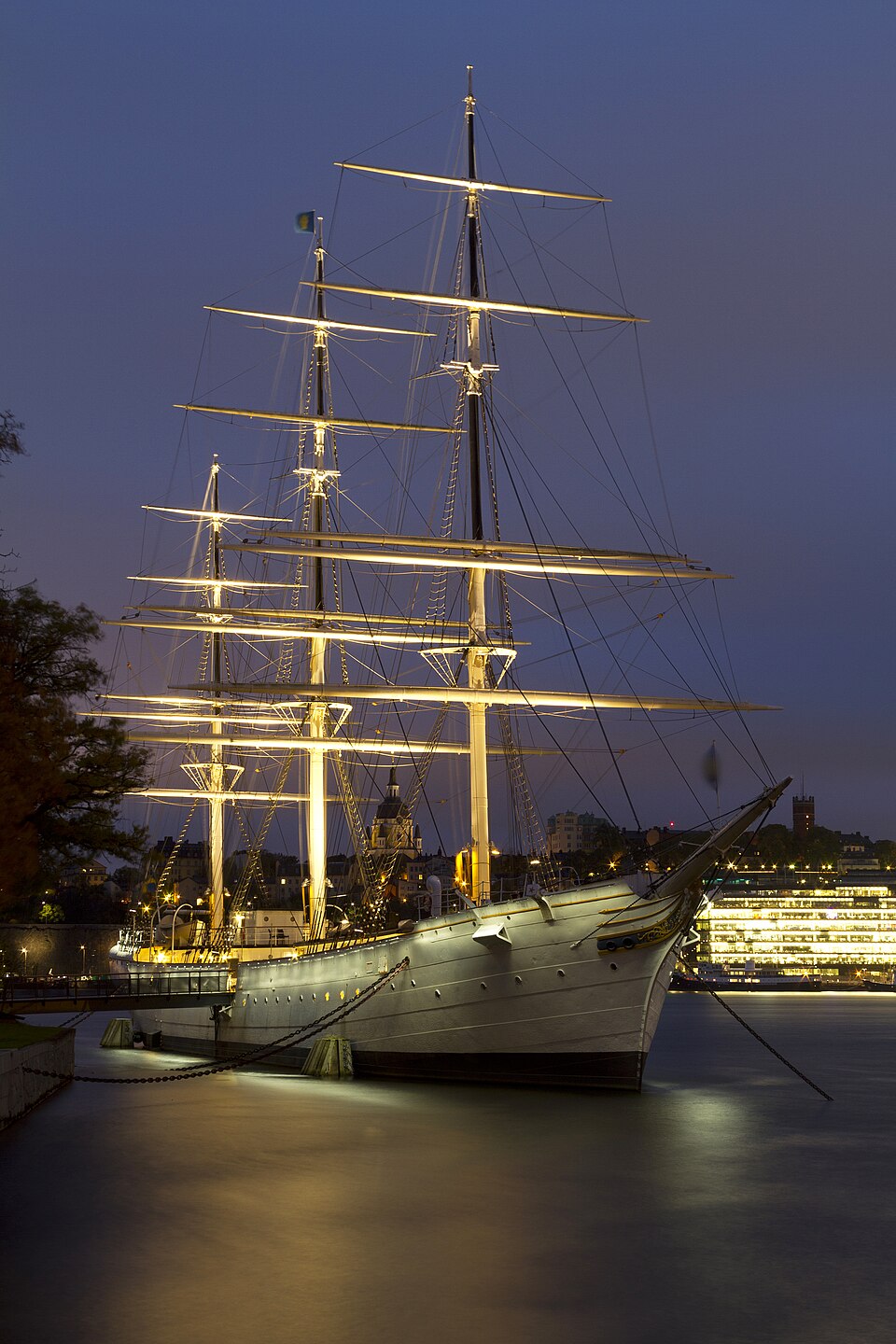
Af Chapman is a full-rigged steel ship moored on the western shore of Skeppsholmen in central Stockholm. Built in 1888 as the Dunboyne in Whitehaven, England, it later served as a training vessel before becoming a youth hostel in 1949. The vessel represents late 19th-century maritime engineering and remains one of Stockholm's most distinctive waterfront landmarks. Its preserved masts and rigging dominate the harbour skyline, offering visitors an authentic encounter with seafaring heritage. The ship functions as accommodation rather than a museum, though its historic character attracts numerous sightseers who appreciate its architectural and nautical significance.
Checked 2026-08-26
The interior retains original maritime features adapted for hostel accommodation. Visitors encounter wooden paneling, narrow companionways, and compact cabins typical of historic vessels. The ship contains multiple dormitory rooms and private cabins, communal bathrooms, a kitchen facility, and common areas where guests gather. Original fixtures include portholes, bulkheads, and deck structures that preserve the atmosphere of seafaring life. The upper decks remain accessible, providing open-air spaces with views across Stockholm's harbour. Interior spaces reflect practical adaptations made during conversion to hostel use while maintaining structural elements from its sailing and training vessel periods.
Checked 2026-08-26
Sightseeing visitors typically spend thirty minutes to one hour observing the exterior and accessible deck areas. Guests staying overnight occupy the vessel according to standard hostel check-in and check-out arrangements. Photography enthusiasts may extend their visit to capture changing light conditions on the ship and surrounding waterfront. The vessel's position on Skeppsholmen allows combination with exploration of neighbouring museums and parkland. Those interested in maritime history may wish to examine details of rigging, hull construction, and preserved features at length. Duration depends entirely on individual interest in nautical heritage and photographic opportunities.
Checked 2026-08-26
Operator-confirmed hours are Not recorded pending review. The vessel operates as accommodation throughout the year, though accessibility for non-guests varies with seasonal demand and operational decisions. Summer months bring extended daylight hours favourable for exterior photography and deck access. Winter visits offer atmospheric conditions with possible snow and ice in the harbour, though deck access may be restricted for safety reasons. The surrounding Skeppsholmen area remains publicly accessible regardless of vessel operating status. Visitors should verify current access arrangements directly with the hostel operator before planning a specific visit, particularly during off-peak periods.
Checked 2026-08-26
Operator-confirmed prices are Not recorded pending review. Accommodation rates apply for overnight stays booked through the hostel operator. No admission fee structure for casual visitors has been confirmed from available sources. Non-guests may access exterior decks and surrounding areas without charge, subject to operational discretion and safety considerations. Visitors seeking to photograph or observe the vessel from nearby vantage points incur no cost. Those wishing to stay aboard must arrange booking through appropriate channels. Pricing for any guided access or special arrangements would require direct enquiry with management.
Checked 2026-08-26
Af Chapman occupies a fixed mooring on Skeppsholmen island, accessible from central Stockholm on foot or by public transport. Walk across the Skeppsholmen bridge from Blasieholmen, near the Grand Hôtel and Nationalmuseum. Bus services connect to nearby stops on Strandvägen. The island also accommodates other major museums including Moderna Museet and ArkDes. Water transport options serve the surrounding harbour area during operational seasons. Cycling routes connect Skeppsholmen with Djurgården and the Old Town. The vessel's prominent masts make it visible from multiple approach directions, assisting navigation to the specific mooring location on the island's western shore.
Checked 2026-08-26
Deck surfaces become slippery when wet; appropriate footwear is essential for safe movement. Narrow passages and steep companionways present accessibility challenges for visitors with mobility limitations. Low doorways and overhead structures require awareness to avoid injury. The vessel's position exposes it to harbour winds and weather conditions that may differ from sheltered urban areas. Non-guests should respect boundaries between public areas and accommodation spaces. Mooring lines and maritime equipment near the vessel require caution. Water safety awareness applies near all harbour edges. Visitors should note that operational decisions about access rest with hostel management and may change without advance notice.
Checked 2026-08-26
The vessel offers exceptional photographic subjects including rigging silhouettes against sky, hull reflections in harbour water, and contextual views with surrounding Stockholm architecture. Morning and evening light produce particularly striking effects on the steel hull and wooden structures. The neighbouring shoreline provides varied vantage points for composition. Wide-angle lenses accommodate the vessel's scale and surrounding environment; telephoto options isolate detail in rigging and fittings. Seasonal variations include summer greenery, autumn colours on adjacent trees, winter snow, and spring light conditions. Tripod use on decks requires stability awareness due to vessel movement. Night photography benefits from nearby urban illumination reflecting on water surfaces.
Checked 2026-08-26
Non-guests may access exterior areas and decks subject to operational discretion, though no formal admission structure is confirmed.
Interior spaces primarily serve hostel guests; general public access to cabins and facilities is not confirmed from available sources.
Built in 1888 as the Dunboyne, it operated as a training ship before conversion to Stockholm's most distinctive youth hostel in 1949.
No guided tour arrangements are recorded; visitors typically explore independently.
Historic ships with narrow passages, steep companionways, and level changes present significant accessibility challenges.
The ship serves as permanently moored accommodation; sailing capability is not indicated in available sources.
Loading the interactive map…
The interactive map could not be loaded.
Last updated:
Source: OpenStreetMap contributors, Wikidata ·