


2 min walk
Storkyrkan
- Must see · Heritage site
- Place of worship
Language · 1 published
Historic monument · Stockholm
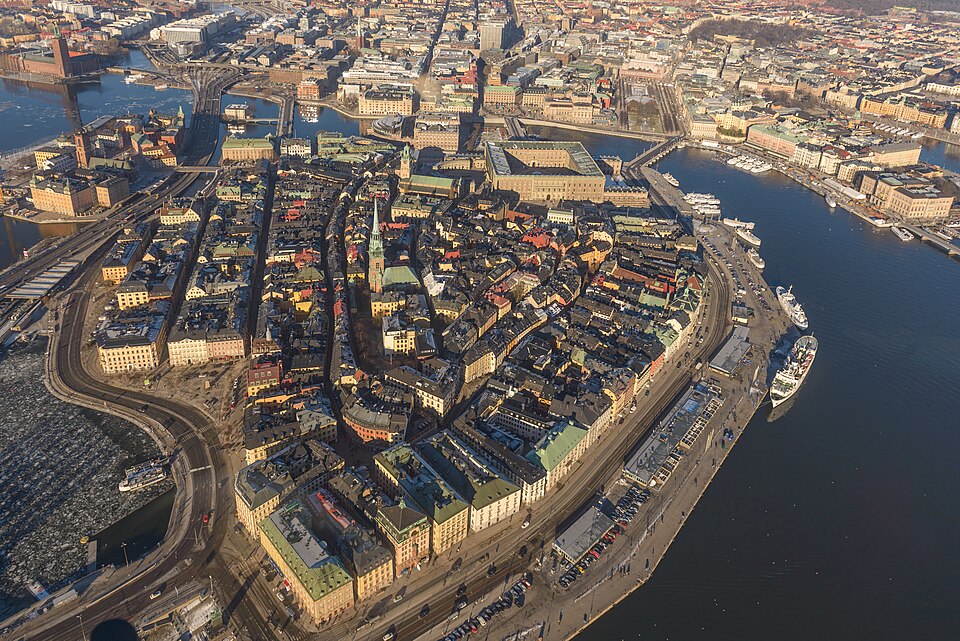
Gamla stan is Stockholm's old town, and until 1980 its official name was Staden mellan broarna, the town between the bridges, which describes what a visitor walks into better than old town does. It is mainly one island, Stadsholmen, with the islets Riddarholmen, Helgeandsholmen and Strömsborg counted in, sitting in the channel where Lake Mälaren drains into the Baltic. Around three thousand people live there, so it is a working residential district as well as the most visited square kilometre in Sweden.
The town dates from the 13th century, and the name Stockholm originally meant this island and nothing else. What stands above ground is mostly later: the bulk of the buildings are 16th and 17th century, raised on medieval plots and strongly marked by North German building habit. Recent volunteer inventories of the district's 370 properties have found that structures long dated to the 17th and 18th centuries can be up to three hundred years older than the record claimed.
The street plan, though, is the medieval one. Two long streets, Västerlånggatan and Österlånggatan, ran outside the old city walls, and a grid of lanes climbs between them to the high ground at Stortorget. Gamla stan was a slum from the mid-19th century until after the Second World War, when whole blocks and five alleys were demolished to enlarge the Riksdag. Its rehabilitation as something worth keeping dates only from the 1970s.
Checked 2026-08-26 · Source
The city's own visitor service lists six ticketed institutions inside the district: the Royal Palace, Stockholm Cathedral, the Medieval Museum, the Jewish Museum, the Nobel Prize Museum and the Royal Armoury. Each is a separate visit with its own hours and its own ticket, and none of them is included in walking the streets.
The set pieces outdoors are as much of the point. Stortorget, the square at the top of the island, is ringed by merchants' houses and the Stock Exchange Building, and it was the site of the Stockholm Bloodbath of November 1520, when Christian II of Denmark had the Swedish nobility killed there. Storkyrkan holds Bernt Notke's Saint George and the Dragon. Riddarholmskyrkan, over on Riddarholmen, is the royal burial church. The House of Nobility stands at the north-western corner, Tessin Palace faces the palace across Slottsbacken, and Bonde Palace houses the Supreme Court.
Smaller things reward attention. Mårten Trotzigs gränd runs from Västerlånggatan up to Prästgatan in 37 steps and narrows to 90 centimetres, the narrowest street in Stockholm. Järnpojken, an iron boy about 15 centimetres high, sits in the Bollhustäppan courtyard behind the Finnish Church. Den gyldene freden on Österlånggatan has traded since 1722 and is owned by the Swedish Academy.
Checked 2026-08-26 · Source

Two hours is the working figure for Gamla stan itself, meaning the streets, the squares and the outside of the buildings, with no museum entered. That is enough to walk Västerlånggatan end to end, climb through the side lanes to Stortorget, look into Storkyrkan, cross to Riddarholmen for the water view and come back down to Järntorget without hurrying. No operator publishes a suggested duration for the district, so treat two hours as an editorial estimate rather than a quoted one.
The figure changes the moment a museum is added, because each of them is a separate visit rather than a room off the street. The Royal Palace alone will absorb two to three hours if its several museums are taken seriously; the Nobel Prize Museum runs to about an hour and a half. A visitor who wants the district and one major interior should budget half a day and should not attempt two interiors in the same morning.
Distance is not the constraint here. Stadsholmen is roughly 600 metres north to south, so nothing is far. What slows a visit down is that the lanes are steep, cobbled and worth stopping in, and that the two long streets are lined with shops and cafes that were built to interrupt a walk.
Checked 2026-08-26
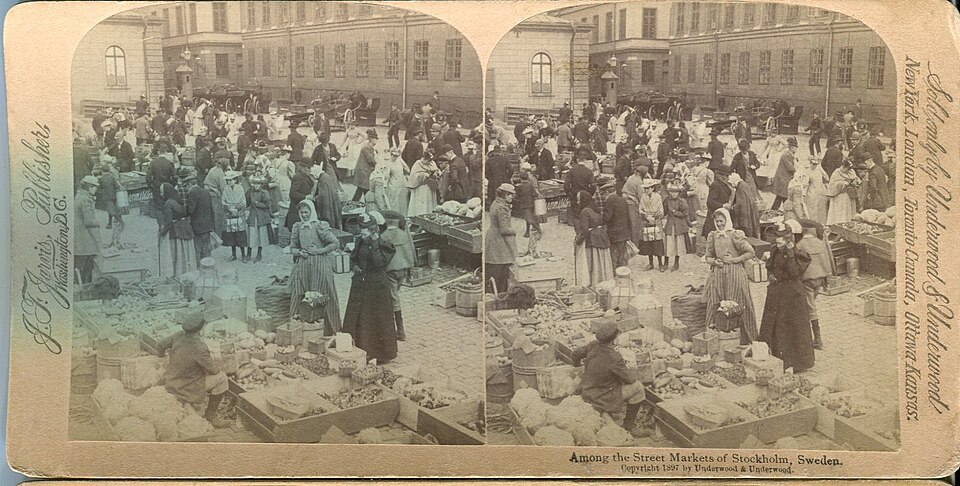
The hour matters more than the season. Västerlånggatan is close to empty before about half past nine and unpleasantly full from late morning until the early evening, and the difference between those two states is total. A visitor who wants the medieval street plan rather than a queue should be on the island by nine, and can then spend the crowded middle of the day inside one of the museums.
Summer gives long light and the largest crowds. In June and July the sky over Riddarfjärden stays usable until well past ten at night, which makes an evening walk the best of the day once the cruise and coach traffic has drained away. Winter reverses everything: at 59 degrees north the sun sets in the middle of the afternoon in December, and the island under lamplight with snow on the cobbles is genuinely better looking than it is in August, though the stone gets slippery and the shops close early.
Late spring and early autumn are the compromise. May, early June, September and early October give workable daylight, open shops and far fewer people on the two long streets. The Christmas market on Stortorget is an exception worth knowing about, because it makes December afternoons on that square as crowded as any summer day.
Checked 2026-08-26
There is no ticket for Gamla stan and no gate to buy one at. The district is public street: Västerlånggatan, Österlånggatan, Prästgatan, Stortorget, Järntorget and the lanes between them are walked freely at any hour, and Stockholm's own visitor service publishes no admission price and no opening hours for the district, because none exists to publish.
What costs money are the institutions inside it. The Royal Palace, Stockholm Cathedral, the Royal Armoury, the Nobel Prize Museum, the Medieval Museum and the Jewish Museum are each ticketed separately and each keeps its own hours, including closed days. Their prices and times must be read on their own sites before a visit is planned around them; none of them is recorded here, because this page covers the district rather than the buildings.
One practical service is seasonal. Visit Gamla stan runs a visitor centre in the district during the summer months only, and the city's own attractions page states plainly that it is not open outside them. A visitor arriving in October or February should not plan on staffed information inside the old town.
Guided walks are sold by third parties rather than by the city, including ghost walks and the City Museum's self-guided Stockholm 1793 route, and are priced independently.
Checked 2026-08-26 · Source
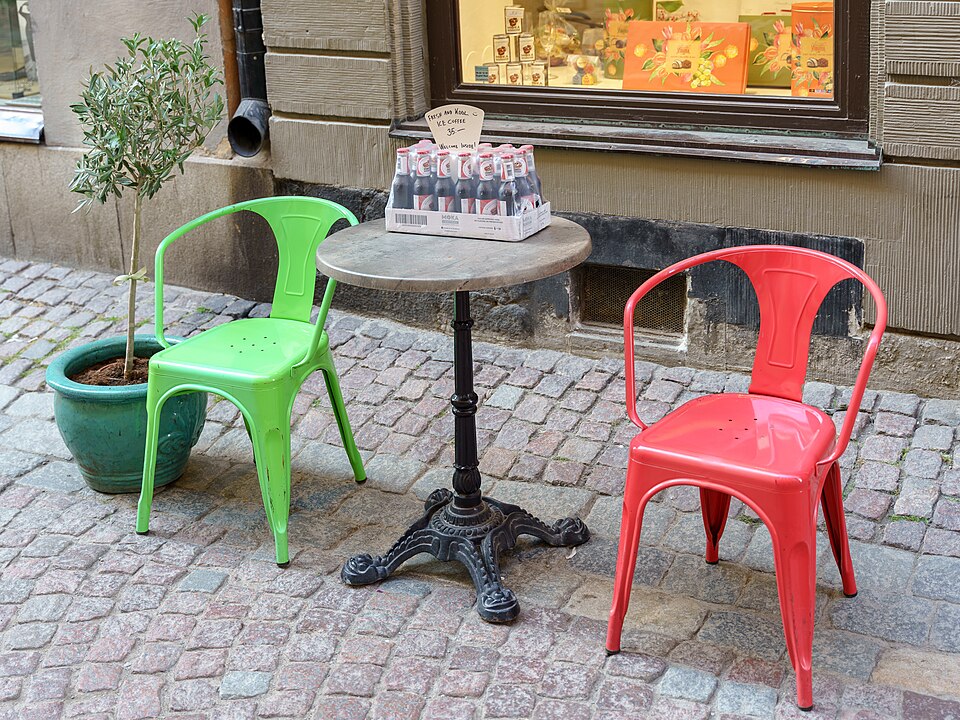
Gamla stan has its own metro station, on both the Green and the Red lines, at the western edge of the island. It is unusual in being at ground level rather than underground, partly tucked beneath the Centralbron bridge, because the lines cross to Södermalm on a bridge immediately south of it. From the platform the whole district is a walk of a few minutes.
A single SL ticket costs 43 SEK and is valid for 75 minutes; the reduced fare for senior citizens and for children, teenagers and students up to the age of 20 is 26 SEK. Tickets are bought in the SL app, at customer service shops, or with a card at the turnstiles and on buses. Cash is not accepted on Stockholm buses, and travelling without a valid ticket carries a 1500 SEK penalty. The commuter ferry to Djurgården leaves from Gamla stan, which makes the museum island a short crossing rather than a separate journey.
A car is not needed and is a liability. Stockholm's inner city carries a congestion charge on weekdays between 06:30 and 18:29, from 11 to 40 SEK per passage, capped at 135 SEK a day in high season and 105 SEK off season, with nothing charged at weekends or on holidays. Garage parking runs roughly 75 to 120 SEK an hour on weekdays and around 400 SEK for 24 hours.
Checked 2026-08-26 · Source
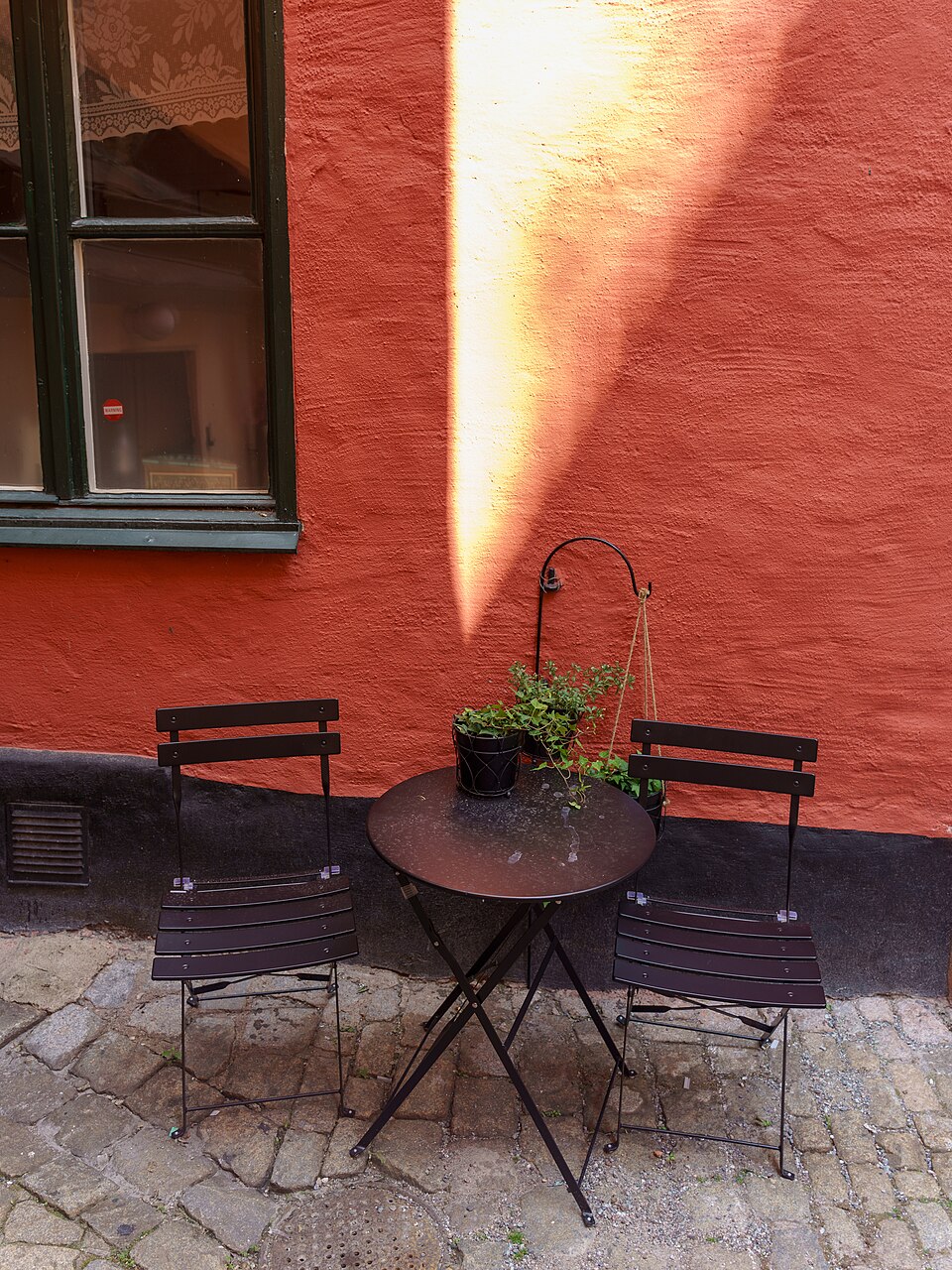
The surface is the first thing. Gamla stan is cobbled almost everywhere, the lanes between the two long streets climb steeply, and Mårten Trotzigs gränd is 37 steps rather than a street. Thin soles and any kind of heel are a mistake, and a wheeled suitcase across Stortorget is a noisy, exhausting error that visitors make daily. In winter the same cobbles ice over and the slopes become the hazard rather than the charm. The district's OpenStreetMap record is tagged wheelchair accessible, which is true of the flat main streets and misleading about most of the lanes.
Västerlånggatan is the second thing. It is the souvenir street, and a visitor who walks only it will conclude that Gamla stan is a shopping arcade with a medieval facade. The medieval town is one block east or west, on Prästgatan, Köpmangatan, Svartmangatan and Österlånggatan, and those lanes are quiet at the same hour that the main street is impassable.
Restaurants directly on Stortorget and on Västerlånggatan price for their address. Eating one street back is materially cheaper for the same food. Finally, three thousand people live here: the lanes are residential doorways, not exhibits, and courtyards behind them are private however open the gate looks.
Checked 2026-08-26
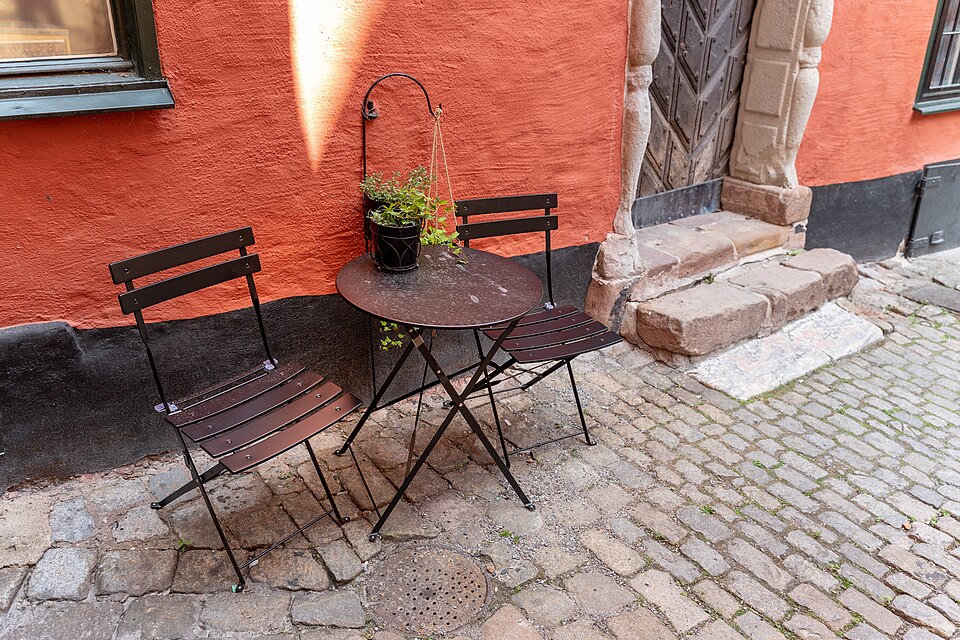
The lanes are narrow enough that light reaches the ground for only a short part of the day, and that single fact governs photography in Gamla stan. Between about eleven and two the sun clears the roofline and the alleys stop being black slots; outside those hours the useful subjects are the open squares and the waterfronts instead. A wide lens earns its place here more than anywhere else in Stockholm, because there is rarely enough room to step back.
Stortorget's row of coloured merchant houses is the picture everybody takes, and it works best in the late morning when the facades are lit and before the square fills. The Stock Exchange Building at the head of the square is the awkward element in the frame; composing from the south-eastern corner keeps it out.
The best views of the district are from outside it. The quay on Riddarholmen looks west over Riddarfjärden and is the place to be at sunset, and the Södermalm heights across the water give the classic elevation of the whole island. From the island itself, the approach along Skeppsbron gives the eastern waterfront with the palace above it, best in morning light.
Mårten Trotzigs gränd is genuinely hard: at 90 centimetres there is no room, so photograph down the steps from the top rather than up from Västerlånggatan.
Checked 2026-08-26
No. Gamla stan is a public district of streets and squares, not an enclosed site, and Stockholm's own visitor service publishes no admission price and no opening hours for it. Walking Västerlånggatan, Österlånggatan, Prästgatan, Stortorget and the lanes between them costs nothing at any hour. The museums and the palace inside the district are a different matter: the Royal Palace, Stockholm Cathedral, the Royal Armoury, the Nobel Prize Museum, the Medieval Museum and the Jewish Museum are each ticketed separately and keep their own hours, so anyone planning around one of them should read that institution's own site.
Allow two hours for the district itself, which covers both long streets, the climb to Stortorget, a look inside Storkyrkan and a crossing to Riddarholmen for the water view. That is an editorial estimate rather than an operator figure, because no official duration is published for the district. Add a museum and the arithmetic changes sharply: the Royal Palace absorbs two to three hours on its own, and the Nobel Prize Museum around an hour and a half. Half a day is the realistic budget for the streets plus one major interior.
By metro. Gamla stan station serves both the Green and the Red lines and sits at the western edge of the island at ground level, partly under the Centralbron bridge, a few minutes' walk from anywhere in the district. A single SL ticket costs 43 SEK and is valid for 75 minutes, with a reduced fare of 26 SEK for senior citizens and for children, teenagers and students up to the age of 20. Cash is not accepted on buses, and travelling without a valid ticket carries a 1500 SEK penalty. The commuter ferry to Djurgården also leaves from Gamla stan.
No. The district is small, walkable and awkward to drive in, and the costs are real. Stockholm's inner city carries a congestion charge on weekdays between 06:30 and 18:29, from 11 to 40 SEK per passage depending on the hour, capped at 135 SEK a day in high season and 105 SEK off season, with no charge at weekends or on holidays. Garage parking in the inner city runs roughly 75 to 120 SEK an hour on weekdays and around 400 SEK for a 24-hour stay. More than 40 Park-and-Ride facilities sit just outside the inner city next to public transport connections, which is the sensible option for anyone arriving by car.
Before half past nine in the morning, or after the early evening. Västerlånggatan is close to empty at nine and effectively impassable from late morning to early evening, and the same lanes read as two different places at those two hours. The practical plan is to walk the district early, spend the crowded middle of the day inside one of the museums, and come back out in the evening. In June and July the light over Riddarfjärden lasts past ten at night; in December the sun sets in mid-afternoon and the island is best seen under lamplight.
Flat shoes with grip. The district is cobbled almost throughout, the lanes between the two long streets climb steeply, and Mårten Trotzigs gränd is 37 steps narrowing to 90 centimetres rather than a walkable street. In winter the cobbles ice over and the slopes become the real hazard. Wheeled luggage across Stortorget is a mistake. Two other things are worth knowing: restaurants on Stortorget and Västerlånggatan price for their address and one street back is materially cheaper, and about three thousand people live in the district, so the doorways and courtyards behind the lanes are homes rather than exhibits.
Loading the interactive map…
The interactive map could not be loaded.
Last updated:
Source: OpenStreetMap contributors, Wikidata ·