


3 min walk
Baltic Sea Science Center
- High
- Museum
Language · 1 published
Entertainment venue · Stockholm
| Monday | 10:00 – 18:00 |
|---|---|
| Tuesday | 10:00 – 18:00 |
| Wednesday | 10:00 – 18:00 |
| Thursday | 10:00 – 18:00 |
| Friday | 10:00 – 18:00 |
| Saturday | 10:00 – 18:00 |
| Sunday | 10:00 – 18:00 |
Checked 2026-08-26 · Source
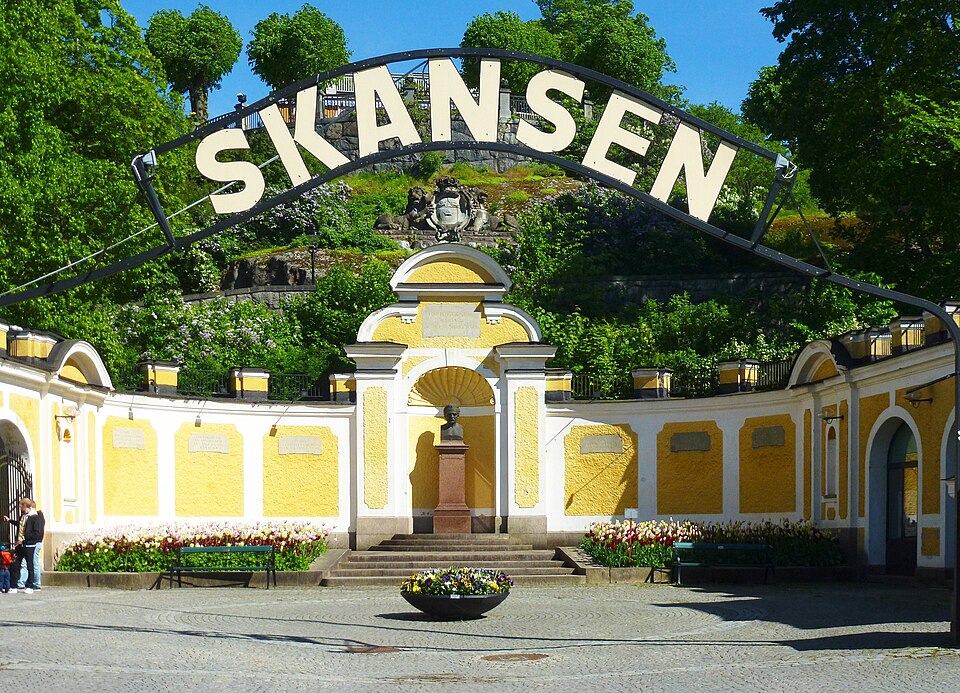
Skansen is the world's oldest open-air museum, founded in 1891 by the linguist and folk educator Artur Hazelius on Skansenberget, a wooded hill in the middle of Djurgården in central Stockholm. Hazelius bought the hill and began moving houses onto it from every part of Sweden, so that a visitor walking a few hundred metres could cross from a Halland farmstead to a northern Sami camp. There are 190 museum buildings on the site today. The oldest dates from the early fourteenth century and the most modern from the 1950s. His motto was know yourself, and the argument behind the whole place is that understanding how people actually lived is the way to understand who they became. The houses were first filled with dolls in folk costume; these were quickly replaced by real people spinning, weaving and baking, and that is still how the interiors are staffed. Animals came next, because livestock were part of farm life, and the Nordic wild species were part of the landscape the farms sat in. The result is one enclosed park that is simultaneously a museum, a zoo and a botanical collection, and it is open every day of the year.
Checked 2026-08-26 · Source
The open-air museum is the core: relocated houses and whole farmsteads arranged by region, with interpreters in period dress working the crafts that belong to each building. Around them lie the gardens, which run through four centuries of Swedish horticulture, from the eighteenth-century kitchen garden at Skogaholm to twentieth-century allotment plots, the Rose Garden and the small yards of the Old Town Quarter. The zoo holds Nordic wild animals, including brown bears, moose, lynx, wolverines, seals and otters, alongside rare Swedish livestock breeds kept as part of conservation breeding programmes. Two indoor attractions are covered by the entrance ticket: Lill-Skansen, the children's zoo, and the Baltic Sea Science Center, which is about life below the surface of the Baltic. The Skansen Aquarium is on the site but is not included, and is paid for separately at its own door. The Galejan fairground sells its own ride tickets on site. There are shops for pottery and glass, a bakery, several restaurants and cafes, barbecue areas at Bollnästorget that are lit daily unless there is a fire ban, and microwaves in Skogens hus for visitors who bring their own food. A web-based audio guide and scheduled guided tours cover the history, the animals and the buildings.
Checked 2026-08-26 · Source
Skansen publishes no recommended visit length on its visitor pages, so the figure here is editorial judgement rather than an operator statement. The park covers roughly thirty hectares on a hill, and the walking distances between attractions are long enough that time disappears into the paths rather than the exhibits. Four hours is a realistic first visit: enough to walk the main loop of farmsteads, spend real time in three or four staffed interiors, see the bears and the moose, and sit down once. Two hours buys a single strand and no more, and is best spent either on the houses or on the animals, not both. A family that adds Lill-Skansen and the Baltic Sea Science Center to the outdoor circuit will pass five hours without effort, because both are indoor spaces children do not want to leave. Two things change the arithmetic. Between 28 September and 10 January the park closes at 15.00 on weekdays, which leaves a five-hour day in total and makes an early arrival the difference between a full visit and a partial one. Against that, the ticket allows leaving and re-entering on the same day if staff stamp you at the entrance, so a long visit can be split around a meal outside.
Checked 2026-08-26
Skansen is open every day of the year and has no weekly closing day, but the hours change three times across 2026. From 1 June to 30 August it opens daily 10.00 to 18.00. From 31 August to 27 September it opens daily 10.00 to 17.00. From 28 September to 10 January 2027 it opens 10.00 to 15.00 on weekdays and 10.00 to 16.00 at weekends. The published exceptions matter more than they look. Sing-along evenings run on Tuesdays from 23 June to 11 August, when the park stays open to 20.00. During the autumn school holidays, 24 October to 1 November, the winter hours are lifted to 10.00 to 16.00, and there is extra Halloween opening from 15.00 to 19.00 on 24 October and 28 to 31 October. The Christmas market runs 27 November to 20 December with Friday and Saturday 10.00 to 17.00 and Sunday 10.00 to 16.00. Christmas Eve is 10.00 to 14.00, the Christmas school holidays from 25 December to 10 January run 10.00 to 16.00, and New Year's Eve has two blocks, 10.00 to 16.00 and 20.00 to 24.00. Arriving at opening is worth more here than at most sites, because the interpreters are freshest and the hill is quiet.
Checked 2026-08-26 · Source
On 26 August 2026 the published day-ticket prices were 305 kr for an adult, 265 kr for a student or pensioner, and 0 kr for children aged 0 to 15. Skansen states plainly that the price varies with the season and that the online price is the lowest; tickets bought at the entrances cost slightly more. Children still need a ticket even though it is free, and a complimentary child ticket is added when an adult, student or senior ticket is bought. The student discount applies whatever country the student studies in, on production of a valid student card at the entrance. Documentation of at least fifty per cent disability pension gets the senior rate. Carers accompanying a paying visitor enter free on an official assistant's card, and asylum seekers enter free on an LMA or UT card. There are no group discounts of any kind; care homes and similar institutions can instead buy a group card for SEK 1,500 that admits fifteen people for a calendar year. The ticket covers Lill-Skansen and the Baltic Sea Science Center but not the Skansen Aquarium, which is paid for on site. Free cancellation applies until the day before the visit. The entrances and shops are cashless.
Checked 2026-08-26 · Source

The address is Djurgårdsslätten 49, and no car is needed or wanted. Skansen states that there is no parking at the site; the nearest parking is by the Vasa Museum, at Bellmansro near Rosendal, or on Strandvägen and Narvavägen, and the museum's own suggestion is to leave the car in the Gallerian garage on Hamngatan and take the tram. Djurgårdsvägen is closed to private cars from 22 April to 30 September on Saturdays, Sundays and public holidays between 10.00 and 17.00, and on Christmas market weekends between 10.00 and 16.00; buses, taxis, permit holders and vehicles with a disabled badge are exempt. Tram line 7 runs from T-Centralen and stops directly outside the main entrance, with space for wheelchairs and pushchairs. The historic tram 7N runs from Norrmalmstorg. Bus 67 comes from Odenplan and also stops at the entrance; buses 69 and 76 stop at Djurgårdsbron, 950 metres away. Ferry line 82 on the Slussen to Djurgården route lands at Allmänna Gränd, 400 metres from the entrance, and SL fares apply. Walking from Djurgårdsbron takes about ten minutes; from central Stockholm it is roughly forty. There are three ways in: the main entrance, the Solliden Entrance at Sollidsbacken 9, and the seasonal Hazelius Gate.
Checked 2026-08-26 · Source
The hill is the thing nobody plans for. Skansen describes its own terrain as hilly in places, with steep slopes, cobbled stretches and fairly long distances between attractions, and says openly that the historic buildings cannot always be adapted. Wear shoes you would walk a town in. The funicular railway from the Hazelius Gate carries visitors up the steepest climb, but it keeps different hours from the main entrance, is closed for parts of the year, and takes a lunch break from 12.15 to 13.00 Monday to Thursday; on 26 August 2026 it ran 10.00 to 16.00 while the main entrance ran to 18.00. Wheelchairs and mobility scooters are not recommended on it because of evacuation. The main entrance has a platform lift up to Spegeldammen with a 500 kg limit, and from there escalators and steep paths continue upward. Wheelchairs are lent at the main entrance in limited numbers against a SEK 200 card deposit; pushchairs are hired for SEK 75; lockers cost SEK 29 to 49 an hour. Pets are not allowed apart from assistance dogs, which may not enter Lill-Skansen or the Aquarium. Bicycles, scooters and skateboards are banned inside. Everything runs in rain.
Checked 2026-08-26 · Source

Skansen's visitor pages set out no photography policy, so what follows is practical judgement rather than a rule read from the operator. The hill is the picture. From Tingsvallen at the top of the funicular and from the terrace by Solliden the ground opens over the water towards central Stockholm, and those are the two places where a wide lens earns its weight. The relocated houses are the harder subject: timber interiors with small windows, lit in most cases by whatever the day gives, so a fast lens or a steady hand matters more than any amount of equipment, and a person working at a loom or an oven will usually make a better frame than an empty room. Sweden's low sun does the work outdoors, raking along the log walls in the morning and again late. The winter timetable is a gift here rather than a limit: from 28 September the park shuts at 15.00 on weekdays, which in December means the last hour is already blue, with the Christmas market lantern-lit. Animal enclosures are wooded and deep, so expect to wait rather than to arrange. Distances are long, and carrying less is worth more than carrying more.
Checked 2026-08-26
On 26 August 2026 Skansen published a day ticket at 305 kr for adults, 265 kr for students and pensioners, and free admission for children aged 0 to 15. The price changes with the season, and Skansen states that the online price is always the lowest, with tickets at the entrances costing slightly more. Free child tickets still have to be added to the booking. There are no group discounts.
It is open every day of the year with no weekly closing day, but closing time moves three times across 2026: daily 10.00 to 18.00 from 1 June to 30 August, daily 10.00 to 17.00 from 31 August to 27 September, and 10.00 to 15.00 on weekdays with 10.00 to 16.00 at weekends from 28 September to 10 January 2027. Holiday periods and the Christmas market have their own published exceptions, so check the date before travelling.
Skansen publishes no recommended duration, so this is editorial judgement. Allow four hours for a first visit covering the farmsteads, a few staffed interiors and the main animal enclosures. Two hours covers one strand only. Families who add Lill-Skansen and the Baltic Sea Science Center pass five hours easily. The winter weekday closing at 15.00 leaves a five-hour day in total, so arrive at opening. The ticket allows re-entry on the same day if staff stamp you on the way out.
No. Skansen states that admission to the Skansen Aquarium is not included and that tickets are bought separately on site at the aquarium itself, in addition to the Skansen entrance ticket. Lill-Skansen, the children's zoo, and the Baltic Sea Science Center are both included. The Galejan fairground also sells its own ride tickets on site, and certain concerts and evening events are ticketed by their organiser, with Skansen admission included in that ticket.
No. Skansen states there is no parking at the site. The nearest parking is by the Vasa Museum, at Bellmansro, or on Strandvägen and Narvavägen, and Skansen's own advice is to park in the Gallerian garage on Hamngatan and take the tram. Djurgårdsvägen is closed to private cars from 22 April to 30 September on Saturdays, Sundays and public holidays between 10.00 and 17.00. A few disabled parking spaces exist inside via the Solliden Entrance.
Yes. Skansen allows visitors to leave the park and re-enter the same day; ask a member of staff at the entrance for a re-entry stamp before going out. This matters on a long visit, because it lets a family break for a meal outside the park and return for the afternoon. Note that the entrances and shops are cashless, that pets other than assistance dogs are not allowed, and that bicycles, scooters and skateboards may not be brought inside.
Loading the interactive map…
The interactive map could not be loaded.
Last updated:
Source: OpenStreetMap contributors, Wikidata ·