_3.jpg)
.jpg)
.jpg)
.jpg)
.jpg)
.jpg)
3 min walk
Drottningholm Palace Theatre
- Must see · Heritage site
- Historic monument
Language · 1 published
Historic monument · Stockholm
Drottningholms slott
| Monday | 10:00 – 17:00 |
|---|---|
| Tuesday | 10:00 – 17:00 |
| Wednesday | 10:00 – 17:00 |
| Thursday | 10:00 – 17:00 |
| Friday | 10:00 – 17:00 |
| Saturday | 10:00 – 17:00 |
| Sunday | 10:00 – 17:00 |
Also recorded: 10:00 – 16:00
Checked 2026-08-26 · Source
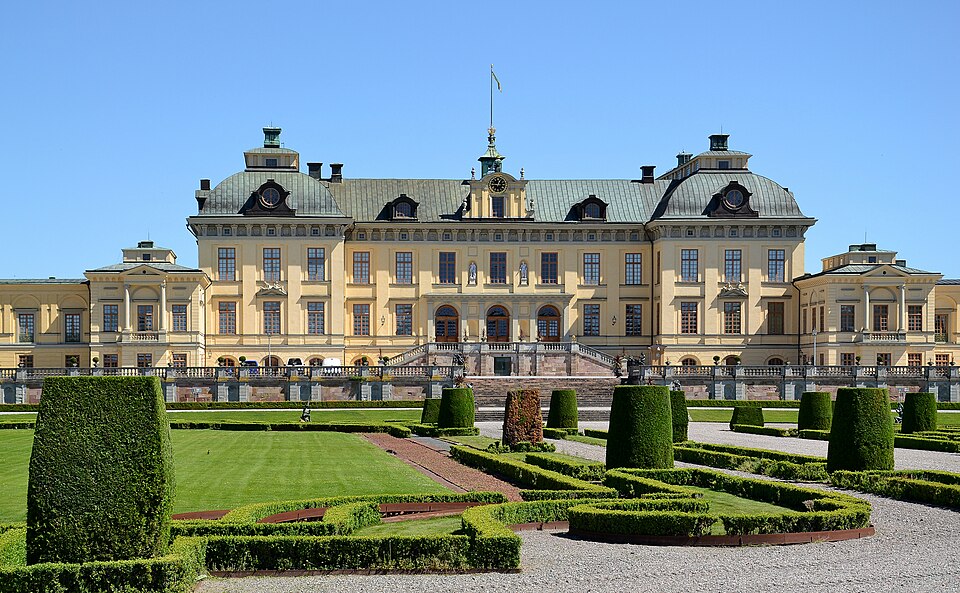
Drottningholm sits on the island of Lovon in Ekero Municipality, about ten kilometres west of central Stockholm, and it is a working royal home as well as a monument. The Royal Palaces describe it as the best preserved royal castle built in Sweden in the 1600s, and it carries a UNESCO World Heritage inscription. The southern wing is the permanent private residence of the King and Queen; everything else, palace and grounds, is open to the public year round.
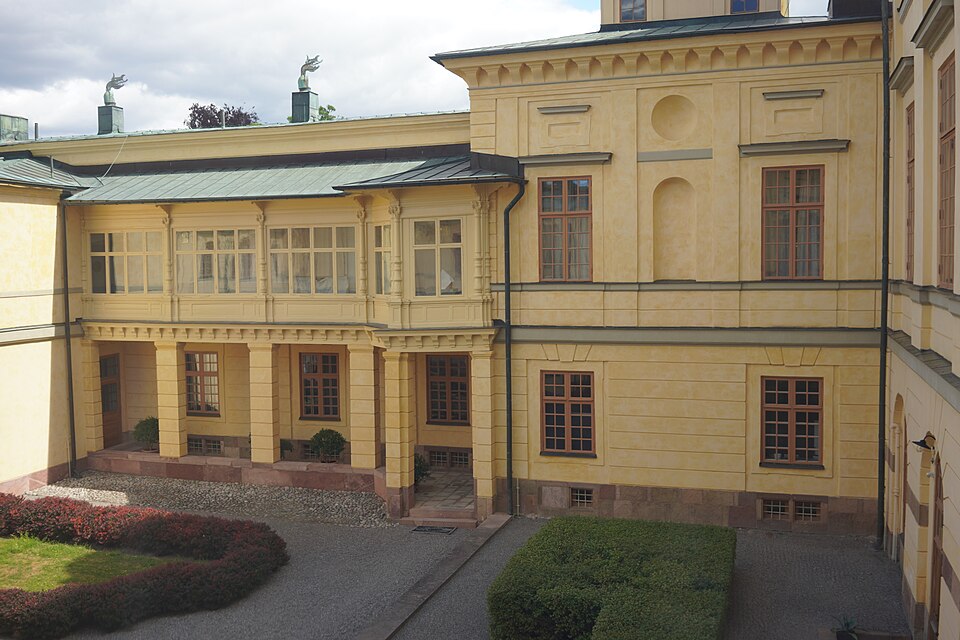
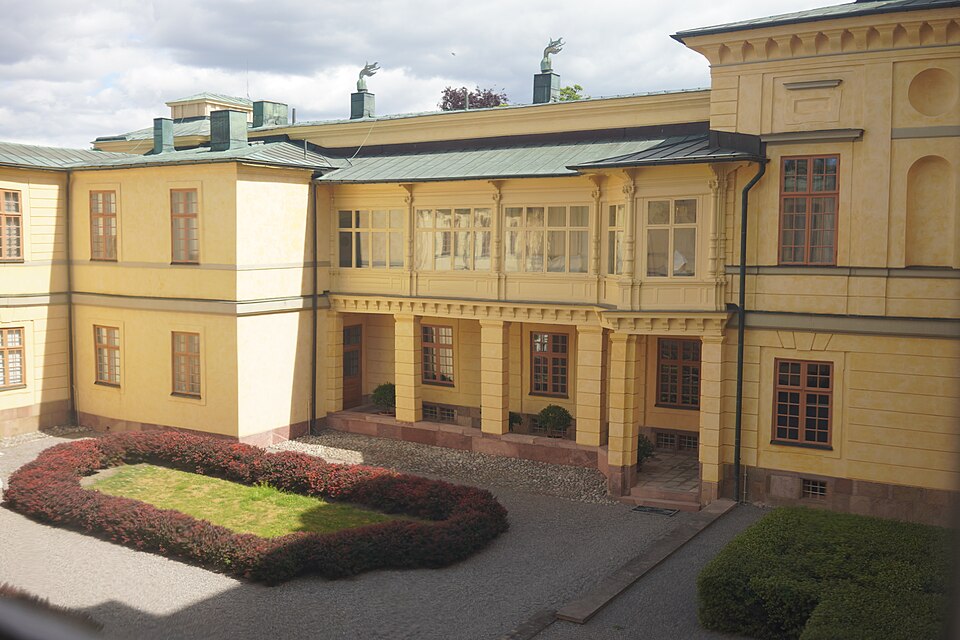
The name means Queen's Island, and it goes back to the late sixteenth century, when King Johan III built a palace here for Queen Katarina Jagellonika. That building burned down on 30 December 1661, months after the Queen Dowager Hedvig Eleonora had bought it. She commissioned Nicodemus Tessin the Elder to replace it, and work on the palace visible today began in 1662. Tessin the Younger finished what his father started after 1682.
What a visitor actually walks into, then, is layered rather than single-period: an early Baroque shell built for a regent, French-inspired Rococo rooms fitted out for Lovisa Ulrika after 1744, and a park that changes style as you cross it. The state bought the estate in 1777.
Checked 2026-08-26 · Source
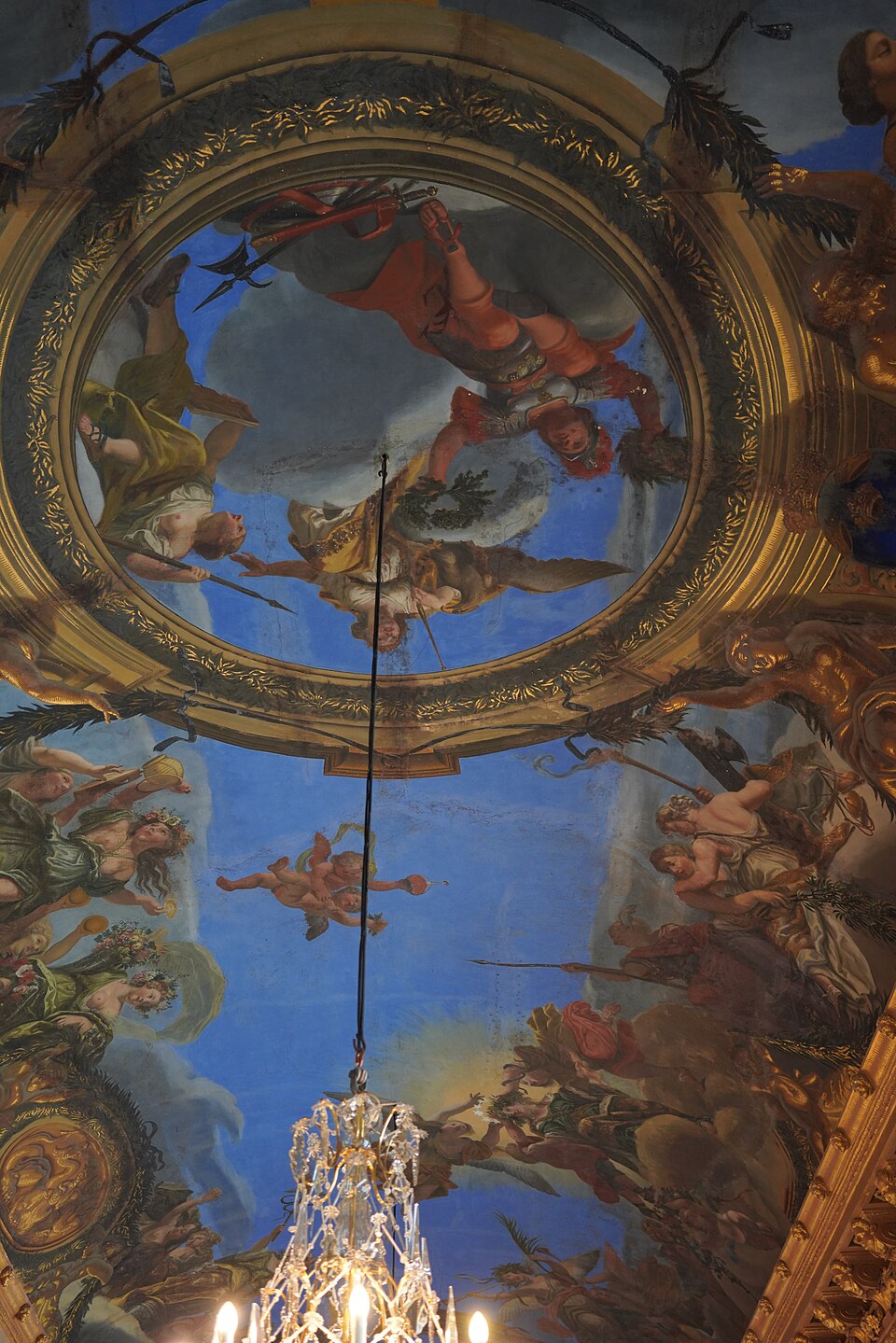
The ticketed interior is the suite known as the Reception Halls. The staircase is the piece to slow down for: Tessin the Elder's most extravagant work, layered with painting, stucco and sculpture. Beyond it come the Ehrenstrahl Drawing Room, named for the court painter David Klocker Ehrenstrahl whose canvases fill it, and Hedvig Eleonora's State Bedchamber, the two rooms the Royal Palaces single out as among the foremost early Baroque interiors in Sweden. Karl XI's gallery dates from the son's phase of the project.
The eighteenth-century layer belongs to Lovisa Ulrika. Her Green Antechamber and Green Cabinet were redone in French-inspired Rococo, and her library, converted from a picture gallery in the 1760s, is the room that best explains why Carl von Linnaeus spent time here cataloguing the royal natural history collections.
Outside, the park is free and open all year. It runs through three distinct designs: Hedvig Eleonora's Baroque garden with its parterre, twelve small fountains and the Hercules fountain; the mid-eighteenth-century bosquets and chestnut avenues around the Chinese Pavilion; and Fredrik Magnus Piper's English landscape park of 1780, with ponds, canals, islands and bridges. The bronzes in the Baroque garden are casts; the Adriaen de Vries originals are in Museum de Vries.
Checked 2026-08-26 · Source
Allow three hours on site, and treat that as separate from the travel time, which is substantial. The Royal Palaces publish no recommended visit length, so this is a judgement rather than a quoted figure, but the pieces are easy to add up.
The guided tour of the Reception Halls takes about forty-five minutes, and the operator states that length explicitly. Walking the same rooms alone with the free audio guide in the Royal Palaces app takes a similar time, sometimes a little less. That is the palace itself.
The park is what stretches the visit. Getting from the palace forecourt down through the Baroque garden, along the chestnut avenue and out to the Chinese Pavilion is a genuine walk, not a stroll between two doors, and coming back adds the same again. Give it an hour if you only want to see the Baroque parterre and the avenue, ninety minutes if you intend to reach the English Park's ponds and bridges as well.
Adding the Chinese Pavilion interior pushes the total towards four hours. Cutting the park to the parterre alone and skipping the pavilion brings it down to ninety minutes, which is the shortest visit that still feels like one. A half day is the honest planning unit.
Checked 2026-08-26
The published calendar splits the year sharply, and getting this wrong is the difference between a tour and a locked door. From August through 30 September 2026 the palace is open every day, 10.00 to 17.00, with no weekly closing day. From 3 October to 6 December 2026 it opens on Saturdays and Sundays only, 10.00 to 16.00, and is shut Monday to Friday. The calendar then lists no open dates at all between 7 December 2026 and 1 January 2027, and picks up again on 2 January 2027 at 10.00 to 16.00.
No midday break is published for any day in that calendar, and no last-admission time is given either. Treat the closing hour as the moment the rooms empty rather than the moment you may still start, and arrive with the forty-five-minute tour length in mind.
Within a day, the earlier the better in the high season, when coach groups and the boat from the City Hall Quay arrive together. October and November weekends are the quiet counterpart, at the cost of an hour less on the clock and low northern light by mid-afternoon. The park is open all year regardless of the palace calendar, so a winter weekday walk is still possible.
Checked 2026-08-26 · Source
The Royal Palaces publish a single 2026 price list covering all their sites. Drottningholm Palace costs SEK 170 for an adult, SEK 150 for a student and SEK 85 for a child aged 7 to 17. Children aged 6 and under enter free when accompanied by an adult. Prices are per person, and the operator notes the list is subject to change or error.
If the Chinese Pavilion is also on the plan, the combined Drottningholm Palace and Chinese Pavilion ticket is SEK 250 adult, SEK 230 student and SEK 125 child, against SEK 140, SEK 120 and SEK 70 for the pavilion alone. The combination saves SEK 60 for an adult. The Royal Palaces annual card is SEK 500 at every age band and covers the group's sites, which pays for itself on a third palace visit.
The Cultural Heritage Card gives 50 per cent off admission. A longer list of free-entry categories includes ICOM cardholders, press with a press ID, authorised tour guides, Friends of the Nationalmuseum and Friends of Drottningholm Theatre; those free tickets cannot be bought online and are issued at the entrance against a membership card and photo identification. Tickets otherwise sell at the palace entrance during opening hours or online in advance. Guided tours are ticketed separately.
Checked 2026-08-26 · Source
No car is needed. The standard public route is the metro to Brommaplan, then a bus signed to Drottningholm; the stop to search for in a journey planner is Drottningholms Slott, Drottningholm. One warning from the operator matters more than it sounds: bus tickets cannot be bought anywhere in the Drottningholm area, the Pressbyran kiosk that once sold them has gone, and the return leg has to be paid for through the SL app. Buy or load the return before leaving the palace.
In summer, regular boats run from Stadshuskajen, the City Hall Quay beside Stockholm City Hall, operated by Stromma; times and fares come from them on +46 8 587 140 00. It is the slower way out and by some distance the better one, since the approach from the water is how the palace was designed to be seen. A signed cycle path runs from central Stockholm.
Driving, the approach from every direction converges on route 275 and then Brommaplan, where signs point to Drottningholm. Visitor parking sits at the palace and at the Palace Theatre, with more about 300 metres away at Karusellplan. It costs SEK 15 an hour with a six-hour maximum, paid by card, SMS or the Mobill Parkering or ePark apps, zone code 25583. Bus and wheelchair parking is free.
Checked 2026-08-26 · Source
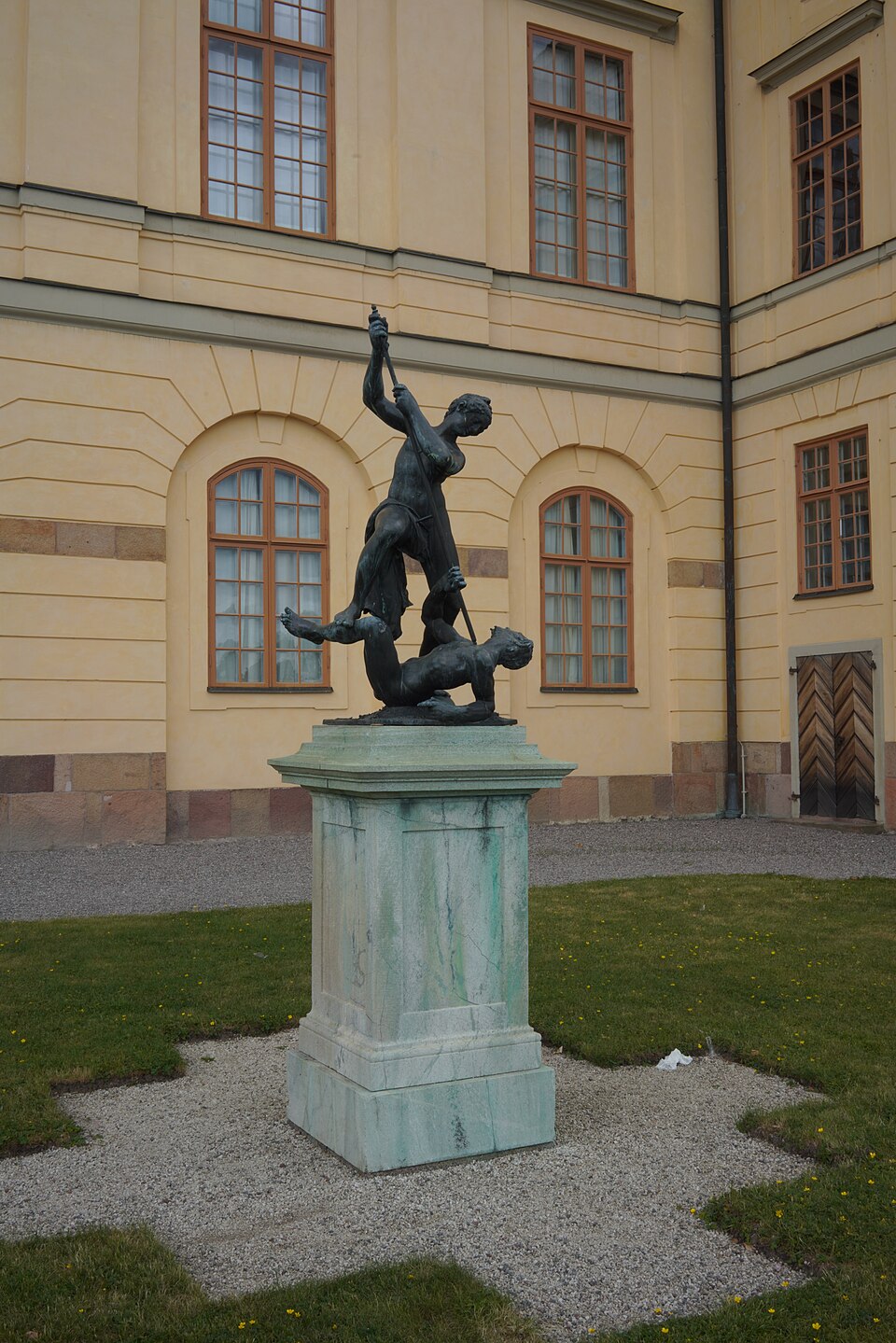
The interior rules are stricter than at most palace museums and are enforced at the door. Luggage is not permitted inside. Bags and backpacks, including baby carriers, must be carried in front of the body and kept under supervision, because the rooms are narrow and the fabrics fragile. There are no lockers and no storage of any kind at Drottningholm, so anything you cannot carry in front of you has to stay in Stockholm.
Prams and pushchairs cannot go in. They are left in the arcade at the entrance, which the Royal Palaces state plainly is unattended and has no locking facilities. Plan around that if a small child is with you, or use a carrier instead.
Removable ice grips must come off before entering and built-in ones must be retracted, a rule that catches winter visitors who have walked from the bus. Phones must be silenced for the whole visit.
Toilets are in the Main Guard Wing and by the Chinese Pavilion, which is worth knowing before setting off across the park, since there is nothing between the two. The park itself is large, gravelled and exposed; on the October and November weekends the wind off Malaren is the deciding factor in how long anyone stays outside.
Checked 2026-08-26 · Source
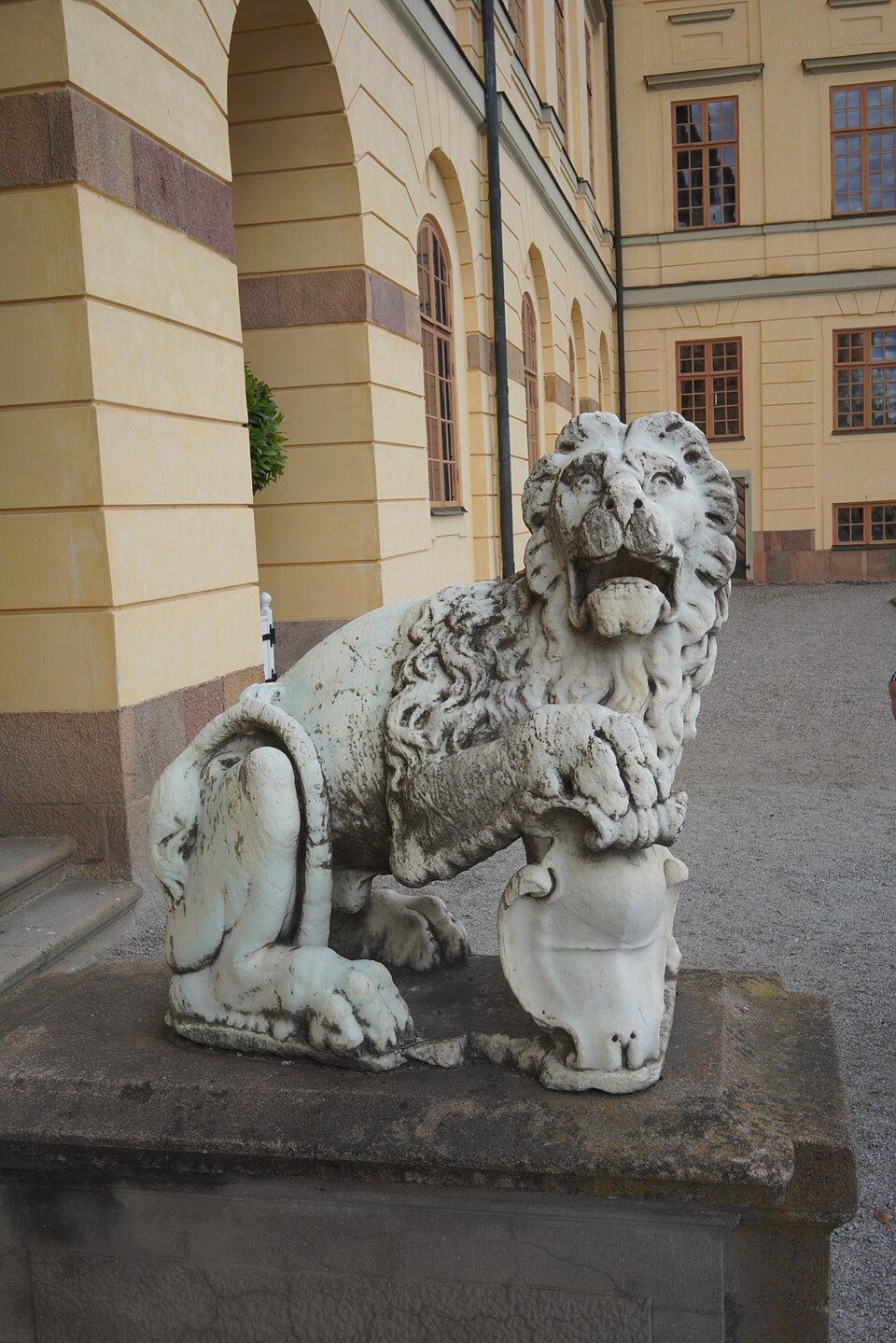
The Royal Palaces allow photography and filming inside for private use, with conditions that are specific rather than vague. No flash and no added lighting. No tripods, no selfie sticks and no other fixed equipment. Nothing that disturbs other visitors, a guided tour or any other activity in the palace. Three hundred and sixty degree cameras and drones are prohibited outright, and commercial or otherwise arranged shoots need advance permission from the Information Department at the Royal Court.
The no-flash rule shapes the whole interior take. The Reception Halls are lit through windows and the walls are dark silk and gold, so anything handheld is going to be a slow exposure. Brace against a doorframe rather than reaching for a tripod you cannot use, and shoot the staircase from the landing, where the painted ceiling and the sculpture read together in one frame.
Outside, the park is where the good pictures are. The Baroque parterre and the water parterre with its twelve fountains sit best from the palace steps, looking away from the building. The palace front itself takes afternoon light and is at its best from across the water, which is the argument for arriving by boat and photographing on the approach rather than after landing.
Checked 2026-08-26 · Source
Not year round. The Royal Palaces' calendar shows the palace open daily from 10.00 to 17.00 through 30 September 2026. From 3 October to 6 December 2026 it opens on Saturdays and Sundays only, 10.00 to 16.00, and is closed Monday to Friday. The calendar lists no open dates between 7 December 2026 and 1 January 2027, then resumes on 2 January 2027, 10.00 to 16.00. The palace park, by contrast, is open all year.
The Royal Palaces' 2026 price list gives SEK 170 for an adult, SEK 150 for a student and SEK 85 for a child aged 7 to 17, charged per person. Children aged 6 and under enter free with an adult. A combined ticket with the Chinese Pavilion is SEK 250, SEK 230 and SEK 125. The Cultural Heritage Card gives 50 per cent off, and the Royal Palaces' annual card is SEK 500.
Three hours is a realistic figure for the palace and the park together, though the Royal Palaces publish no recommended duration and this is an editorial judgement. The operator does state that a guided tour of the Reception Halls takes about forty-five minutes. Adding the Chinese Pavilion interior takes the visit closer to four hours; seeing the Reception Halls and the Baroque parterre alone can be done in ninety minutes.
Yes, and it is the normal way. Take the metro to Brommaplan and change to a bus signed for Drottningholm, searching for the stop Drottningholms Slott, Drottningholm. In summer, boats run from Stadshuskajen by the City Hall. One catch: the Royal Palaces warn that bus tickets cannot be bought anywhere in the Drottningholm area, so the return journey must be paid for through the SL app before leaving.
Yes, for private use, but under stated limits. No flash or added lighting, no tripods, no selfie sticks and no other fixed equipment, and nothing that disturbs other visitors or a guided tour. Cameras shooting three hundred and sixty degrees and drones are not allowed at all. Commercial or arranged photography requires advance permission from the Information Department at the Royal Court.
No. The Royal Palaces state there are no luggage lockers or storage facilities at Drottningholm. Luggage is not allowed inside the palace at all, and bags, backpacks and baby carriers must be carried in front of the body under supervision. Prams cannot go in; they are left in the arcade at the entrance, which is unattended and has no locking facilities. Ice grips must be removed or retracted before entering.
Loading the interactive map…
The interactive map could not be loaded.
Last updated:
Source: OpenStreetMap contributors, Wikidata ·