

1 min walk · Stari Grad
Bajrakli Mosque
- Must see · Heritage site
- Place of worship
Language · 11 published
Place of worship · Belgrade
Read from the OpenStreetMap access tags; anything not listed has no tag recorded.
Set the group type to family in the planner and the day window contracts to about three quarters of a solo day.
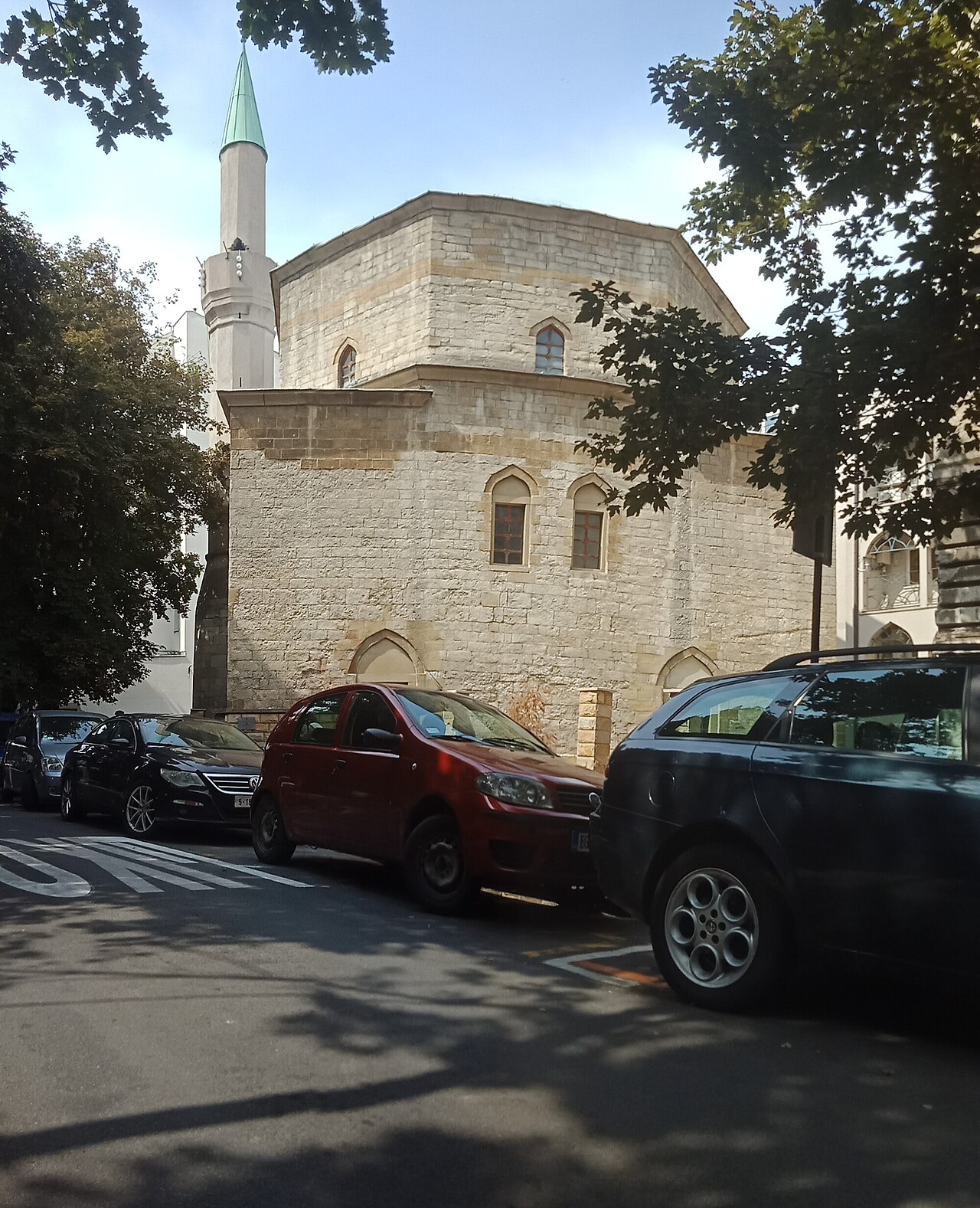
Bajrakli Mosque stands as the sole surviving Ottoman-era mosque in Belgrade, Serbia's capital. Built during the period of Ottoman rule, it represents a rare remnant of Islamic religious architecture in a city where numerous mosques once existed. The structure derives its name from the Turkish word for flag, referencing the practice of raising a flag to signal prayer times. Daily, around the five prayer times listed in the Islamic Community of Serbia’s official timetable. This is an active mosque rather than a timed visitor attraction. No weekly closure day or separate sightseeing schedule applies; non-worship visits must not interrupt prayers.
Checked 2026-08-31 · Source
The interior follows traditional Ottoman mosque design principles with a prayer hall oriented toward Mecca. Visitors will observe the mihrab, a niche indicating the direction of prayer, and the minbar, a raised pulpit used for sermons. The space is characterized by relatively modest decoration compared to grander imperial mosques, reflecting its community-scale function. Carpeting covers the floor for prayer. Architectural details include domed or semi-domed ceiling elements typical of Ottoman construction. This is an active mosque rather than a timed visitor attraction.
Checked 2026-08-31 · Source
A respectful visit to Bajrakli Mosque typically requires between fifteen and thirty minutes, depending on individual interest in architectural observation and historical context. This duration assumes no active prayer service is in progress during the visit. Visitors should factor in additional time for reading any available informational materials and for quiet observation of the interior features. Those with particular interest in Ottoman religious architecture or Belgrade's multicultural heritage may wish to allocate slightly longer. Free general entry; there is no adult admission ticket or visitor tariff.
Checked 2026-08-31 · Source
Visitors should independently verify current opening times before planning a visit, as active religious sites maintain schedules subject to change based on prayer times, religious observances, and community needs. Fridays, the principal day of congregational prayer in Islam, may present particular constraints on visitor access. Daily, around the five prayer times listed in the Islamic Community of Serbia’s official timetable. The entrance is at 11 Gospodar Jevremova Street, close to the junction with Kralja Petra. Bus 31 terminates at Studentski trg; from there, walk north along Kralja Petra and turn right into Gospodar Jevremova.
Checked 2026-08-31 · Source
As an active place of worship rather than a commercial tourist facility, Bajrakli Mosque may not operate with an admission fee structure. Many functioning religious sites worldwide permit visitor entry without charge while encouraging voluntary donations for maintenance. Those wishing to contribute may inquire locally about appropriate donation practices. The main prayer room is on the ground floor. Free general entry; there is no adult admission ticket or visitor tariff. The protected monument stands on a slope toward the Danube. The wooden mahfil above the entrance and the minaret terrace are elevated and are not step-free.
Checked 2026-08-31 · Source
Bajrakli Mosque occupies a location in Belgrade's central urban fabric, specifically in the historical Dorćol district north of the central Kalemegdan fortress area. The address places it within reasonable walking distance from other central landmarks for visitors already exploring on foot. The entrance is at 11 Gospodar Jevremova Street, close to the junction with Kralja Petra. Bus 31 terminates at Studentski trg; from there, walk north along Kralja Petra and turn right into Gospodar Jevremova. The main prayer room is on the ground floor. The wooden mahfil above the entrance and the minaret terrace are elevated and are not step-free.
Checked 2026-08-31 · Source
Visitors must recognize Bajrakli Mosque as an active religious site demanding appropriate conduct. Dress modestly, covering shoulders and knees; women should additionally cover their heads when entering. Remove shoes before entering the prayer hall. Avoid visiting during scheduled prayer times when the space serves worshippers. Photography requires particular sensitivity and explicit permission. Maintain quiet demeanor throughout. The protected monument stands on a slope toward the Danube. The wooden mahfil above the entrance and the minaret terrace are elevated and are not step-free. The official heritage survey documents a courtyard ablution fountain but no lift or accessible toilet.
Checked 2026-08-31 · Source
Photography inside Bajrakli Mosque requires explicit advance permission and should never be assumed permissible. Many mosques restrict or prohibit interior photography to preserve worshipper privacy and devotional atmosphere. If permission is granted, avoid photographing individuals without specific consent, particularly during prayer or religious activities. Flash photography is typically inappropriate in any case due to potential disruption and preservation concerns. Exterior photography from public thoroughfares generally faces fewer restrictions, though sensitivity to worshippers entering or exiting remains important. The official heritage survey documents a courtyard ablution fountain but no lift or accessible toilet.
Checked 2026-08-31 · Source
Yes. It is Belgrade’s only surviving active example of Islamic religious architecture.
The city heritage authority places its construction most probably in the second half of the 17th century, on the site of an older mesdzid.
A flag raised on its minaret once signalled the simultaneous start of prayer to Belgrade’s other mosques.
No. It served as a Catholic cathedral during Austrian rule from 1717 to 1739 and returned to Islamic worship after the Ottoman restoration in 1741.
The interior contains a mihrab, a raised wooden minbar and a wooden mahfil; the courtyard contains an ablution fountain and an unfinished madrasa with a library.
It was placed under state protection in 1946 and designated a cultural monument of great importance in 1979.
Loading the interactive map…
The interactive map could not be loaded.

Last updated:
Source: OpenStreetMap contributors ·