


1 min walk · Vračar
Co-cathedral of Christ the King in Belgrade
- Must see
- Place of worship
Language · 1 published
Place of worship · Градска општина Врачар, Belgrade
Београдска надбискупија
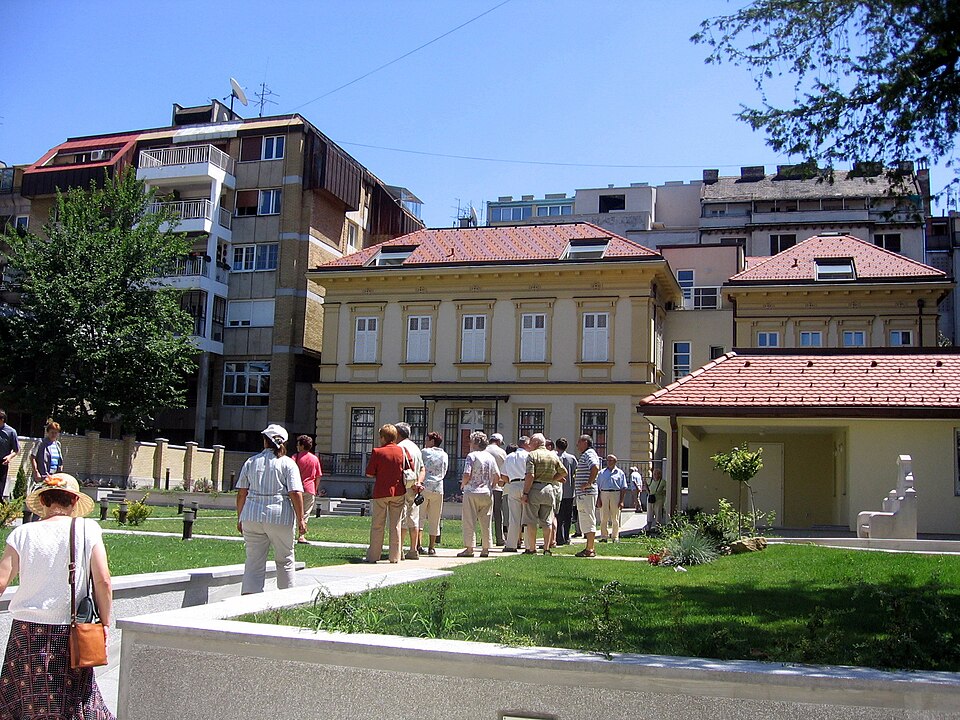
This building on Svetozara Markovića street is the Episcopal Palace, seat of the Metropolitan Archdiocese of Belgrade — the Roman Catholic archdiocese covering Central Serbia, with the Diocese of Subotica and the Diocese of Zrenjanin as its suffragans. Per OpenStreetMap it was built in 1884, two storeys under a single-level roof.
Catholic administration in the area goes back to the medieval Diocese of Syrmia; Belgrade fell under Ottoman rule in 1521, and a functioning Catholic diocese was only re-established after the Habsburgs took the city in 1717, then lost it again in 1739. A 1914 Concordat between the Kingdom of Serbia and the Holy See set out a regular archdiocese, delayed by the First World War and only created in 1924 under archbishop Ivan Rafael Rodić; it was raised to a metropolitan see in 1986. Before the archdiocese existed in its current form, the see was held by a succession of bishops — Jozef Ignác de Vilt, Stefan Cech, Venceslao Soic and Giovanni Paolesic — stretching back to 1800, part of the same on-again, off-again Catholic presence that the Ottoman and Habsburg contest over the city produced. The current archbishop, Ladislav Nemet, has held the post since 5 November 2022 and was made a cardinal in 2025.
Checked 2026-08-24 · Source
The archdiocese's administrative offices and the archbishop's residence occupy this address — not a museum, and not laid out for visitors.
The actual church, the Cathedral of the Blessed Virgin Mary, stands nearby as part of a monastery complex known as the Marijanum. It began as a school and chapel for the children of French business families who settled in Belgrade in the early 1920s; Assumptionist monks built the first church in 1924–1925, consecrated on 25 September 1925 by Angelo Roncalli — then the Holy See's apostolic visitor to Bulgaria, later Pope John XXIII. A belfry added in 1930 carries three bells: the largest donated by King Alexander I of Yugoslavia, the middle one sent from the Vatican, and the smallest bought with worshippers' donations. A larger memorial church for French and Serbian soldiers killed in the First World War was added to the complex from 1938.
Checked 2026-08-24 · Source
A few minutes at this address — it is an administrative building and residence, not a site with an interior to tour. Visiting the cathedral itself, a short walk away, adds another twenty to thirty minutes for the church, its 1930 belfry and the wider Marijanum complex.
Checked 2026-08-24 · Source
Any time of day for the exterior of the palace; there is no published visitor programme to time a visit around. The cathedral nearby holds Mass on the usual Catholic parish schedule, which is not published on the sources this page uses.
Checked 2026-08-24
None — the palace is not a ticketed or visitable site, since it houses administrative offices and the archbishop's residence rather than a public exhibit.
The cathedral nearby, like other Catholic parish churches in Belgrade, does not charge for entry during services; no separate admission arrangement for sightseeing outside service times is published on the sources this page uses.
Checked 2026-08-24
Svetozara Markovića 20, in central Belgrade, a short walk from the wider Vračar and Stari Grad sightseeing area around Republic Square.\n\nBelgrade has no metro; trams, buses and trolleybuses serve the surrounding streets, and the walk from the old town takes roughly ten to fifteen minutes depending on the starting point.
Checked 2026-08-24 · Source
This is a working office and a private residence, not a tourist attraction — there is no public entry, and it should be treated with the same discretion as any other administrative or residential building.
The nearby cathedral is an active parish church with its own French-founded school history; standard church etiquette — modest dress, quiet during services — applies there even though it does not apply to a walk past this office building.
Because the Metropolitan Archdiocese of Belgrade is a small minority institution in a city whose religious life is overwhelmingly Serbian Orthodox, a visitor arriving expecting the scale of a Western European cathedral complex may find the palace and the parish church both modest by comparison.
Checked 2026-08-24 · Source
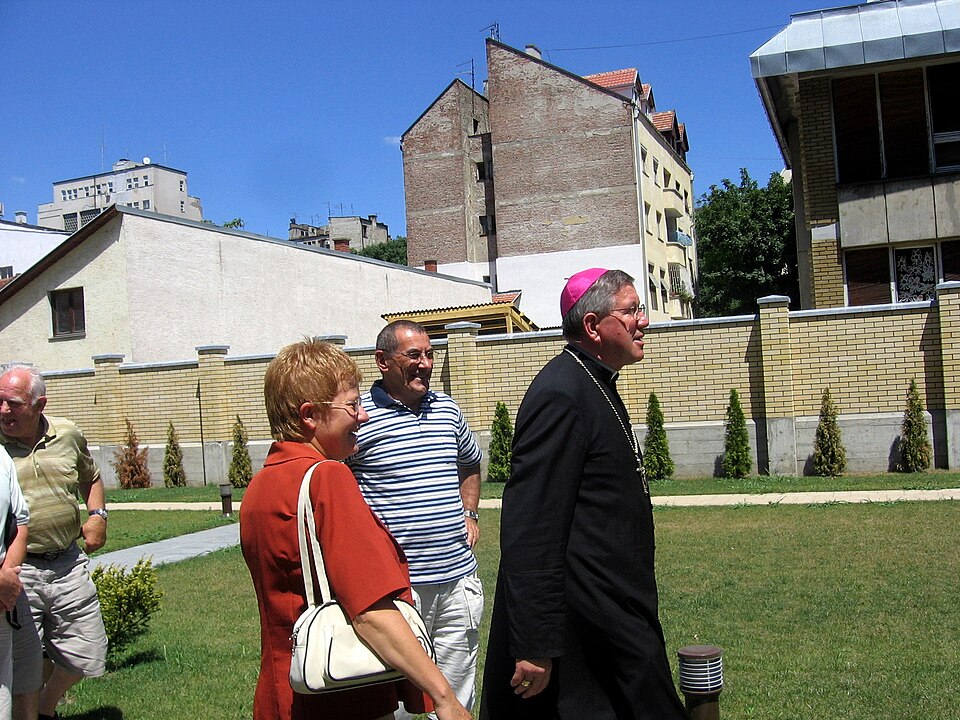
The 1884 facade on Svetozara Markovića is the only part of the building a visitor sees; nothing about interior access or photography is published because there is none to arrange. The cathedral's 1930 belfry and the wider Marijanum complex nearby are the more photogenic subject.
Checked 2026-08-24 · Source
No — this building is the Episcopal Palace, the archdiocese's administrative seat. The cathedral, the Church of the Blessed Virgin Mary, is a separate nearby building where services are held.
A 1914 Concordat with the Holy See set out a regular archdiocese; it was finally created in 1924 after the First World War delayed the process, and raised to a metropolitan archdiocese in 1986.
No — it is an administrative office and residence with no public visiting arrangement.
Ladislav Nemet, SVD, in office since 5 November 2022 and made a cardinal in 2025.
It was built in 1884, per its OpenStreetMap record.
Angelo Roncalli, the Holy See's apostolic visitor to Bulgaria at the time, on 25 September 1925 — he later became Pope John XXIII.
Loading the interactive map…
The interactive map could not be loaded.
Last updated:
Source: OpenStreetMap contributors, Wikidata ·