


.jpg)
3 min walk · Stari Grad
Museum of Science and Technology Belgrade
- High
- Museum
Language · 1 published
Place of worship · Градска општина Стари град, Belgrade
Храм Светог Александра Невског
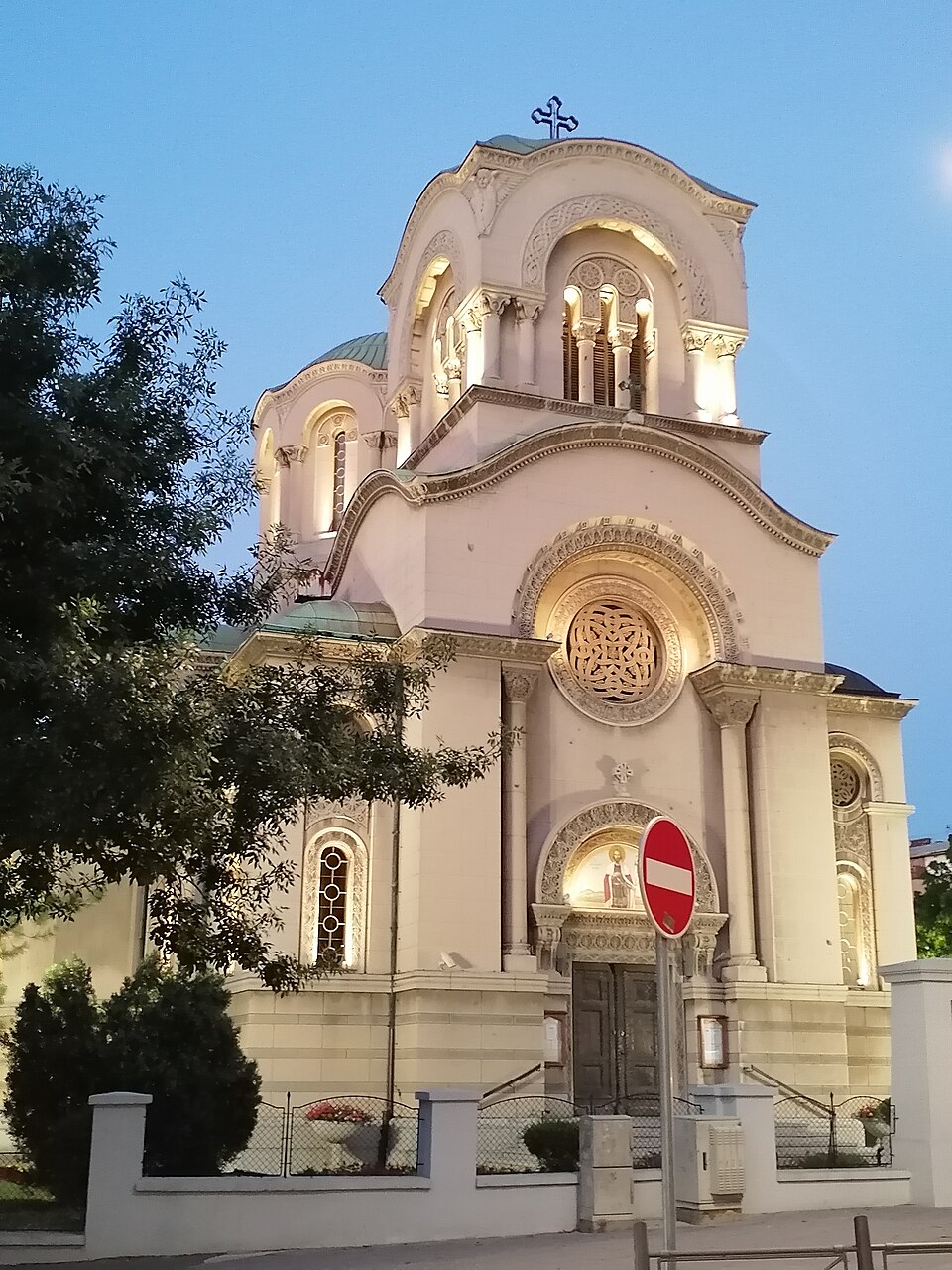
The Church of St. Alexander Nevsky is a Serbian Orthodox parish church in Belgrade's Dorćol neighborhood, standing on Cara Dušana Street in the Stari Grad municipality. A first, smaller church on the site dates to 1877; its foundations were consecrated again in 1912 for a larger building, and construction of that larger church was completed between 1928 and 1929 to a design by Jelisaveta Načić, one of the first women architects to practice in Serbia. It was declared a cultural monument in 1983.
The design draws on the medieval Morava school, the last major flowering of Serbian church architecture before the Ottoman conquest, known for richly carved stone ornament around its doors and windows. Choosing that model for a 1920s parish church, at the same moment St. Mark's was rising nearby to a Byzantine-Kosovo model, reads as part of a broader interwar turn back to Serbia's medieval architectural inheritance rather than to imported European styles.
Checked 2026-08-23 · Source
The church is named for Alexander Nevsky, the thirteenth-century Russian prince and saint, a dedication that reflects Belgrade's close ties to Russia and, after 1918, to the large community of Russians who fled the Revolution and Civil War. Yugoslavia took in one of the largest White Russian émigré populations outside France, and King Alexander I, a self-described Russophile, was personally receptive to the refugees; that community built or supported several Orthodox institutions in Belgrade in the years the larger Nevsky church went up.
The site itself carries an older layer of history: during the Habsburg occupation of Belgrade from 1717 to 1739, Capuchin monks adapted a former mosque near this spot for Catholic worship and ran a hospital serving soldiers and local residents before their departure. Detailed inventories of the current church's icons, iconostasis and interior fittings are not published on the sources this page uses and are not reproduced here.
Checked 2026-08-23 · Source

Fifteen to twenty minutes covers a look at the exterior stonework and a quiet pass through the nave; this is a working parish church rather than a museum-scale interior, so there is less to linger over than at Belgrade's larger cathedrals.
It sits close enough to St. Mark's Church, about ten minutes on foot, and to the Dorćol grid of streets that it works best folded into a longer walk through the old town rather than visited as a single destination.
Checked 2026-08-23
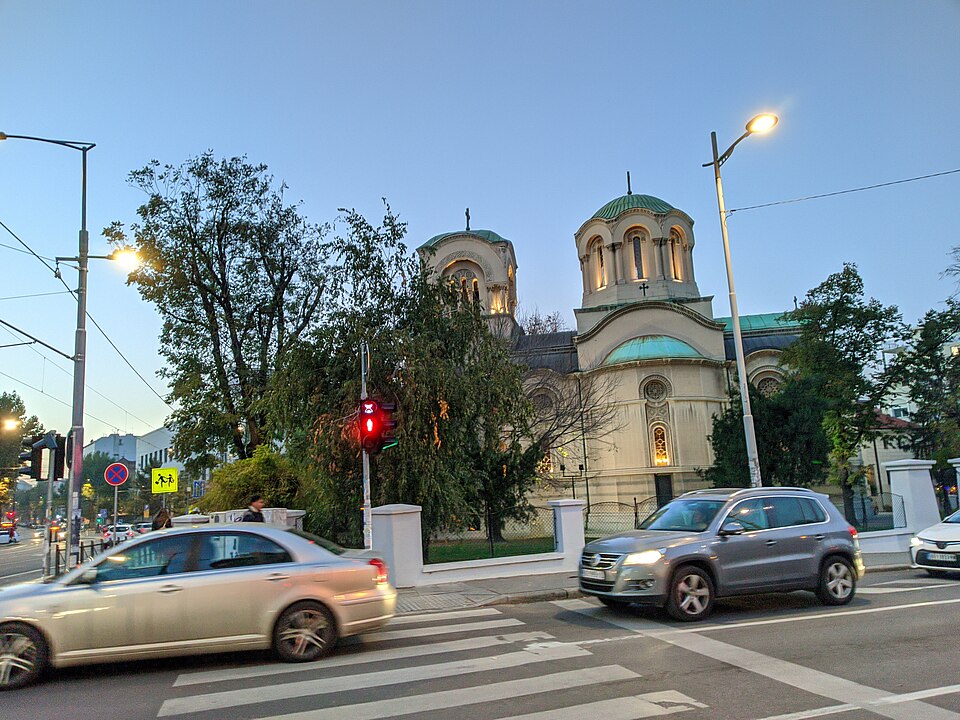
Weekday mornings are quiet, with none of the queuing that affects Belgrade's larger sights. As an active parish, the church holds regular Sunday liturgies and services on Orthodox feast days, when the building is in use by its congregation rather than open for casual sightseeing.
Its carved stone façade is the main visual draw and depends on direct light to show its relief detail, so a sunny morning or early afternoon gives more definition to the doorway and window carving than an overcast day does.
Checked 2026-08-23
Entry is free, as at every working Orthodox parish church in Belgrade. There is no admission booth; a donation box near the entrance supports the building's upkeep and is customary rather than required.
Current opening hours outside of service times are not published on the sources this page uses and are not reproduced here.
Checked 2026-08-23
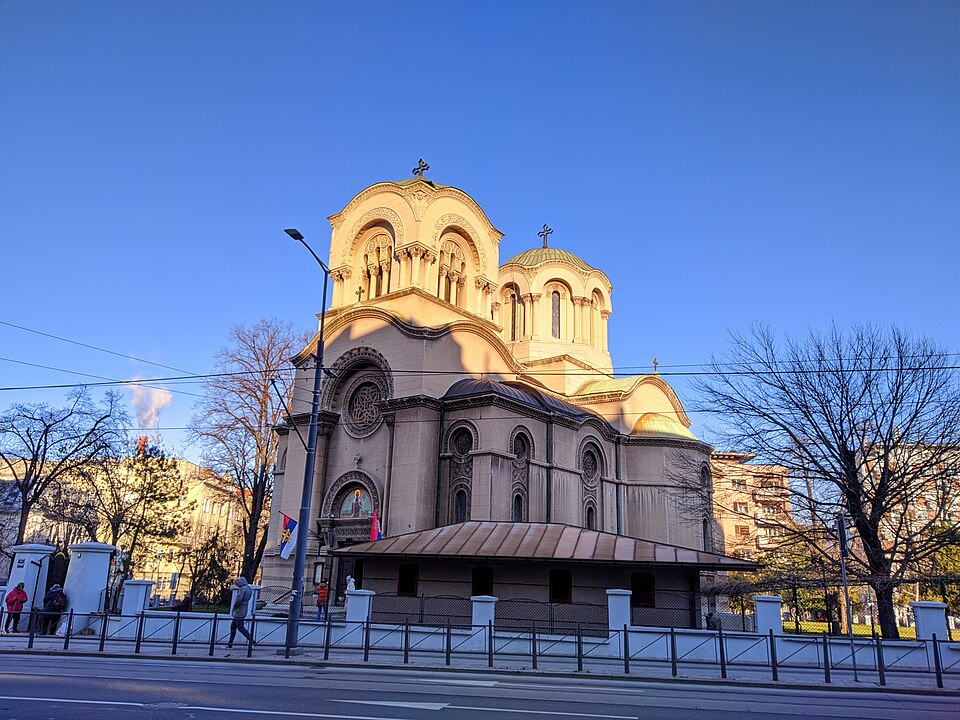
The church stands at 61 Cara Dušana Street in Dorćol, roughly a fifteen-minute walk north from Republic Square through the old town, or a shorter walk east from the Belgrade Fortress along the Danube-facing streets of the district.
Belgrade has no metro; several tram and bus lines run along Cara Dušana Street and the surrounding Dorćol grid, with stops within a few minutes' walk of the church. Dorćol's blocks are flat and walkable, which makes arriving on foot from the old town the simplest option for most visitors already exploring the area.
Checked 2026-08-23
As an active Serbian Orthodox parish, the same conduct expected at any working church applies here: shoulders and knees covered, hats off for men, and a quiet manner during services. Because this is a smaller neighborhood church rather than a cathedral, a service in progress can make the whole nave unavailable for sightseeing rather than leaving a side aisle open, so checking before entering during likely liturgy times avoids disappointment.
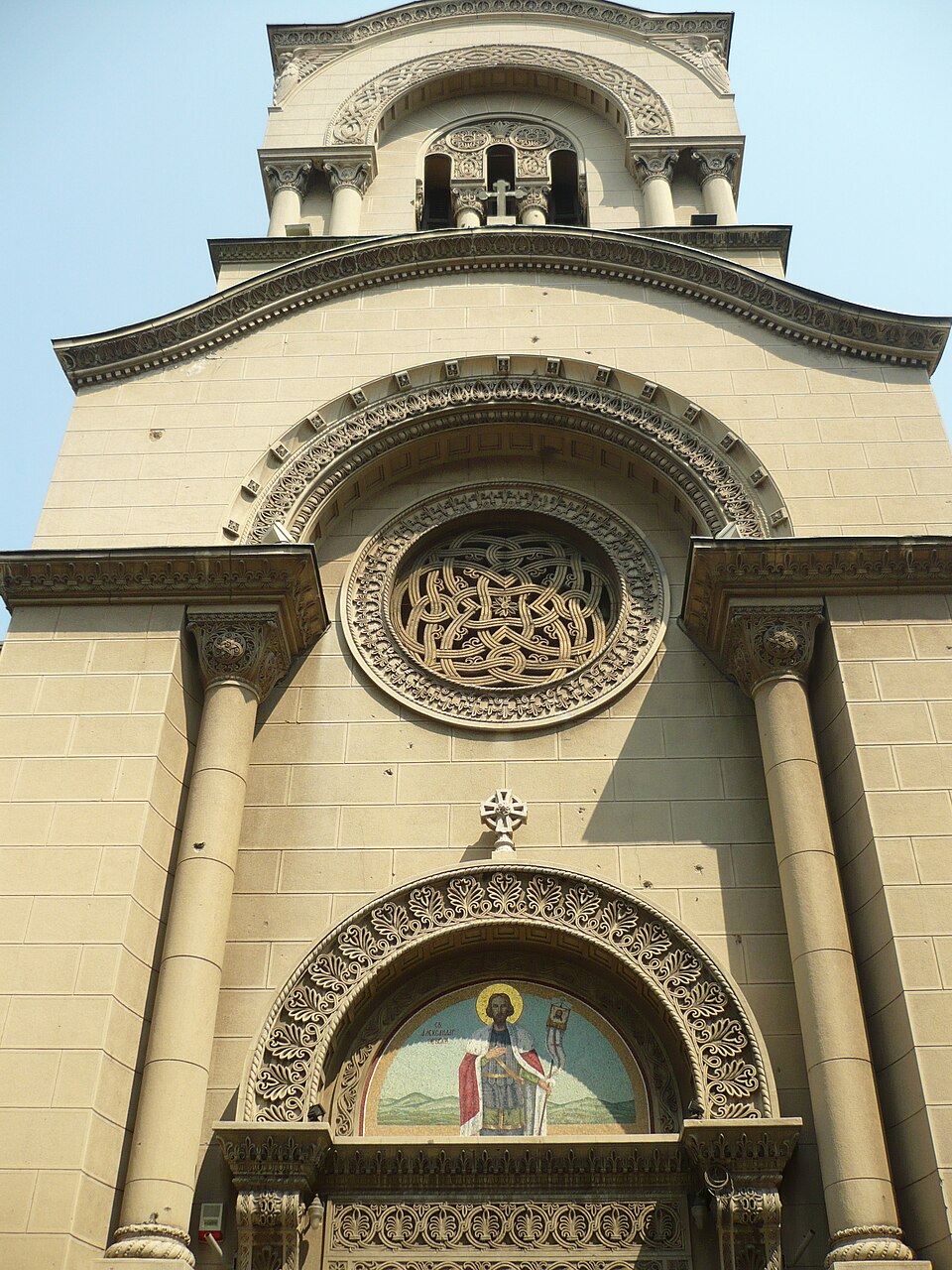
There is no crowd-control issue or queue to plan around, and no separate paid areas inside. The carved stone Morava-style doorways and window surrounds are original decorative fabric and should not be touched or climbed on for photographs.
Checked 2026-08-23
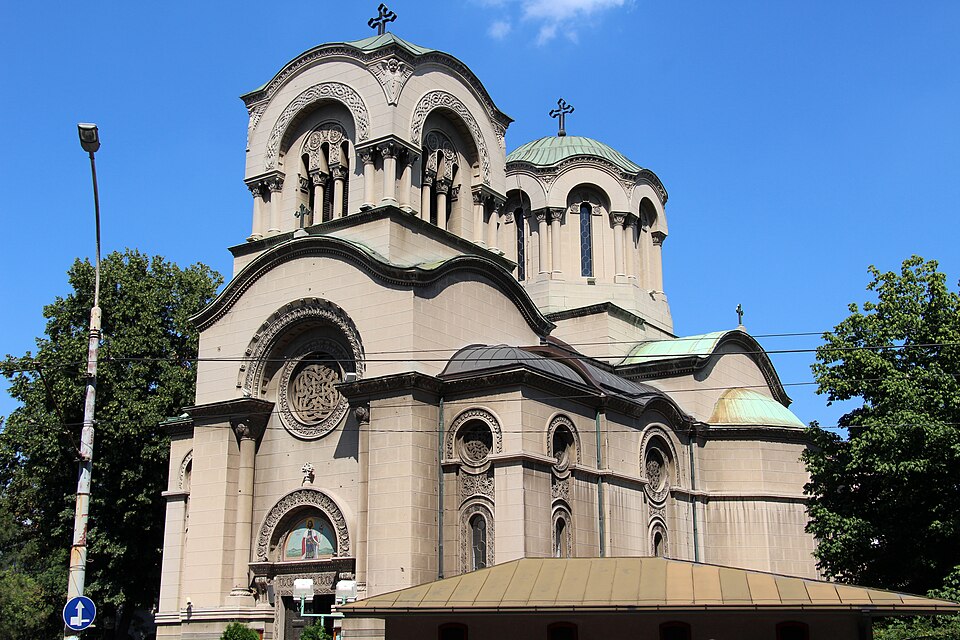
Photography without flash is generally acceptable in the nave outside of services; flash and tripods are best avoided out of respect for worship regardless of posted signage. The building's strongest photographic subject is its exterior, where the carved stone Morava-style ornament around the doors and windows rewards a closer, detail-focused shot rather than a single wide view of the façade.
Cara Dušana Street is narrow, which limits how far back a photographer can stand for a full-façade shot; the opposite pavement or a slight angle down the street gives more working room than shooting straight on.
Checked 2026-08-23
An earlier, smaller church on the site dates to 1877. The larger church standing today had its foundations consecrated in 1912 and was completed between 1928 and 1929.
Jelisaveta Načić, one of the first women architects to practice in Serbia, designed the larger church in the style of the medieval Morava school.
The dedication reflects Belgrade's ties to Russia, reinforced after 1918 when Yugoslavia took in one of the largest White Russian émigré communities outside France, welcomed personally by King Alexander I.
During the Habsburg occupation of Belgrade from 1717 to 1739, Capuchin monks adapted a former mosque near the site for Catholic worship and ran a hospital there.
Yes. It was declared a cultural monument in 1983.
No. Entry is free, with a donation box near the entrance for visitors who wish to contribute to upkeep.
Loading the interactive map…
The interactive map could not be loaded.
Last updated:
Source: OpenStreetMap contributors, Wikidata ·