


1 min walk · Stari Grad
Jewish Historical Museum
- Must see
- Museum
Language · 1 published
Place of worship · Градска општина Стари град, Belgrade
Бајракли џамија
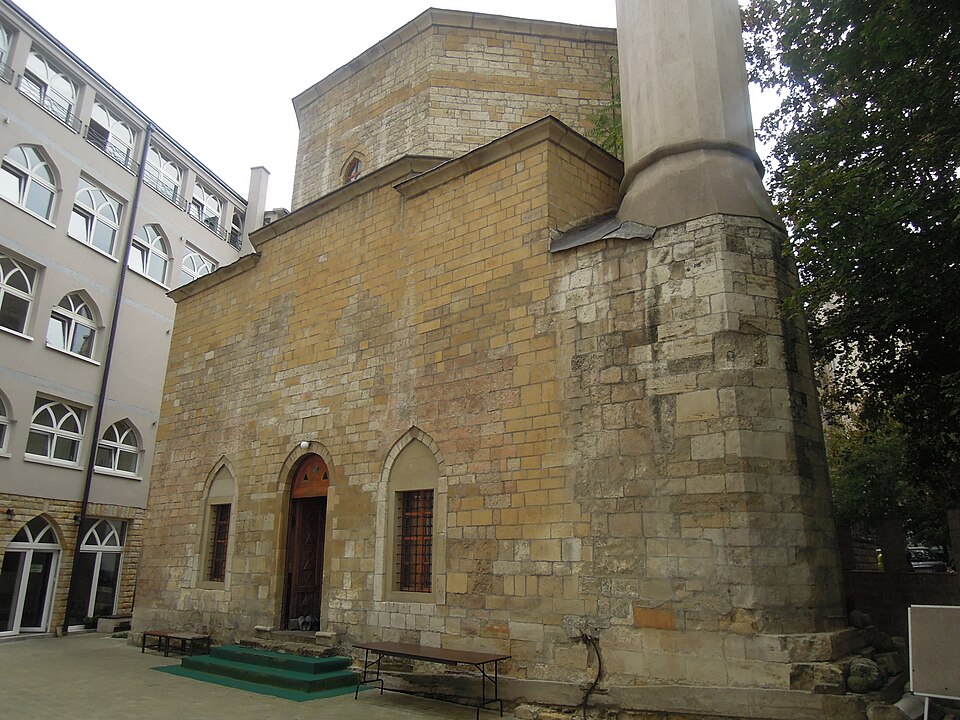
The Bajrakli Mosque is the only mosque left in Belgrade, out of 273 that stood here under Ottoman rule.
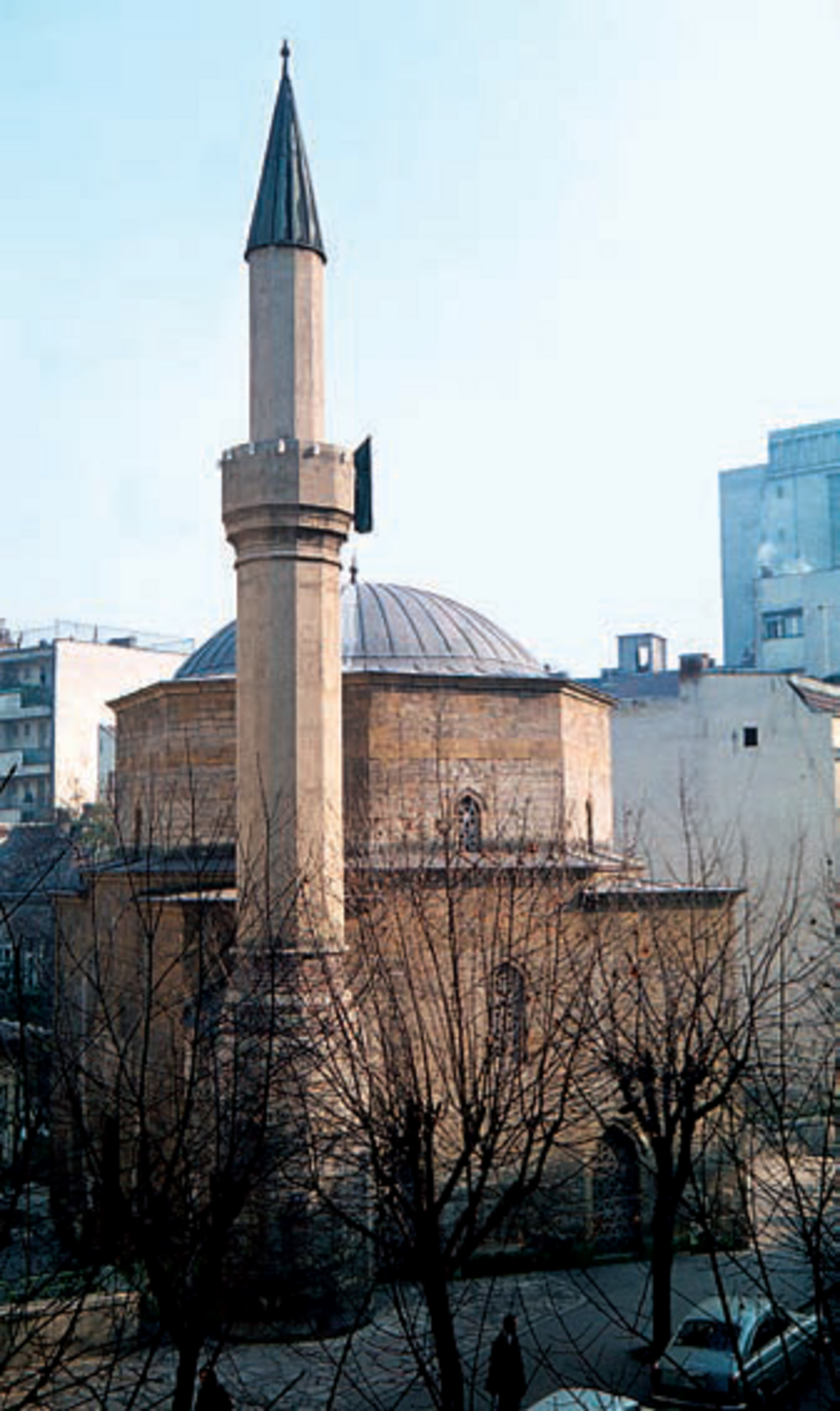
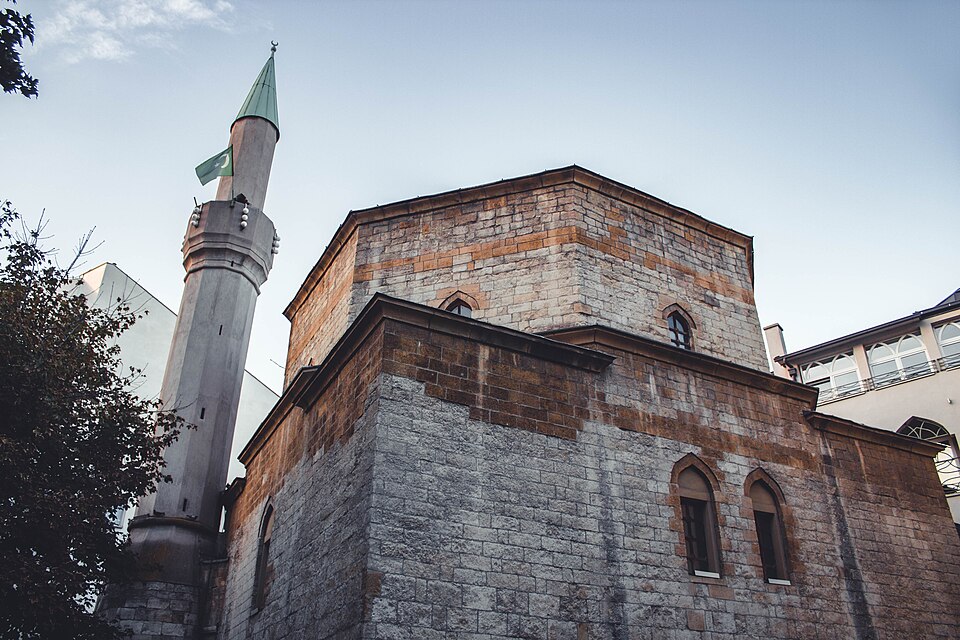
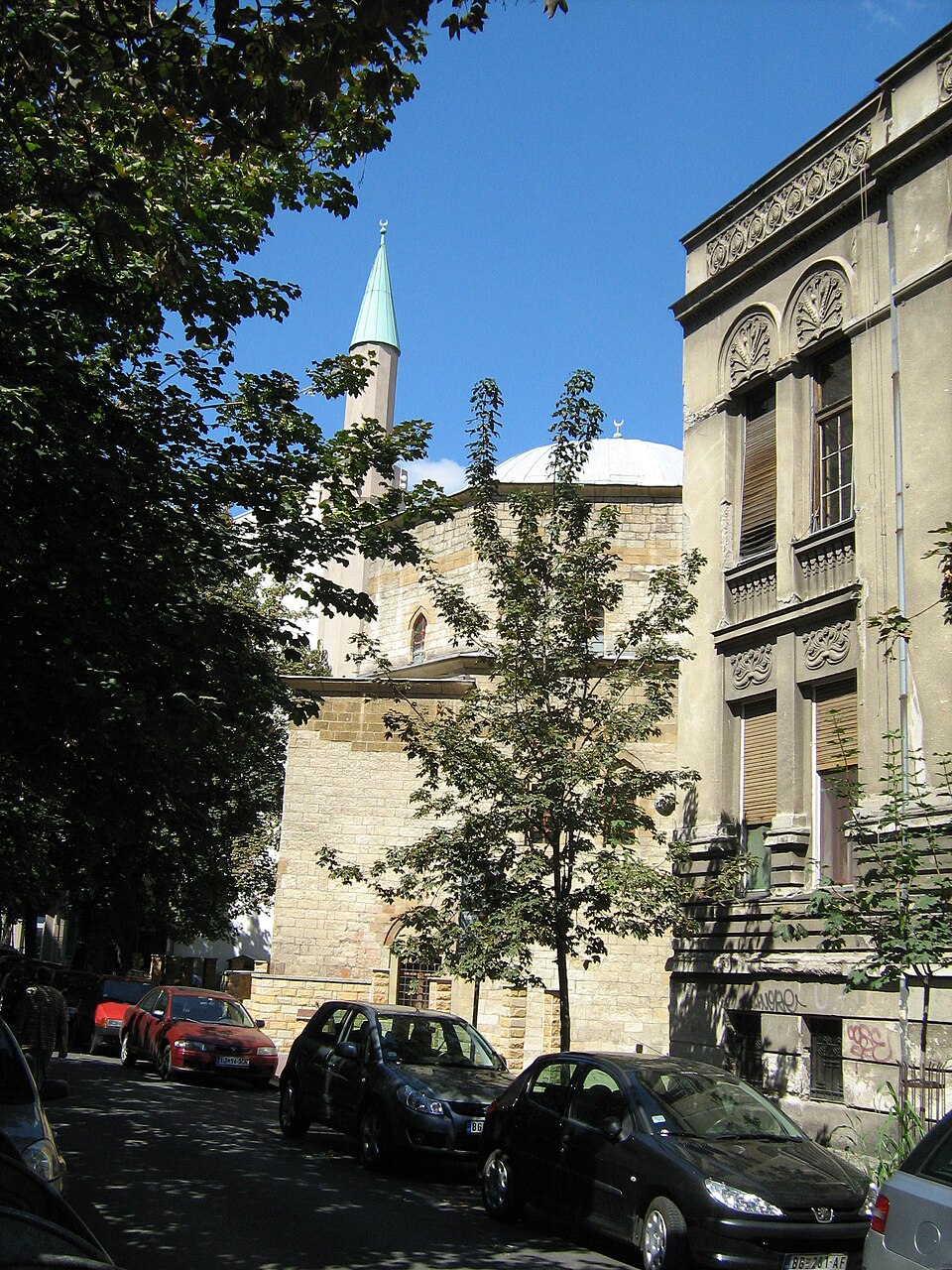
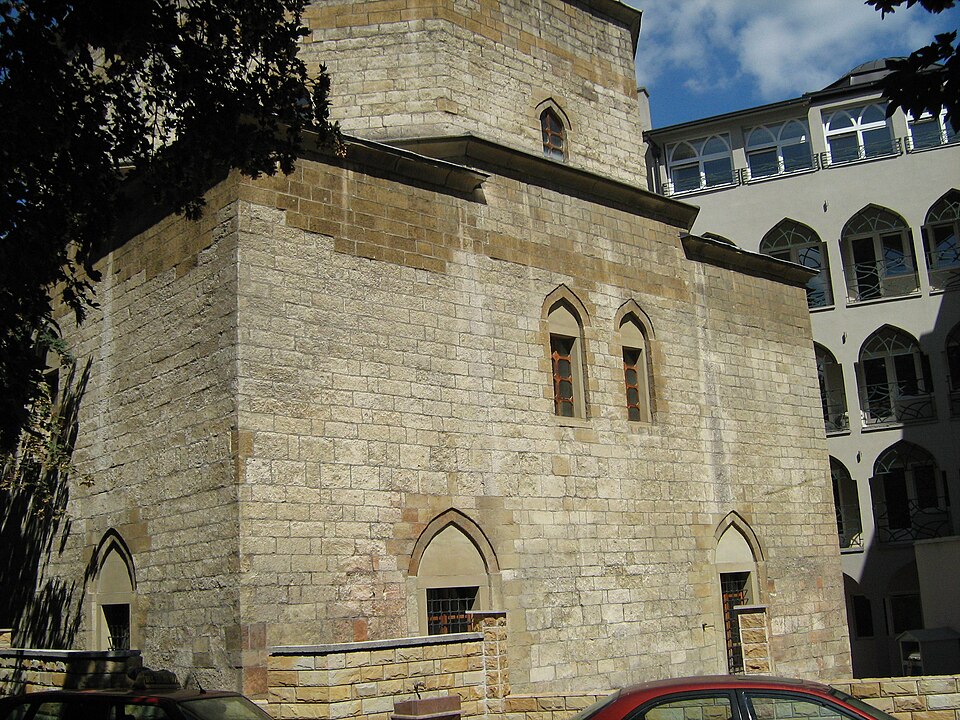
It was built around 1575, in Dorćol, and it is a plain one-storey cube of stone and brick with a dome and a minaret.
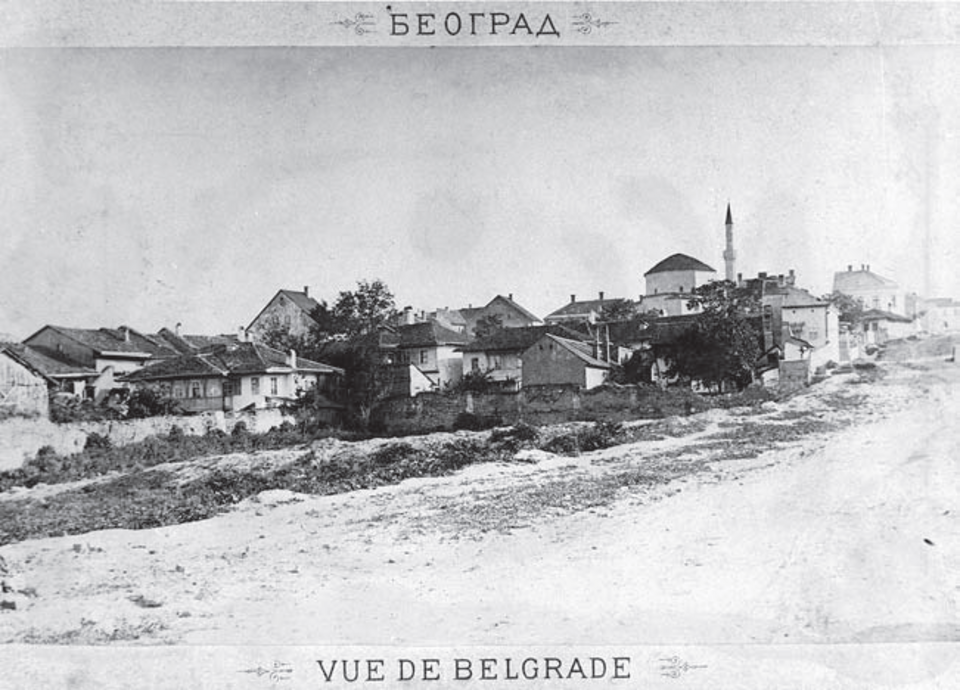
The name comes from the Turkish bayrak, a flag — a flag was raised on the minaret to signal the start of prayer to the city's other mosques, and none of those other mosques survives.
During the Austrian occupation between 1717 and 1739 it was converted into a Roman Catholic church, and returned to use as a mosque when the Ottomans came back.
It has been protected as a cultural monument of great value since 1979.
Checked 2026-08-23 · Source
A single domed room, and very little decoration.
The interior is modest: calligraphic Quranic inscriptions and not much else. This is a sixteenth-century provincial mosque rather than an imperial one, and what it offers is age and survival rather than ornament.
It functions as the main Islamic cultural centre in Belgrade and serves the city's Muslim community.
In 2004 it was set on fire during violent protests connected to unrest in Kosovo. It was repaired, with conservation work on the stone façades and restoration of the windows, and the damage is no longer visible — which is itself part of what a visitor should know about the building.
Checked 2026-08-23 · Source
Twenty minutes, and it is on the way between the fortress and Skadarlija.
The building is small and there is one room to see.
Gospodar Jevremova, the street it stands on, runs through Dorćol, which is the old quarter between the fortress and the Danube and is the most pleasant part of Belgrade to walk without a destination.
Skadarlija, the old bohemian street of restaurants, is five minutes away.
Checked 2026-08-23 · Source
Outside prayer times, and not on Friday around midday.
This is a working mosque with a congregation, not a monument, and the congregation comes first in a city where it has one building.
Visitors are received courteously outside prayer, and asking at the door is the correct approach rather than walking in.
There are no seasonal considerations; the visit is indoors and takes minutes.
Ramadan changes the rhythm of the building entirely, with the evening prayer filling it, and is the one period when a casual visit is unlikely to be welcome.
Checked 2026-08-23
Free. It is a working mosque and there is no admission charge, no ticket office and no printed material; whoever is at the door is the whole of the visitor service.
Donations are accepted and are the customary way to contribute, as at the city's churches.
The Islamic community that maintains the building runs it as a place of worship and a cultural centre rather than as a monument, and there is no guided visit to buy.
Checked 2026-08-23 · Source
Gospodar Jevremova, in Dorćol, about ten minutes' walk from Republic Square and five from Knez Mihailova.
The walk down from the Kalemegdan gate through Dorćol takes ten minutes and is the natural approach.
There is no metro in Belgrade; trams, buses and trolleybuses run instead, and the old town is walkable end to end.
Checked 2026-08-23 · Source
It is a working mosque and the ordinary rules apply: shoes off, shoulders and knees covered, heads covered for women, no visiting during prayer.
Ask before entering rather than walking in. There is no visitor entrance separate from the worshippers'.
Friday midday prayer fills the building.
Photography inside should be asked about rather than assumed, and photographing worshippers is not acceptable.
The building is easy to walk past — it stands back from the street behind a wall and is not signposted in the way a monument would be.
Checked 2026-08-23 · Source
The exterior from Gospodar Jevremova, with the minaret above the wall, is the available photograph, and the street is narrow enough that it needs a wide lens.
The interior is small, plain and dim; ask before photographing it and do not photograph anyone praying.
The building's real subject is its isolation — one mosque where 273 stood — and that is a difficult thing to put in a frame. The wider street, with the ordinary Belgrade façades either side, comes closest.
There is no elevated position and no view of the dome from any public street.
Checked 2026-08-23
One. The Bajrakli Mosque is the only survivor of 273 that stood in the city under Ottoman rule.
It was built around 1575 and has been protected as a cultural monument of great value since 1979.
Flag mosque, from the Turkish bayrak. A flag was raised on the minaret to signal the start of prayer to the city's other mosques.
Yes. During the Austrian occupation between 1717 and 1739 it was converted into a Roman Catholic church, and returned to use as a mosque afterwards.
It was set on fire during violent protests connected to unrest in Kosovo. It was repaired, with conservation work on the stone façades and the windows.
Yes, outside prayer times and with the usual courtesies — shoes off, shoulders and knees covered, heads covered for women. Ask at the door rather than walking in.
Loading the interactive map…
The interactive map could not be loaded.
Last updated:
Source: OpenStreetMap contributors, Wikidata ·