

2 min walk
Al-Balad Souq Al Alawi
- Must see
- Historic monument
Language · 11 published
Museum · Jeddah

| Monday | 09:00 – 23:00 |
|---|---|
| Tuesday | 09:00 – 23:00 |
| Wednesday | 09:00 – 23:00 |
| Thursday | 09:00 – 23:00 |
| Friday | 16:30 – 23:00 |
| Saturday | 09:00 – 23:00 |
| Sunday | 09:00 – 23:00 |
Checked 2026-08-31 · Source
Read from the OpenStreetMap access tags; anything not listed has no tag recorded.
Set the group type to family in the planner and the day window contracts to about three quarters of a solo day.
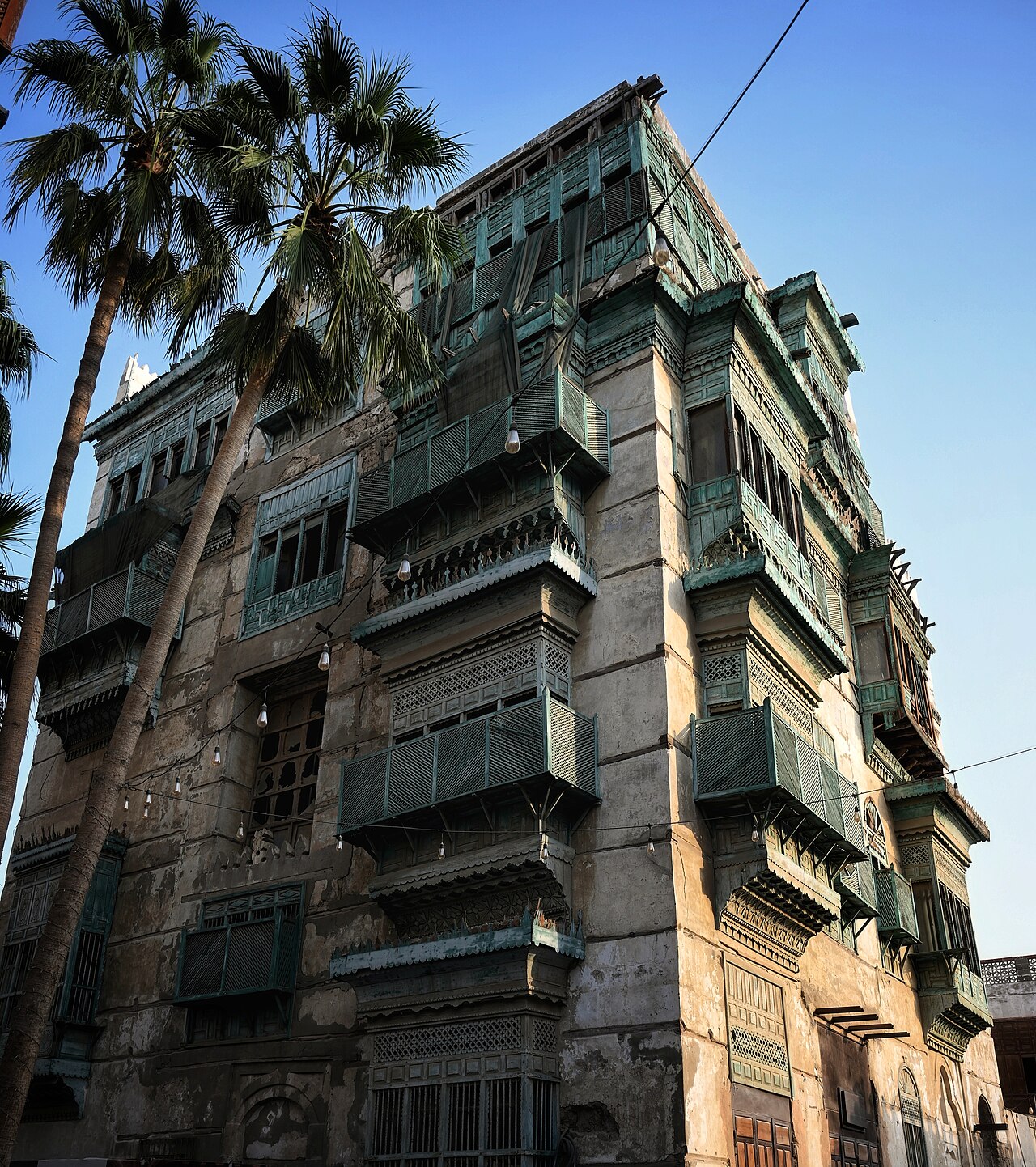
Matbouli House Museum is a heritage building in Jeddah's historic district, preserving traditional Hejazi architecture. The structure exemplifies the coral-stone construction and wooden latticework characteristic of old Jeddah residences. As a house museum, it offers insight into domestic life and architectural practices of the region's mercantile families. The site contributes to understanding Jeddah's role as a historic Red Sea port and pilgrimage gateway. Its preservation reflects broader efforts to maintain the cultural fabric of the Al-Balad area.
Checked 2026-08-31 · Source
Traditional Hejazi houses typically incorporate multipurpose reception rooms, private family quarters, and rooftop spaces adapted to the coastal climate. Decorative elements may include intricately carved wooden doors, gypsum ventilation panels, and built-in storage niches. The museum presumably interprets the merchant lifestyle that shaped Jeddah's cosmopolitan character.
Checked 2026-08-31 · Source
Visitors typically allocate between forty-five minutes and ninety minutes for house museums of comparable scale and complexity. This estimate allows for unhurried examination of architectural details, reading of any available interpretive materials, and contemplation of the domestic spaces. Those with particular interest in regional building techniques or social history may prefer extended visits. The compact nature of traditional Hejazi houses suggests the experience is intensive rather than extensive. Actual duration depends on individual engagement and any guided elements offered.
Checked 2026-08-31 · Source
Saturday–Thursday 09:00–23:00; Friday 16:30–23:00. Closed for a daily break 14:00–16:30 Saturday–Thursday; Friday morning is closed. Visitors should verify current opening times through official channels before planning attendance. Jeddah's coastal climate features high humidity and temperatures exceeding forty degrees Celsius in summer months, potentially affecting comfort during walking exploration of the historic district. The cooler period from November to March generally permits more pleasant outdoor movement between sites. Evening hours may offer atmospheric lighting on coral facades. Friday observances and religious holidays may affect accessibility in the Kingdom.
Checked 2026-08-31 · Source
General admission is SAR 25 per person; children under 8 enter free. Heritage sites in Saudi Arabia have undergone significant policy changes regarding public access and admission structures in recent years. Some cultural institutions now operate without charge as part of national tourism development initiatives, while others maintain modest entry fees. Visitors should consult current official sources for definitive pricing. Payment methods, group rates, and any combined ticketing with nearby heritage attractions remain unverified. Budget-conscious travelers should prepare for variable possibilities. A flexible visit lets travellers connect Matbouli House Museum with the rest of the day without treating one room, viewpoint or photograph as the whole experience. The useful pace depends on personal interest and conditions on arrival.
Checked 2026-08-31 · Source
For public transport, the Historic Jeddah authority places the SAPTCO Bus Station a 7-minute walk from Historic Jeddah. A 24-hour airport express bus links King Abdulaziz International Airport with the historic centre in about 35 minutes for SAR 20; golf carts operate within the district. Matbouli House Museum sits within Al-Balad, Jeddah's historic core near the Red Sea waterfront. The district's narrow lanes restrict vehicular access; approaching on foot from peripheral parking areas proves most practical. Taxis and ride services can deposit visitors at defined zone boundaries. The area connects to King Abdulaziz International Airport approximately twenty kilometers north. Public bus services exist though routes and reliability require local verification. Signage within Al-Balad's labyrinthine street pattern may be inconsistent; navigation applications or local guidance assists orientation.
Checked 2026-08-31 · Source
The operator’s published visitor route is not step-free: the main entrance is shown with stone steps, and the museum tour covers the ground and first floors via an internal staircase. The tour also includes the basement-level cistern area, adding another change of level. The historic district's aging infrastructure presents uneven paving, absent lighting in passages, and minimal accessibility accommodations for mobility-impaired visitors. Coral stone surfaces become slippery when humid. Modest dress respecting local customs is appropriate throughout. Photography restrictions may apply internally despite general tolerance in public heritage zones. Ramadan observances alter rhythms of commercial and cultural activity. Construction or restoration activity nearby may generate noise, dust, or access modifications. No emergency services or amenities are immediately proximate; self-sufficiency in water and sun protection is prudent.
Checked 2026-08-31 · Source
The architectural character of Matbouli House Museum presents compelling visual subjects: weathered coral-block walls, projecting wooden mashrabiya screens, and carved doorway surrounds. Exterior photography in public thoroughfares generally proceeds without restriction. Natural light quality varies dramatically through the day, with harsh midday sun giving way to golden tones in late afternoon. Tripod use may attract scrutiny. Respect for any resident privacy in adjacent inhabited structures should govern composition choices.
Checked 2026-08-31 · Source
The house was built in 1613 and is one of the oldest surviving houses in Historic Jeddah.
It is in Harat Al-Yaman within Historic Jeddah, the Al-Balad area inscribed as a UNESCO World Heritage Site.
Rawasheen are projecting carved wooden windows designed to provide privacy, natural ventilation and shade.
The house was built principally from Red Sea coral stone, carved wood and decorated wooden ceilings.
The route covers two floors: ground-floor reception rooms and the cistern area, followed by first-floor sleeping, storage and family rooms.
The operator gives an approximate tour duration of 45 minutes.
Loading the interactive map…
The interactive map could not be loaded.

Last updated:
Source: OpenStreetMap contributors ·