
2 min walk
Naseef House
- Must see
- Museum
Language · 11 published
Museum · Jeddah
Closed today, Sunday. Next open Monday at 09:00 — the planner will not place a stop here on a Sunday.
Plan around it| Monday | 09:00 – 22:00 |
|---|---|
| Tuesday | 09:00 – 22:00 |
| Wednesday | 09:00 – 22:00 |
| Thursday | 09:00 – 23:59 |
| Friday | 16:00 – 23:59 |
| Saturday | 09:00 – 22:00 |
| Sunday | Closed |
Checked 2026-08-31 · Source
Read from the OpenStreetMap access tags; anything not listed has no tag recorded.
Set the group type to family in the planner and the day window contracts to about three quarters of a solo day.
The Tarek Abdulhakim Center is a Ministry of Culture institution located in Historic Jeddah, dedicated to preserving Saudi musical heritage. Named after the influential Saudi musician Tarek Abdulhakim, the centre serves as a cultural repository and educational space for traditional and contemporary Saudi music. It occupies a restored building within the UNESCO-listed Al-Balad district, contributing to the broader revitalisation of Historic Jeddah's cultural infrastructure. The centre represents Saudi Arabia's efforts to document, celebrate, and transmit its musical traditions to new generations. Monday–Wednesday and Saturday 09:00–22:00; Thursday 09:00–00:00; Friday 16:00–00:00; Sunday closed. Sunday is the weekly closure. Special events may use separately published hours.
Checked 2026-08-31 · Source
The centre houses collections and resources related to Saudi musical heritage. The restored architectural setting in Historic Jeddah provides an authentic context for engaging with cultural heritage. Visitors should expect a culturally focused environment emphasising preservation and education rather than commercial entertainment. Free general admission; advance booking is required through the Ministry of Culture ticketing service.
Checked 2026-08-31 · Source
The appropriate duration for visiting the Tarek Abdulhakim Center depends on individual interest in Saudi musical heritage and cultural institutions. A focused visit might reasonably occupy between forty-five minutes and two hours. Those with deeper interest in ethnomusicology, archival research, or the specific legacy of Tarek Abdulhakim may wish to extend their stay. The centre's location within Historic Jeddah allows visitors to combine their trip with exploration of surrounding heritage sites, markets, and traditional architecture, making it one component of a fuller day in Al-Balad.
Checked 2026-08-31 · Source
Monday–Wednesday and Saturday 09:00–22:00; Thursday 09:00–00:00; Friday 16:00–00:00; Sunday closed. Sunday is the weekly closure. Special events may use separately published hours. Historic Jeddah's climate presents extreme heat during summer months, making outdoor navigation between sites uncomfortable from roughly May through September. The cooler period from November to March offers more pleasant conditions for walking through Al-Balad's narrow streets.
Checked 2026-08-31 · Source
Free general admission; advance booking is required through the Ministry of Culture ticketing service. As a Ministry of Culture institution, the centre may operate with free admission or nominal fees, though this cannot be assumed. Visitors should verify current entry policies through official sources prior to arrival. Some Saudi cultural institutions require advance booking, particularly for guided tours or educational programmes. Identification may be requested at entry. Budget-conscious travellers should prepare for either free access or modest charges.
Checked 2026-08-31 · Source
From AlSulaymaniyah Haramain Railway Station, Historic Jeddah is about a 17-minute drive. The official Al-Balad guide places the district about a seven-minute walk from the SAPTCO bus stop. A 24-hour Airport and Bus Rapid Transit service links King Abdulaziz International Airport with central Jeddah in about 35 minutes for SAR 20; golf carts operate within Historic Jeddah. The centre sits within Historic Jeddah, the Al-Balad district, accessible from central Jeddah by various transport modes. Taxis and ride-hailing services serve the area, though vehicles cannot penetrate the narrowest lanes of the old town. Visitors should anticipate walking final distances through pedestrian passages characteristic of traditional Hijazi urban design. Parking in Al-Balad is limited and congested. The district's irregular street plan can confuse first-time visitors; allowing extra navigation time is prudent. Signage to specific heritage buildings may be inconsistent, so confirming landmarks with locals or digital maps assists orientation.
Checked 2026-08-31 · Source
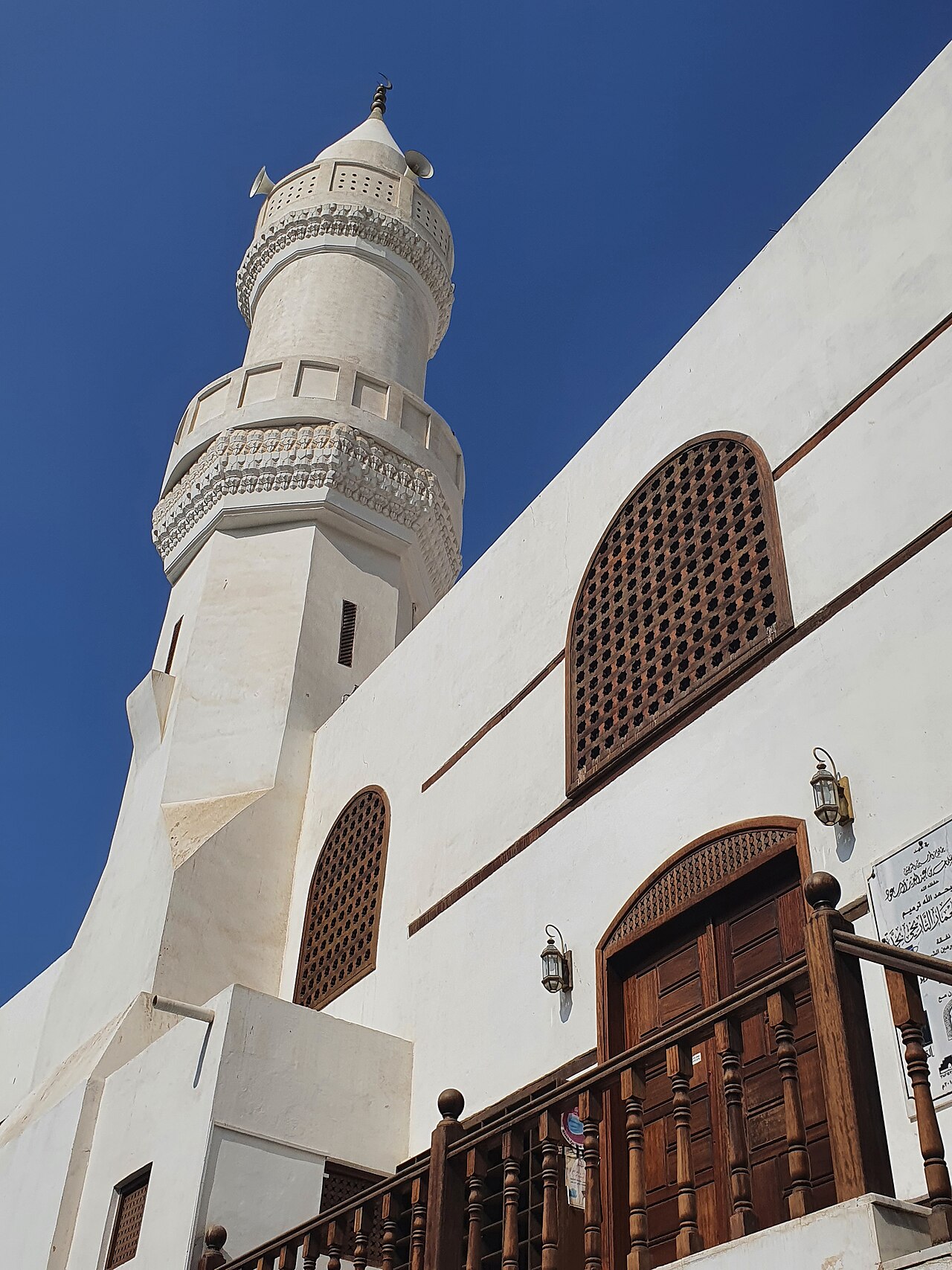
Historic Jeddah provides golf-cart circulation within Al-Balad and designated accessible parking in its official visitor arrangements. The museum occupies a restored multi-storey Hijazi house and uses an upper-level rooftop terrace café, so the complete visitor offer is not wholly step-free. Historic Jeddah's infrastructure presents challenges including uneven surfaces, narrow alleyways, and limited accessibility for mobility-impaired visitors. The coral-stone buildings, while architecturally significant, may have interior conditions unfamiliar to those accustomed to modern facilities. Cultural sensitivity is essential: this is a heritage preservation site, not a commercial venue. Photography restrictions may apply to certain materials or spaces. Visitors should dress modestly consistent with Saudi public norms. The area attracts both tourists and local residents; respectful conduct preserves the site's community function. Verification of any specific visitor regulations is advisable before arrival.
Checked 2026-08-31 · Source
Many cultural institutions permit non-flash photography in general areas while restricting it around sensitive archival materials or during performances. The distinctive architecture of Historic Jeddah offers substantial photographic interest externally, though individual buildings may have specific restrictions. Drone usage is strictly regulated throughout Saudi Arabia and should not be assumed permissible. Visitors wishing to photograph for professional or commercial purposes should seek explicit permission in advance. Respect for other visitors and any ongoing cultural activities should guide spontaneous photographic decisions.
Checked 2026-08-31 · Source
It is a public museum and cultural center devoted to Saudi music, performing arts and the legacy of musician, composer, educator and collector Tariq Abdulhakim.
The museum is in Al-Balad, within the UNESCO-listed Historic Jeddah district.
Displays include Tariq Abdulhakim’s musical instruments, recording reels, photographs, personal belongings, compositions, and audio and video material documenting his work.
Yes. Its interactive rooms include the world’s first laser qanun, which replaces the instrument’s physical strings with light beams that trigger musical sounds.
Yes. The responsible public bodies describe its museum activities, workshops and interactive musical experiences as suitable for all age groups.
The public museum is in Al-Balad, while the center’s specialist research, archive and advanced-performance departments occupy other locations in Jeddah.
Loading the interactive map…
The interactive map could not be loaded.
Last updated:
Source: OpenStreetMap contributors ·