

3 min walk
Jeddah Yacht Club
- Must see
- Activity
Language · 11 published
Place of worship · Jeddah
مسجد الرحمة
| Monday | 00:00 – 23:59 |
|---|---|
| Tuesday | 00:00 – 23:59 |
| Wednesday | 00:00 – 23:59 |
| Thursday | 00:00 – 23:59 |
| Friday | 00:00 – 23:59 |
| Saturday | 00:00 – 23:59 |
| Sunday | 00:00 – 23:59 |
Checked 2026-08-31 · Source
Read from the OpenStreetMap access tags; anything not listed has no tag recorded.
Set the group type to family in the planner and the day window contracts to about three quarters of a solo day.
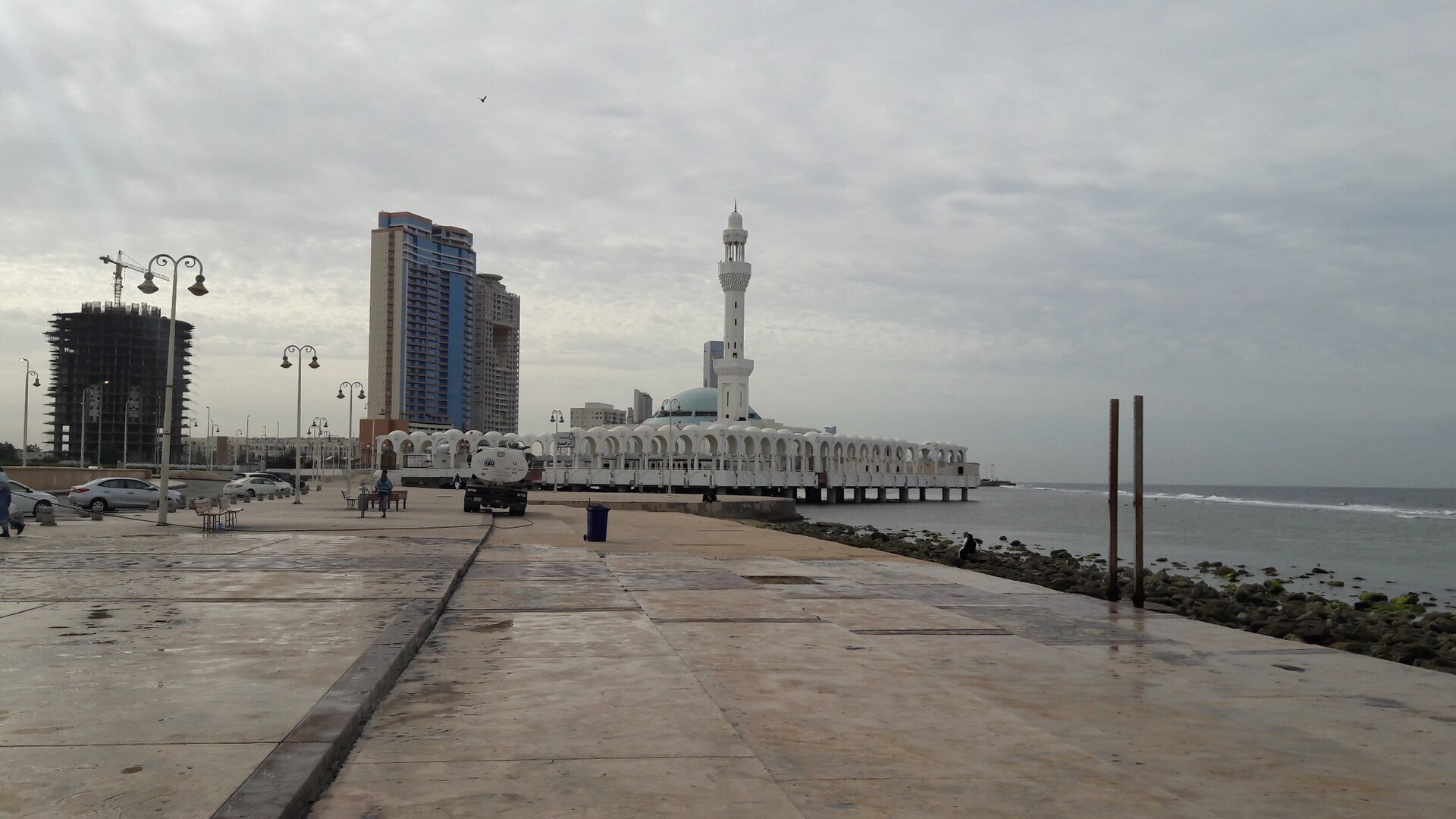
Al Rahma Mosque, locally known as مسجد الرحمة, is a prominent mosque in Jeddah commonly referred to as the Floating Mosque due to its location near the Red Sea waterfront. It sits within Jeddah's coastal area and represents a meaningful point of interest in the waterfront core of the city. The mosque serves as both an active place of worship and a destination for visitors drawn to its unusual setting.
Checked 2026-08-31 · Source
The interior of Al Rahma Mosque follows traditional mosque architecture with prayer halls oriented toward Mecca. The design incorporates elements that complement its maritime location, with windows and openings that frame views of the Red Sea. Decorative features typical of Islamic religious buildings are present, including calligraphy and geometric patterns. The mosque's construction on pilings over water creates a unique atmosphere within the prayer space. Visitors should observe standard mosque etiquette regarding dress and behavior.
Checked 2026-08-31 · Source
A visit to Al Rahma Mosque typically requires between thirty minutes and one hour for those wishing to appreciate the exterior architecture and setting. The duration may extend for visitors who attend prayer services or spend additional time observing the interaction between the structure and tidal conditions. The floating effect varies with sea levels, so timing relative to tides may influence the experience. Visitors should plan flexible timing, particularly if seeking to witness the mosque at high tide when the water-surrounded appearance is most pronounced.
Checked 2026-08-31 · Source
Daily 00:00–23:59 Open 24 hours daily, with no weekly closure day listed. It remains an active mosque; non-Muslim sightseeing visits are permitted outside prayer times. Sunrise and sunset are peak periods. The mosque functions as an active religious site, so prayer times structure daily access patterns. Visitors should respect that Friday midday prayers draw the largest congregations and may limit non-worshipper access. The floating visual effect depends on tidal conditions, which vary throughout the day and month. Coastal weather in Jeddah is generally warm year-round, though summer months bring higher temperatures and humidity. Evening visits may offer cooler conditions and distinctive lighting for viewing the mosque against the water. Ramadan and Hajj periods may affect visitor access and atmosphere.
Checked 2026-08-31 · Source
Free admission for ordinary worship and sightseeing visits; no entrance ticket or advance reservation is required. As a functioning mosque, Al Rahma Mosque typically does not charge entry fees for worshippers or visitors observing standard visiting protocols. Visitors should not expect commercial ticketing infrastructure. Any organized tour packages that include the mosque would be arranged through external providers with separate pricing structures. Independent visitors should carry minimal personal items and be prepared for security considerations standard at significant religious buildings.
Checked 2026-08-31 · Source
The mosque is on Jeddah Corniche beside the Red Sea. From King Abdulaziz International Airport, official options include airport taxis from Terminal 1, the North Terminal and the Hajj and Umrah Terminal, plus Careem, Uber, Bolt and Jeeny from Terminal 1. Jeddah Bus is the named public-transport network; its official app provides the nearest current stop and route, and buses operate daily from 05:30 to 23:30. Al Rahma Mosque occupies a waterfront position in Jeddah accessible by road along the coastal Corniche area. Taxis and ride-hailing services operate throughout Jeddah and represent the most straightforward access method for visitors unfamiliar with local routes. The Corniche is a major Jeddah thoroughfare, so the general area is known to drivers. Visitors should confirm precise drop-off points, as waterfront access may involve pedestrian approaches. Walking along the Corniche from nearby accommodations is possible depending on location.
Checked 2026-08-31 · Source
The wheelchair-accessible Jeddah Corniche provides a step-free waterfront approach. The Corniche has wide, landscaped pedestrian paths. This rating covers the waterfront approach; it does not extend to ablution facilities or every internal prayer area. Visitors must observe Islamic dress codes and behavioral norms when approaching and entering the mosque. Appropriate modest covering for limbs is expected; women should cover hair and wear loose-fitting clothing, while men should wear clothing covering at least to the knees and shoulders. Footwear is removed before entering prayer areas. The waterfront location presents slip hazards and tidal changes that affect immediate surroundings. The mosque remains primarily a place of worship, not a tourist installation, so visitor presence during prayers should be discreet and respectful of congregants.
Checked 2026-08-31 · Source
The exterior of Al Rahma Mosque offers distinctive photographic opportunities due to its water-adjacent setting and the floating illusion at high tide. The interplay of structure, water, and sky creates compositions particularly effective during golden hours of sunrise and sunset. Interior photography is subject to restrictions common at active religious sites; explicit permission should be sought before capturing images inside. Tripods and professional equipment may attract scrutiny. Visitors should prioritize respect for worshippers over photographic objectives, avoiding flash and intrusive positioning. Drone usage would require appropriate permits and is not advisable without confirmed authorization. The mosque's lighting after dark may offer additional exterior photographic possibilities.
Checked 2026-08-31 · Source
It stands on white concrete pillars extending over the Red Sea, creating a floating impression from the waterfront.
The mosque was built in 1985.
The mosque occupies a 2,400-square-metre site and accommodates 2,300 worshippers, including 500 women in a suspended wooden prayer area.
A central dome supported by eight decorated columns is surrounded by 52 smaller domes, 23 external shade umbrellas and 56 stained-glass windows.
Yes. The official Saudi tourism guidance permits non-Muslim visits outside prayer times.
Sunrise and sunset are the peak visiting periods because of the Red Sea views and changing light.
Loading the interactive map…
The interactive map could not be loaded.

Last updated:
Source: OpenStreetMap contributors, Wikidata ·