.jpg)

2 min walk
Al-Balad Souq Al Alawi
- Must see
- Historic monument
Language · 11 published
Historic monument · Jeddah
Read from the OpenStreetMap access tags; anything not listed has no tag recorded.
Set the group type to family in the planner and the day window contracts to about three quarters of a solo day.
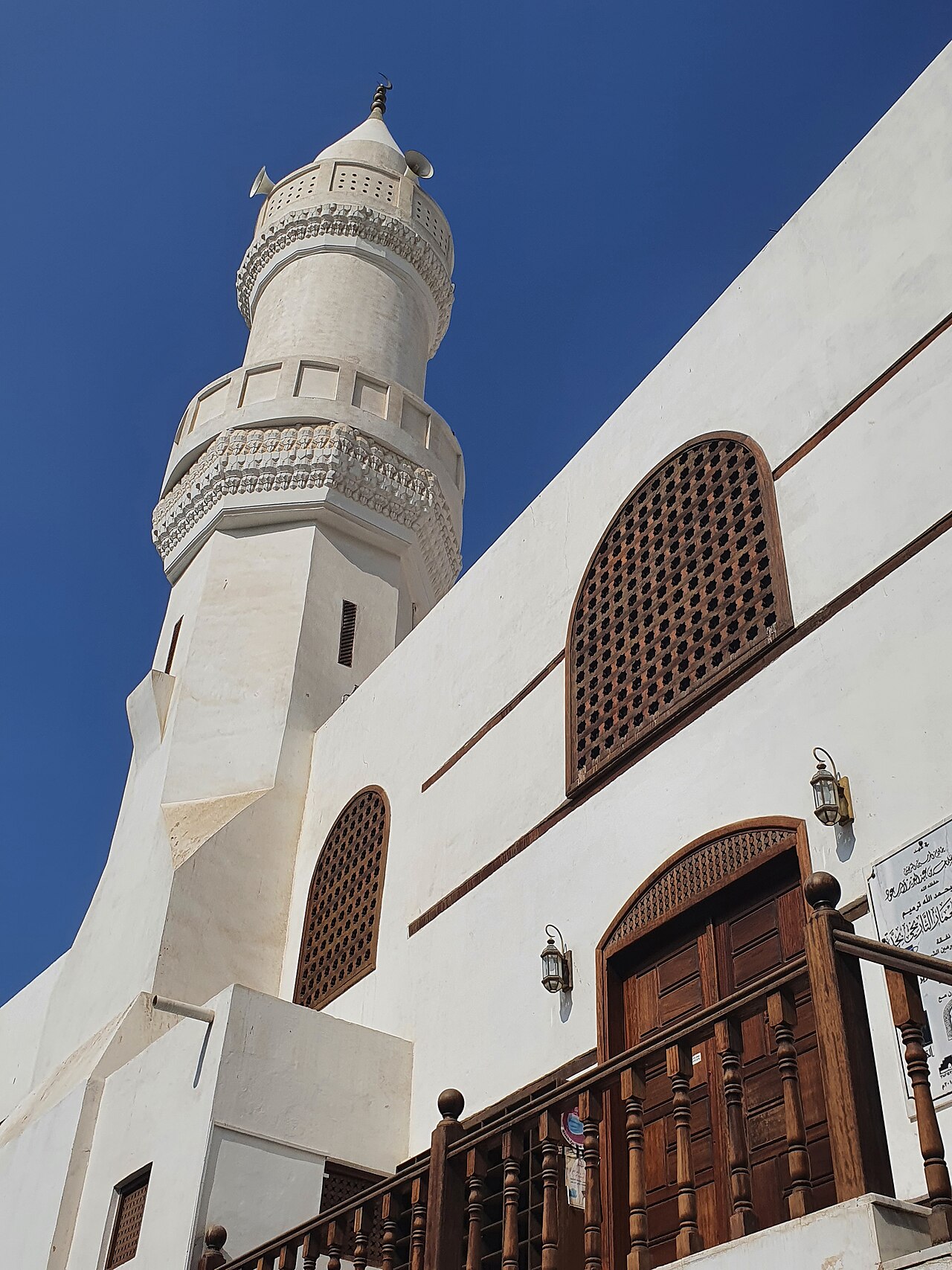
Al-Shafi'i Mosque is an active historic mosque in Jeddah, Saudi Arabia. Its local name is مسجد الشافعي. The mosque maintains an independent religious function and is kept as a separate point of interest from the broader historic district stops. It serves as a place of worship for the local Muslim community while also holding historical significance within the urban fabric of Jeddah, one of the oldest port cities in the region and a gateway for pilgrims traveling to Mecca. Kept separately from the broad district stop.
Checked 2026-08-31 · Source
As an active historic mosque, Al-Shafi'i Mosque contains prayer halls oriented toward the qibla. Worshippers will find spaces for individual and congregational prayer. The mosque functions as a living religious site rather than a museum, meaning its primary contents serve spiritual purposes for the Muslim community that gathers there for daily prayers.
Checked 2026-08-31 · Source
Visitors should plan their time at Al-Shafi'i Mosque according to personal interest and religious observance. A brief visit for prayer or quiet reflection may take fifteen to twenty minutes. Those wishing to appreciate the historic architecture and atmosphere might stay thirty to forty-five minutes. The mosque's active status means visitors should be mindful of prayer times and community activities. There is no recorded information suggesting guided tours or structured visitor programs, so duration depends entirely on individual purpose and respectful observation of the space.
Checked 2026-08-31 · Source
Daily for the five Islamic prayers; no separate sightseeing timetable is published. This remains an active mosque, so worship takes priority. The responsible public bodies list no weekly closure day or fixed tourist visiting hours. As an active mosque, Al-Shafi'i Mosque is fundamentally open for the five daily prayers, which shift throughout the year according to the solar cycle. Non-Muslim visitors should note that entry to the interior of mosques in Saudi Arabia is generally restricted to Muslims. The most appropriate times for Muslims to visit align with prayer schedules. Friday midday prayer represents the weekly congregational gathering and would be particularly significant, though also the most crowded period for worshippers.
Checked 2026-08-31 · Source
Free general admission; no mosque admission ticket or tariff is published. Paid guided walks in Al-Balad are separate optional tour products. Historic mosques functioning as places of worship in Saudi Arabia typically operate without entry costs for worshippers. There is no indication of paid tours, special access passes, or donation requirements in available sources. Visitors should be prepared for the possibility that no formal ticketing system exists, though this cannot be definitively confirmed without direct operator verification.
Checked 2026-08-31 · Source
Use Jeddah Bus service to Al-Balad, then approach on foot through Historic Jeddah. Visit Saudi uses Bab Jadid as the named meeting point for its Al-Balad walk to Al-Shafi'i Mosque; the route continues via Abu Inabah Street. SAPTCO buses operate daily and are equipped for passengers with disabilities. Al-Shafi'i Mosque is located in Jeddah, a major city on Saudi Arabia's Red Sea coast. Jeddah is served by King Abdulaziz International Airport, which handles both domestic and international flights. Within the city, visitors can use taxis, ride-hailing services, or private vehicles to reach the mosque. The mosque's historic nature suggests it lies within or near Jeddah's older urban areas, possibly in proximity to the historic Al-Balad district, though this specific spatial relationship is not confirmed.
Checked 2026-08-31 · Source
A published architectural study documents wheelchair facilities at an entrance on the mosque's north side. The ablution area and toilets are separate from the main mosque on the northern side. The surrounding Historic Jeddah walking routes have inconsistent wheelchair accessibility, despite the accessible mosque entrance. Visitors must respect the mosque's active religious function. Appropriate Islamic dress is essential: modest clothing covering arms and legs, with women additionally required to cover hair. Shoes must be removed before entering prayer areas. Non-Muslims should verify access permissions before attempting entry, as restrictions may apply. Prayer times bring increased activity and should be observed with quiet respect. Photography requires caution and sensitivity. The surrounding historic area may have narrow streets and limited parking. Summer temperatures in Jeddah can exceed forty degrees Celsius, requiring hydration and sun protection for outdoor movement.
Checked 2026-08-31 · Source
Photography at Al-Shafi'i Mosque requires careful judgment and cultural sensitivity. As an active place of worship, unrestricted photography would be inappropriate and potentially offensive to worshippers. No specific photography policies are recorded in available sources. Visitors should refrain from photographing individuals without explicit permission, particularly during prayer. Interior photography may be restricted or prohibited entirely. Those wishing to capture architectural features should do so discreetly from exterior public spaces when possible, always prioritizing respect for the religious function of the site over documentation needs. When uncertain, abstain from photographing.
Checked 2026-08-31 · Source
The mosque stands in Al-Mazloum neighborhood at the heart of Historic Jeddah.
It was historically known as Al-Jami' Al-'Atiq, meaning the Ancient Mosque.
The responsible public-body account dates the minaret to the thirteenth century.
The mosque has a square plan with an open central courtyard designed for ventilation.
Its historic construction uses wood, sea clay and locally quarried manqabi stone.
The comprehensive restoration concluded with the mosque's reopening in 2015 and was described as the first heritage-building restoration carried out using a UNESCO-adopted method.
Loading the interactive map…
The interactive map could not be loaded.

Last updated:
Source: OpenStreetMap contributors ·