.JPG)

2 min walk
Plaza San Luis Complex
- Must see
- Activity
Language · 11 published
Historic monument · Manila
| Monday | 08:00 – 17:00 |
|---|---|
| Tuesday | 08:00 – 17:00 |
| Wednesday | 08:00 – 17:00 |
| Thursday | 08:00 – 17:00 |
| Friday | 08:00 – 17:00 |
| Saturday | 08:00 – 17:00 |
| Sunday | 08:00 – 17:00 |
Checked 2026-08-31 · Source
Read from the OpenStreetMap access tags; anything not listed has no tag recorded.
Set the group type to family in the planner and the day window contracts to about three quarters of a solo day.
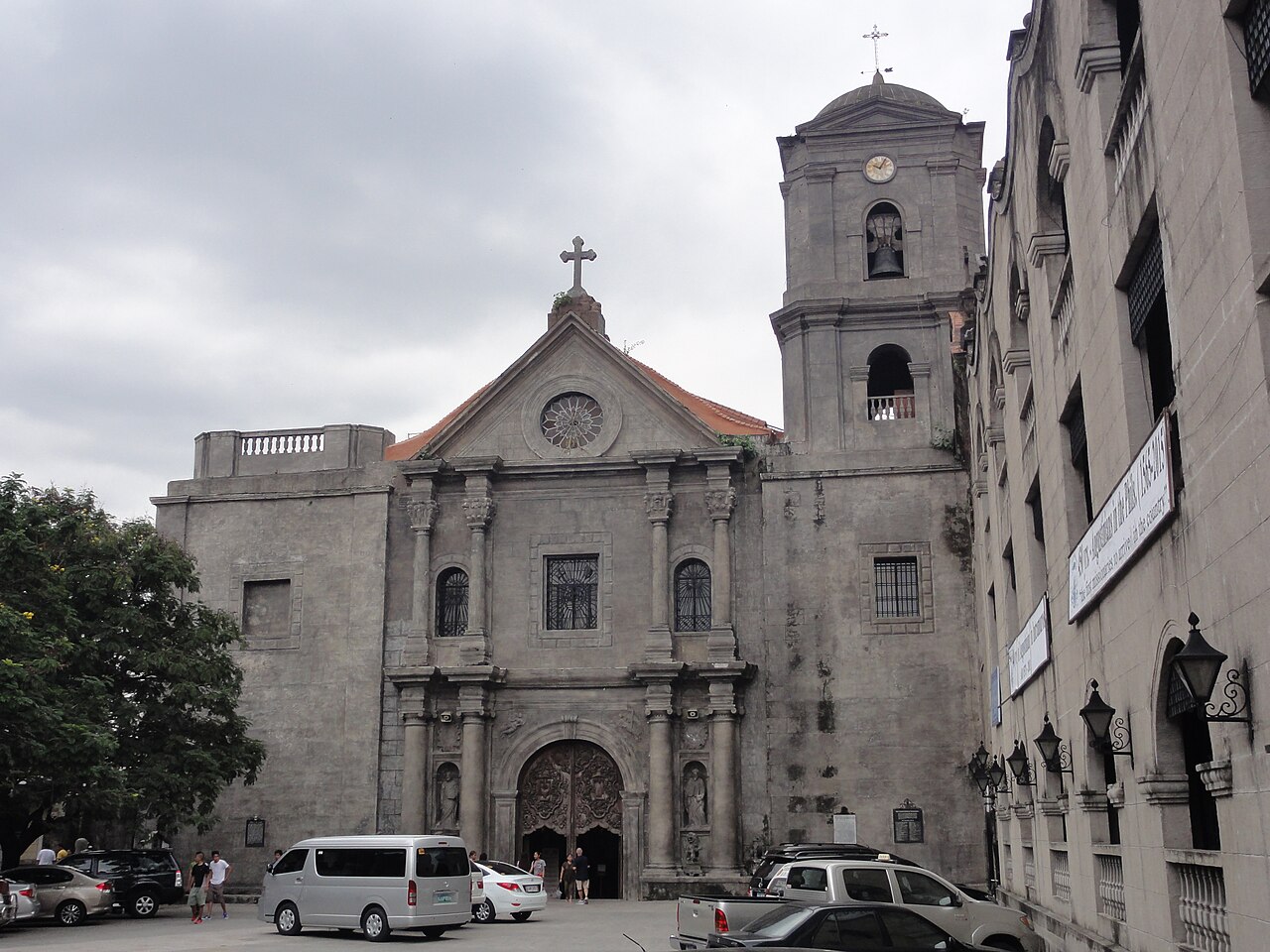
San Agustin Church stands within the historic walled district of Intramuros in Manila. It holds distinction as the oldest stone church in the Philippines, with origins tracing to Spanish colonial construction. The building represents a significant monument of religious and architectural heritage in Metro Manila. Its designation as a UNESCO World Heritage Site, as part of the Baroque Churches of the Philippines serial inscription, underscores international recognition. The structure has endured multiple earthquakes and wartime events, testament to its resilient construction. Visitors encounter a tangible link to centuries of Philippine history through its preserved fabric.
Checked 2026-08-26
The interior presents notable features characteristic of Spanish colonial ecclesiastical design. Visitors observe carved wooden doors, ornate altars, and trompe-l'oeil ceiling paintings executed in a style that creates illusionistic depth. A museum occupies adjacent space, housing religious artifacts, colonial-period furnishings, and historical documents. The church contains tombs and memorials associated with prominent historical figures. Crypt areas and sacristy spaces may be accessible depending on operational circumstances. The overall atmosphere conveys the solemnity of continuous worship across generations. Decorative programs combine imported European influences with localized interpretations, forming distinctive visual narratives within the sacred space.
Checked 2026-08-26
A thorough visit typically requires between sixty to ninety minutes, though individual pacing varies considerably. This duration accommodates entry, interior circulation, and examination of architectural and artistic details. Visitors with specific historical or artistic interests may extend their stay. The adjacent museum demands additional time for meaningful engagement with displayed collections. Those participating in religious services should adjust expectations accordingly, as liturgical schedules may constrain or extend the experience. Photography enthusiasts often require longer periods for composition in variable interior lighting. Group tours may proceed at different tempos depending on guide narration and participant questions.
Checked 2026-08-26
Visitors should consult the official Intramuros Administration website or direct church communication for current accessibility. The church functions as an active place of worship, meaning religious observances may affect tourist access. Weekday mornings potentially offer quieter conditions for contemplative examination. Weekend and feast-day periods likely experience increased attendance from congregants and tourists alike. Seasonal variations in Manila's climate, including pronounced wet and dry periods, may influence comfort during approach and queuing. Advance verification remains essential given operational uncertainties and potential modifications to public access schedules. Check the operator's own site for the travel date before relying on a schedule or fare.
Checked 2026-08-26
The church may operate with donation-based entry, fixed admission, or combined ticketing with Intramuros district attractions. Museum access potentially incurs separate charges. Certain visitor categories—religious pilgrims, students, seniors, residents—may receive differential treatment, though specific entitlements remain unverified. Cash payment in Philippine pesos typically predominates at heritage sites, though electronic payment adoption continues expanding. Visitors should carry appropriate denominations. Group arrangements and educational visits may require advance coordination. Budget-conscious travelers should investigate whether Intramuros day-passes or Manila tourism cards incorporate this site. Check the operator's own site for the travel date before relying on a schedule or fare.
Checked 2026-08-26
San Agustin Church occupies Intramuros, the colonial core near Manila's Pasig River. Multiple transport modes serve this central district. Ride-hailing applications provide direct access with variable traffic conditions. Jeepneys and buses operate on surrounding routes, requiring subsequent walking through fortified gates. The Light Rail Transit system stops at nearby stations, necessitating onward connection on foot or by cycle-rickshaw. Intramuros itself permits pedestrian circulation through characteristic cobblestone streets. Wayfinding to the church follows established heritage trail markers. Visitors should anticipate security screening at district entry points. Signage in English assists navigation. Early departure from accommodation mitigates metropolitan congestion impacts.
Checked 2026-08-26
Active religious functions demand respectful comportment regardless of personal belief. Modest dress covering shoulders and knees represents appropriate preparation. Interior floors may prove uneven given historical construction. Low light levels challenge mobility and require caution. Manila's tropical climate generates interior humidity affecting comfort. Crowding intensifies during religious festivals and holiday periods. Street-level surroundings in Intramuros include vehicular traffic mixing with pedestrians. Vendors and informal guides may approach visitors near entry zones. Personal belongings warrant vigilance in any congested tourist environment. Emergency egress routes may differ from modern building conventions due to heritage fabric preservation constraints.
Checked 2026-08-26
Interior photography conditions present challenges from restricted natural illumination and artificial lighting of limited intensity. Camera stability becomes essential; tripods may face restrictions during busy periods or may be prohibited entirely. Flash usage potentially damages sensitive painted surfaces and disturbs worshippers—policy should be verified on arrival. Wide-angle lenses accommodate spatial constraints. Higher ISO settings introduce noise but enable hand-held capture. Exterior photography benefits from early or late daylight angles across the stone façade. Drone operation falls under Philippine civil aviation regulations and likely requires explicit authorization within this historic district. Commercial or publication use necessitates separate permissions from administrative authorities.
Checked 2026-08-26
Yes, the church maintains active parish functions alongside its heritage and tourism roles.
Physical configuration suggests integrated access, though specific arrangements should be confirmed on arrival.
Formal guided tour availability is Not recorded pending review; visitors may inquire at entry.
Heritage construction presents potential barriers; specific accessibility provisions are Not recorded pending review.
It constitutes one component of the UNESCO serial World Heritage Site inscription, with counterparts in Santa Maria, Paoay, and Miag-ao.
Active worship status implies public Mass participation is possible, though schedules are Not recorded pending review.
Loading the interactive map…
The interactive map could not be loaded.

Last updated:
Source: OpenStreetMap contributors, Wikidata ·