
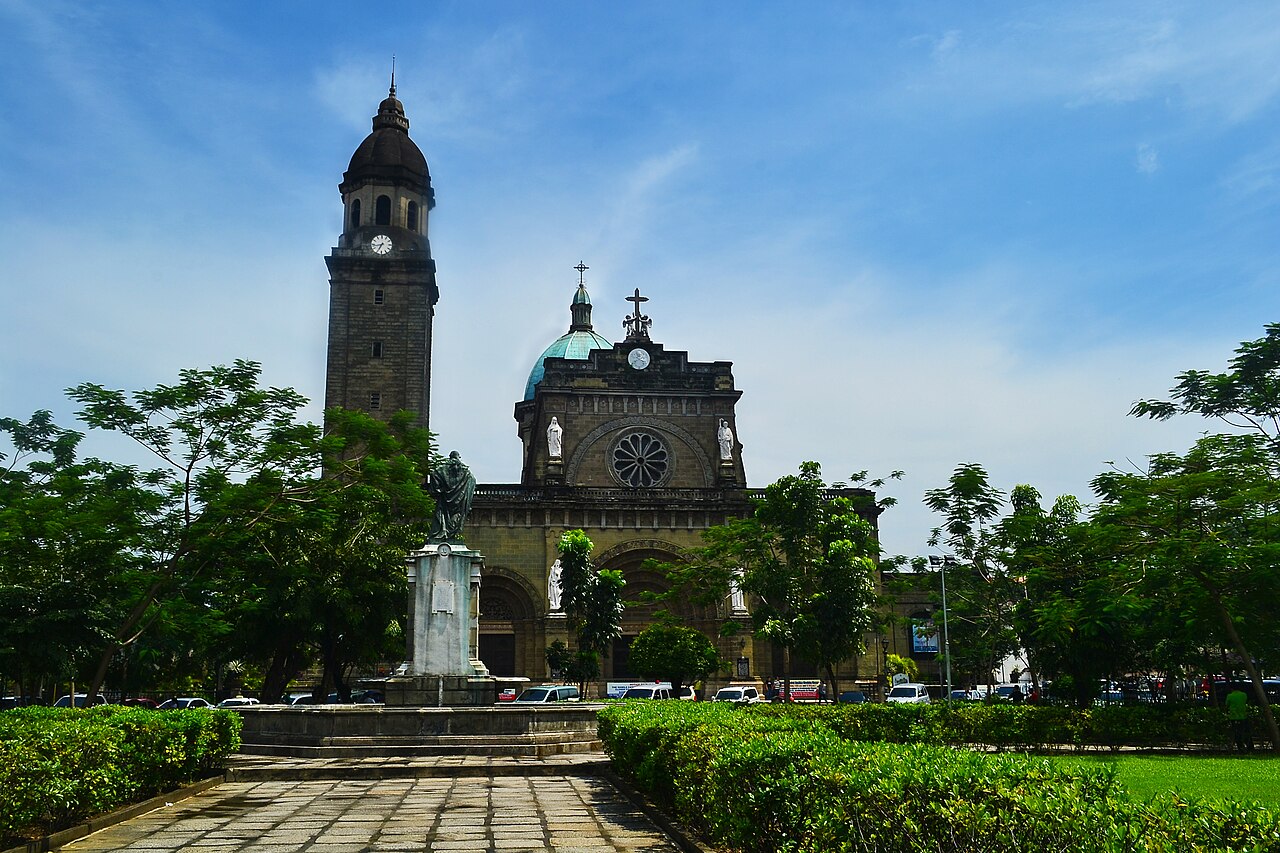
6 min walk
Plaza de Roma
- Must see
- Nature site
Language · 11 published
Historic monument · Manila

| Monday | 08:00 – 22:00 |
|---|---|
| Tuesday | 08:00 – 22:00 |
| Wednesday | 08:00 – 22:00 |
| Thursday | 08:00 – 22:00 |
| Friday | 08:00 – 22:00 |
| Saturday | 06:00 – 22:00 |
| Sunday | 06:00 – 22:00 |
Checked 2026-08-31 · Source
Read from the OpenStreetMap access tags; anything not listed has no tag recorded.
Set the group type to family in the planner and the day window contracts to about three quarters of a solo day.
Fort Santiago is a citadel within the walled district of Intramuros, Manila. Built by Spanish colonial forces, it served as a military headquarters and prison complex during successive colonial periods. The fort is historically significant as the site where national hero José Rizal was imprisoned before his execution in 1896. Its strategic location at the mouth of the Pasig River made it a defensive stronghold. Today it operates as a national shrine and museum under heritage administration. The structure represents layered colonial history spanning Spanish, American, and Japanese occupations of the Philippines. The historic structure contains uneven stone surfaces, ramps, staircases, and potentially confined spaces. Full accessibility is unlikely without specific accommodation inquiry. Visitors should contact the Intramuros Administration directly regarding current accessibility provisions. The historic structure contains uneven stone surfaces, ramps, staircases, and potentially confined spaces. Full accessibility is unlikely without specific accommodation inquiry. Visitors should contact the Intramuros Administration directly regarding current accessibility provisions.
Checked 2026-08-26 · Source
The fort complex contains restored ruins, a Rizal Shrine museum, gardens, and defensive walls with bastions. Visitors encounter the Rizal cell and various memorial installations. Underground chambers and former dungeons are accessible in portions of the site. The Plaza de Armas serves as a central open space. A visitor centre and some exhibition areas occupy adapted structures. The moat system partially remains visible. Not all original structures survived wartime destruction. Some areas may be under maintenance or restoration at any given time.
Checked 2026-08-26 · Source
Most visitors allocate between one and two hours for a basic circuit of Fort Santiago. Those with strong interest in Philippine history, particularly the Rizal narrative and colonial military architecture, may extend to two and a half hours. The compact site does not require extensive walking distance, though uneven surfaces and ramparts slow progress. Combined visits with broader Intramuros exploration typically occupy a half-day or more. Self-guided pacing allows flexibility. Visitors should factor in Manila traffic and Intramuros access time when planning overall scheduling.
Checked 2026-08-26 · Source
Visitors should consult the Intramuros Administration website or contact site management directly before planning. Manila's tropical climate produces distinct wet and dry seasons. The dry season from approximately November to April generally offers more predictable conditions for outdoor heritage walking. Midday heat and humidity can be intense throughout the year, making morning visits potentially more comfortable. Rainy season visits require preparedness for sudden downpours that may affect exposed areas of the fort. Weekend and holiday periods typically draw larger domestic visitor numbers.
Checked 2026-08-26 · Source
The Intramuros Administration website should be consulted for current admission fees and any applicable concessions. Philippine nationals and foreign visitors may be subject to different rate structures at national heritage sites. Some special exhibitions or events may carry supplementary charges. Group rates, if offered, require direct inquiry. Visitors should carry sufficient cash as backup even if electronic payment is anticipated, given infrastructure variability at heritage locations in Metro Manila.
Checked 2026-08-26 · Source
Fort Santiago sits at the northeastern corner of Intramuros, accessible via multiple gates into the walled city. From central Manila districts, taxis and ride-hail services provide direct access, though drivers may require clear destination specification. Light Rail Transit Line 1 serves Central Terminal and United Nations Avenue stations, both requiring onward connection by foot, cycle-rickshaw, or vehicle through Intramuros gates. Jeepneys and buses serve routes along major surrounding roads. Intramuros itself permits some vehicular access with restrictions. Walking from nearby Intramuros accommodations is feasible. Traffic congestion significantly affects journey reliability throughout Metro Manila.
Checked 2026-08-26 · Source
Uneven stone surfaces, ramps, and staircases present trip hazards throughout the historic structure. Limited shade in open areas exposes visitors to sun and heat. Some dungeon and underground areas may be dark, confined, or temporarily closed. Manila's tropical climate demands hydration and sun protection. The surrounding Intramuros district has active vehicle traffic despite heritage status. Street-level attention is advisable when approaching and departing. Heritage sites in the Philippines may experience variable maintenance standards. Visitor facilities such as restrooms and seating may be limited or unevenly distributed. Security presence is visible but visitors retain responsibility for personal belongings.
Checked 2026-08-26 · Source
The fort's stone architecture, ramparts, and Pasig River outlook provide structured photographic subjects. Morning and late afternoon light angles enhance texture on weathered surfaces. The Rizal Shrine and memorial installations require respectful framing. Drone operation would require separate authorization from multiple authorities given the location within a capital city heritage zone and near waterway. Interior dungeon and museum areas may restrict flash or photography entirely. Fellow visitors frequently populate key viewpoints, requiring patience for unobstructed shots. Weather conditions dramatically affect atmospheric quality for exterior photography.
Checked 2026-08-26 · Source
The historic structure contains uneven stone surfaces, ramps, staircases, and potentially confined spaces. Full accessibility is unlikely without specific accommodation inquiry. Visitors should contact the Intramuros Administration directly regarding current accessibility provisions.
Visitors should consult the Intramuros Administration website or inquire on arrival. Self-guided exploration is possible throughout the site.
Children may visit under appropriate supervision. The dungeon areas and historical content regarding imprisonment and execution may require parental discretion. Physical hazards including uneven surfaces and open water features necessitate close monitoring of young visitors.
Visitors should verify current ticketing structures with the Intramuros Administration before purchasing.
Comfortable walking shoes with grip are essential for uneven stone surfaces. Sun protection including hat and covering is advisable for exposed areas. Modest dress is appropriate for a national shrine and memorial site.
Nearby Intramuros establishments may offer alternatives before or after visiting.
Loading the interactive map…
The interactive map could not be loaded.

Last updated:
Source: OpenStreetMap contributors, Wikidata ·