


2 min walk
Quiapo Church
- Must see
- Historic monument
Language · 11 published
Historic monument · Manila
Plaza Miranda
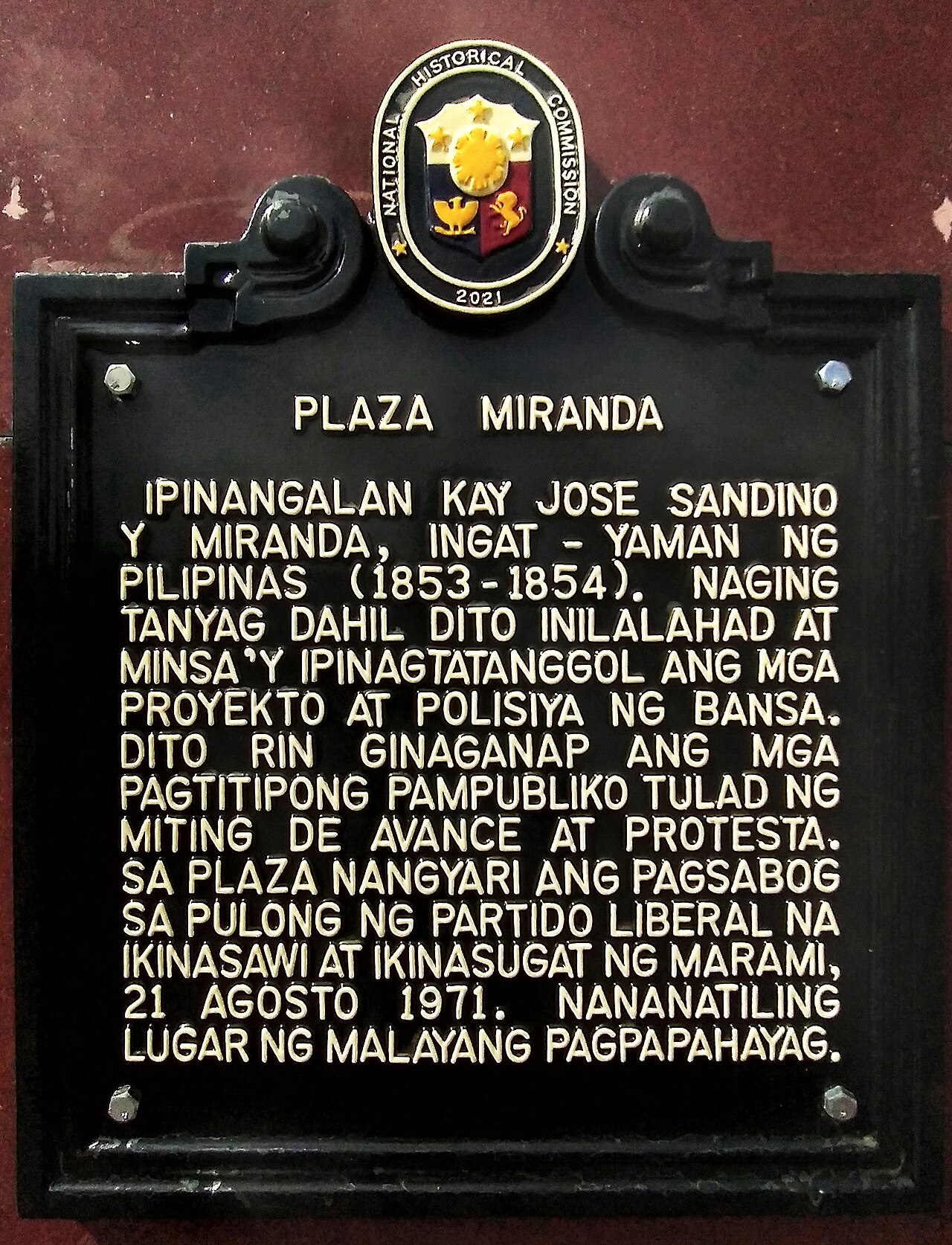
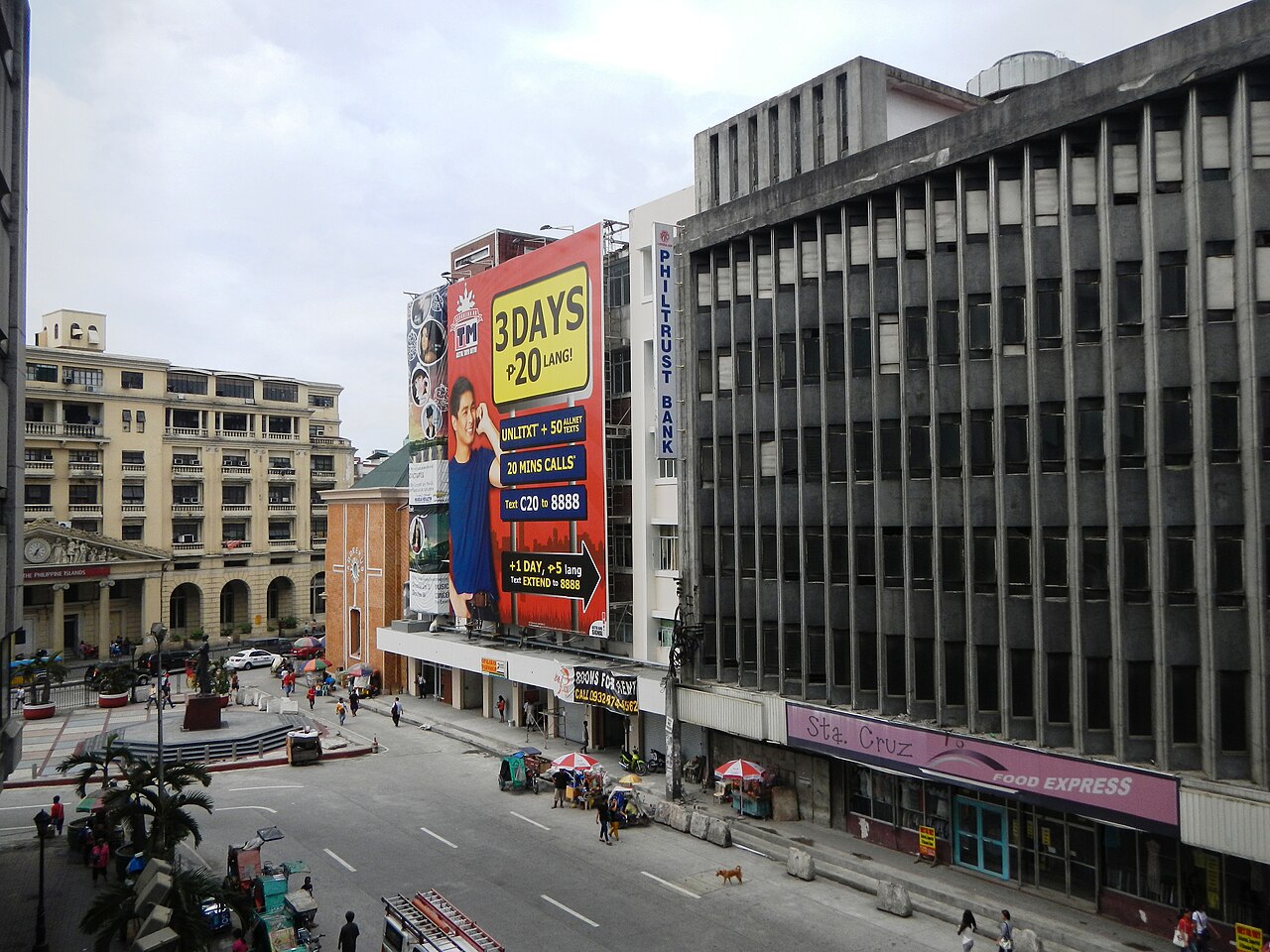
Plaza Miranda is an open public square in Manila’s Quiapo district, directly opposite the Minor Basilica of the Black Nazarene, widely known as Quiapo Church. The plaza is both a gathering place and a site associated with political demonstrations and major moments in Philippine democratic history. Travelers encounter national memory, religious devotion, street commerce, and daily city movement in one compact urban setting. Plaza Miranda is a public square in the Quiapo district of Manila, Philippines. It holds significant historical importance as a site of political gatherings and demonstrations throughout Philippine history. The plaza is situated in front of the Minor Basilica of the Black Nazarene, commonly known as Quiapo Church. It serves as an open urban space where citizens congregate, protest, and engage in public discourse. The location remains embedded in national memory due to events that shaped Philippine democracy. The area requires standard urban precautions. Daytime visits with secured valuables and situational awareness are advisable. Crowded religious events present elevated risks.
Checked 2026-08-26 · Source
There is no enclosed interior at Plaza Miranda. The space consists of paved public areas, some greenery, commemorative features, and open pedestrian circulation. Its strongest visual and cultural relationship is with Quiapo Church facing the square. Around the plaza, vendors, shops, worshippers, and passers-by create the dense commercial and religious atmosphere that defines Quiapo. The place is experienced through movement, observation, and street-level detail. The plaza features open paved areas, some greenery, and commemorative elements related to its historical role. It sits directly opposite Quiapo Church, one of Manila's most prominent religious landmarks. The surrounding area includes commercial establishments typical of a busy urban district. Street vendors operate in the vicinity, reflecting the commercial character of Quiapo. The plaza itself is largely an unenclosed public space without gated boundaries, allowing free pedestrian movement through the area at all hours.
Checked 2026-08-26 · Source
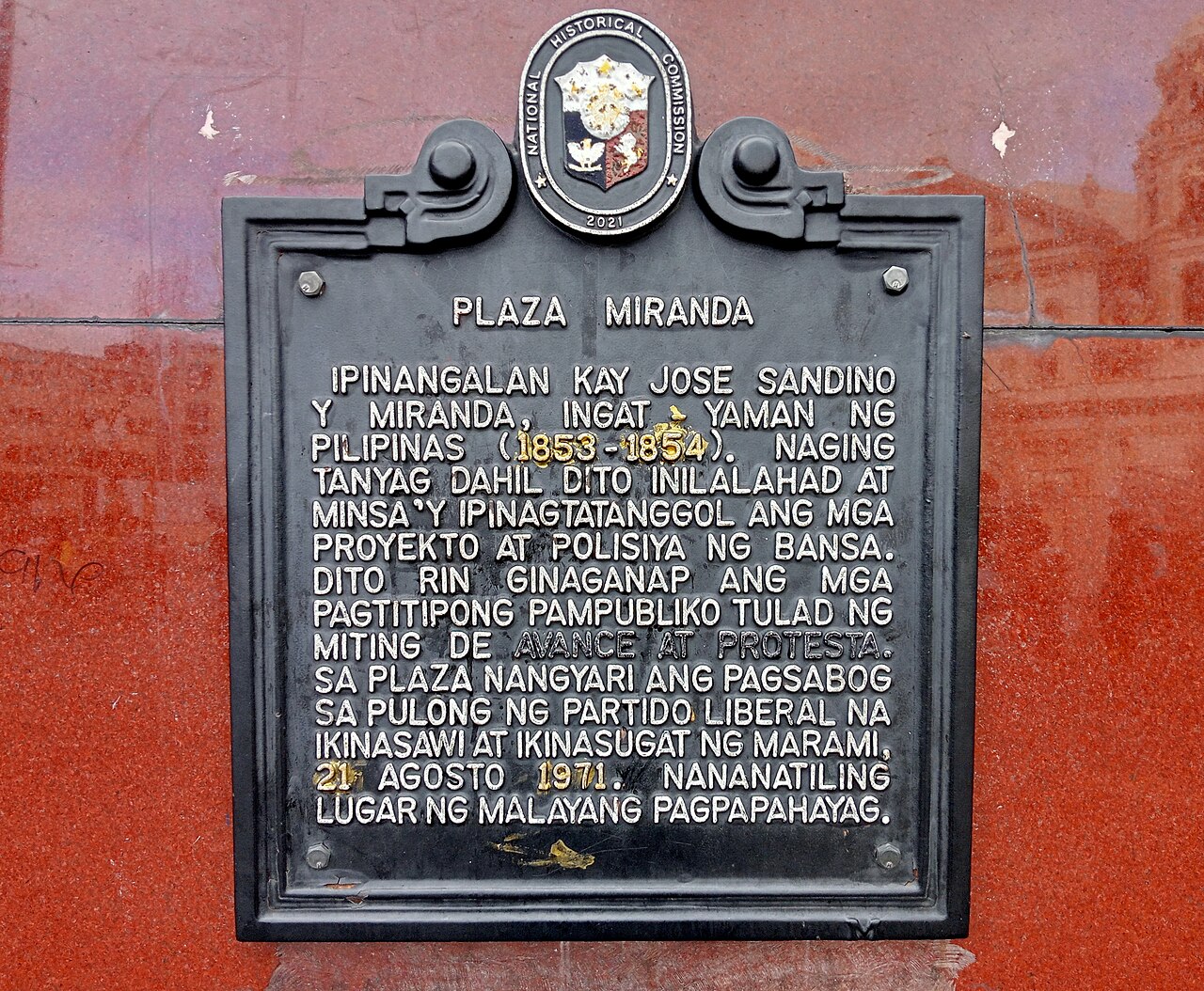
Allow fifteen to thirty minutes to cross the square, take in its relationship with Quiapo Church, and observe the surrounding district. Add time if you want to photograph street life, visit the church, or explore nearby commercial streets. Plaza Miranda is a useful short stop because it provides context for Quiapo rather than presenting a single indoor attraction. Crowd levels and personal interest will shape the pace. A visit to Plaza Miranda typically requires brief observation time, as it functions primarily as a passageway and gathering point rather than a destination with enclosed attractions.
Checked 2026-08-26 · Source

Daylight is the most comfortable period for a first visit, with clearer views across the square and easier awareness of traffic and crowds. Plaza Miranda becomes especially intense during religious events connected with Quiapo Church, including the January Black Nazarene procession. Those occasions can transform the square into a packed devotional route. Choose a quieter daytime moment for observation, or visit during a major event only if you are prepared for dense crowds.
Checked 2026-08-26 · Source
Plaza Miranda is a public square and has no admission charge. You can move through the space without a ticket, while transport, food, and purchases from nearby vendors are separate expenses. Small denominations are practical for street transactions. If you enter Quiapo Church or engage with religious institutions, follow their own arrangements and keep the square itself distinct from any church-related contribution.
Checked 2026-08-26 · Source
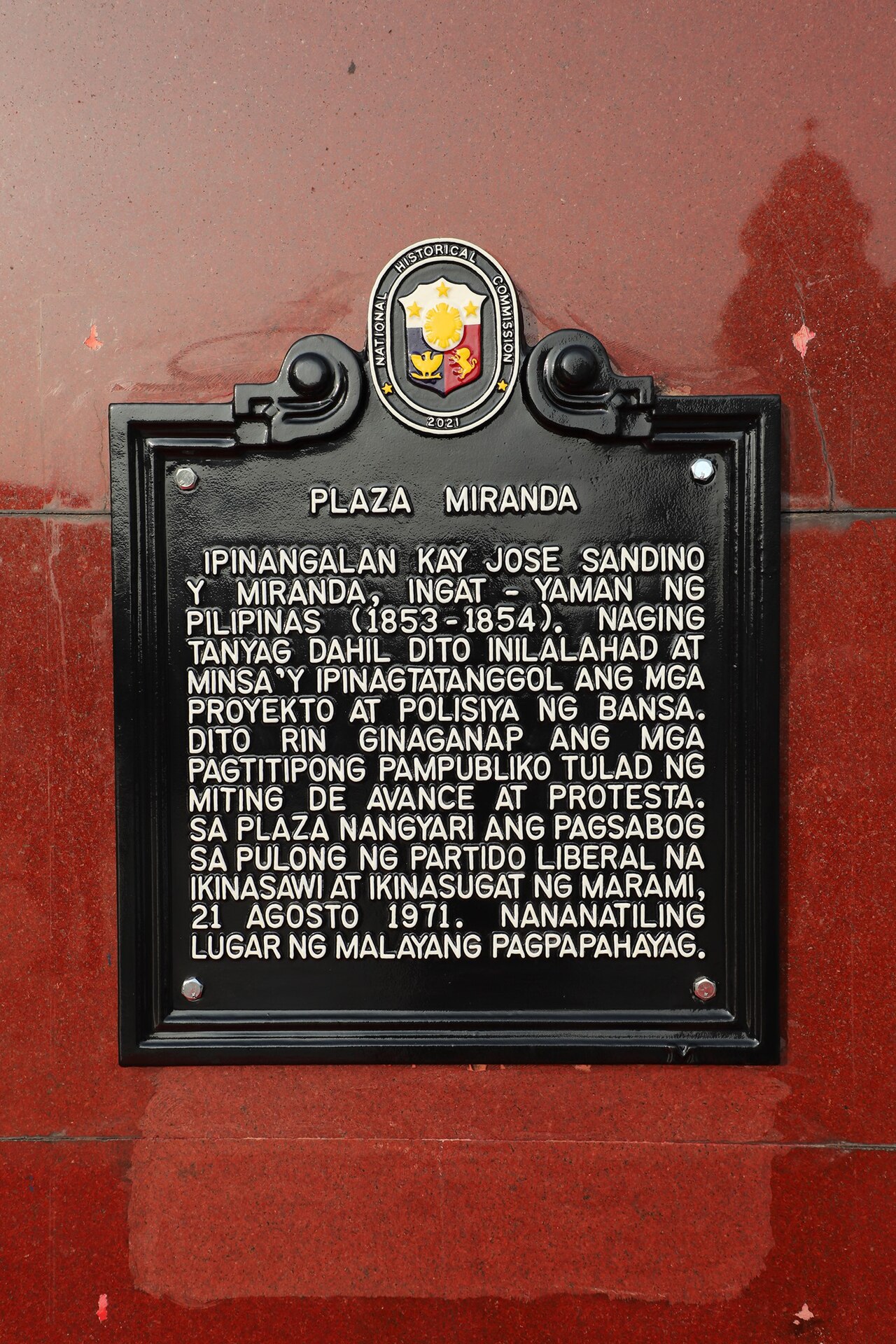
Plaza Miranda is in central Quiapo, served by jeepneys and buses using Quezon Boulevard and nearby streets. LRT-1 Carriedo Station and LRT-2 Recto Station provide rail access within walking distance, followed by a busy urban approach. Taxis and ride-hailing vehicles can reach the district, although congestion often slows road journeys. Walking from nearby Manila neighborhoods is possible when you are comfortable navigating crowded streets and crossings.
Checked 2026-08-26 · Source

Quiapo is crowded, active, and demanding of attention. Keep wallets, phones, and bags secure, especially during religious gatherings and periods of heavy pedestrian movement. Traffic around the square can be continuous and unpredictable, so use marked crossings and stay alert at the edge of the road. Vendors may approach visitors directly. Daylight visits are a practical choice for travelers unfamiliar with the district, especially when visiting alone.
Checked 2026-08-26 · Source

The open square, Quiapo Church frontage, vendors, and passing crowds provide varied subjects for street and architectural photography. Use discretion with people, particularly worshippers and anyone engaged in prayer. Keep cameras and phones secure in dense crowds, and avoid blocking pedestrian routes. Early morning and late afternoon light can add texture to the streetscape. Photograph from public areas and treat religious activity as something to observe respectfully, not stage.
Checked 2026-08-26 · Source
It is a Quiapo public square opposite Quiapo Church, known for political gatherings, demonstrations, religious activity, and its place in Philippine democratic memory.
Fifteen to thirty minutes is enough for the square and its relationship with Quiapo Church; add time for church visits or nearby streets.
No. Plaza Miranda is an open public square without an admission charge.
Use jeepneys or buses serving Quezon Boulevard, or walk from LRT-1 Carriedo and LRT-2 Recto stations. Taxis and ride-hailing vehicles also serve Quiapo.
The Minor Basilica of the Black Nazarene, commonly called Quiapo Church, stands directly opposite the square.
Crowds increase during religious events associated with Quiapo Church, including the January procession of the Black Nazarene.
Loading the interactive map…
The interactive map could not be loaded.
Last updated:
Source: OpenStreetMap contributors, Wikidata ·