City guide
Paris Itinerary: 1, 2, 3 Days and One Week


Plan one day, two days, three days or a week in Paris with coherent neighbourhood routes, proper meal breaks, family options and sensible cuts.
This guide is part of our Paris destination coverage. Paris
One day in Paris: trace the Right Bank to the island
Paris becomes navigable when the Seine and its adjoining quarters supply the order. Read the Paris destination guide for orientation, then reserve the morning for one collection theme and let the afternoon progress east. Lunch separates those two chapters, never at the end of a tiring morning.
The Paris destination guide gives the broader context; this one-day plan moves along Cour Carrée–Île de la Cité. Verify each venue's latest guidance before setting out. Inclusion here describes geography, not guaranteed entry on a particular calendar date.
Enter the Louvre Museum with a question rather than a trophy list. The former fortress and royal palace holds eight curatorial departments, so Egyptian antiquities, Islamic art, French painting or carved art can sustain an independent thread. Three principal wings are not three boxes to tick. Pick connected rooms using the institution's latest floor plan and accept that most of the holdings will remain for another trip.
Emerge beside Cour Napoléon and move into the Palais Royal precinct. Cour d'Honneur, arcades and the enclosed grounds change the scale after the Louvre's immense galleries. Eat in this central zone. Sitting here also creates a decision point: a punctual Louvre morning can support Carnavalet; a late or tiring one goes directly to the river.
The small-scale bearings matter. Cour Napoléon leads toward Place du Carrousel; the northern passage points into Palais Royal; Galerie de Montpensier and Galerie de Valois enclose the quieter garden. None needs separate completion. Together, these passages turn a confusing museum exit into a short chain of courtyards leading to Rue de Rivoli and the Marais.
For the fuller version, continue east through the Marais to Musée Carnavalet. Its Paris-history focus carries the story from royal palace to urban life. Keep this second institution tightly edited. Rue des Francs-Bourgeois and the Hôtel de Ville direction prevent the afternoon from drifting west toward attractions previously passed.
Cross by Pont d'Arcole for Notre-Dame de Paris. Notre-Dame remains a functioning Catholic sanctuary, so worship and instructions on site take priority. Begin with the forecourt, portals and exterior buttresses; enter only under the conditions posted by the sanctuary. If the line no longer fits, the exterior completes the walk from the palace quarter to the historic island without requiring a replacement farther afield.
Carnavalet gives way when the Louvre consumes extra attention. If the island is reached late, retain the façade and forecourt instead of sacrificing dinner. The Eiffel Tower does not belong as an evening add-on: reaching western Paris would reverse the entire route. End near the Île or Latin Quarter, with spare daylight available for the quays rather than another security queue.
Checked 2026-09-05 · Official site · www.louvre.fr
Checked 2026-09-05 · Official site · www.domaine-palais-royal.fr
Checked 2026-09-05 · Official site · www.carnavalet.paris.fr
Checked 2026-09-05 · Official site · www.notredamedeparis.fr
Two days in Paris: pair the Latin Quarter with plants
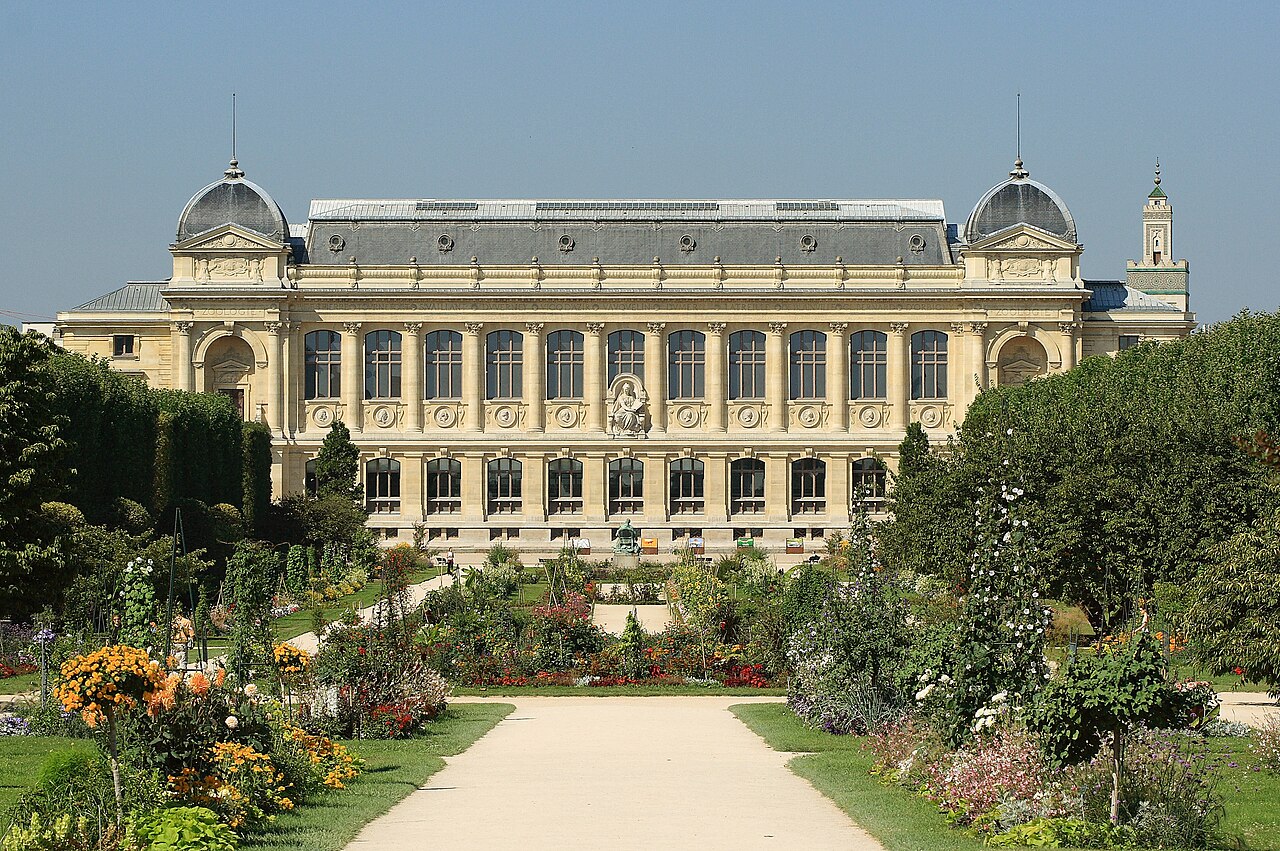

Keep the Right Bank-to-island route for day one. Day two begins at the Panthéon, descends through the Latin Quarter and ends at the Jardin des Plantes. Rue Soufflot, Place de la Contrescarpe and the Mouffetard slope make this a south-easterly descent rather than a set of disconnected reservations.
At the Panthéon, concentrate on the relationship among portico, dome, nave, crypt and national memory. The monument's own bulletin determines which portions are available. Afterward, descend for lunch around the lower Latin Quarter. Saint-Germain-des-Prés lies in the opposite direction and would bend a simple line into a wide U, so save it for a different neighbourhood day.
Montagne Sainte-Geneviève supplies the local incline. Rue Clovis keeps the Roman and medieval fabric local; Place de la Contrescarpe introduces the Mouffetard side; Rue Monge points toward the botanical campus. Arènes de Lutèce may appear along this descent, but it functions as context rather than another required threshold. Together, the names describe one downhill walk from monument to plants.
Continue toward Place Monge and the Jardin des Plantes. Formal beds, notable trees and the wider scientific campus provide open air after the stone monument. Decide separately whether any greenhouse, gallery or zoological component merits admission; presence within the grounds does not make them compulsory. A botanical loop alone can carry the later part of the day.
Rain shortens the open-air portion without changing districts. A lengthy Panthéon encounter likewise means reduced garden paths, not a hurried extra institution. If Panthéon access is unavailable, keep the Rue Soufflot-to-Place Monge descent, take lunch as planned and expand the botanical side. The two-day stay then retains a clear contrast pairing royal and civic central Paris on day one and scholarly, memorial and natural-history Paris on day two.
Checked 2026-09-05 · Official site · www.paris-pantheon.fr
Checked 2026-09-05 · Official site · www.jardindesplantesdeparis.fr
Three days in Paris: move from Rodin to the iron tower

_%C3%A0_Paris,_13_juin_2021_01.jpg)
Day three stays in the seventh arrondissement while edging west. Begin at the Musée Rodin, pause for lunch around Rue Cler, then continue across Champ de Mars toward Eiffel Tower. Hôtel Biron's bronze and stone figures contrast with the tower's exposed ironwork, all without crossing the city.
At Rodin, choose depth over catalogue coverage. Bronze and stone change with viewpoint and daylight, while the house and grounds offer different settings for the work. Check the museum's latest information to see which rooms and exterior areas are available. Finish the chosen loop by lunchtime; carrying museum fatigue into Champ de Mars diminishes both halves.
Avenue de Tourville and École Militaire provide a legible surface connection toward the Eiffel Tower area. Passing these structures does not create an obligation to enter them. Chaillot sits across the Seine and should not be inserted on the way to the main destination merely for a second angle.
Stay south of the Seine: Hôtel Biron, Avenue de Tourville, Place Joffre and Champ de Mars form one clear line. Quai Branly marks the river edge; Pont d'Iéna belongs after the Eiffel Tower, never beforehand. This chain prevents an accidental loop through Alma-Marceau or Chaillot and distinguishes a seventh-arrondissement progression unlike a generic panorama hunt.
Treat the Eiffel Tower area as worthwhile at ground level. The four piers, lattice and changing geometry make the structure legible even when an ascent is unavailable or unwanted. Consult the Eiffel Tower operator for the latest reservation, security and access conditions; no ascent is promised here.
Do not chase a second western panorama afterward. It begins a separate western route after Rodin, lunch and Champ de Mars have already filled the day. If Rodin takes longer than expected, see the Eiffel Tower from outside. If its arrangements run late, eat nearby rather than crossing Paris for a fixed evening booking. Rodin's work, military quarter and the Eiffel Tower are enough for one day.
Checked 2026-09-05 · Official site · www.musee-rodin.fr
Checked 2026-09-05 · Official site · www.toureiffel.paris
One week in Paris: add a butte and an eastern greenway

.jpg)
For one week, use five neighbourhood days, one return visit and one free day. Follow the three sequences above, then add lower Montmartre and eastern Paris along a former railway corridor. Move a whole neighbourhood day when weather or entry conditions change; splitting its landmarks across several days destroys the benefit of local movement.
Day four begins at the Musée de la Vie Romantique on Rue Chaptal. Ary Scheffer's house and studios introduce the artistic neighbourhood once called Nouvelle Athènes on an intimate scale. The rooms, courtyard and landscaped setting offer a marked counterpoint to the Louvre. Consult the City of Paris museum information, then leave this lower-slope address by lunchtime.
Eat around Saint-Georges or the foot of Rue des Martyrs. There, choose one northbound route toward Sacré-Cœur according to the party's mobility and latest local conditions. Place des Abbesses and Montmartre should be treated as a hill district, not as a straight continuation of the grands boulevards. A seated meal before the ascent is the hinge linking domestic Romanticism with the basilica's monumental setting.
Sacré-Cœur is an active place of worship. Silence, services and directions at the entrance govern any interior encounter. Travertine, domes, terraces and the panorama still provide an architectural finish if immediate entry is unsuitable. Select one compact loop near the hill and one descent toward dinner; Pigalle, every studio address and the western cemetery do not all belong simply because they appear on a Montmartre map.
Day five moves east. Follow a selected stretch of the Coulée verte René-Dumont, where planted promenade reuses a former railway line. Decide on the exit at the outset: Avenue Daumesnil or Jardin de Reuilly can mark a sensible transition to lunch. Trying to complete the whole linear park before Père-Lachaise turns the outing into an endurance test.
Near Bastille, Viaduc des Arts and the elevated planting introduce the rail conversion. Farther east, Jardin de Reuilly, Allée Vivaldi and street-level sections modify the promenade's character. Pick one transition as the endpoint. Choose that endpoint before setting out; counting distance is less useful because stairs, surface and the intended lunch quarter vary by segment.
After food, continue separately to Père-Lachaise Cemetery. These neighbouring experiences require different behaviour: the greenway encourages forward movement, whereas a burial ground asks for quiet orientation. Use the City of Paris plan to select a connected cluster of divisions and note the intended exit. Broad avenues, narrow walkways, wooded slopes and memorials matter as much as individual famous graves.
Boulevard de Ménilmontant and Avenue Gambetta sit on different sides of the cemetery. Decide which edge belongs to the onward route, then choose graves. Avenue Principale, Avenue Casimir and the smaller division walkways are navigational references, not a sightseeing checklist. An intelligible loop ending at the intended gate prevents the cemetery from becoming an unplanned crossing of the twentieth arrondissement.
If the elevated walk has run long, shorten it at the preselected descent and protect the cemetery's contemplative character. If rain or ground conditions undermine both open-air elements, exchange the entire eastern day with the reserve. Do not attach another museum after Père-Lachaise; arriving at an unintended gate alone creates enough scope for an extra perimeter walk.
Day six answers something learned during the trip. Re-enter a different Louvre department, deepen the Paris-history thread after Carnavalet, spend longer with botanical collections or choose another setting for art. Draw an arrondissement boundary, then decide. A return visit should reveal a fresh subject, not recreate the identical highlight path photographed earlier.
Leave day seven undecided until the stay is under way. It can receive the botanical grounds after rain, a sanctuary encounter interrupted by worship, a missed reservation or accumulated museum fatigue. If no repair is needed, use the margin for a market street, the quays, an extended lunch or an early finish. Versailles, Bois de Vincennes and Bois de Boulogne are not casual fillers; each would change the geographic scale and deserves a deliberate substitution.
Treat Seine crossings as boundaries rather than decorations. Pont d'Arcole completes the central eastward route, while the Rodin-to-Eiffel Tower sequence stays south of the water. Pont Royal links the Louvre side to the Orsay side, but this plan keeps those museums on different days. Choose the bridge before setting out. This exposes an unnecessary river crossing and prevents a scenic detour becoming a second cross-city journey.
Arrange the week by texture. Follow the Louvre with open air, separate Rodin and Montmartre when legs need recovery, and combine greenway and cemetery only under suitable conditions. Every evening, note down tomorrow's arrondissement, principal doorway, lunch zone and intended exit. That short Paris-specific ledger prevents one unavailable interior from becoming a cross-city dash.
Checked 2026-09-05 · Official site · museevieromantique.paris.fr
Checked 2026-09-05 · Official site · www.sacre-coeur-montmartre.com
Checked 2026-09-05 · Official site · www.paris.fr
Checked 2026-09-05 · Official site · www.paris.fr
Paris with children: build each day around one question
With children, give each day one question. Ask how a fortress evolved into a museum, how stone carries a dome, how plants are classified, how a statue changes at every angle or how the Eiffel Tower's iron frame stands. One question gives children a way to edit a large collection while avoiding an adult highlights list.
At the Louvre, select a civilization, material or handful of connected objects. Leave while that thread still seems successful and use Palais Royal for lunch and movement. In the Latin Quarter, combine Panthéon with Jardin des Plantes only when the botanical grounds remain the gentler segment; greenhouses and galleries are separate admissions, not automatic family extras.
Rodin and Champ de Mars provide a strong bronze, stone and iron comparison within one sector. Children can sketch an outline, find changes in material or track the Eiffel Tower lattice at ground level. Ask each operator directly about security, pushchairs and mobility arrangements relevant to the actual family. This general outline cannot certify facilities or suitability for a particular age.
Give children visible navigation roles: Cour Carrée to Palais Royal arcades, Rue Soufflot downhill to Place Monge, or Hôtel Biron toward École Militaire. At breakfast, agree on the question, lunch area and exit point. When concentration fades, finish inside the chosen sector. A missed landmark creates no debt for the next date, while a remembered object or street connection gives the day its own story.
Use a paper sketch with three labels rather than a dense city map. Younger travellers can mark a courtyard, a bridge and a garden gate; older children can compare arrondissement numbers or identify the chosen side of the Seine. These observations require no reserved activity and remain possible when a gallery, lift or programme changes.
Checked 2026-09-05 · Official site · www.louvre.fr
Checked 2026-09-05 · Official site · www.jardindesplantesdeparis.fr
Checked 2026-09-05 · Official site · www.musee-rodin.fr
Checked 2026-09-05 · Official site · www.toureiffel.paris
Turn your Paris interests into neighbourhood days
Open the Paris-prefilled itinerary planner after choosing dates, party and tempo. Check whether its route stays within nearby areas. The Louvre and Île de la Cité belong to central Paris; Panthéon and Place Monge stay on the Rive Gauche; Hôtel Biron and Champ de Mars remain in the seventh; Rue Chaptal leads north to Montmartre; Avenue Daumesnil leads east toward Père-Lachaise.
Treat every suggested entrance as conditional. If a place has no recorded hours, do not assume it is open, and worship, rehearsal or maintenance can take priority over sightseeing. Check the responsible venue, preserve the lunch zone and decide where to finish before leaving. When a delay appears, continue through nearby streets instead of replacing it with a famous landmark across the Seine.
Use things to do in Paris to compare candidates, then return to the Paris-prefilled itinerary planner with a shortlist. An omitted POI may replace another within the same neighbourhood and side of the Seine; it is not a free addition.
Write down the main booking, lunch quarter, side of the Seine or arrondissement boundary, and final decision point. Reassess while seated. If entry fails, the surrounding courtyards, streets or quays preserve the planned route through the neighbourhood. The neighbourhood matters more than the reservation.
Look at the transfers between Pont d'Arcole, Place Monge, École Militaire, Abbesses and Avenue Daumesnil. If the result jumps between two distant points, remove the weaker addition before departure. A result that remains inside one arrondissement cluster on one side of the Seine leaves time for an unhurried walk, food and recovery.
Checked 2026-09-05 · Official site · parisjetaime.com
Checked 2026-09-05 · Official site · www.notredamedeparis.fr
Checked 2026-09-05 · Official site · www.sacre-coeur-montmartre.com
Turn this list into a plan
Set your days, your pace and the hours you actually want to be out. The planner works around closing days and travel time, and leaves room to eat.