


1 min walk · Paris 7e Arrondissement
Gustave Eiffel
- High
- Historic monument
Language · 1 published
Historic monument · Paris 7e Arrondissement, Paris
Tour Eiffel
| Monday | 09:00 – 23:59 |
|---|---|
| Tuesday | 09:00 – 23:59 |
| Wednesday | 09:00 – 23:59 |
| Thursday | 09:00 – 23:59 |
| Friday | 09:00 – 23:59 |
| Saturday | 09:00 – 23:59 |
| Sunday | 09:00 – 23:59 |
Checked 2026-08-24 · Source
Read from the OpenStreetMap access tags; anything not listed has no tag recorded.
Set the group type to family in the planner and the day window contracts to about three quarters of a solo day.
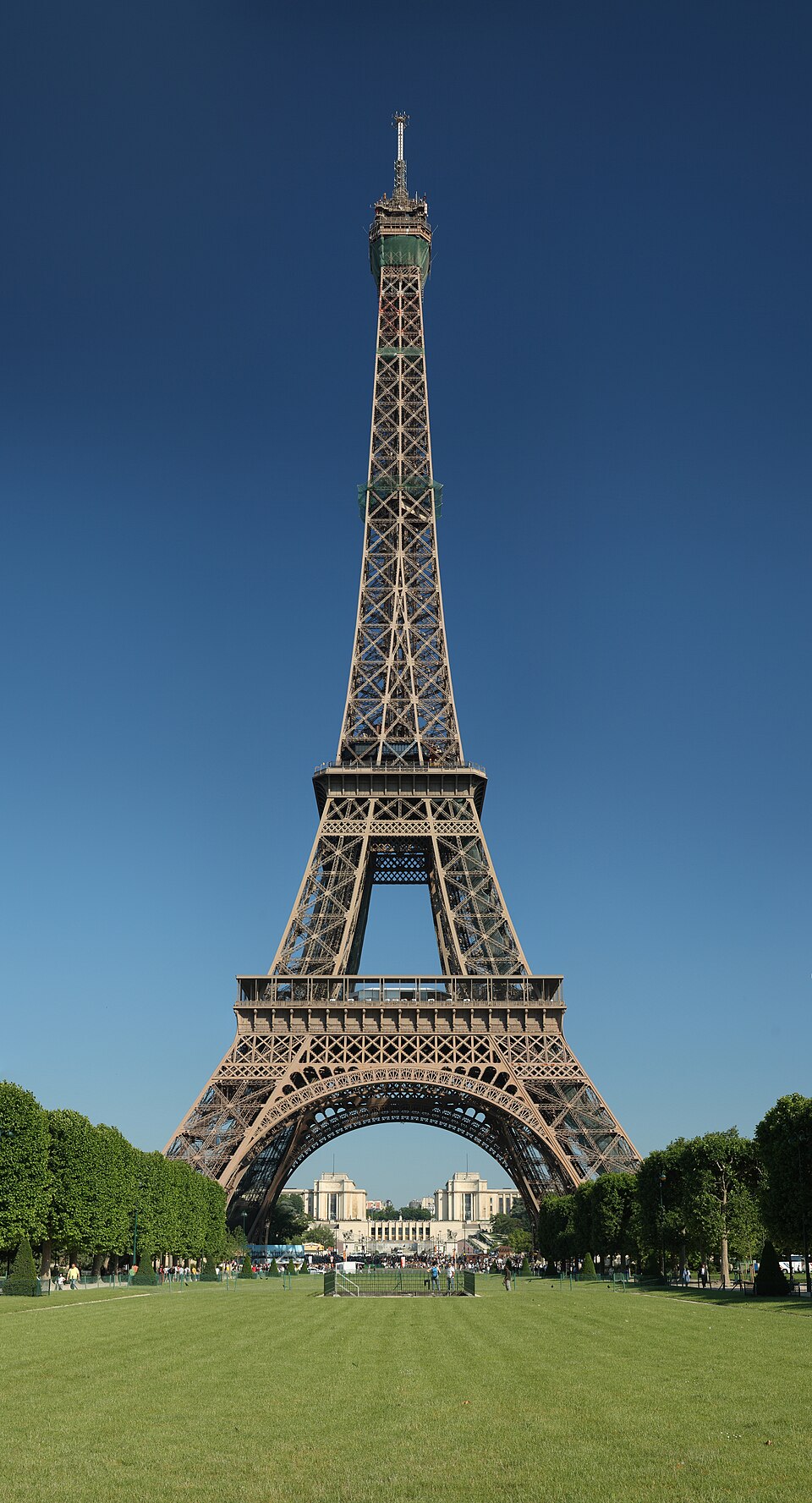
The Eiffel Tower was built to stand for twenty years and be taken down. Gustave Eiffel's company started the foundations on 28 January 1887 and finished on 31 March 1889, in time for the World's Fair marking the centenary of the Revolution.
It opened to the public on 15 May 1889 and took 1,896,987 visitors before the exhibition closed. The demolition permit fell due in 1909 and the tower survived because it turned out to be useful for radio telegraphy — the antenna added in 1957 brought it to its present 330 m.
It has a square base 125 m on a side and the top public platform is at 276 m, which is the highest observation deck in the European Union.
Checked 2026-08-23 · Source
Three levels, eight lifts, and more than six hundred steps if you would rather not queue.
The first floor is at 57 m and is reachable by stairs — over 300 steps — or by lift, and holds restaurants and facilities. The second is at 115 m, another 300-odd steps up, and holds the Michelin-starred Le Jules Verne. The third, at 276 m, is lift-only.
The stairs are the underrated ticket. They are cheaper, the queue is shorter, and the structure is far more interesting from inside the ironwork than from a lift car.
Sixty tonnes of paint go on every seven years to keep the rust off; the last complete repainting was in 2010.
Checked 2026-08-23 · Source
Two to three hours including the queue, and the queue is most of it.
The tower takes about seven million visitors a year — 5,889,000 in 2022 — and every one of them goes up the same lifts. Booking a timed ticket in advance is the difference between two hours and four.
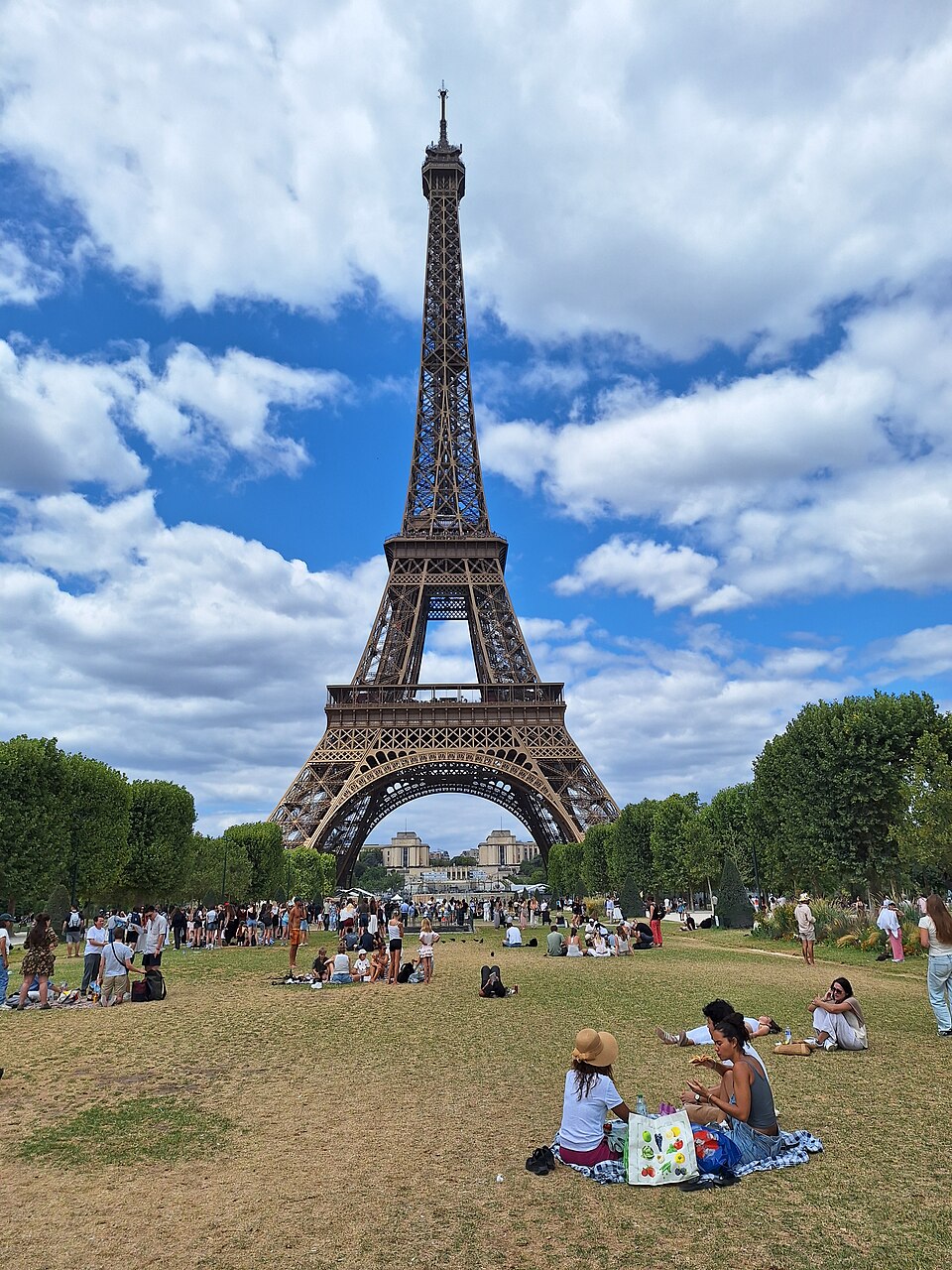
The Champ de Mars in front and the Trocadéro across the river each take twenty minutes and give the views of the tower that going up it cannot.
Checked 2026-08-23 · Source
First slot of the day, or an hour before sunset if you want the city lit.
Those are the two arguments and they are incompatible: early is empty, late is beautiful and full. The middle of the day is neither.
April to June and September to October are Paris's comfortable months. The top platform is open to the wind at 276 m and is genuinely cold whenever the ground is merely cool.
In bad visibility the third level is not worth the extra ticket; on those days the second at 115 m gives most of the view for less money and less waiting.
Checked 2026-08-23
Tickets are priced by how high you go and by whether you take the lift or the stairs, and they are cheaper and faster booked online in advance.
The figure shown on this page is the one currently published. The structure has not changed since 1889, when tickets cost 2 francs for the first level, 3 for the second and 5 for the top, with half price on Sundays.
The stairs to the second floor are the cheapest way up and the queue for them is shorter than for any lift.
Checked 2026-08-23 · Source
The 7th arrondissement, on the Left Bank at the end of the Champ de Mars.
Bir-Hakeim on Métro line 6 and Champ de Mars–Tour Eiffel on the RER C are both a few minutes' walk. Trocadéro on lines 6 and 9 is on the far bank and is the better arrival — you come out facing the tower across the river.
The Métro runs 16 lines across 321 stations, with stations 548 m apart on average — a two-stop journey is usually faster walked.
Checked 2026-08-23 · Source

Book ahead. Turning up without a timed ticket in season means hours rather than minutes.
Security screening applies at the perimeter and bags are checked. Large bags are not permitted and there is no left luggage.
The area around the tower has Paris's densest concentration of street sellers and of the petition, ring-find and three-cup routines. None of it is dangerous and none of it is worth engaging with.
The top platform is exposed at 276 m and closes in high wind, sometimes at short notice, without the lower levels closing.
Stairs to the second floor are over six hundred steps in total and there is no lift back down from the first level for stair ticket holders in some arrangements.
Checked 2026-08-23 · Source
The tower is a better subject than a viewpoint. From the Trocadéro terrace across the river it stands whole, and early morning puts the sun behind you.
From the Champ de Mars the base and the four legs read as engineering rather than as a silhouette, which is the more interesting photograph and the one fewer people take.
From the tower itself, the second floor at 115 m frames the city better than the top does — high enough to see the plan, low enough that buildings still have shape.
The night illumination and its hourly sparkle are photographable from the ground; commercial use of images of the lit tower is restricted, which does not affect personal photographs.
Checked 2026-08-23
330 m, including the radio antenna added in 1957. The base is 125 m square and the top public platform is at 276 m — the highest observation deck in the EU.
Foundations started on 28 January 1887 and it was completed on 31 March 1889, for the World's Fair marking the centenary of the Revolution. It opened to the public on 15 May 1889.
No. The permit ran twenty years and it was to be demolished in 1909. It survived because it proved useful for radio telegraphy.
If you can. Over 300 steps to the first floor at 57 m and another 300-odd to the second at 115 m — cheaper, shorter queues, and the ironwork is far more interesting from inside it. The third level at 276 m is lift-only.
Two to three hours including the queue, and the queue is most of it. The tower takes around seven million visitors a year.
Priced by level and by lift or stairs. Current rates are not published on the sources this page uses; book online in advance, which is both cheaper and faster.
Loading the interactive map…
The interactive map could not be loaded.
Last updated:
Source: OpenStreetMap contributors, Wikidata ·