


1 min walk · Paris 5e Arrondissement
Jardin Alpin
- High
- Nature site
Language · 1 published
Historic monument · Paris 5e Arrondissement, Paris
Jardin des Plantes
| Monday | 07:30 – 20:00 |
|---|---|
| Tuesday | 07:30 – 20:00 |
| Wednesday | 07:30 – 20:00 |
| Thursday | 07:30 – 20:00 |
| Friday | 07:30 – 20:00 |
| Saturday | 07:30 – 20:00 |
| Sunday | 07:30 – 20:00 |
Checked 2026-08-24 · Source
Read from the OpenStreetMap access tags; anything not listed has no tag recorded.
Set the group type to family in the planner and the day window contracts to about three quarters of a solo day.
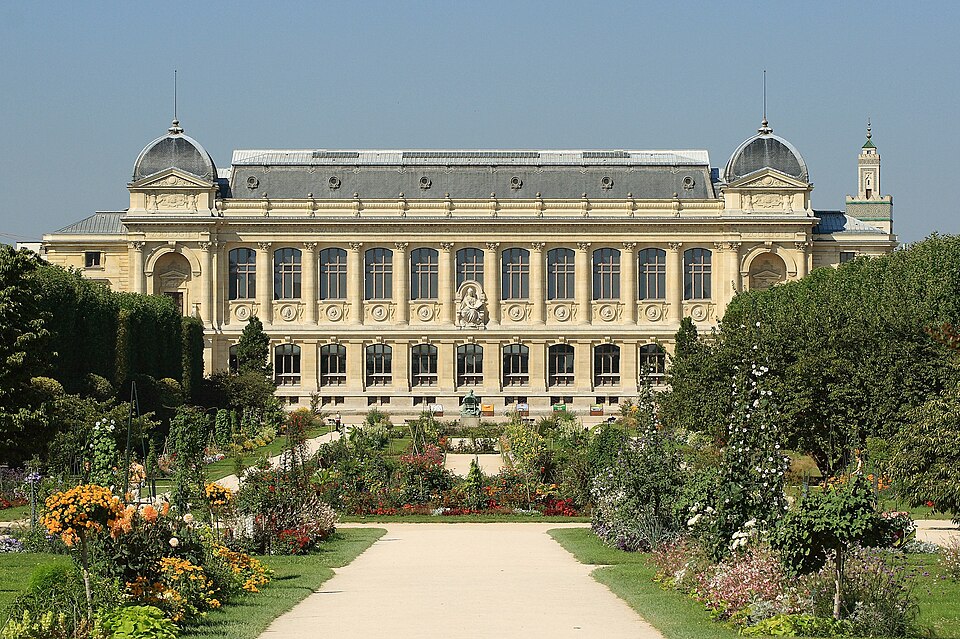
The Jardin des plantes is Paris's main botanical garden and the founding site of the Museum national d'Histoire naturelle, on the Left Bank in the 5th arrondissement, between the Seine and the Austerlitz rail yards.
It began as a royal medicinal-plant garden, established by edict of Louis XIII in 1635 on the advice of his physicians Guy de La Brosse and Jean Herouard, and opened to the public in 1640 — making it one of the oldest botanical gardens still on its original site anywhere in the world.
It survived the Revolution intact because the naturalists running it turned it into a public natural-history institution rather than a royal one, and the museum built around it is still a working research body, not a preserved period garden.
Checked 2026-08-24 · Source
The site is a cluster of separate attractions inside one 28-hectare enclosure, and each one is entered and, in most cases, ticketed on its own.
The Grande Galerie de l'Evolution occupies the restored 1889 iron-and-glass zoology hall and runs a parade of large taxidermied animals down its central nave, with dedicated rooms on endangered and extinct species. The Menagerie, opened in 1794 from animals seized from Versailles and travelling fairs, is the oldest zoo still operating in France and keeps a deliberately old-fashioned, city-scale collection rather than large-mammal enclosures.
The garden itself is split into a formal parterre along the main axis, an alpine garden on an artificial rock outcrop, a rose and iris garden, and a set of historic glasshouses — the Grandes Serres — holding tropical, desert and New Caledonian collections. The Galeries de Paleontologie, de Mineralogie and d'Anatomie comparee sit at the garden's southern end in their own 1898 buildings.
Checked 2026-08-24 · Source
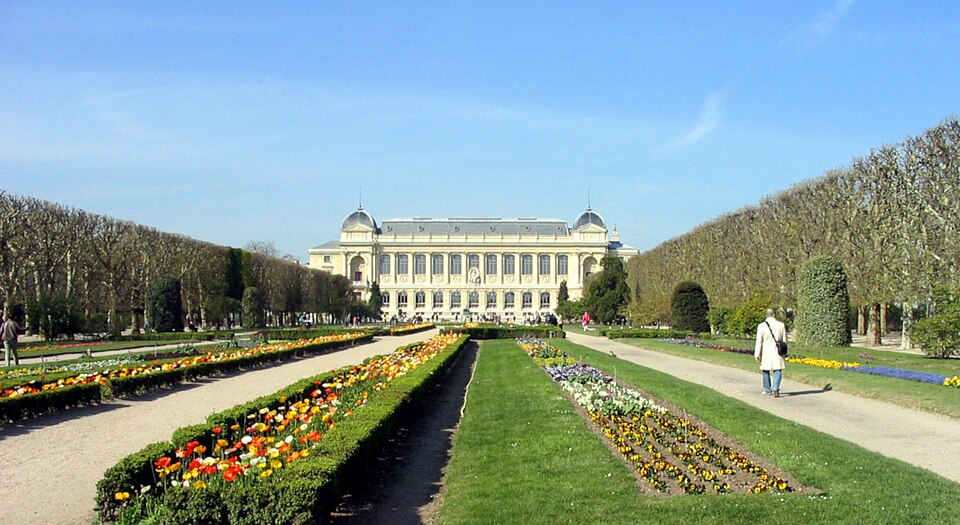
Walking the garden itself without entering any building takes 30-45 minutes end to end. Adding one of the paid attractions changes that substantially: the Grande Galerie de l'Evolution alone is a two-hour visit, and the Menagerie is another one and a half to two hours because it is spread over the full site rather than in one building.
Seeing the garden plus one gallery plus the Menagerie in a single day is possible but long; most visitors pick either the natural history galleries or the zoo, not both, and plan two to three hours total.
Checked 2026-08-24 · Source
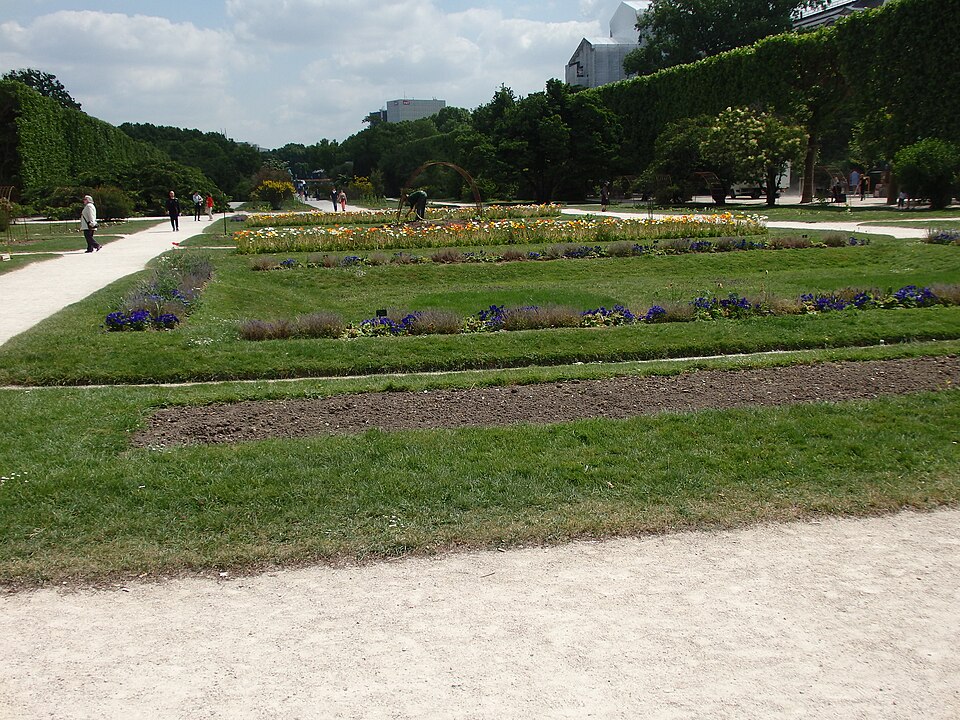
The garden is at its best from late April to June, when the rose garden and the herbaceous borders along the central alley are in full bloom; the alpine garden peaks slightly later, into July.
Weekday mornings are markedly quieter than weekend afternoons, when the Menagerie in particular fills with families. The Grandes Serres and the galleries are indoor and make a reasonable wet-weather stop, unlike the open garden paths.
The garden's own opening and closing times vary by season and are not recorded here — confirm the current hours on the museum's site before travelling.
Checked 2026-08-24 · Source
The garden itself is free to walk. The Grande Galerie de l'Evolution, the Menagerie, the Grandes Serres and the palaeontology and mineralogy galleries are each ticketed separately by the Museum national d'Histoire naturelle, and a combined pass covering several of them is sold at the museum's own ticket desks and website.
Current prices are not recorded here; the operator's site is the only reliable source for the day's rate and for any combined-ticket saving, and it should be checked before travelling rather than assumed from an old figure.
Checked 2026-08-24 · Source
The garden sits directly on the Seine's Left Bank opposite the Institut du monde arabe, reached by metro line 5 or 10 at Gare d'Austerlitz or Jussieu, or by RER C at Gare d'Austerlitz. Several bus routes stop along its Rue Cuvier and Rue Buffon boundaries.
It is a flat ten-minute walk from Notre-Dame across the Pont de Sully and the Ile Saint-Louis, which makes it a natural pairing with a Left Bank morning rather than a destination visited on its own.
Checked 2026-08-24 · Source
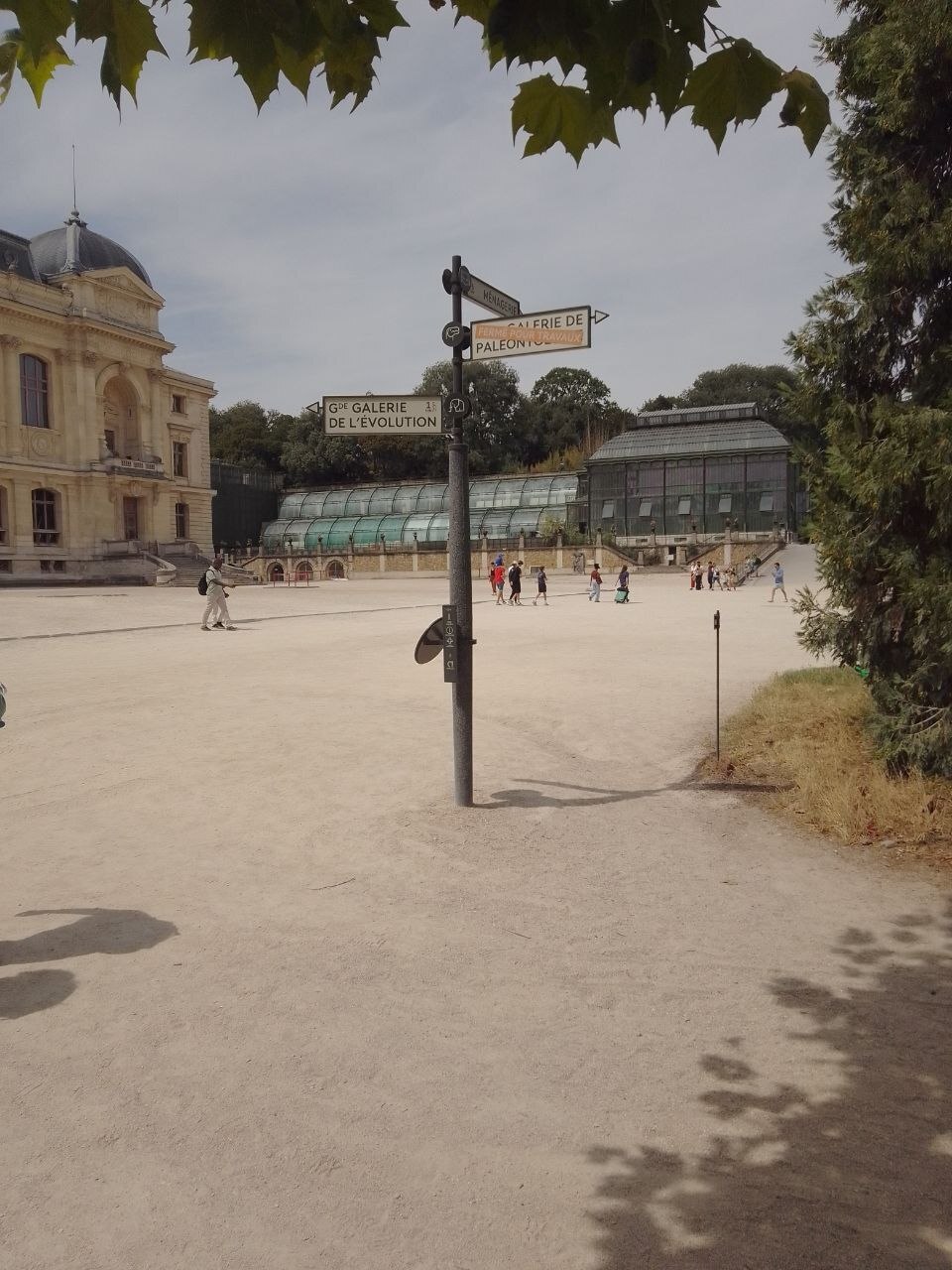
The garden, the Menagerie and each gallery keep separate opening hours and separate closing days — a plan built around one schedule can arrive at another building's door while it is shut, so check each attraction's own page rather than assuming they match.
The Menagerie's enclosures are old and close together by modern zoo standards; visitors expecting African-savanna-style open enclosures are sometimes disappointed, and that is a fair description of the collection rather than a maintenance problem.
Photography is generally allowed in the garden and galleries without a tripod; flash and tripods are restricted in the Grande Galerie de l'Evolution to protect the historic taxidermy and other visitors' experience of the dim, theatrical lighting.
Checked 2026-08-24 · Source
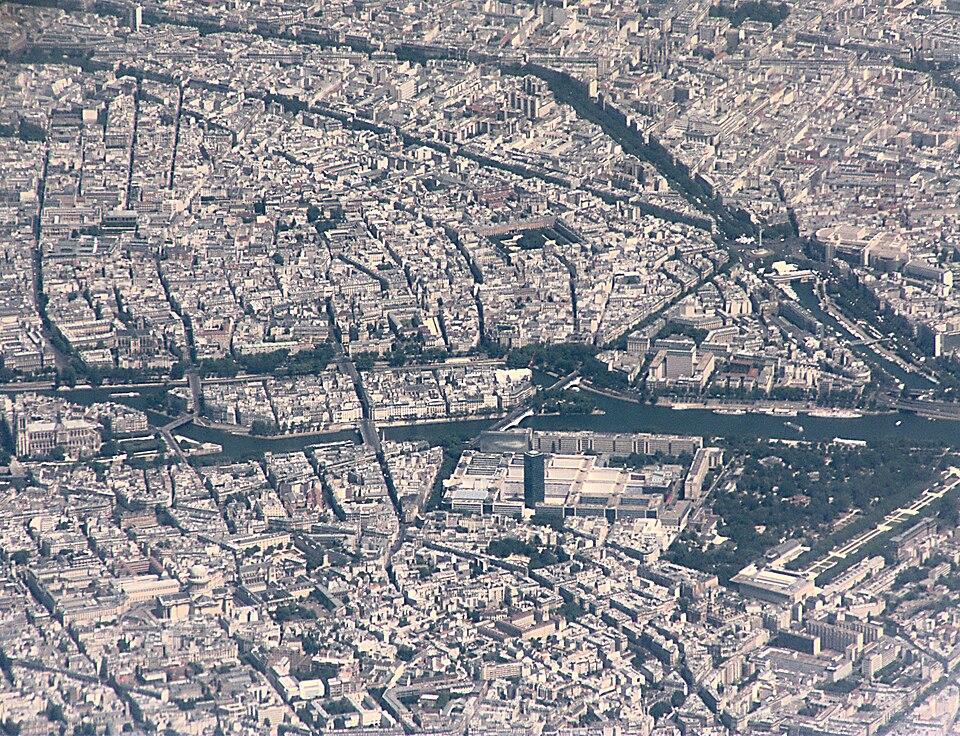
The central alley, lined with plane trees and framed by the Grande Galerie's iron facade at one end, is the garden's set-piece view and reads best in the low light of early morning or the last hour before closing.
The alpine garden's rockwork and the Grandes Serres' glasshouse silhouettes against the sky are the other reliable subjects; the Menagerie's older, cage-style enclosures photograph less well than open-air zoos and are better shot for the animals themselves than for the setting.
Checked 2026-08-24 · Source
The garden itself is free. The Grande Galerie de l'Evolution, the Menagerie, the Grandes Serres and the science galleries are each ticketed separately by the Museum national d'Histoire naturelle.
It was established by royal edict in 1635 and opened to the public in 1640, making it one of the oldest botanical gardens still on its founding site.
No. The Menagerie inside the Jardin des plantes, opened in 1794, is a separate, older and smaller collection from the Parc zoologique de Paris at the Bois de Vincennes.
The garden alone is 30-45 minutes on foot. Adding the Grande Galerie de l'Evolution or the Menagerie takes the visit to two to three hours; doing both galleries plus the zoo in one day is possible but long.
A restored 1889 iron-and-glass hall with a central parade of large taxidermied animals and dedicated rooms on endangered and extinct species.
The garden's open paths are not, but the Grandes Serres glasshouses and the indoor galleries are, and each is ticketed separately.
Loading the interactive map…
The interactive map could not be loaded.
Last updated:
Source: OpenStreetMap contributors, Wikidata ·