

_-_btv1b532397225.jpg)


1 min walk · Paris 3e Arrondissement
square Georges-Cain
- High
- Nature site
Language · 1 published
Museum · Paris 3e Arrondissement, Paris
| Monday | Closed |
|---|---|
| Tuesday | 10:00 – 18:00 |
| Wednesday | 10:00 – 18:00 |
| Thursday | 10:00 – 18:00 |
| Friday | 10:00 – 18:00 |
| Saturday | 10:00 – 18:00 |
| Sunday | 10:00 – 18:00 |
Checked 2026-08-24 · Source
Read from the OpenStreetMap access tags; anything not listed has no tag recorded.
Set the group type to family in the planner and the day window contracts to about three quarters of a solo day.
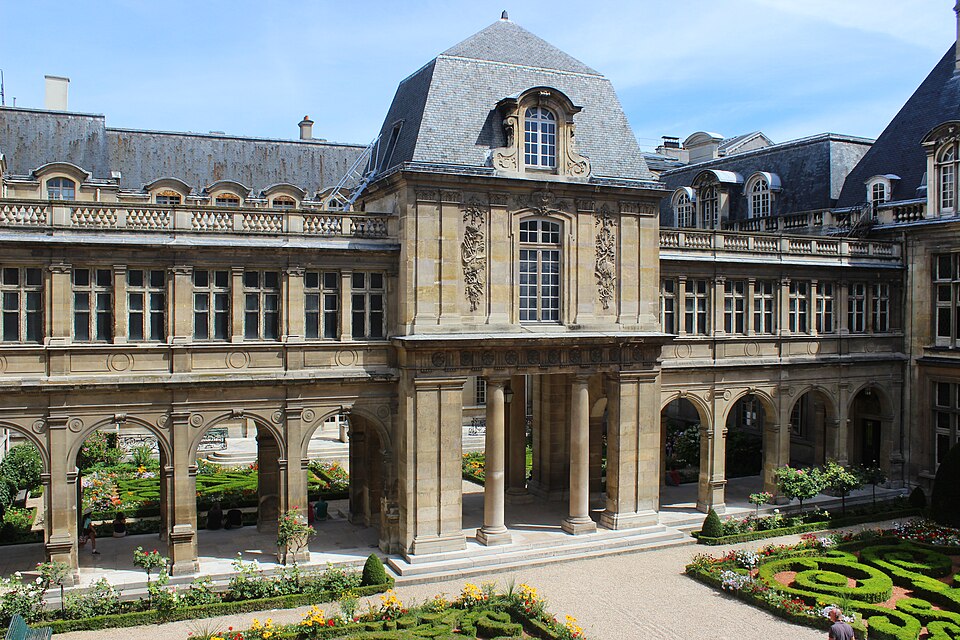
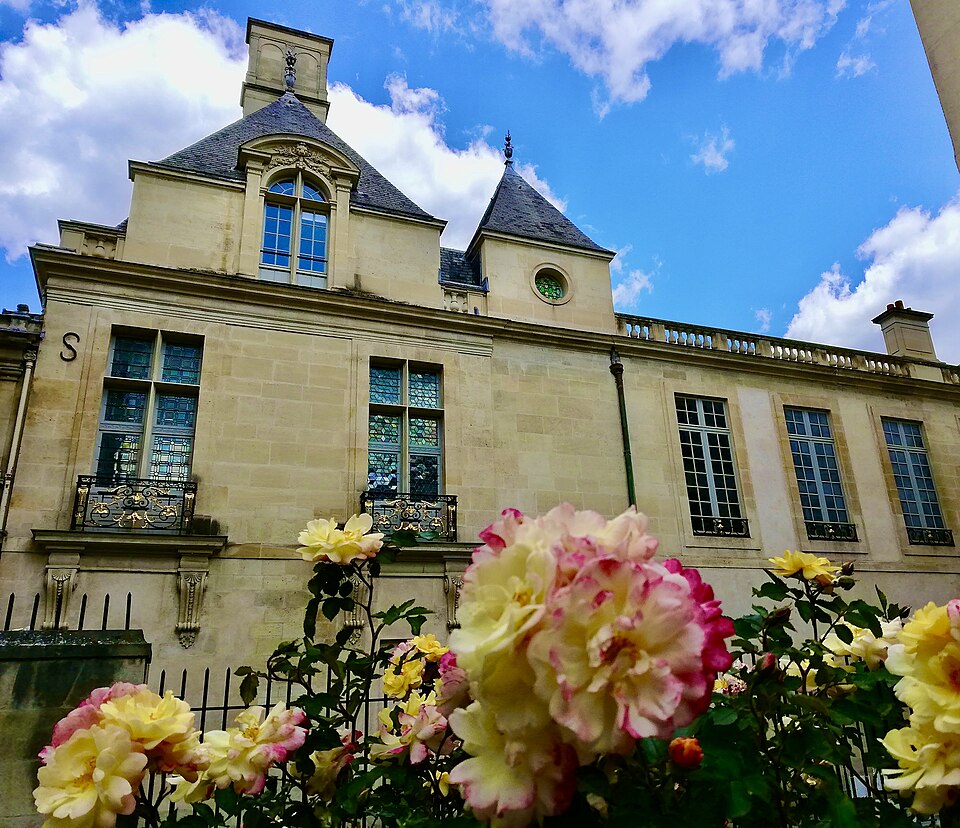
Musee Carnavalet is the museum of the history of Paris, occupying two adjoining Marais mansions: the Hotel Carnavalet, built in the 16th century and remodelled by Francois Mansart in 1655, and the neighbouring Hotel Le Peletier de Saint-Fargeau.
It opened as a municipal museum in 1880, making it one of the oldest of the city's own museums, and its permanent collection has been free to enter since 2001, in line with the other Paris Musees institutions the city runs.
The museum closed for a full renovation in 2016 and reopened on 29 May 2021 with reorganised galleries and a clearer chronological route from the city's earliest settlement through to the present day.
Checked 2026-08-24 · Source
The route runs chronologically from Gallo-Roman Lutetia through the medieval and royal city to the Revolution and into the 19th and 20th centuries, spread across roughly a hundred rooms in the two connected mansions.
Individual period rooms are reconstructed rather than simply hung with paintings, including the cork-lined bedroom in which Marcel Proust wrote much of In Search of Lost Time, moved here intact from his apartment.
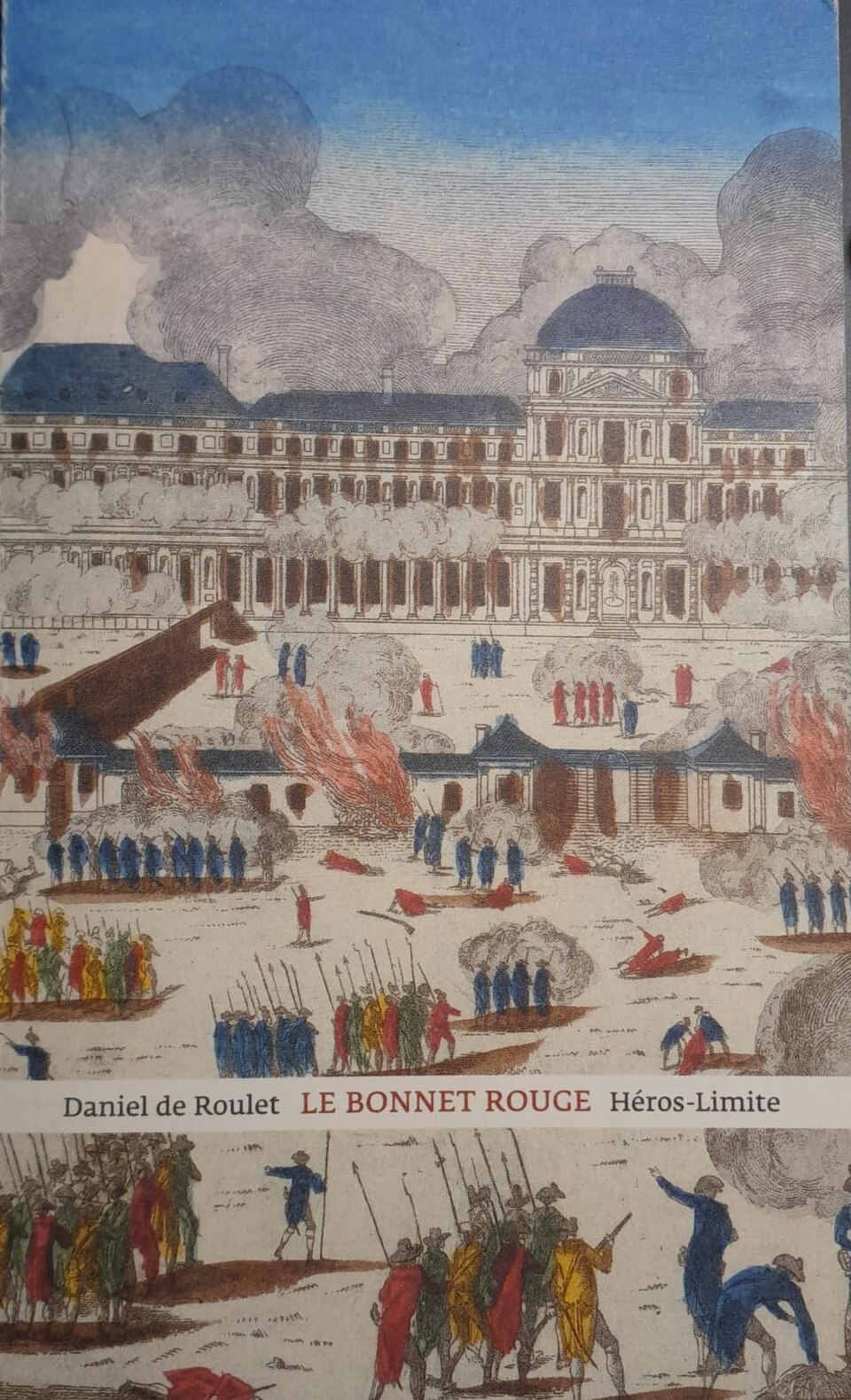
The Revolutionary galleries hold relics from 1789-1799 including models of the Bastille built from its own demolished stone, and a full Art Nouveau jeweller's shop interior — the Boutique Fouquet, designed by Alphonse Mucha — has been reassembled whole inside the museum. The courtyard gardens carry topiary and a statue of Louis XIV by Antoine Coysevox.
Checked 2026-08-24 · Source

Two to three hours for the permanent collection at a normal pace, given the scale of the two connected mansions; a focused visit taking in only the Revolutionary galleries and the Proust room can be done in about an hour.
The courtyard gardens add a further stop and are a reasonable place to pause partway through, since the museum's two mansions are connected at courtyard level as well as inside.
Checked 2026-08-24 · Source

Closed on Mondays, the standard closing day shared with most Paris Musees institutions. Weekday mornings run quieter than weekend afternoons, in line with most free-entry museums in the city, which draw a heavier walk-in crowd once there is no ticket queue to plan around.
The courtyard gardens close earlier than the interior galleries on some days — check the current schedule at the entrance rather than assuming both share one closing time.
Checked 2026-08-24 · Source
The permanent collection is free to enter, a Paris Musees policy in place since 2001 across the city's own museums. Temporary and special exhibitions are ticketed separately, with current prices set and published by the museum directly.
There is no timed-entry system for the free permanent collection, so no ticket needs booking in advance, but that also means there is no cap on how many visitors are inside at once — a difference from the paid national museums nearby, where a timed slot limits crowding.
Checked 2026-08-24 · Source
Saint-Paul on Metro line 1 and Chemin Vert on line 8 are both a short walk through the Marais to the museum's entrance on Rue de Sevigne.
The surrounding Marais streets are pedestrian-heavy and packed with independent shops, which makes the walk from either station a destination in itself rather than a simple transfer.
Bastille, served by lines 1, 5 and 8, sits a little further east and is a reasonable alternative approach for anyone arriving from that side of the city rather than doubling back through the centre of the Marais.
Checked 2026-08-24 · Source
The two connected mansions and roughly a hundred rooms are easy to lose a sense of direction in without picking up a plan at the entrance — a visitor without one commonly misses whole wings rather than seeing the museum end to end.
Free entry means no fixed group size or timed slot controlling how busy the permanent galleries get, so the most popular rooms — the Proust bedroom and the Fouquet boutique among them — can be crowded on weekend afternoons in a way a ticketed museum would not be.
Checked 2026-08-24 · Source
Photography without flash is generally permitted in the permanent galleries, in line with the practice at most Paris Musees venues, though flash and tripods are typically restricted to protect period furnishings and textiles.
The courtyard, with Coysevox's statue of Louis XIV and its clipped topiary, gives the clearest architectural shot of the two mansions together; the reassembled Fouquet Art Nouveau interior is the standout indoor subject.
Checked 2026-08-24 · Source
The permanent collection is free, a Paris Musees policy in place since 2001. Temporary exhibitions are separately ticketed.
The history of Paris, from Gallo-Roman Lutetia through the medieval and royal city, the Revolution, and into the 19th and 20th centuries.
Yes. The cork-lined bedroom in which he wrote much of In Search of Lost Time was moved here intact from his apartment.
29 May 2021, after closing for a full renovation in 2016.
Two to three hours for the full permanent collection, or about an hour for a focused visit to the Revolutionary galleries and the Proust room.
Mondays, the standard closing day shared with most Paris Musees institutions.
Loading the interactive map…
The interactive map could not be loaded.
Last updated:
Source: OpenStreetMap contributors, Wikidata ·