


63 min walk
Estadio Azteca
- High
- Historic monument
Language · 11 published
Museum · Mexico City
Closed today, Monday. Next open Tuesday at 10:00 — the planner will not place a stop here on a Monday.
Plan around it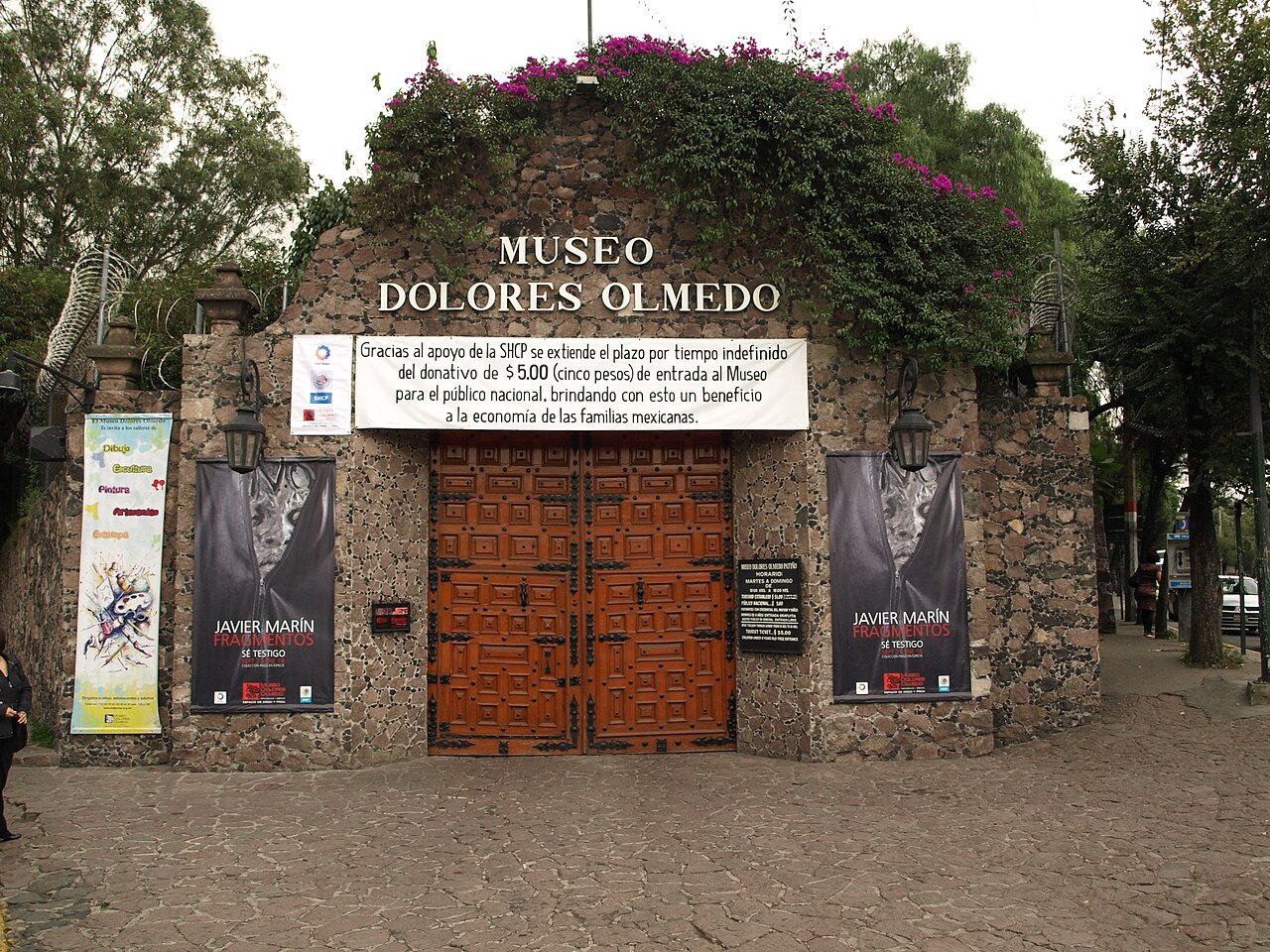
| Monday | Closed |
|---|---|
| Tuesday | 10:00 – 18:00 |
| Wednesday | 10:00 – 18:00 |
| Thursday | 10:00 – 18:00 |
| Friday | 10:00 – 18:00 |
| Saturday | 10:00 – 18:00 |
| Sunday | 10:00 – 18:00 |
Checked 2026-08-31 · Source
Read from the OpenStreetMap access tags; anything not listed has no tag recorded.
Set the group type to family in the planner and the day window contracts to about three quarters of a solo day.
Museo Dolores Olmedo occupies a former hacienda in Xochimilco, in southern Mexico City. The museum grew from the collection of Dolores Olmedo, an important patron of Mexican art. Its historic estate setting gives the visit a different rhythm from a conventional city gallery: art is experienced alongside courtyards, gardens, and the character of the former residence. The museum reopened on 30 May 2026 after six years closed. The Museo Dolores Olmedo is a museum housed in a former hacienda in Xochimilco, southern Mexico City. It holds the art collection of Dolores Olmedo, a prominent patron of Mexican art who died in 2002. The institution reopened on 30 May 2026 following a six-year closure period. The hacienda setting provides a distinctive environment for viewing works by major Mexican artists. The museum occupies historic grounds that contribute to its character as a cultural destination beyond conventional gallery spaces. A flexible visit lets travellers connect Museo Dolores Olmedo with the rest of the day without treating one room, viewpoint or photograph as the whole experience. The useful pace depends on personal interest and conditions on arrival. Yes, the museum reopened on 30 May 2026 after a six-year closure. The collection emphasises Diego Rivera and Frida Kahlo, reflecting Dolores Olmedo's personal connections with both artists.
Checked 2026-08-26 · Source
The collection is especially associated with Diego Rivera and Frida Kahlo, reflecting Dolores Olmedo’s personal relationships with both artists. Paintings, drawings, and other works are presented within the hacienda’s rooms and grounds. Courtyards and gardens form part of the experience rather than serving merely as a route between galleries. Peacocks roam the estate, adding a distinctive living element to a museum visit focused on twentieth-century Mexican art and a collector’s personal vision. The collection centres on works by Diego Rivera and Frida Kahlo, reflecting Olmedo's personal relationships with both artists.
Checked 2026-08-26 · Source
Set aside roughly two to three hours for a rounded visit. That gives you time to see the art collection, move through the hacienda rooms, explore the gardens and courtyards, and pause around the peacocks. Visitors chiefly interested in Rivera or Kahlo may spend longer with selected works. The estate is more dispersed than a single modern gallery, so walking between indoor and outdoor areas contributes to the overall pace.
Checked 2026-08-26 · Source

The museum reopened on 30 May 2026, making it a renewed cultural destination in Xochimilco. Weekday mornings can suit visitors seeking a quieter experience, while weekend visits may feel more social and active. Rain is more common from June through October and can affect time in the gardens. Because this is a southern-city excursion rather than a central museum stop, place it into a day plan that leaves room for the journey to and from Xochimilco.
Checked 2026-08-26 · Source
The reopening gives the museum a new chapter, and the visit should be planned as an estate-and-collection experience rather than a quick gallery stop. Decide whether you want time for the indoor works, the grounds, or both. The former hacienda setting is part of the attraction’s identity, so a rushed itinerary can miss much of its character. Allow flexibility around the journey and the two-to-three-hour visit suggested for seeing the collection and outdoor spaces together.
Checked 2026-08-26 · Source
The museum is in Xochimilco, well south of Mexico City’s central museum districts. The Xochimilco light rail connects with Tasqueña Metro station, followed by an onward connection toward the museum. Taxis and ride-hailing services offer alternatives, especially when travelling with limited time. Traffic can make the journey lengthy, so place the museum as a deliberate destination rather than assuming it will fit easily between central-city stops.
Checked 2026-08-26 · Source

The former hacienda includes uneven surfaces and steps, which can make movement harder for visitors with mobility limitations. Peacocks move freely around the grounds; give them space and avoid disturbing them. Xochimilco’s outdoor setting brings sun exposure and walking, so water and protection from strong sunshine are useful companions. The neighbourhood is less concentrated around international tourism than the historic centre, and visitors may find that Spanish is more useful here.
Checked 2026-08-26 · Source
The hacienda provides varied photographic subjects: historic walls, courtyards, gardens, art-filled rooms, and peacocks moving through the grounds. Interior photography should remain considerate of artworks and other visitors, with particular care in memorial or intimate residential spaces. Flash can harm works and disturb the gallery atmosphere. Use the outdoor areas for wider compositions, then return to the collection for close architectural details that show how the former residence frames the art.
Checked 2026-08-26 · Source
It reopened on 30 May 2026 after a six-year closure.
The collection is especially associated with Diego Rivera and Frida Kahlo.
It is housed in a former hacienda in Xochimilco, southern Mexico City.
A rounded visit usually takes about two to three hours, including the collection, hacienda rooms, gardens, and courtyards.
Use the Xochimilco light rail from Tasqueña Metro station, followed by an onward connection toward the museum.
Its art collection is displayed in a Xochimilco hacienda with gardens, courtyards, and free-roaming peacocks.
Loading the interactive map…
The interactive map could not be loaded.
Last updated:
Source: OpenStreetMap contributors ·