

29 min walk
Estadio Azteca
- High
- Historic monument
Language · 11 published
Museum · Mexico City
Museo Diego Rivera Anahuacalli
| Monday | Closed |
|---|---|
| Tuesday | 11:00 – 17:30 |
| Wednesday | 11:00 – 17:30 |
| Thursday | 11:00 – 17:30 |
| Friday | 11:00 – 17:30 |
| Saturday | 11:00 – 17:30 |
| Sunday | 11:00 – 17:30 |
Checked 2026-08-31 · Source
Read from the OpenStreetMap access tags; anything not listed has no tag recorded.
Set the group type to family in the planner and the day window contracts to about three quarters of a solo day.
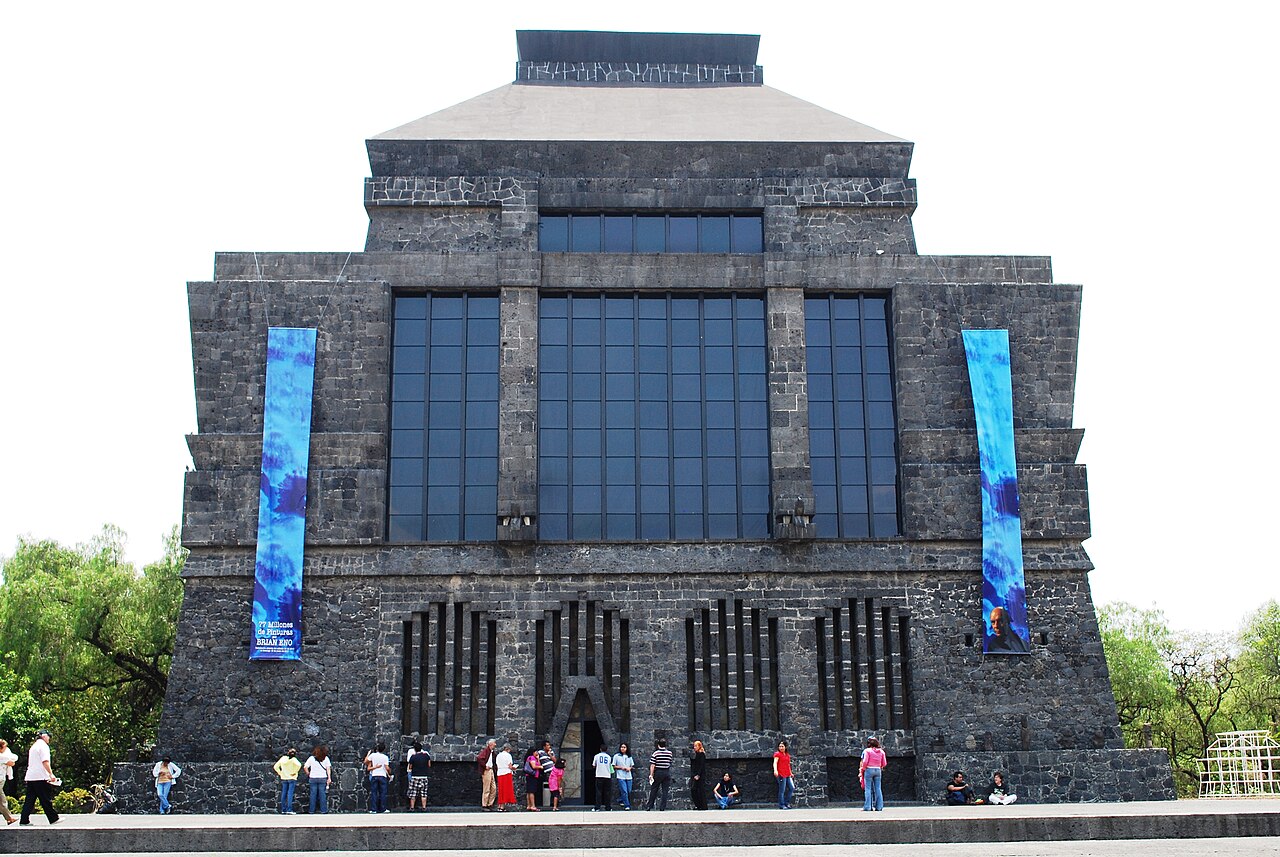
The Diego Rivera Anahuacalli Museum is a volcanic-stone building in Mexico City designed by the renowned Mexican muralist Diego Rivera to house his extensive pre-Hispanic art collection. Constructed from black volcanic rock sourced from the Xitle volcano, the structure reflects Rivera's artistic vision and deep interest in Mexico's indigenous heritage. The museum stands as both a repository of ancient artifacts and an architectural statement, embodying the artist's desire to create a space that honors pre-Columbian civilizations through modern design principles rooted in traditional materials.
Checked 2026-08-26
The museum contains Diego Rivera's personal collection of pre-Hispanic artifacts, which he accumulated throughout his lifetime. These objects span various Mesoamerican cultures and civilizations. The building itself serves as an integral part of the experience, with its fortress-like appearance, thick stone walls, and dramatic interior spaces designed to evoke ancient temples. Rivera's artistic influence permeates the structure, from the overall architectural conception to specific decorative elements. The collection and building together represent the artist's attempt to bridge Mexico's deep past with its contemporary cultural identity.
Checked 2026-08-26
Visitors should allocate approximately two to three hours for a thorough exploration of the museum. This duration allows adequate time to examine the pre-Hispanic collection, appreciate the architectural details of the volcanic-stone structure, and absorb the overall atmosphere that Rivera intended to create. The building's multi-level design and varied interior spaces reward unhurried observation. Those with particular interest in either pre-Columbian art or Rivera's work may wish to extend their visit. The contemplative quality of the spaces encourages a slower pace than conventional museums.
Checked 2026-08-26
Visitors should consult the museum's official channels or contact them directly before planning a visit to confirm current opening times, as schedules may change without widespread notification. Mexico City's mild climate means exterior conditions rarely prevent visits, though rainy season afternoons from June through September can bring heavy precipitation. Morning visits typically offer quieter conditions at cultural institutions throughout the city. Weekend afternoons may attract more local visitors. Advance verification of operational status remains essential for all travel planning. Check the operator's own site for the travel date before relying on a schedule or fare.
Checked 2026-08-26
Visitors must verify current admission fees through official museum channels before arrival, as pricing structures may have changed since last public update. Many Mexico City museums offer discounted rates for students, teachers, seniors, and residents, though specific eligibility requirements vary by institution. Some national museums operate with free admission on certain days, but this policy does not universally apply. Budget-conscious travelers should confirm costs in advance. Payment methods accepted at the entrance should also be verified, as cash-only policies persist at some cultural sites. Check the operator's own site for the travel date before relying on a schedule or fare.
Checked 2026-08-26
The museum occupies a location in the Coyoacán borough of southern Mexico City, distinct from the more centrally clustered museum district. Public transportation options include the Mexico City Metro system, with connecting bus or taxi services required for the final approach. The Metro Line 3 provides reasonable proximity, though exact transfer points require local verification. Ride-hailing applications operate throughout the city and offer direct access. Visitors staying in Coyoacán's historic center may find the museum accessible by walking, depending on exact accommodation location. Traffic congestion affects all surface travel during peak hours.
Checked 2026-08-26
The volcanic-stone construction creates notably cool interior temperatures regardless of external conditions; visitors should bring appropriate layers. Uneven flooring and changes in elevation throughout the multi-level structure demand sturdy footwear and attention to footing. Limited natural lighting in some areas may challenge visitors with vision difficulties. The museum's location in a residential zone means surrounding amenities are less concentrated than in tourist cores. Cellular data connectivity may vary in the building's thick-walled interior. Water and restroom facilities should be located upon entry. Security protocols including bag checks are standard practice at Mexican cultural institutions.
Checked 2026-08-26
Photography policies at Mexican museums vary considerably and change periodically. Visitors should observe posted signage regarding camera use and refrain from photographing when explicitly prohibited. Flash photography typically damages sensitive artifacts and is universally restricted in collection areas. Tripods and professional equipment usually require advance permission and may incur fees. Smartphone photography without flash is increasingly permitted in many institutions, though specific allowances differ by gallery. Staff instructions regarding photography should be followed promptly. Respect for fellow visitors' viewing experience should guide all camera use. Video recording faces stricter limitations than still photography at most cultural sites.
Checked 2026-08-26
Yes. Diego Rivera personally designed this volcanic-stone museum to house his pre-Hispanic collection and realize his artistic vision for the space.
Anahuacalli derives from Nahuatl, combining elements referring to the Anahuac region surrounding Mexico City and calli meaning house, essentially signifying a house related to this central Mexican area.
Both are located in the Coyoacán borough, though they are not immediately adjacent. Visitors often combine them in a single day with appropriate transportation planning.
The collection spans various Mesoamerican cultures and civilizations that Rivera collected throughout his lifetime, not limited to a single cultural origin.
Online ticketing availability is Not recorded pending review. Visitors should verify current purchase options through official museum channels before planning their visit.
Specific accessibility accommodations are Not recorded pending review. The multi-level volcanic-stone structure with uneven surfaces may present challenges; direct inquiry with the museum is advised.
Loading the interactive map…
The interactive map could not be loaded.

Last updated:
Source: OpenStreetMap contributors, Wikidata ·