

.jpg)
.jpg)

.jpg)
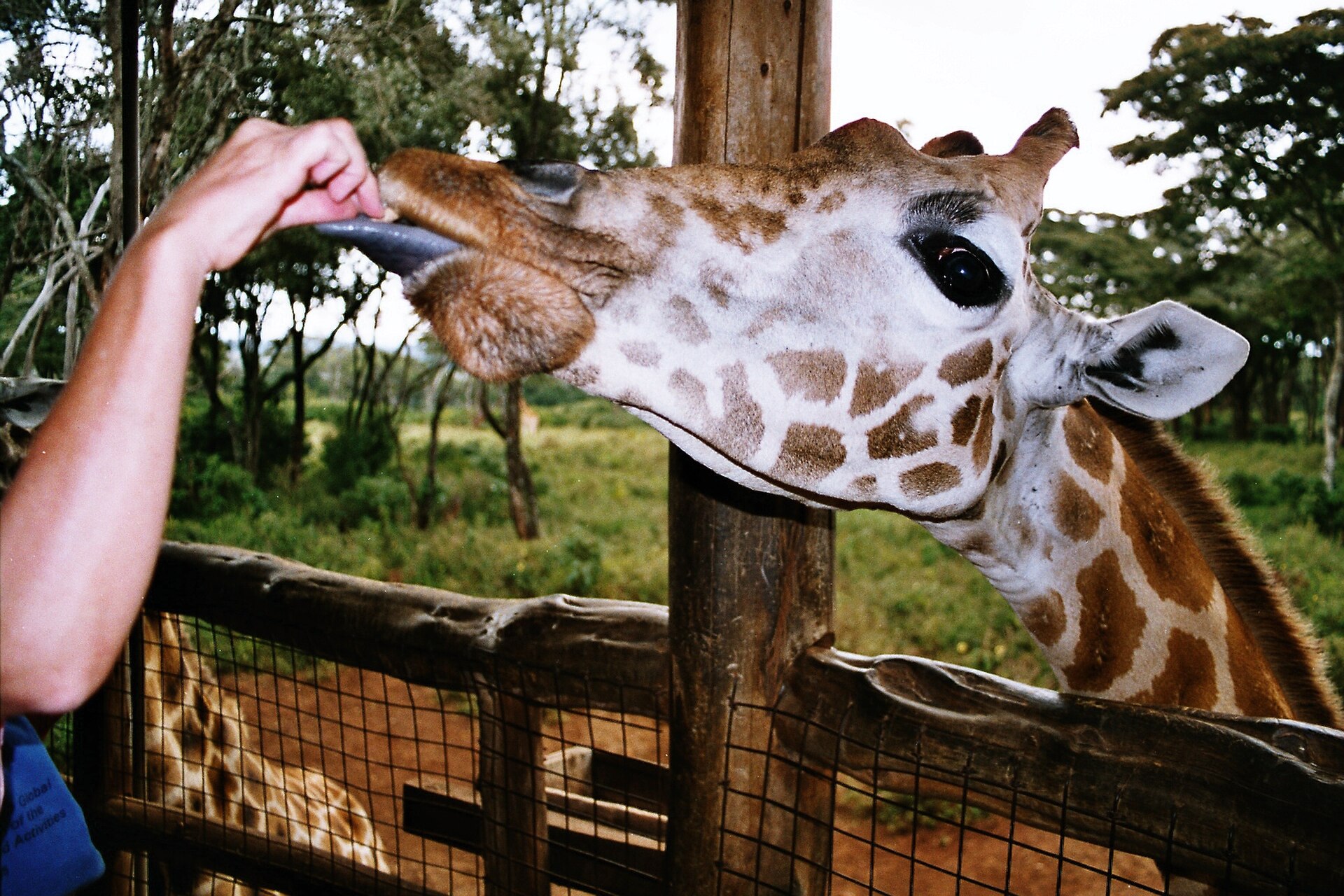
40 min walk
Giraffe Centre
- Must see
- Family attraction
Language · 11 published
Nature site · Nairobi
David Sheldrick Wildlife Trust

| Monday | 11:00 – 12:00 |
|---|---|
| Tuesday | 11:00 – 12:00 |
| Wednesday | 11:00 – 12:00 |
| Thursday | 11:00 – 12:00 |
| Friday | 11:00 – 12:00 |
| Saturday | 11:00 – 12:00 |
| Sunday | 11:00 – 12:00 |
Parsed from OpenStreetMap opening hours on 2026-08-26.
The Sheldrick Wildlife Trust's Nairobi Nursery is an orphan-elephant care facility inside Nairobi National Park. The Trust describes the Nursery as the formative first stage of an orphan's journey back to the wild, where its youngest orphaned elephants are raised in a protected but wholly wild setting. A public visit is not a zoo circuit: it is a scheduled opportunity to observe the Nursery herd's milk feed and mud bath while learning about the wider Orphans' Project and conservation work. Treat it as a conservation visit with controlled access, not casual wildlife viewing.
Checked 2026-08-28 · Source
The public session centres on the Nursery herd rather than on a series of enclosures. The Trust says visitors watch orphaned elephants emerge from the forest in groups for specialist milk, then gather for play, mud wallowing, dust bathing and other activity. A senior Keeper introduces the individual animals and explains their stories and the Trust's work, followed by time for questions. Some animals and care areas remain outside the public experience, so visitors should not expect unrestricted access or a guarantee that a particular adopted elephant will appear.
Checked 2026-08-28 · Source

The Trust states that the public visiting hour runs from 11am to noon, so allow substantially longer once park entry, transport to the Nursery and the return are included. The exact editorial duration is Not recorded because the practical total depends on the Nairobi National Park gate process and the way you arrive. Do not schedule another fixed appointment immediately after noon. A visit is most reliable when it is the central commitment of a morning rather than a short add-on between distant Nairobi attractions.
Checked 2026-08-28 · Source

Book for the daily public session rather than arriving at an arbitrary time. The Trust describes the visit as timed around the herd's midday milk feed and mud bath, and says advance booking is required. Weather changes the practical experience: its visitor guidance notes that the outdoor setting can be hot and sunny, while March to April and October to December can be muddy. Current availability, closures and booking conditions must be confirmed on the Trust's own page before travel because this is a managed conservation programme.
Checked 2026-08-28 · Source

Advance booking is required for the public visiting hour. The Trust states that Nursery visitors also need to account for separate Kenya Wildlife Service park entry requirements, and its visitor material directs guests to current booking details. The current donation and park-fee amounts are Not recorded in this guide because they should be taken directly from the live operator booking flow, not repeated after a one-day check. Confirm every required payment before travel, including any conditions applying to the vehicle or driver bringing you to the gate.
Checked 2026-08-28 · Source
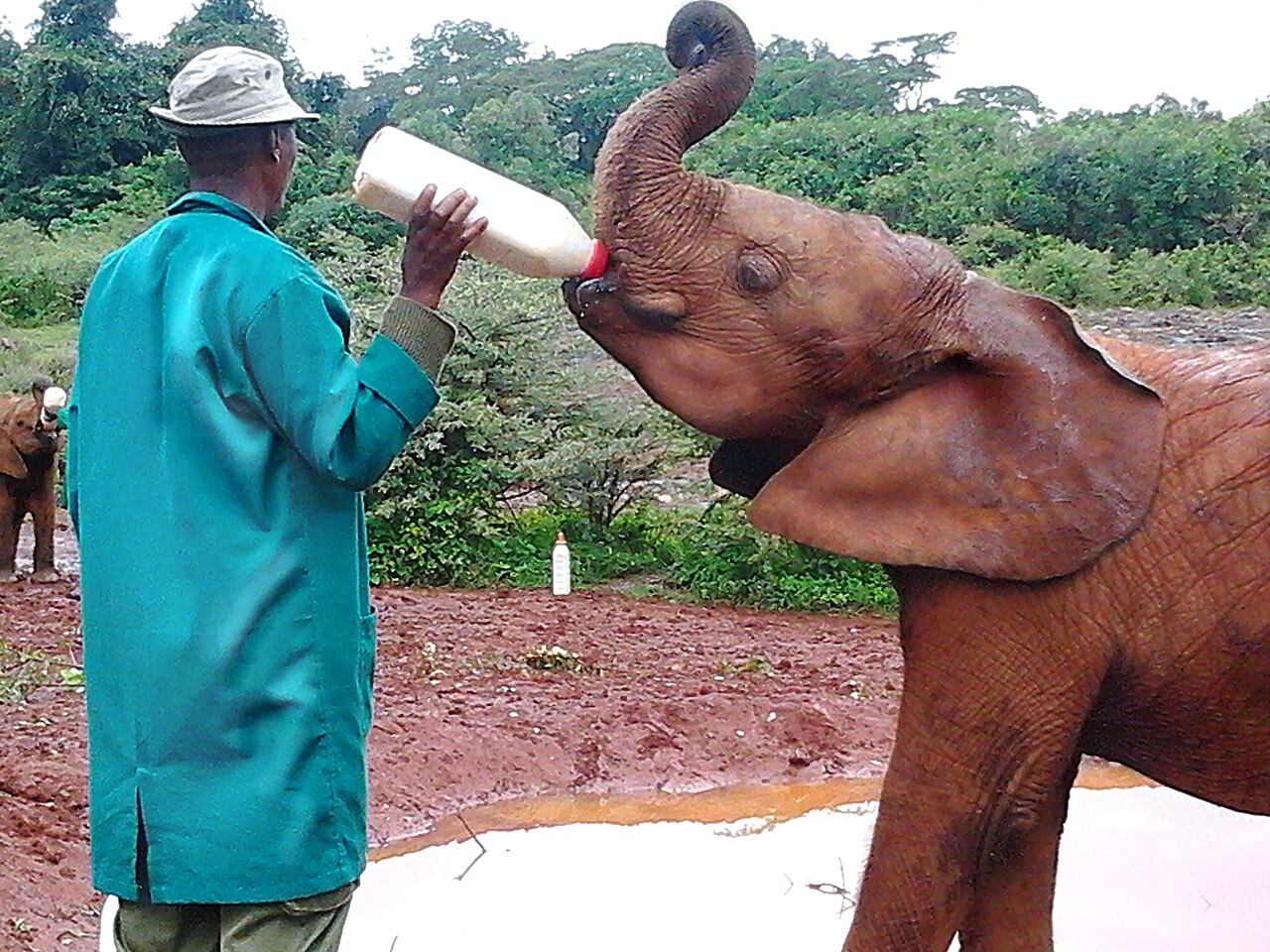
The Nairobi Nursery sits in Nairobi National Park. The Trust identifies the KWS Central Workshop Gate, also known as Magadi Gate, on Magadi Road, and explains that taxi and ride-hailing visitors are dropped at the KWS gate unless separate vehicle and driver fees have been paid. After showing the relevant park ticket, on-foot visitors are directed to the Trust vehicle for the short drive to the Nursery. Confirm the current route and gate instructions with the Trust before departure because access procedures are part of the booking process.
Checked 2026-08-28 · Source
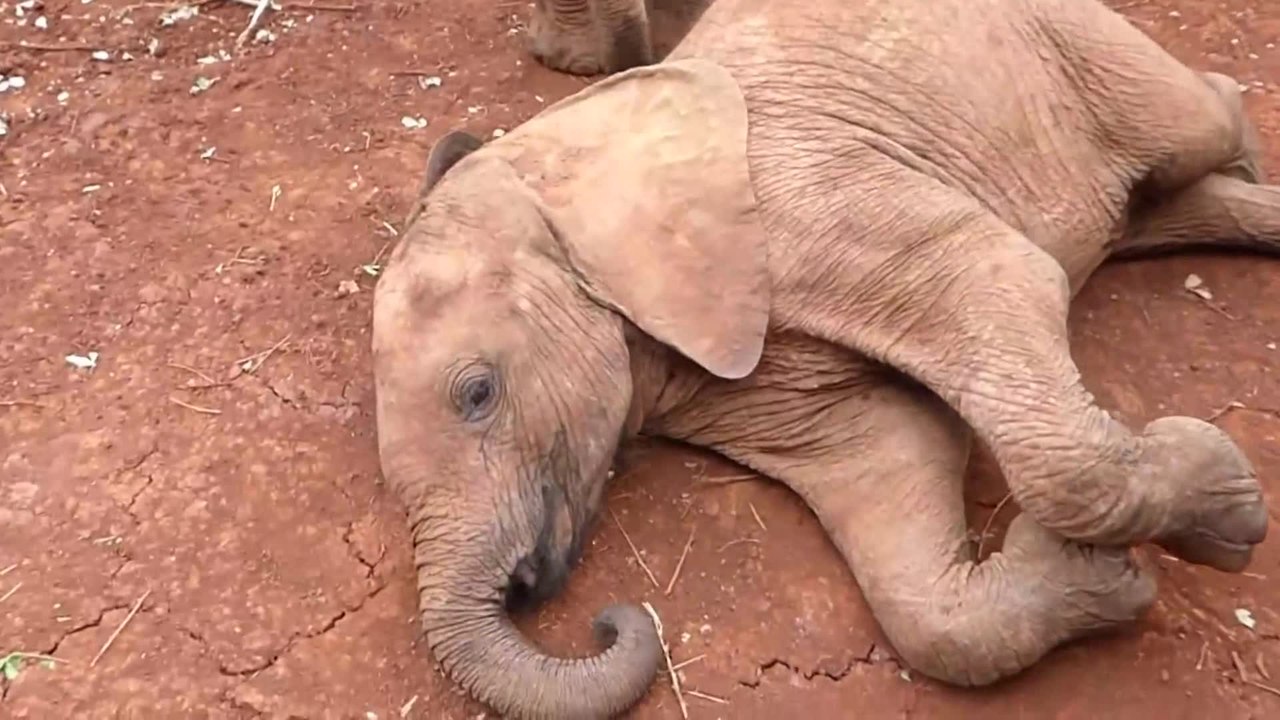
Respect the visitor boundary and the keepers' instructions at all times. The Trust limits human exposure for the elephants' welfare: only Keepers feed or directly interact with the animals, even though an elephant may approach the cordon. Bring water, sun protection and suitable footwear, but leave snacks and other drinks at home as the Trust requests. Do not promise a child or an adopter a meeting with a particular animal; the Trust says the public visit shows the herd then attending the mud bath, not every animal in its care.
Checked 2026-08-28 · Source

The best images come from observing the public session without trying to direct it: the elephants' entrance, feeding and mud-bath activity are the natural visual moments. Keep cameras behind the visitor line, do not use photography to seek closer contact and follow any instruction from the Keepers. Specific flash, tripod, drone and commercial-photography rules are Not recorded in this guide, so obtain the Trust's permission before using equipment beyond a hand-held personal camera. The existing licensed image set for this POI remains unchanged.
Checked 2026-08-28 · Source
Yes. The public session is by advance booking and is scheduled around the Nursery herd's midday feed and mud bath.
The Trust states that its public visiting hour runs daily from 11am to noon, subject to its current booking conditions.
Yes. The Trust says Nursery access has separate KWS park-entry requirements in addition to the booked public visit.
Not necessarily. The public visit features the Nursery herd attending the midday session, while individual animals may be elsewhere.
Bring water, sun protection and outdoor footwear. The Trust asks visitors to leave other drinks and snacks at home.
No. The Trust limits direct interaction and feeding to its Keepers to protect the elephants' welfare.
Loading the interactive map…
The interactive map could not be loaded.
Last updated:
Source: OpenStreetMap contributors, Wikidata ·