
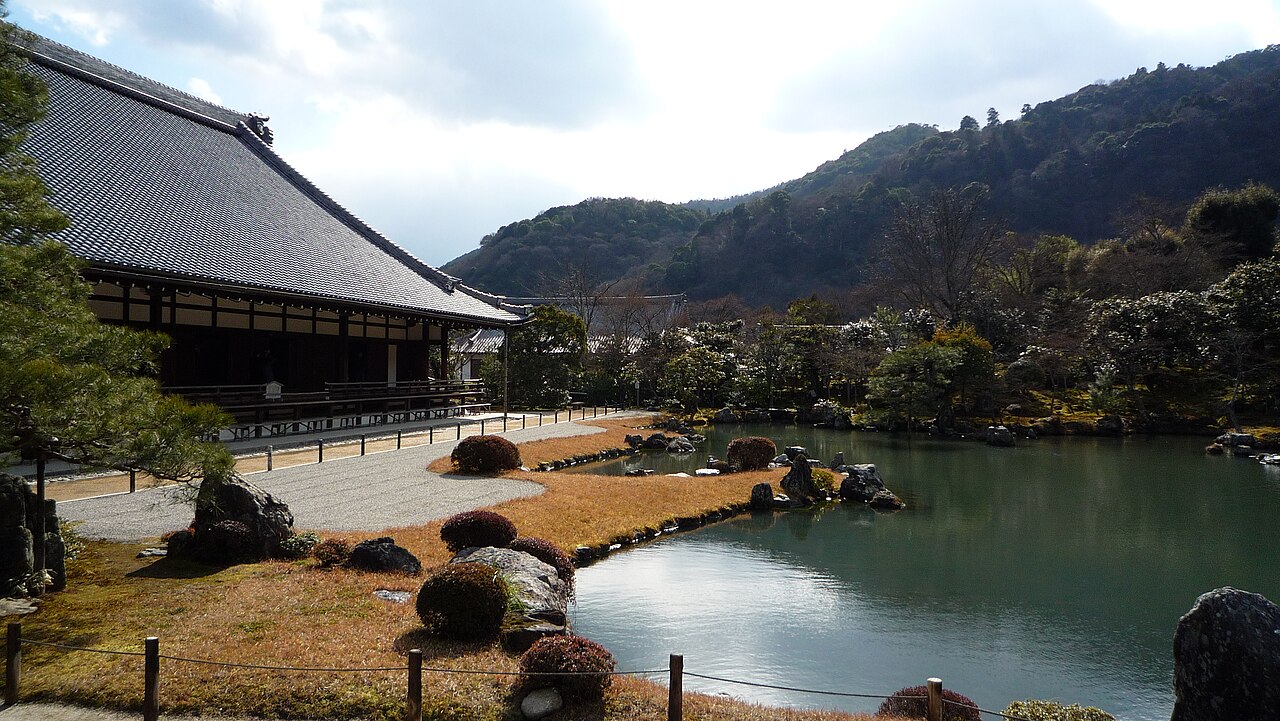
8 min walk
Tenryū-ji Temple
- Must see · Heritage site
- Historic monument
Language · 11 published
Historic monument · Kyoto
Sagano Romantic Train

The Sagano Scenic Railway is a tourist railway in Kyoto's Arashiyama district. It operates along a former freight line that runs parallel to the Hozu River gorge. The railway is commonly known as the Sagano Romantic Train or Torokko Train. It offers passengers views of the river valley, forested slopes, and seasonal scenery. The line connects Saga Torokko Station near Arashiyama with Kameoka Torokko Station. The journey traverses a rural landscape that contrasts with Kyoto's urban core. The open-air carriages are a distinctive feature of this attraction.
Checked 2026-08-26
The railway uses retro-styled carriages including open-sided cars for unobstructed views. Passengers see the Hozu River ravine, mountains, and vegetation directly from their seats. The route passes through tunnels and across bridges. There are no interior exhibits or displays. The experience centers entirely on the passing landscape. Seasonal variations include cherry blossoms in spring and autumn foliage. The gorge scenery remains the consistent focus throughout the approximately seven-kilometer journey. Some cars have windows that can be opened for photography and ventilation.
Checked 2026-08-26
The one-way journey between terminal stations takes roughly twenty-five minutes. This duration allows sustained viewing of the gorge without rushing. Most visitors treat the railway as a one-way experience, returning to Kyoto via the JR Sagano Line from nearby Kameoka Station. Combining both directions by train would extend the total excursion to approximately two hours including transfers. The brief transit time suits integration into broader Arashiyama itineraries. Visitors should factor in waiting periods at stations during busy seasons. Sagano Scenic Railway also earns time in a kyoto itinerary because EXACT_PRODUCTION reconciliation for the ranked entry; identity and coordinates were verified without a nearby fallback. Its value becomes clearer when the stop is compared with the surrounding streets and the other ranked places nearby.
Checked 2026-08-26
Peak seasons align with cherry blossom viewing in spring and autumn foliage. Morning and late afternoon light enhance gorge photography. Summer offers lush greenery though temperatures may be elevated. Winter presents bare landscapes with reduced crowds. Weather conditions affect open-car comfort significantly. Rain may diminish visibility and experience quality. Weekends and Japanese holidays draw substantially larger visitor numbers. Advance planning remains advisable for preferred travel periods. A flexible visit lets travellers connect Sagano Scenic Railway with the rest of the day without treating one room, viewpoint or photograph as the whole experience. The useful pace depends on personal interest and conditions on arrival. Check the operator's own site for the travel date before relying on a schedule or fare.
Checked 2026-08-26
Tickets are purchased at station counters on the day of travel or through reserved seating systems. Fares vary by carriage type with open-air cars commanding premium pricing. Same-day availability fluctuates with demand. Reserved tickets may sell out during peak foliage and blossom periods. Group bookings have specific procedures. Children and seniors may have reduced fare categories. International tourists should prepare cash as payment methods may be restricted. Combination tickets with river boat descents are sometimes available. Check the operator's own site for the travel date before relying on a schedule or fare.
Checked 2026-08-26
Saga Torokko Station sits near JR Saga-Arashiyama Station on the Sagano Line, accessible from Kyoto Station in approximately fifteen minutes. The station is also reachable on foot from Arashiyama's central bamboo grove and temple district. Kameoka Torokko Station lies outside central Kameoka with JR Kameoka Station approximately a twenty-minute walk away. The railway terminals are not directly connected by continuous rail service. Visitors must use separate transportation for return journeys. Signage in Japanese and English assists navigation at both endpoints.
Checked 2026-08-26
Open-sided cars expose passengers to weather without protection. Secure loose items against wind gusts in tunnels and cuts. The railway operates on a single track with limited daily departures; missing a planned train disrupts itineraries significantly. Station facilities are minimal. Crowding during peak seasons creates boarding competition. The gorge route has no emergency stops for passenger illness. Motion sickness affects some travelers. Children require supervision near open sides. Photography from moving cars demands caution with equipment. Return transportation from Kameoka requires separate planning.
Checked 2026-08-26
The moving train presents challenges for sharp images. Open cars eliminate window reflections but introduce wind vibration. Fast shutter speeds compensate for motion. The river gorge offers compositions of water, rock, and vegetation. Morning light illuminates the east-facing slopes. Tunnel transitions cause rapid exposure changes. Tripods are impractical in confined spaces. Telephoto lenses compress gorge layers effectively. Wide angles capture the open-car experience. Video recording captures the kinetic scenery though audio includes train noise. Respect other passengers' sightlines when positioning cameras at open sides.
Checked 2026-08-26
Yes, these names refer to the same operation. The railway uses torokko carriages, which influences its common names.
The railway operates one-way between Saga and Kameoka. Return requires separate transportation, typically the JR Sagano Line.
No, the train includes both open-sided and enclosed carriages. Open cars offer superior views but no weather protection.
Take the JR Sagano Line to Saga-Arashiyama Station, then walk to nearby Saga Torokko Station.
Reservations are advisable during peak seasons. Same-day tickets may be available during quieter periods.
Severe weather may affect operations. Open-car passengers experience conditions directly without shelter.
Loading the interactive map…
The interactive map could not be loaded.
Last updated:
Source: OpenStreetMap contributors, Wikidata ·