

7 min walk
Kyoto Aquarium
- Must see
- Family attraction
Language · 11 published
Historic monument · Kyoto
西本願寺
Reviewed by Elena Voss · SSMTour Travel Editor
| Monday | 05:30 – 17:00 |
|---|---|
| Tuesday | 05:30 – 17:00 |
| Wednesday | 05:30 – 17:00 |
| Thursday | 05:30 – 17:00 |
| Friday | 05:30 – 17:00 |
| Saturday | 05:30 – 17:00 |
| Sunday | 05:30 – 17:00 |
Parsed from OpenStreetMap opening hours on 2026-08-26.
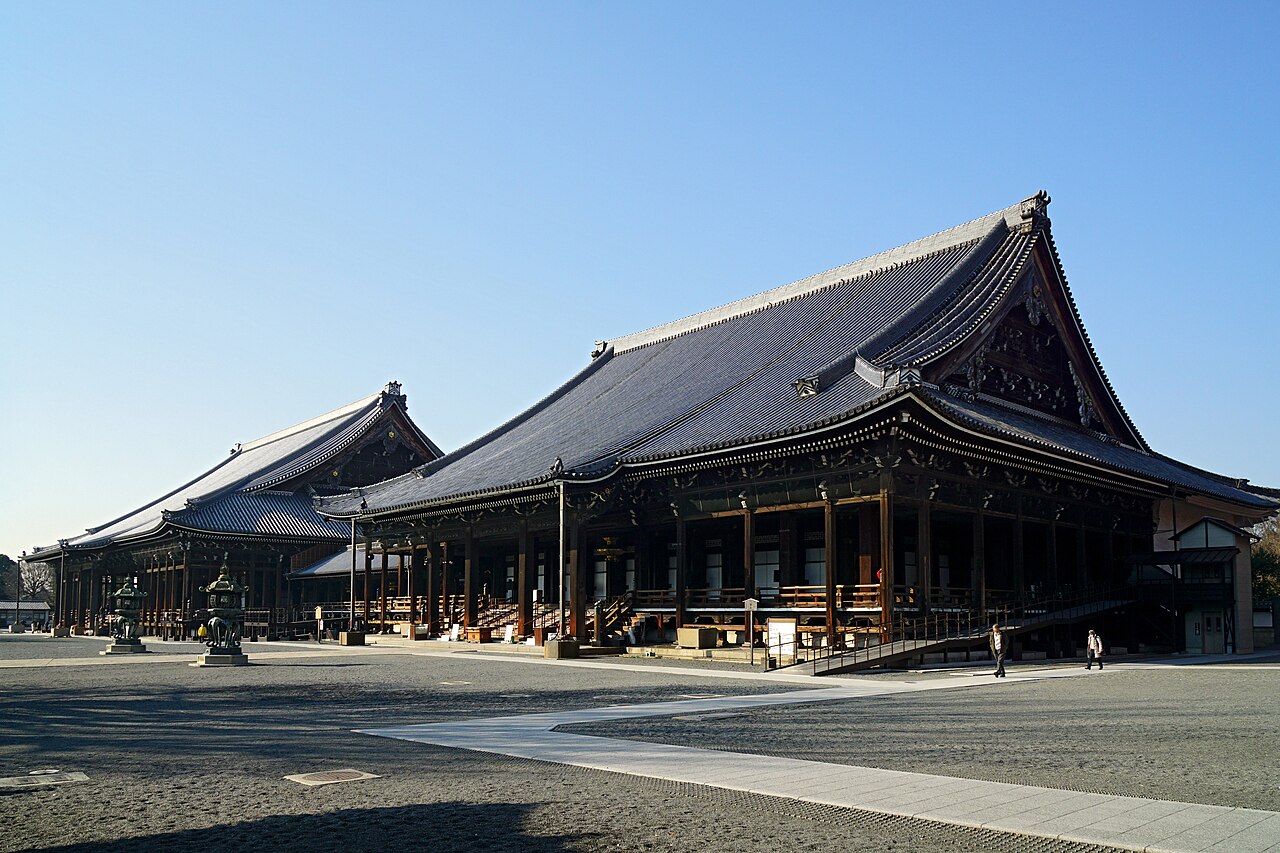
Nishi Hongan-ji is a Jodo Shinshu Buddhist temple in central Kyoto and the headquarters of one branch of the Hongan-ji tradition. The large complex represents an important religious and architectural landmark close to Kyoto Station. Its halls, gates and wooden structures show the scale and craftsmanship of a major temple institution. Nishi Hongan-ji stands separately from Higashi Hongan-ji, reflecting the historical division of the Hongan-ji school. A visit suits travellers interested in Buddhist history, traditional architecture and active religious spaces. Nishi Hongan-ji is a Jodo Shinshu Buddhist temple in Kyoto, Japan. No. They are separate temples resulting from a historical division of the Hongan-ji sect. They stand as distinct headquarters complexes with separate administrations.
Checked 2026-08-26 · Source
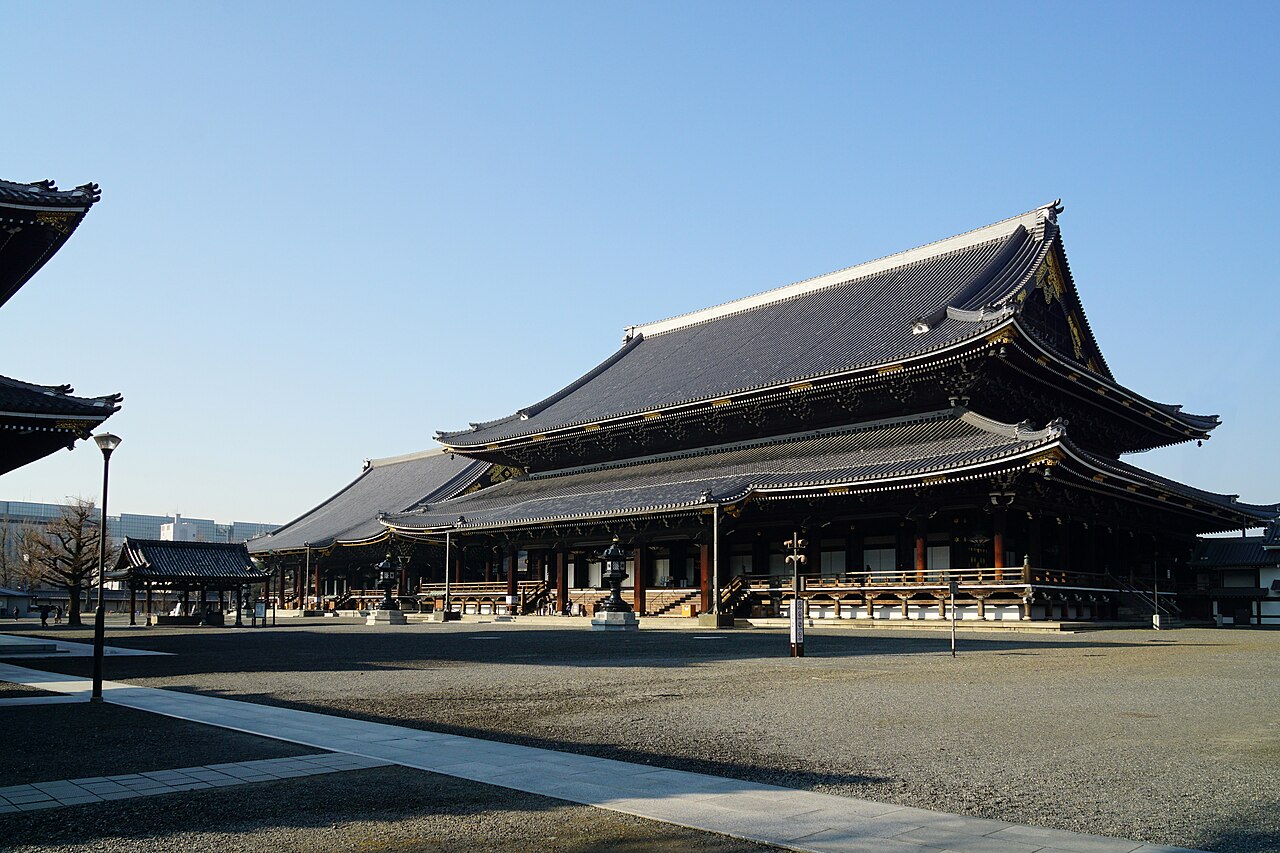
The compound includes the Amida Hall and the Founder’s Hall, along with gates, halls and subsidiary buildings arranged across broad temple grounds. The Karamon gate is a National Treasure and is notable for its elaborate carved decoration. Hiunkaku is an Important Cultural Property within the temple complex. The Shoin contains study rooms and traditional artistic details. Look closely at rooflines, timber construction, carved panels and the relationship between open courtyards and enclosed halls. The scale makes the complex feel like a functioning institution rather than a single monument.
Checked 2026-08-26 · Source
Most visitors need one to two hours at Nishi Hongan-ji. A shorter visit can focus on the principal halls, gates and exterior architecture, while a slower visit gives more time to examine carving, timber details and the layout of the grounds. Visitors combining the temple with Kyoto Station, Higashi Hongan-ji or nearby central districts can fit it into a broader walking route. Wear comfortable shoes because the compound is extensive and interior visits may involve moving between outdoor paths and rooms where shoes are removed.
Checked 2026-08-26 · Source
Spring and autumn bring Kyoto’s greatest sightseeing demand, while summer is hot and humid and winter is colder but often calmer. Morning or late afternoon light can bring out the texture of wooden buildings and carved gates. Religious observances may alter the atmosphere or the areas available during a visit. The temple’s urban position makes it practical in many parts of a Kyoto day, especially when paired with Kyoto Station or the related Higashi Hongan-ji complex. Set aside time to walk between the major structures rather than treating the grounds as one viewpoint.
Checked 2026-08-26 · Source
Nishi Hongan-ji is a temple headquarters with a mixture of religious and visitor-facing spaces. Access arrangements can differ between open grounds, halls, special exhibitions and event areas. Some parts may be available without a separate payment, while a particular building or exhibition can use its own admission arrangement. Treat the principal halls and the Karamon gate as the core architectural focus of the visit. Carry a practical payment method for any charge connected with a restricted exhibition or special event, and follow the access signs at each entrance.
Checked 2026-08-26 · Source
Nishi Hongan-ji is near Kyoto Station, making it convenient for visitors arriving by Shinkansen, local train, subway or bus. From the station district, the temple can be reached on foot in approximately fifteen to twenty minutes. Buses and taxis serve the surrounding central streets. Its position also makes a walking connection with Higashi Hongan-ji practical. Follow the broad streets around the station and look for the temple gates and timber buildings. The central location allows easy onward travel to other Kyoto neighbourhoods after the visit.
Checked 2026-08-26 · Source
Nishi Hongan-ji remains an active religious headquarters, so keep voices low and give worshippers space. Remove shoes wherever signs indicate, and follow photography restrictions inside halls and sacred rooms. Some buildings can be closed for ceremonies, maintenance or other temple activity. The grounds are broad, so comfortable footwear helps. Crowds tend to gather around the principal buildings, while other parts may feel quieter. Open courtyards can be exposed to sun, rain and seasonal temperatures. Treat every structure as part of a living religious complex, not only as a photo backdrop.
Checked 2026-08-26 · Source
The Karamon gate is a strong subject for architectural photography, with carved details that reward a closer view. Wide compositions help show the scale of the Amida Hall, Founder’s Hall and surrounding grounds. Morning and late afternoon light can add depth to timber surfaces and rooflines. Photograph exteriors from public visitor areas and keep tripods, bags and bodies clear of entrances. Interior rules can be stricter, especially in active worship spaces. Do not photograph worshippers intrusively, and follow every posted instruction before taking pictures inside a hall.
Checked 2026-08-26 · Source
No. They are separate temple complexes connected by the historical division of the Hongan-ji school, with distinct grounds and administrations.
The Amida Hall, Founder’s Hall and Karamon gate are principal highlights. The compound also contains Hiunkaku, the Shoin and numerous gates and subsidiary buildings.
Allow one to two hours. A shorter visit can focus on the main halls and Karamon gate, while a slower visit suits travellers studying architectural details.
The temple is close to Kyoto Station and takes approximately fifteen to twenty minutes to reach on foot from the station district. Buses and taxis also serve the area.
Wear comfortable shoes for the broad grounds and be ready to remove them where signs indicate. Quiet, respectful clothing and behaviour suit the active religious setting.
Karamon is a National Treasure known for elaborate carved decoration. It is one of the clearest architectural highlights within the Nishi Hongan-ji compound.
Loading the interactive map…
The interactive map could not be loaded.
Last updated:
Source: OpenStreetMap contributors, Wikidata ·