

6 min walk
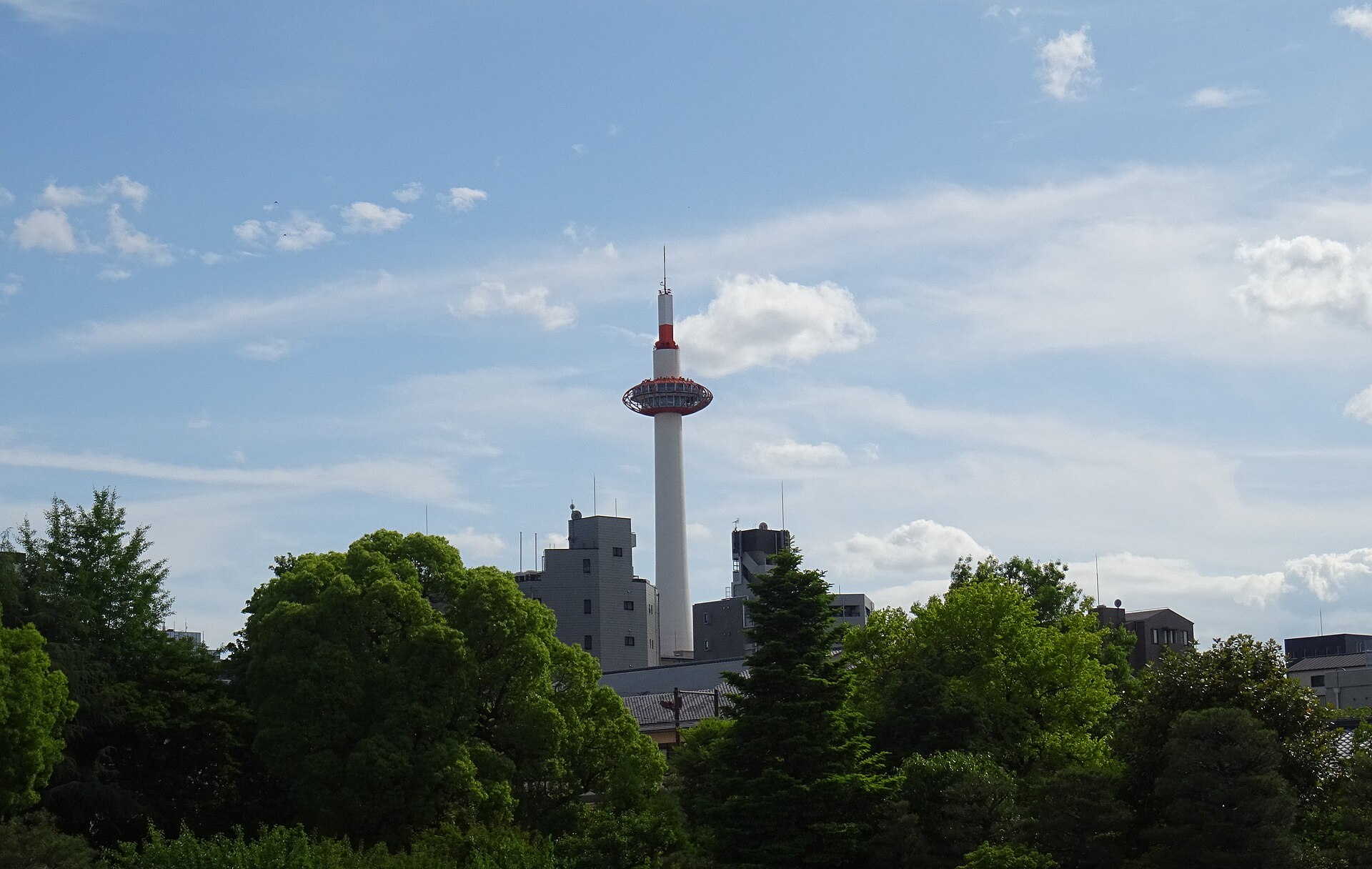
Kyoto Tower
- Must see
- Historic monument
Language · 11 published
Place of worship · Kyoto
東本願寺
| Monday | 05:50 – 17:30 |
|---|---|
| Tuesday | 05:50 – 17:30 |
| Wednesday | 05:50 – 17:30 |
| Thursday | 05:50 – 17:30 |
| Friday | 05:50 – 17:30 |
| Saturday | 05:50 – 17:30 |
| Sunday | 05:50 – 17:30 |
Also recorded: 06:20 – 16:30
Parsed from OpenStreetMap opening hours on 2026-08-26.
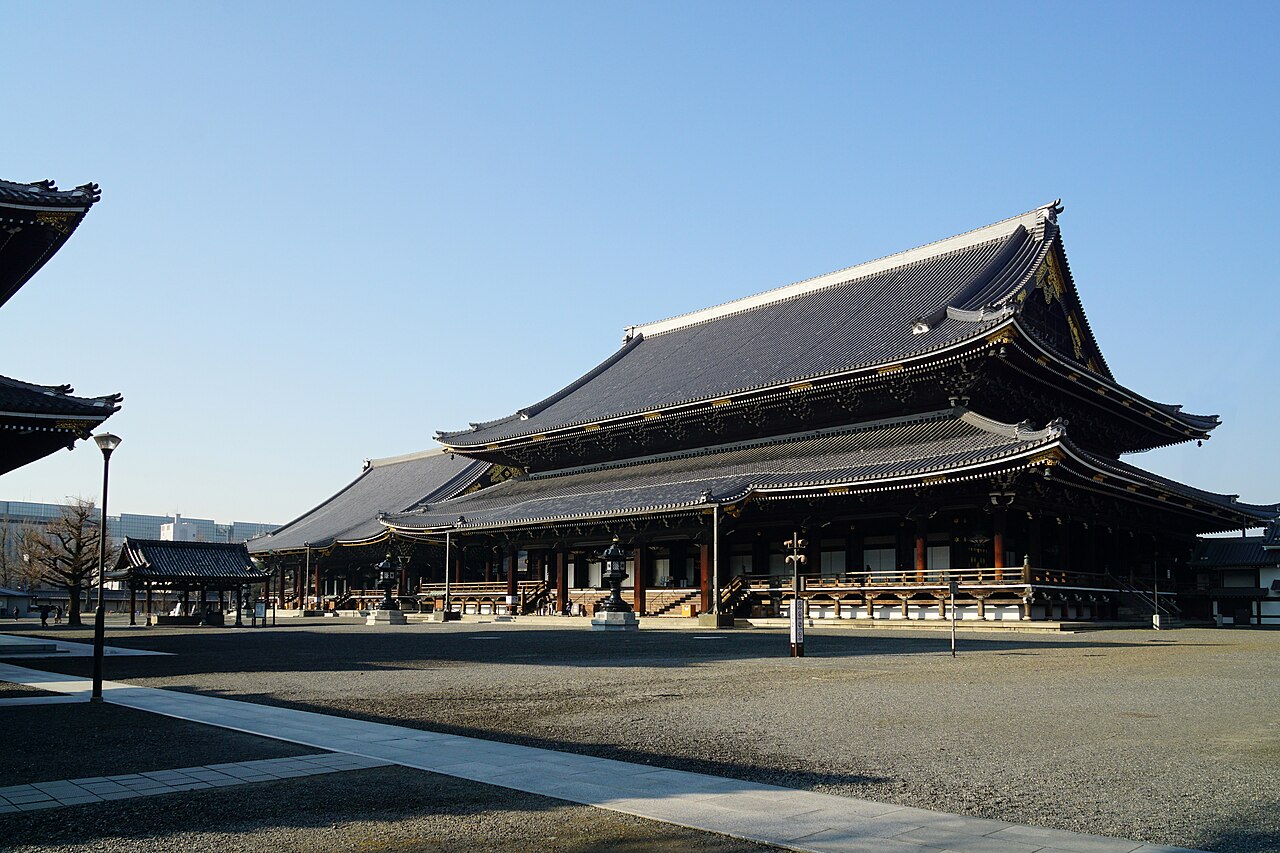
Higashi Hongan-ji is a Jodo Shinshu Buddhist temple in Kyoto, serving as the headquarters of the Otani-ha branch. Founded in 1602 by Shogun Tokugawa Ieyasu, it was established to reduce the political influence of the original Hongan-ji faction. The temple complex occupies a significant site near Kyoto Station. Its main hall, the Goei-do, ranks among the largest wooden structures in the world. The temple remains an active religious center with substantial cultural and historical importance to Japanese Buddhism and Kyoto's urban landscape.
Checked 2026-08-26
The temple complex centers on the monumental Goei-do, or Founder's Hall, dedicated to Shinran, the sect's founder. The Amida-do houses the principal image of Amida Buddha. Visitors encounter expansive tatami-matted interior spaces, massive wooden pillars, and ornate metal fixtures. The grounds include stone-paved courtyards and subsidiary structures. The scale of timber construction demonstrates traditional Japanese architectural techniques. Religious artifacts and ceremonial objects are present, though specific collection details are Not recorded. The atmosphere combines devotional function with architectural grandeur typical of major Japanese religious institutions.
Checked 2026-08-26
A thorough visit to Higashi Hongan-ji typically requires sixty to ninety minutes. The vast main hall alone demands considerable time to appreciate its scale and interior details. Additional exploration of the Amida-do and surrounding grounds extends the duration. Visitors with strong interest in Buddhist architecture or Jodo Shinshu history may spend two hours. The site lacks the garden complexity of some Kyoto temples, streamlining the experience. Morning visits allow more contemplative pacing before potential crowds gather near this centrally located landmark.
Checked 2026-08-26
Visitors should consult official temple communications before planning. The site typically experiences heavier foot traffic during major Buddhist observances and Japanese holiday periods. Early mornings generally offer quieter conditions for appreciating the architecture. Kyoto's summer brings heat and humidity that may affect comfort within the large wooden structures. Winter visits provide crisp light and thinner crowds. Spring and autumn align with peak tourism seasons across Kyoto, affecting accessibility and atmosphere at this prominent location. Check the operator's own site for the travel date before relying on a schedule or fare.
Checked 2026-08-26
Many major Kyoto temples operate donation-based or modest fixed-fee entry systems. Visitors should carry cash as standard preparation for temple visits across Japan. Some special exhibitions or interior access may involve separate charges. The temple's proximity to Kyoto Station makes it accessible for brief visits without substantial time investment. Budget-conscious travelers often combine this site with nearby attractions. Official temple sources should be consulted for current financial requirements before arrival. Higashi Hongan-ji also earns time in a kyoto itinerary because WIKIDATA_PRODUCTION reconciliation for the ranked entry; identity and coordinates were verified without a nearby fallback. Its value becomes clearer when the stop is compared with the surrounding streets and the other ranked places nearby. Check the operator's own site for the travel date before relying on a schedule or fare.
Checked 2026-08-26
Higashi Hongan-ji stands immediately northeast of Kyoto Station, approximately five minutes on foot from the central exit. The proximity to Japan's second-largest railway station makes access straightforward via Shinkansen, conventional rail, and subway connections. City buses serving Kyoto Station provide additional options. The temple's urban location eliminates rural transit complications. Taxis and ride services readily serve the area. Walking from the station involves minimal navigation through developed streets. Signage in Japanese and English typically guides visitors from major transit points to the temple entrance.
Checked 2026-08-26
Visitors must remove shoes before entering the main halls; socks are advisable. The vast wooden floors can prove cold in winter months. Photography restrictions apply within certain interior spaces; observe posted guidance and staff direction. The temple remains an active religious site; respectful conduct and quiet demeanor are expected. Large-scale events may limit public access unexpectedly. The surrounding area experiences heavy pedestrian and vehicle traffic given the central location. Construction or restoration work periodically affects access to specific structures without advance public notification.
Checked 2026-08-26
The exterior architecture permits general photography, capturing the impressive scale of the Goei-do and traditional rooflines against urban surroundings. Interior photography restrictions are enforced; specific rules are Not recorded pending review. The spacious grounds allow wide-angle compositions of the main structures. Early morning and late afternoon light enhance the wooden textures. Tripod use likely requires permission and may be restricted during busy periods. The temple's location near Kyoto Station creates challenging background elements for pristine architectural shots. Visitors should prioritize visual observation when interior photography is prohibited.
Checked 2026-08-26
Yes. Both temples originated from the Hongan-ji temple complex. Tokugawa Ieyasu ordered the separation in 1602, creating Higashi Hongan-ji as a distinct institution. Nishi Hongan-ji became the headquarters of the Hongan-ji-ha branch. The split was politically motivated. Both remain active Jodo Shinshu centers in Kyoto.
The temple functions as an active religious institution. Public observation of ceremonies may be possible. Specific schedules and visitor participation protocols are Not recorded. Visitors should observe all conduct guidelines and maintain appropriate respect for worshippers.
Availability of English-language materials is Not recorded. Major Kyoto temples increasingly provide multilingual resources, but visitors should not assume comprehensive English coverage. Visual elements and architectural features remain appreciable without textual aids.
Specific accessibility provisions are Not recorded. The vast wooden structures involve stepped entries and interior level changes typical of historic Japanese architecture. Visitors requiring accommodation should contact the temple directly or consult current accessibility resources before visiting.
On-site dining facilities are Not recorded. The immediate proximity to Kyoto Station provides extensive food options. Traditional temple cuisine experiences are not indicated as available at this location. Visitors should plan accordingly.
The Goei-do is among the world's largest wooden buildings. Exact comparative measurements are Not recorded. Its scale rivals or exceeds many celebrated historic structures globally. The construction represents significant achievement in traditional Japanese timber engineering.
Loading the interactive map…
The interactive map could not be loaded.

Last updated:
Source: OpenStreetMap contributors, Wikidata ·