
1 min walk
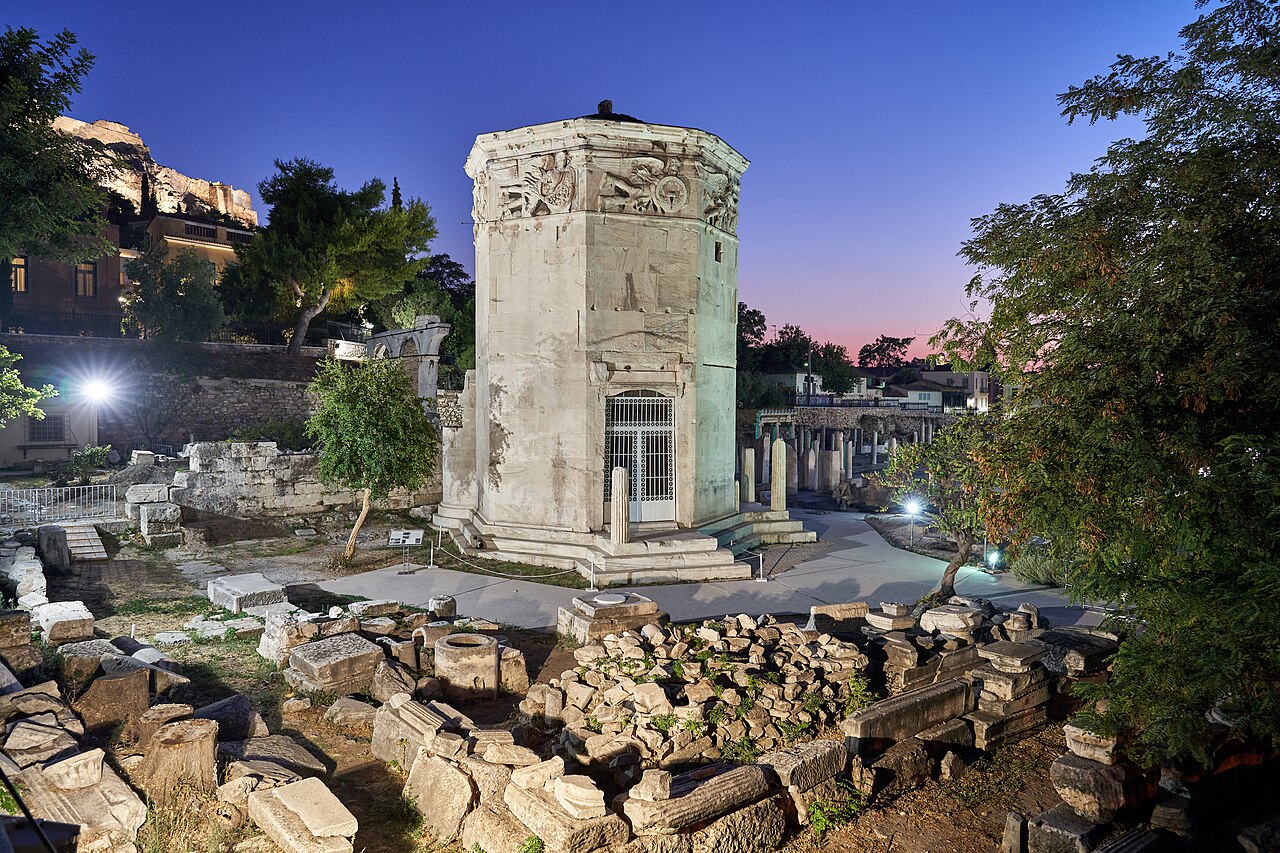
Tower of the Winds
- Must see · Heritage site
- Historic monument
Language · 11 published
Historic monument · Athens
Ρωμαϊκή Αγορά Αθηνών
Reviewed by Elena Voss · SSMTour Travel Editor
| Monday | 08:00 – 20:00 |
|---|---|
| Tuesday | 08:00 – 20:00 |
| Wednesday | 08:00 – 20:00 |
| Thursday | 08:00 – 20:00 |
| Friday | 08:00 – 20:00 |
| Saturday | 08:00 – 20:00 |
| Sunday | 08:00 – 20:00 |
Checked 2026-08-31 · Source
Read from the OpenStreetMap access tags; anything not listed has no tag recorded.
Set the group type to family in the planner and the day window contracts to about three quarters of a solo day.
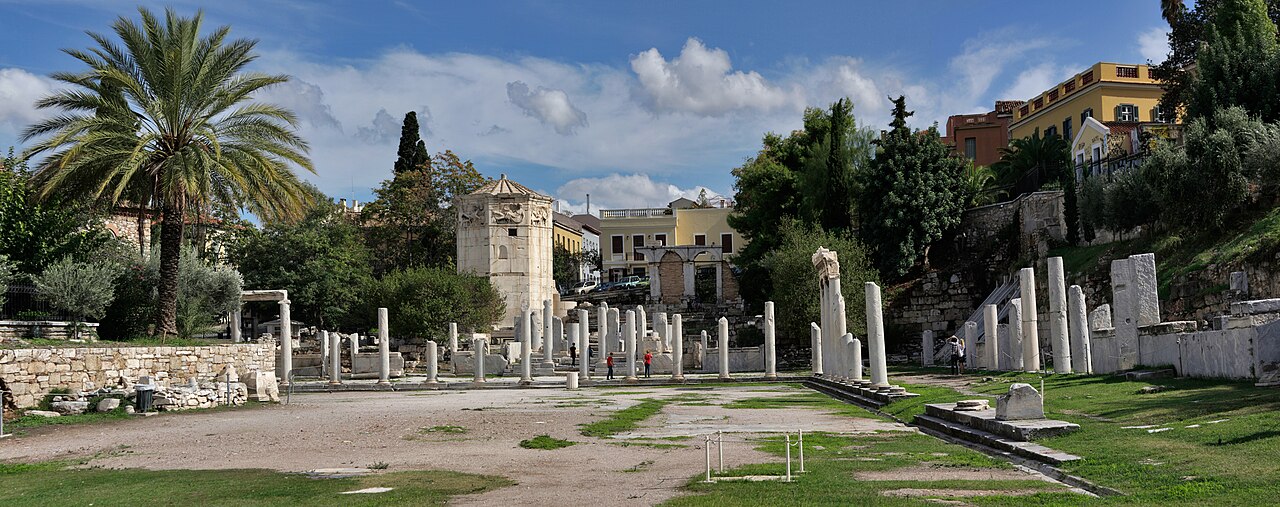
The Roman Agora is an archaeological site in central Athens, located to the north of the Acropolis. It was constructed during the Roman period and served as a commercial and administrative centre, distinct from the earlier Classical Agora. The site contains remains of several structures including the Tower of the Winds, also known as the Horologion of Andronikos Kyrrhestes. The area reflects the urban development of Athens under Roman rule and its integration into the broader Roman Empire. Daily 08:00–20:00; last admission 19:30. Summer schedule applies. Closed on 1 January, 25 March, 1 May, Easter Sunday, 25 December and 26 December.
Checked 2026-08-31 · Source
The most prominent surviving structure is the octagonal Tower of the Winds, an ancient clocktower featuring sundials and a water clock. Portions of the colonnade and gate structures remain visible. The site contains foundations and partial walls of various buildings that comprised the commercial complex. Archaeological work has revealed the layout of this Roman-era marketplace. The surrounding area includes additional ruins and architectural fragments. Interpretive signage may assist visitors in understanding the spatial organisation. Summer schedule applies. Closed on 1 January, 25 March, 1 May, Easter Sunday, 25 December and 26 December.
Checked 2026-08-31 · Source
A visit to the Roman Agora typically requires between thirty minutes and one hour for a general overview. Those with particular interest in ancient architecture or Roman history may wish to allocate additional time for closer examination of structural details and remaining decorative elements. The site's relatively small footprint compared to larger archaeological complexes in Athens means visitors can see the principal features without extensive walking. Combining this visit with nearby attractions in the historic centre is practical given the location.
Checked 2026-08-31 · Source
Visitors should verify current opening schedules through official sources before planning their visit. The exposed nature of the archaeological site suggests consideration of weather conditions, particularly during the peak summer months when Athens experiences high temperatures and intense sunlight. Morning visits may offer more comfortable conditions during warmer periods. Daily 08:00–20:00; last admission 19:30. Monastiraki is the closest metro station and is served by Lines 1 and 3. The Roman Agora is about a four-minute walk from the station. For step-free arrival, use the elevator-equipped Monastiraki Square exit. Two ramped entrances serve separate accessible areas.
Checked 2026-08-31 · Source
The Roman Agora may be covered by combination tickets for multiple archaeological sites in Athens, though specific arrangements require verification. Free admission policies for certain visitor categories on designated days, common at Greek archaeological sites, should be confirmed with official sources rather than assumed. Budgeting flexibility is recommended pending confirmation of actual costs at time of visit. The full-price adult ticket is €10 and covers the Roman Agora archaeological site. Tickets are sold at the site and through the Ministry of Culture’s official e-ticketing service. Two ramped entrances serve separate accessible areas.
Checked 2026-08-31 · Source
The Roman Agora occupies a central location in Athens historic district, accessible by multiple transport options. The Monastiraki area, with its metro station serving lines 1 and 3, provides nearby access. The This is Athens website offers general orientation information for visitors navigating the city centre. Monastiraki is the closest metro station and is served by Lines 1 and 3. The Roman Agora is about a four-minute walk from the station. For step-free arrival, use the elevator-equipped Monastiraki Square exit. The ramp south of the main entrance on Dioskouron Street reaches the central courtyard between the western and eastern colonnades.
Checked 2026-08-31 · Source
The archaeological site contains uneven surfaces, loose stones, and exposed foundations that present trip hazards requiring appropriate footwear. Limited shade creates exposure risks during hot weather; water and sun protection are essential. Guardrails and barriers should be respected as they protect both visitors and fragile remains. The compact site may become crowded during peak tourism periods, affecting movement and visibility. Two ramped entrances serve separate accessible areas. The northern ramp on Epameinonda Street reaches an adapted route around the Tower of the Winds. The Tower of the Winds route includes a tactile floor guide, a Greek-and-English Braille information panel, Braille leaflets and a monument plan.
Checked 2026-08-31 · Source
The Tower of the Winds offers distinctive architectural photography opportunities given its octagonal form and preserved sculptural details. Morning and late afternoon light may enhance dimensional qualities of the stone surfaces. The surrounding urban context provides contrast between ancient and contemporary Athens. Wide-angle lenses accommodate the tower's height and confined site boundaries. Overhead exposure challenges midday photography during clear conditions. Drone operation would require confirmation of permissions given the central location and proximity to other significant sites. The Tower of the Winds route includes a tactile floor guide, a Greek-and-English Braille information panel, Braille leaflets and a monument plan.
Checked 2026-08-31 · Source
It was built between 19 and 11 BC with funding donated by Julius Caesar and Augustus.
It functioned as a commercial and administrative centre; after the Herulian invasion of AD 267, these functions shifted here from the Ancient Agora.
Tickets are available from the onsite ticket office and through the Hellenic Ministry of Culture’s official e-ticketing service.
Free admission is offered on 6 March, 18 April, 18 May, the final weekend of September and 28 October.
No. Eating, drinking and smoking are prohibited within the archaeological site.
The northern accessible route has a tactile floor guide leading to a Greek-and-English Braille panel; Braille leaflets and a monument plan are also available.
Loading the interactive map…
The interactive map could not be loaded.

Last updated:
Source: OpenStreetMap contributors, Wikidata ·