


1 min walk
House P
- High
- Historic monument
Language · 1 published
Museum · Athens
Μουσείο Ακρόπολης

| Monday | 09:00 – 17:00 |
|---|---|
| Tuesday | 09:00 – 20:00 |
| Wednesday | 09:00 – 20:00 |
| Thursday | 09:00 – 20:00 |
| Friday | 09:00 – 22:00 |
| Saturday | 09:00 – 20:00 |
| Sunday | 09:00 – 20:00 |
Checked 2026-08-26 · Source
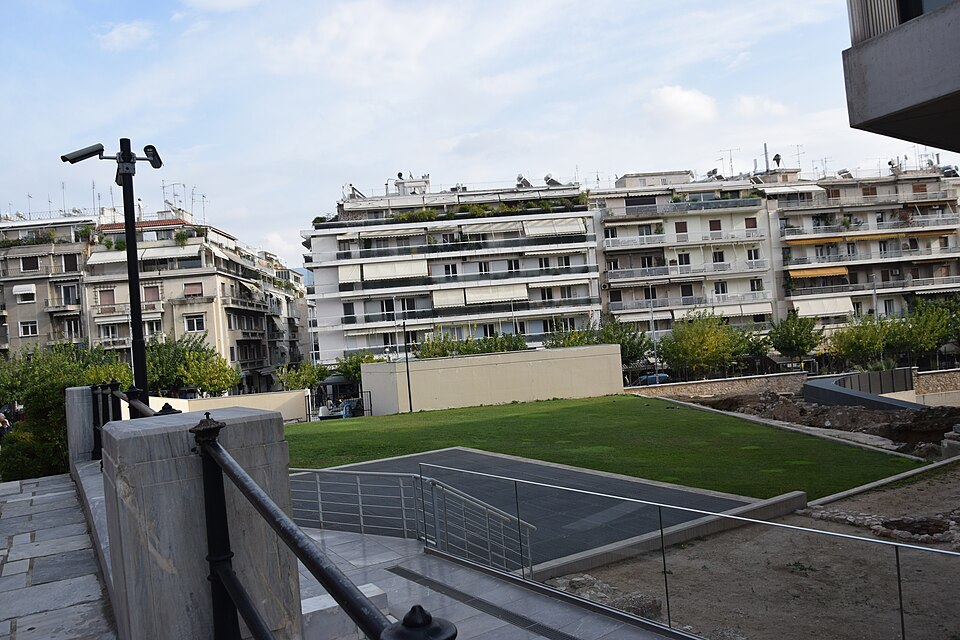
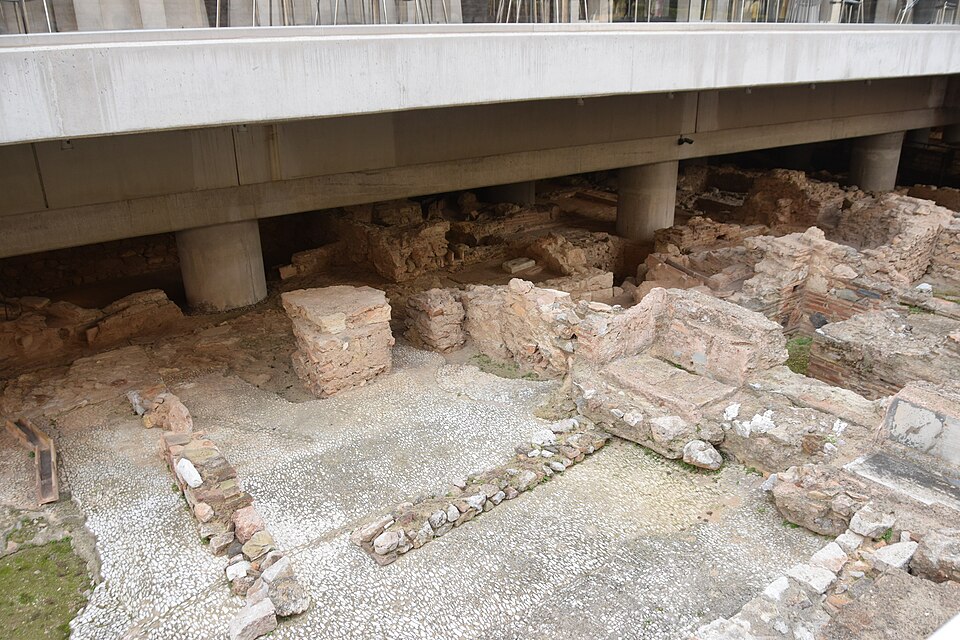
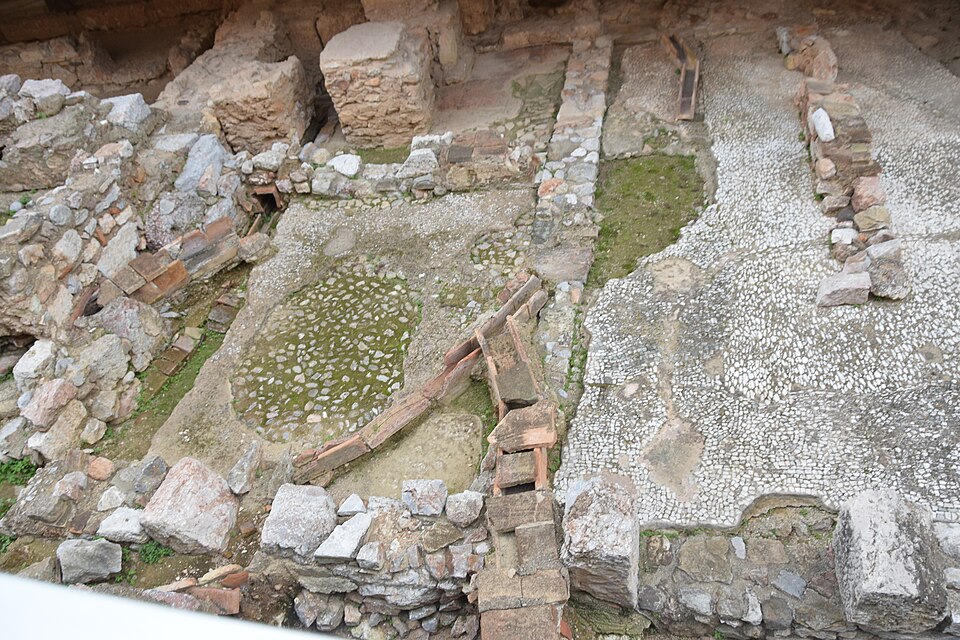
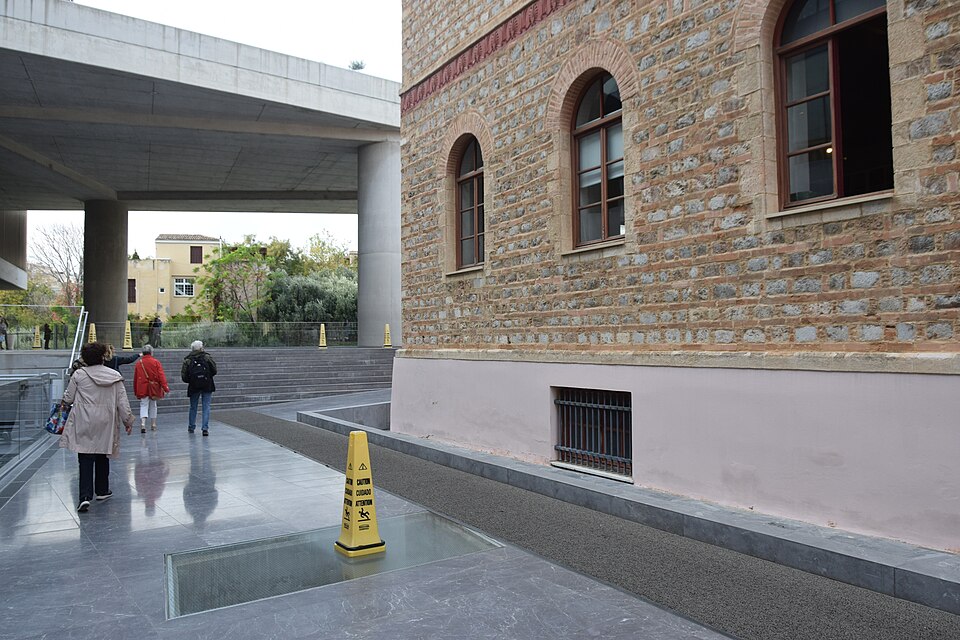
The Acropolis Museum is a single-site museum: everything in it was found on the Athenian Acropolis or on the slopes below it, and nothing in it comes from anywhere else. It opened to the public on 20 June 2009, replacing the small nineteenth-century museum that had stood in a hollow on the Rock itself since 1863 and had long since run out of room. The building is by Bernard Tschumi Architects of New York with the Athens architect Michael Photiadis, cost 130 million euros, and covers a 23,000 square metre site with 14,000 square metres of exhibition space over three main levels and two intermediate ones. It stands in Makrygianni, about 300 metres southeast of the Parthenon, and the glass facades are the argument of the whole design: the sculptures are meant to be seen with the monument they came off visible through the window behind them. The building also sits on stilts. Forty-three columns carry it over the excavated remains of an ancient Athenian neighbourhood, which was left in place rather than cleared, and which visitors now walk over on glass floors and, since 2019, walk through.
Checked 2026-08-26 · Source
The route runs upward through four levels. The ground floor is the Gallery of the Acropolis Slopes, a ramp that climbs the way the ancient approach to the Rock climbed, holding finds from the sanctuaries, houses and theatres on the hillsides; glass panels in its floor look down onto the excavation. The first floor carries the bulk of the collection in a circular sweep from the second millennium BC to the end of antiquity, and its eastern and southern sections, the Archaic Acropolis Gallery, are the ones most people remember: korai, the Peplos Kore, the Rampin Rider, the Calf-bearer, the Kritios Boy and the pediments of the Hekatompedon, standing free under skylights rather than shut in cases. The western section holds sculpture from the Athena Nike temple and the Erechtheion. The third floor is the Parthenon Gallery, a glass-walled hall 39 by 84 metres whose concrete core matches the orientation and dimensions of the temple's cella, with the Ionic frieze mounted around it at eye level, the metopes between steel columns numbering as the Parthenon's did, and the pediment figures on low plinths. Original marbles stand beside plaster copies of the pieces held in London and elsewhere. Below everything, at level -1, is the excavated neighbourhood and, since June 2024, its own small museum.
Checked 2026-08-26 · Source

Allow two and a half hours. The Museum publishes no suggested visit length anywhere on its site, so that figure is this guide's judgement built from what the Museum does publish, not a number read off a page. It buys the three floors walked properly at about forty minutes each, plus the twenty to thirty minutes the excavation underneath deserves and most visitors forget to budget for, plus the queue and the X-ray check at the door. Ninety minutes is enough only if the excavation is skipped and the ground floor is walked briskly, leaving the Archaic Gallery and the Parthenon Gallery to take the time. Four hours is not excessive for anyone reading labels, since the first floor alone holds several hundred sculptures. Two structural points shape the plan. Clearance of the galleries begins fifteen minutes before closing time, and last entry is thirty minutes before it, so the printed closing hour is not the hour available. And the third floor is the payoff rather than the warm-up, so a visitor running short on time should climb straight to the Parthenon Gallery and work back down rather than run out of stamina on the ground floor.
Checked 2026-08-26 · Source
The Museum runs two seasons. From 1 April to 31 October it opens 9 am to 8 pm from Tuesday to Sunday, with Monday short at 9 am to 5 pm and Friday long at 9 am to 10 pm. From 1 November to 31 March it opens 9 am to 5 pm Monday to Thursday, 9 am to 10 pm on Friday and 9 am to 8 pm on Saturday and Sunday. Last entry is half an hour before closing in every case, and the galleries begin to clear fifteen minutes before it. There is no weekly closing day. The Museum closes on 1 January, Orthodox Easter Sunday, 1 May, and 25 and 26 December; it runs 9 am to 3 pm on 24 and 31 December, noon to 6 pm on Orthodox Good Friday and 9 am to 3 pm on Orthodox Holy Saturday. Friday evening is the useful slot, in either season: it adds two to five hours to the day and puts the Parthenon Gallery in low light with the Rock floodlit through the glass. Monday is the trap, because it is the shortest day of the summer week. Four days are free: 6 March, 25 March, 18 May and 28 October — busy for exactly that reason.
Checked 2026-08-26 · Source
General admission is 20 euros a head and reduced admission is 10 euros, with no seasonal difference in the current price table. One ticket covers all the exhibition areas and the archaeological excavation beneath the building. Tickets are single-use and valid only for the date printed on them, so a two-day return visit means paying twice. General admission tickets can be bought at the Museum's ticket desk or through the e-ticketing service on the official site; reduced and free tickets can only be issued at the desk, on production of the documents that prove eligibility. Cash and VISA, MasterCard, Maestro and UnionPay cards are all accepted. Reduced admission covers non-EU visitors aged 25 or under and EU or Greek citizens over 65; free admission covers EU visitors aged 25 or under, non-EU children up to 5, disabled visitors with one companion, ICOM and ICOMOS members, journalists and licensed Greek guides, among a long published list. The current temporary exhibition is ticketed separately at 10 euros general and 5 euros reduced. The Museum's ticket has nothing to do with the ticket for the Acropolis site itself, and no combined ticket exists — the Acropolis is sold through etickets.tap.gr.
Checked 2026-08-26 · Source
The address is Dionysiou Areopagitou 15, 11742 Athens, and the entrance sits at the start of the Dionysiou Areopagitou pedestrian street, the walkway that links the Museum to the Acropolis and the sites around it. No car is needed and none is wanted: the Museum publishes no visitor car park, and the surrounding streets are pedestrianised or narrow. The metro is the simple answer. Akropoli station on Line 2, the Anthoupoli to Elliniko line, is at the door, and there are bike racks at the station entrance as well as at the Museum's own main entrance. The nearest bus and trolley stop is Makrygianni; the Museum lists bus routes 24, 40, 57, 103, 106, 108, 111, 126, 134, 135, 136, 137, 155, 206, 208, 227, 230, 237, 790 and 856 along with the A2, A3, A4, B2, B3, B4, E2 and E22 services, and trolley lines 1, 5 and 15. The nearest tram stop is Leoforos Vouliagmenis. Tourist coaches drop off in Hatzichristou Street and groups enter from Mitseon Street. From the Acropolis exit the walk downhill is a few minutes on the flat pedestrian street.
Checked 2026-08-26 · Source
Three things catch people out. First, the closing time is not the leaving time: last entry is thirty minutes earlier and staff start clearing galleries fifteen minutes before the door shuts, so arriving an hour before closing buys perhaps forty usable minutes. Second, in winter the excavation beneath the Museum keeps its own shorter hours — 9 am to 5 pm every day from 1 November to 31 March — while the Museum above stays open until 8 pm at weekends and 10 pm on Friday, so a late winter visit can find the galleries open and the excavation shut. Third, there is an X-ray scanner at the entrance and backpacks and bulky bags have to go in one of the two ground-floor cloakrooms, which is a queue on top of a queue on a busy morning. Groups of 16 to 40 must book in advance and may be turned away without a reservation. Pets are not allowed, guide dogs are. Food and drink are not allowed in the galleries. One inconsistency worth knowing: the same page states that the café and restaurant follow the Museum's hours, and then prints a café table with different summer times, so check on the day rather than plan a meal around either.
Checked 2026-08-26 · Source
Amateur photography and filming for personal use are permitted throughout the Museum with one firm exception: the Archaic Acropolis Gallery on the first floor, where cameras are not allowed at all, because many of those sculptures still carry traces of their ancient paint. That rules out the korai, the Peplos Kore and the Rampin Rider, which is the single fact most visitors wish they had known before arriving. Flash is not allowed anywhere, and neither is any additional professional equipment — portable lights, tripods, monopods. The Museum also states that photographs taken inside may not be published in print or digital form; professional photography and filming need written consent applied for at least one month, or two months for filming, in advance, and carry prescribed fees. What is left is still the best picture in the building. The Parthenon Gallery on the third floor is glass on all four sides, so the frieze can be shot with the Acropolis itself in the same frame, and the light does the work: late afternoon puts warm light on the marble from the west, and Friday evening in either season gives the floodlit Rock behind the sculptures. The excavation below, seen down through the glass floors, is the other one.
Checked 2026-08-26 · Source
General admission is 20 euros and reduced admission is 10 euros, at the same price in both seasons. The ticket covers every exhibition area and the archaeological excavation beneath the building. General admission tickets are sold at the Museum's ticket desk and through the e-ticketing service on the official site; reduced and free tickets are issued only at the desk, against the documents that prove eligibility. Tickets are single-use and valid only for their printed date.
From 1 April to 31 October the Museum opens 9 am to 8 pm Tuesday to Sunday, 9 am to 5 pm on Monday and 9 am to 10 pm on Friday. From 1 November to 31 March it opens 9 am to 5 pm Monday to Thursday, 9 am to 10 pm on Friday and 9 am to 8 pm at the weekend. Last entry is thirty minutes before closing and the galleries begin to clear fifteen minutes before it. There is no weekly closing day.
Allow two and a half hours. The Museum publishes no recommended visit length, so this is a planning estimate rather than an official figure: roughly forty minutes on each of the three exhibition floors, plus twenty to thirty minutes for the excavation underneath, plus the security check at the entrance. Ninety minutes covers the Archaic Gallery and the Parthenon Gallery only. Anyone reading labels can spend four hours without trying.
Yes, except in the Archaic Acropolis Gallery on the first floor, where photography and filming are banned to protect sculptures that still hold traces of their original colour. Elsewhere amateur photography for personal use is allowed without flash and without tripods, lights or other professional equipment. The Museum states that images taken inside may not be published in print or digital form, and professional photography or filming requires written permission applied for well in advance.
No. The Museum states plainly that its ticket is independent of the ticket for the Acropolis and the other associated archaeological sites, and no combined ticket exists. Tickets for the Acropolis site are sold separately through etickets.tap.gr. The two are five minutes apart on the same pedestrian street, so visiting both in one day is easy, but it means two separate purchases and two separate queues.
No. The Museum publishes no visitor car park and sits at the head of the Dionysiou Areopagitou pedestrian street. Akropoli station on metro Line 2 is at the entrance, the Makrygianni stop serves a long list of bus routes and trolley lines 1, 5 and 15, and the nearest tram stop is Leoforos Vouliagmenis. Bicycle racks stand at the Museum's main entrance and at the metro station. Tourist coaches drop off in Hatzichristou Street.
Loading the interactive map…
The interactive map could not be loaded.
Last updated:
Source: OpenStreetMap contributors, Wikidata ·