


1 min walk
National Gallery of Georgia
- Must see · Heritage site
- Museum
Language · 11 published
Activity · Tbilisi
შოთა რუსთაველის გამზირი
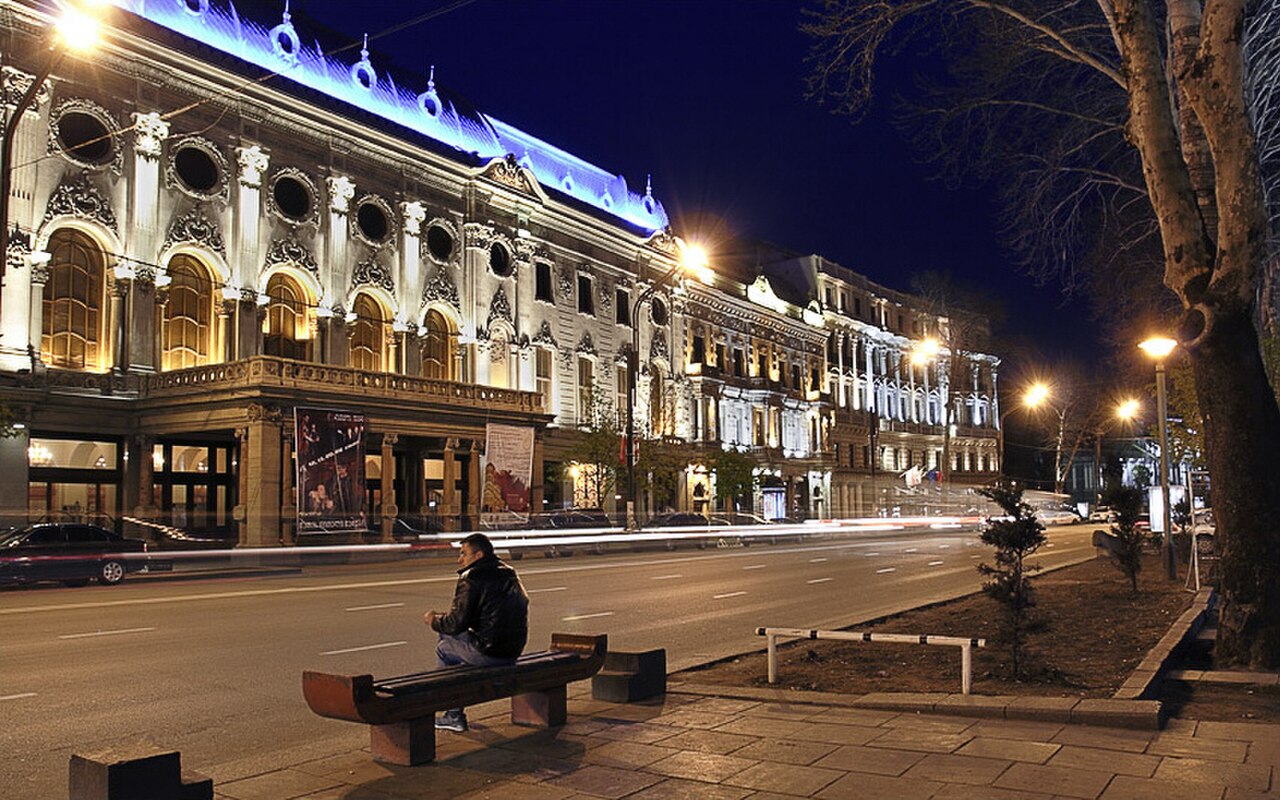
Rustaveli Avenue is Tbilisi's principal ceremonial boulevard, named after the medieval Georgian poet Shota Rustaveli. The avenue functions as the city's political and cultural spine, extending from Freedom Square toward the Rustaveli Metro station. Its development accelerated during the nineteenth century under Russian imperial rule and continued through the Soviet period, resulting in a layered urban landscape. The street embodies successive phases of Georgian statehood and remains the default setting for national demonstrations, state funerals, and public celebrations. Its width and axial design distinguish it from Tbilisi's older, more intimate quarters.
Checked 2026-08-26
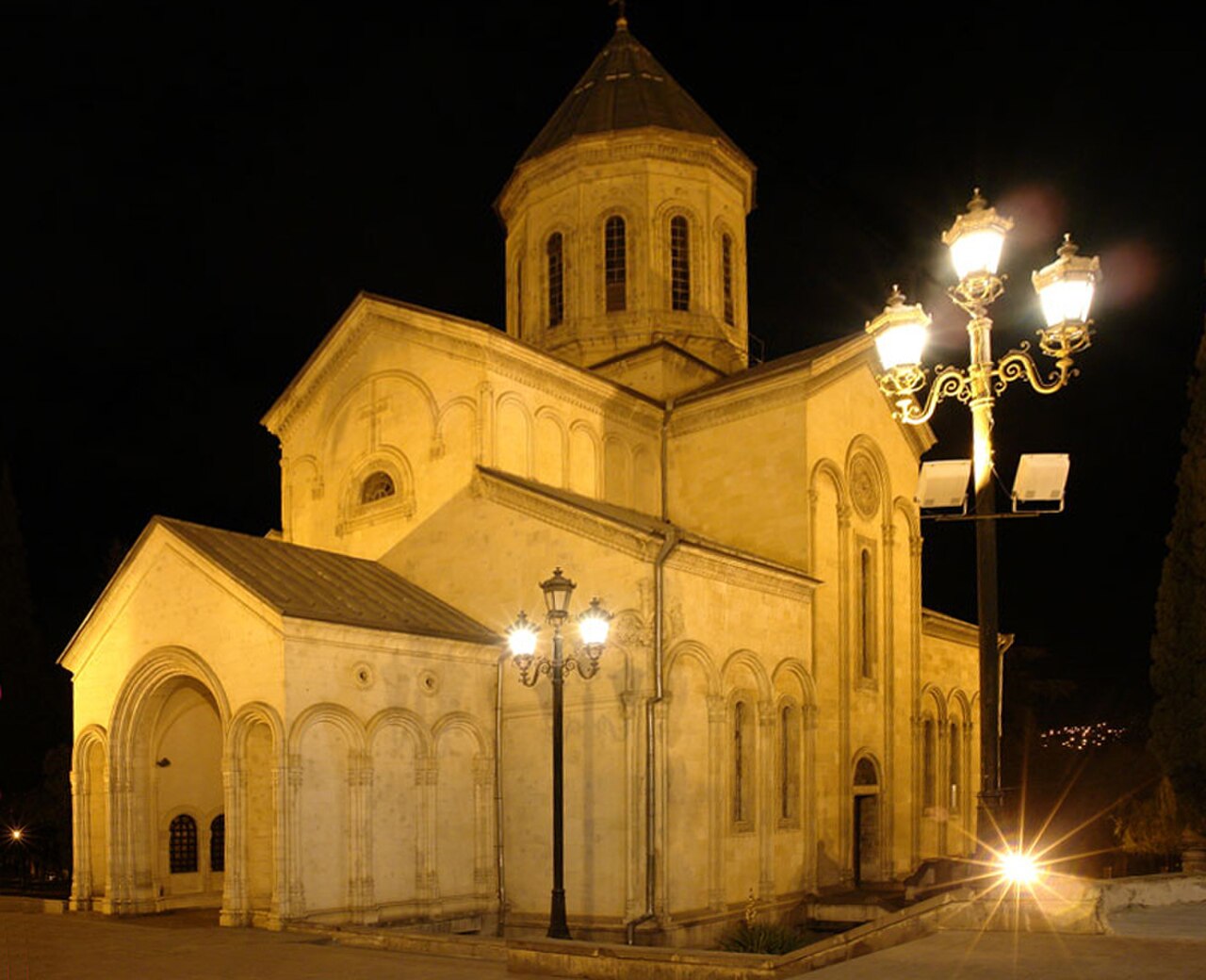
The avenue contains the Parliament of Georgia, the Tbilisi Opera and Ballet State Theatre, the Rustaveli State Drama Theatre, the Georgian National Museum, the National Gallery of Georgia, and the Kashveti Church of St. George. Interwar and Soviet-era civic buildings line both sides, including former publishing houses, government ministries, and educational institutions. Several hotels occupy prominent corners. The street mixes ceremonial neoclassical facades with Stalinist monumentalism and later modernist interventions. Underground passages connect some blocks. The built fabric shows varying states of conservation, with recent renovations alongside visibly aging structures.
Checked 2026-08-26
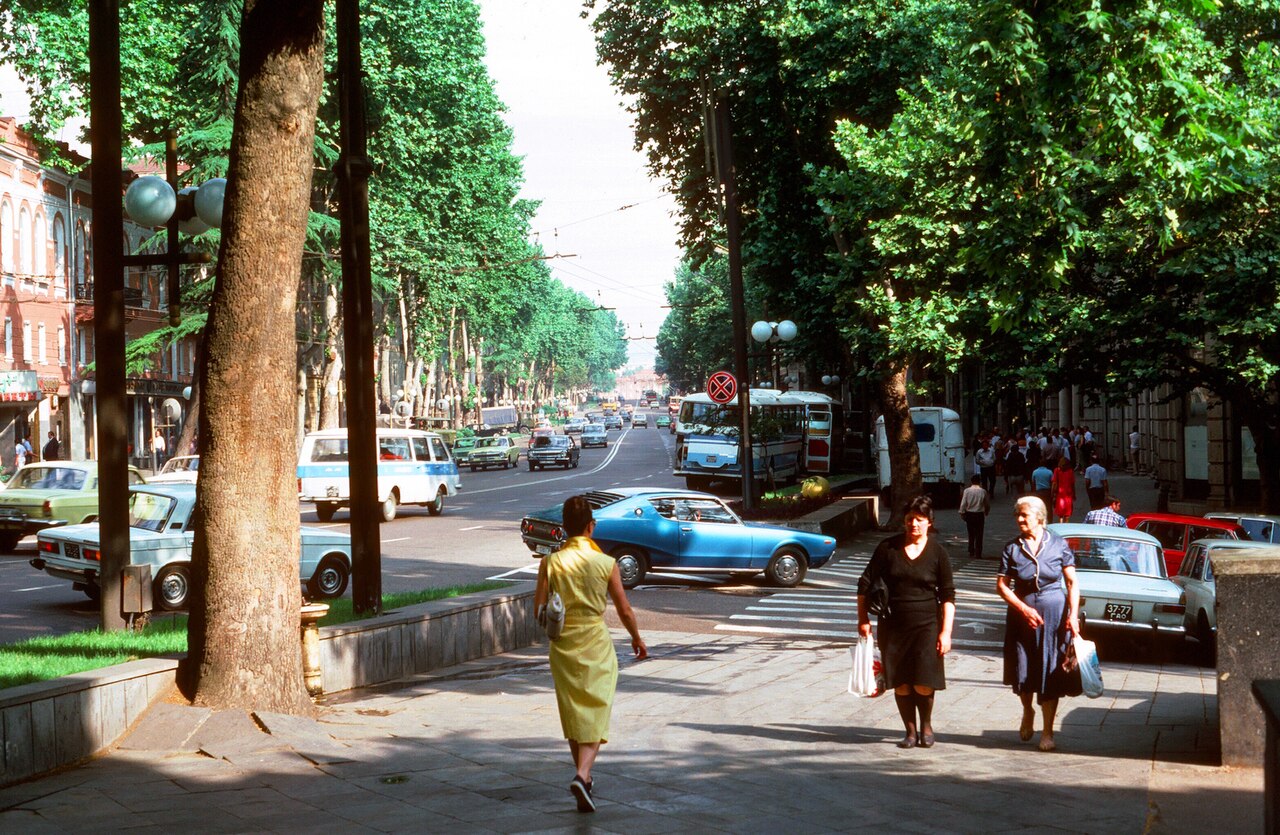
A continuous walk along the central pedestrian-accessible portion requires approximately twenty to thirty minutes at moderate pace without entering buildings. Visitors typically allocate half a day to combine exterior observation with entry to one or two institutions such as the museum or gallery. Evening attendance at the opera or theatre extends the visit substantially. The avenue rewards repeated passes at different hours, as the character shifts between business traffic, political gatherings, and nocturnal leisure. There is no formal circuit or prescribed route; movement is self-directed along the linear corridor.
Checked 2026-08-26

The avenue operates as public thoroughfare at all hours, with individual institutions maintaining separate schedules. Seasonal weather variations affect comfort significantly: summer brings intense heat and limited shade, while winter can produce icy conditions underfoot. Political demonstrations occur unpredictably and may temporarily restrict access or create congestion. Major national holidays see ceremonial activity and larger crowds. Operator-confirmed hours or prices are Not recorded pending review. Visitors should verify current opening times for specific destinations before planning. Evening illumination highlights architectural details after dark, though some peripheral streets become less populated late at night.
Checked 2026-08-26
The avenue itself requires no admission fee. Individual venues operate distinct ticketing regimes. The Georgian National Museum and National Gallery charge entry fees, with possible concessions for students, seniors, or residents. Theatre and opera performances require purchased seats, with pricing tiers reflecting seating location. Some state buildings, including the parliament exterior, may be viewed without cost from the public way. Operator-confirmed hours or prices are Not recorded pending review. Visitors should consult official venue websites or telephone directly for current rates, as online third-party information may be outdated or inaccurate.
Checked 2026-08-26

The Rustaveli Metro station on Line One serves the avenue's midpoint. Freedom Square Metro station anchors the southern end, with a walkable connection to the avenue's beginning. Multiple municipal bus and marshrutka routes cross or parallel the street. Taxis and ride-hailing services access the full length, though traffic congestion is common during peak hours. The avenue's central location places it within walking distance of the Old Town to the south and the Mtatsminda funicular to the west. Pedestrian priority varies by block; some crossings lack signalized protection.
Checked 2026-08-26

Traffic moves at speed despite pedestrian concentrations; crossing outside designated points carries risk. Pavement quality is inconsistent, with uneven surfaces, missing tiles, and trip hazards present. Political demonstrations can materialize rapidly and may involve road closures or cordoned areas; maintain situational awareness. Street-level commerce includes aggressive souvenir solicitation near major intersections. After dark, peripheral side streets offer less visibility and fewer passersby than the main avenue. Summer heat demands hydration and sun protection due to limited tree canopy. Building entry security varies; bags may be subject to inspection at museums and government-adjacent structures.
Checked 2026-08-26

The avenue's axial perspectives and architectural facades suit wide-angle and telephoto work. The parliament building, opera house, and Kashveti Church offer recognizable subjects. Morning and evening light produce contrasting effects on the east-west oriented street. Tripod use may attract security attention near government buildings; discretion advised. Interior photography policies vary by institution and typically require separate permission or fees. Night photography benefits from building illumination, though handheld shooting challenges arise from variable lighting levels. The avenue's functional nature means compositions include vehicles, signage, and crowds as unavoidable elements rather than intrusions.
Checked 2026-08-26
No. The avenue remains an active vehicular thoroughfare with mixed traffic, though some blocks feature wider pedestrian pavements. Periodic events may cause temporary closures.
Public access to the interior is restricted. The exterior may be viewed from the public way. Specific visitation arrangements, if any, are Not recorded pending review.
No formal guided walking tour of the avenue as a unified site is documented. Individual institutions may offer internal tours or audio guides.
The central portion maintains activity due to theatres and restaurants. Peripheral side streets become quieter and less illuminated. Standard urban precautions apply.
Public toilet provision is Not recorded pending review. Cafes, museums, and hotels may offer facilities for customers or visitors.
Yes. Freedom Square and the Old Town lie to the south. The Dry Bridge market and Mtatsminda area are accessible by foot or short transit connection to the west.
Loading the interactive map…
The interactive map could not be loaded.

Last updated:
Source: OpenStreetMap contributors, Wikidata ·