Tivoli Gardens
Tivoli Gardens is a historic amusement park and pleasure garden in central Copenhagen, Denmark. Established in 1843, it is one of the world's oldest operating amusement parks.
- Must see
- Entertainment venue
Language · 1 published
City guide · Denmark
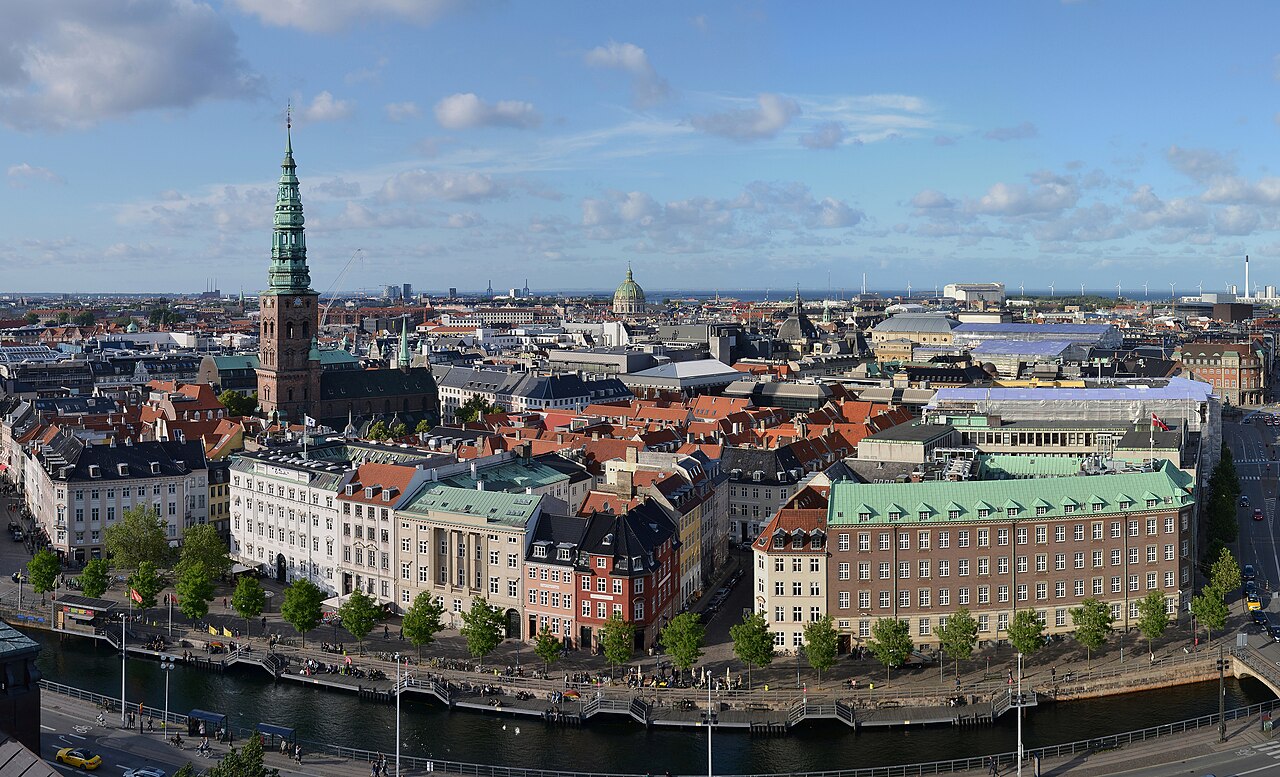
Copenhagen's compact centre sits around Indre By, with the harbour separating it from Christianshavn and Amager. Frederiksberg lies west as a separate municipality inside the urban fabric, while Norrebro and Osterbro extend north of the centre. Major visitor areas are connected by metro, trains, buses and cycle routes, and most central clusters remain practical to explore on foot.
Ranked by importance — sitelinks, pageviews and heritage status, not editor preference.
50 places match
Category
Typical visit duration
Tivoli Gardens is a historic amusement park and pleasure garden in central Copenhagen, Denmark. Established in 1843, it is one of the world's oldest operating amusement parks.
Nyhavn is a canal cut inland from Copenhagen's harbour with a quay down each side, addressed as Nyhavn 1-71, 1051 København K.
Den lille Havfrue is a bronze figure of a mermaid half-turned into a woman, set on a granite boulder in the water at the edge of the Langelinie promenade.
Rosenborg is a small Renaissance castle standing in the King's Garden, Kongens Have, a few streets north of the medieval centre of Copenhagen.
Amalienborg is the Danish royal family's home in Copenhagen: four almost identical rococo palaces set around an octagonal square, with Frederik V's equestrian statue at the centre and the dome of the Marble Church closing one axis.
Christiansborg Palace, locally known as Christiansborg Slot, stands on Slotsholmen island in central Copenhagen.
Nationalmuseet is Denmark's national museum of cultural history, and it occupies a building that was a private house, then a royal residence, then a courthouse, before it was ever a museum.
The Ny Carlsberg Glyptotek stands on Dantes Plads, between Tivoli and the back of the Danish parliament quarter, and it is one museum only in the administrative sense.
Rundetaarn, the Round Tower, is a seventeenth-century observatory tower on Købmagergade in the medieval core of Copenhagen, and the thing that makes it unusual is that it has no staircase for most of its height.
Freetown Christiania is an autonomous district in Copenhagen, Denmark, established in 1971 when squatters occupied former military barracks. The area operates under collective self-governance and has developed a distinctive countercultural identity.
The Church of Our Saviour, known locally as Vor Frelsers Kirke, stands as a prominent baroque church in Copenhagen. Its most distinctive feature is an external corkscrew spire with an external winding staircase that visitors can climb.
The Danish War Museum, locally named Krigsmuseet, is a military history museum in Copenhagen. It occupies a historic waterfront building at Christianshavn, formerly serving as naval storage facilities.
The Royal Danish Theatre, known locally as Det Kongelige Teater, stands as Denmark's national theatre and a prominent performing arts institution in Copenhagen. Founded in 1748, it serves as the country's principal venue for opera, ballet, and spoken drama.
Amager Strandpark is a coastal park and beach area on the island of Amager in Copenhagen, Denmark. The park features an artificial lagoon and sandy beach, created as part of a major land reclamation project.
Kastellet is one of the best-preserved star fortresses in Northern Europe, located in Copenhagen near the Langelinie promenade.
Statens Museum for Kunst is Denmark's national gallery, standing on the edge of the Østre Anlæg park in central Copenhagen with Rosenborg Castle across the road.
Grundtvig's Church, known locally as Grundtvigs Kirke, stands as a prominent landmark in Copenhagen. This distinctive building is celebrated for its striking architectural design that merges traditional Danish church aesthetics with expressionist elements.
Copenhagen Zoo Tower, known locally as Zootårnet, is an observation tower situated within Copenhagen Zoo in Frederiksberg.
The Blue Planet, known locally as Den Blå Planet, is Denmark's national aquarium and a major attraction in the Copenhagen area. It replaced the previous aquarium in Charlottenlund and opened as a new purpose-built facility.
Palads Teatret, known locally as Palads Biograferne, is a cinema complex in Copenhagen. The building stands as a notable entertainment venue in the Danish capital, serving film audiences with multiple screening facilities.
Holmens Kirke is a historic church located in central Copenhagen, Denmark. The church occupies a prominent position in the Holmen district, an area with strong naval and maritime associations.
Designmuseum Danmark is a museum dedicated to Danish and international design, crafts, and applied arts. Located in central Copenhagen, it occupies a historic rococo building that formerly served as the Royal Danish Hospital.
The Copenhagen Opera House, known locally as Operaen, is a prominent performing arts venue situated on Holmen island in central Copenhagen. It stands as one of Denmark's most significant cultural institutions, dedicated to opera and ballet performances.
Frederiksberg Have is a historic landscape garden in Frederiksberg, an independent municipality enclosed by Copenhagen. The park was originally laid out in the early 18th century as a Baroque garden for Frederiksberg Palace.
Børsen is a historic former stock exchange building in central Copenhagen, Denmark. Constructed in the Dutch Renaissance style during the 17th century, it served as Denmark's central commercial hub for centuries.
The Natural History Museum of Denmark, locally known as Statens Naturhistoriske Museum, is a major scientific institution in Copenhagen. It serves as the national museum for natural history and operates as part of the University of Copenhagen.
Kastelskirken, known in English as Citadel Church, stands within Kastellet, one of Europe's best-preserved star fortresses. This octagonal church serves the military garrison and the public.
Copenhagen Zoo, known locally as Zoologisk Have København, is a zoological garden in the Frederiksberg district of Copenhagen. Founded in 1859, it is among the oldest zoos in Europe.
Nordisk Film Biografer Field's is a cinema complex located within Field's shopping centre in Copenhagen. It operates under the Nordisk Film Biografer chain, a major Danish cinema operator.
Copenhagen University Library on Fiolstræde is the main library facility serving the University of Copenhagen. The building stands in the historic Latin Quarter of central Copenhagen, an area long associated with academic life in Denmark.
Thorvaldsens Museum is a Copenhagen museum dedicated to the works of Danish sculptor Bertel Thorvaldsen, who spent much of his career in Rome. The building itself is distinctive with its colourful exterior, making it a notable landmark in the city.
Pantomimeteatret is a historic theatre located in Tivoli Gardens, Copenhagen's famous amusement park. Established in the nineteenth century, this distinctive venue specialises in traditional Italian commedia dell'arte performances, particularly the Harlequin and Columbine pantomime tradition.
Rosenborg Castle Gardens, known locally as Kongens Have, is a historic public park in central Copenhagen. Established in the early 17th century as the private gardens of King Christian IV's Rosenborg Castle, it represents the oldest royal garden in Denmark.
Frederiksberg Palace is a Baroque residence situated in Frederiksberg, adjacent to Copenhagen. Constructed in the early eighteenth century, it served as a royal summer palace and remains an emblem of Danish architectural heritage.
The Museum of Copenhagen, known locally as Københavns Museum, is a city museum dedicated to the history of Denmark's capital. It presents the development of Copenhagen from its earliest origins through to the present day.
Trinitatis Church, known locally as Trinitatis Kirke, stands as a historic place of worship in Copenhagen. The church forms part of a distinctive complex that includes the Round Tower, creating a notable architectural ensemble in the city centre.
Havnebadet Islands Brygge is a harbour bath facility situated in the Islands Brygge district of Copenhagen, Denmark. This open-air swimming complex allows visitors to swim in the clean waters of Copenhagen's harbour.
North Atlantic House, known locally as Nordatlantens Brygge, is a cultural centre on Copenhagen's harbourfront. The building occupies a converted warehouse in the Christianshavn district, part of the revitalised harbour area.
The Hirschsprung Collection, known locally as Den Hirschsprungske Samling, is an art museum in Copenhagen. It was established through the private collection of Heinrich Hirschsprung, a tobacco manufacturer and art patron.
DR Koncerthuset is Copenhagen's premier concert hall, serving as the home of the Danish National Symphony Orchestra. Designed by French architect Jean Nouvel, the building opened in 2009 as part of the Ørestad development.
Fælledparken is a major public park in Copenhagen, Denmark. It ranks among the largest urban green spaces in the city and serves as a significant recreational area for residents and visitors.
The University of Copenhagen Botanical Garden, known locally as Botanisk Have, is a botanical garden and research facility affiliated with the University of Copenhagen. Established in 1874, it occupies a central location in the city.
Den Frie Udstilling, known locally as Den Frie, is an exhibition building and arts venue in Copenhagen.
Christians Kirke, locally known as Christians Kirke, is a historic church building in Copenhagen. The structure stands as a notable architectural landmark within the Danish capital.
Trekroner is a sea fort located at the entrance to Copenhagen harbour. The fortification sits on an artificial island near the northern tip of Refshaleøen.
The Workers Museum, locally known as Arbejdermuseet, is a cultural institution in Copenhagen dedicated to the history of the Danish labour movement and working-class life.
Det Ny Teater is a historic theatre located in Copenhagen, Denmark. Its local name, Det Ny Teater, reflects its Danish cultural identity. The venue functions as a performing arts institution within the city's cultural landscape.
Ørstedsparken is a public park in central Copenhagen, Denmark. Named after the physicist Hans Christian Ørsted, it occupies a green space in the city centre near Nørreport Station.
Frederik's Church, known locally as Marmorkirken, stands as one of Copenhagen's most distinctive landmarks. The church features an imposing green copper dome that dominates the city skyline.
Kastrupgård Collection, known locally as Kastrupgårdsamlingen, is an art museum situated in the Kastrup area near Copenhagen. It occupies a historic manor house setting, presenting a cultural venue focused on art exhibitions within a distinctive architectural environment.
Source: OpenStreetMap contributors, Wikidata ·
Indre By contains the historic centre, main shopping streets, palace district and inner harbour. Christianshavn sits across the water, Vesterbro lies west of Central Station, and Norrebro and Osterbro extend north. Frederiksberg forms a green western district with its own centre. The harbour is both a boundary and a transport corridor, so combine waterfront sights by side before crossing repeatedly.
Checked 2026-08-26
Walk or cycle for short central journeys and use metro, trains and buses for longer trips. Visit Copenhagen states that the metro operates throughout the day and night and connects the centre with major neighbourhoods and the airport. Harbour buses are part of public transport and serve waterfront journeys. Buy the correct ticket before boarding and use the journey planner for zone-dependent trips.
Checked 2026-08-26
A fixed duration is not recorded. Plan by cluster: Indre By, Christianshavn and the harbour, then Vesterbro, Norrebro, Osterbro or Frederiksberg according to interest.
Yes. Indre By and the inner harbour are compact enough for walking. Cycling and public transport are useful when moving between outer neighbourhoods or across the wider city.
Yes. Visit Copenhagen states that the metro operates throughout the day and night, connecting the centre with major neighbourhoods and Copenhagen Airport.
Yes. Harbour buses use the public transport system and provide a practical waterfront connection as well as a view of the city from the water.
Metro and regional trains both connect the airport with the city. The better choice depends on the destination neighbourhood, so check the official journey planner before departure.
Set your days, your pace and the hours you actually want to be out. The planner works around closing days and travel time, and leaves room to eat.