
.jpg)


3 min walk
Rosenborg Castle Gardens
- Must see
- Nature site
Language · 1 published
Historic monument · Copenhagen
Rosenborg Slot
| Monday | 10:00 – 17:00 |
|---|---|
| Tuesday | 10:00 – 17:00 |
| Wednesday | 10:00 – 17:00 |
| Thursday | 10:00 – 17:00 |
| Friday | 10:00 – 17:00 |
| Saturday | 10:00 – 17:00 |
| Sunday | 10:00 – 17:00 |
Checked 2026-08-26 · Source
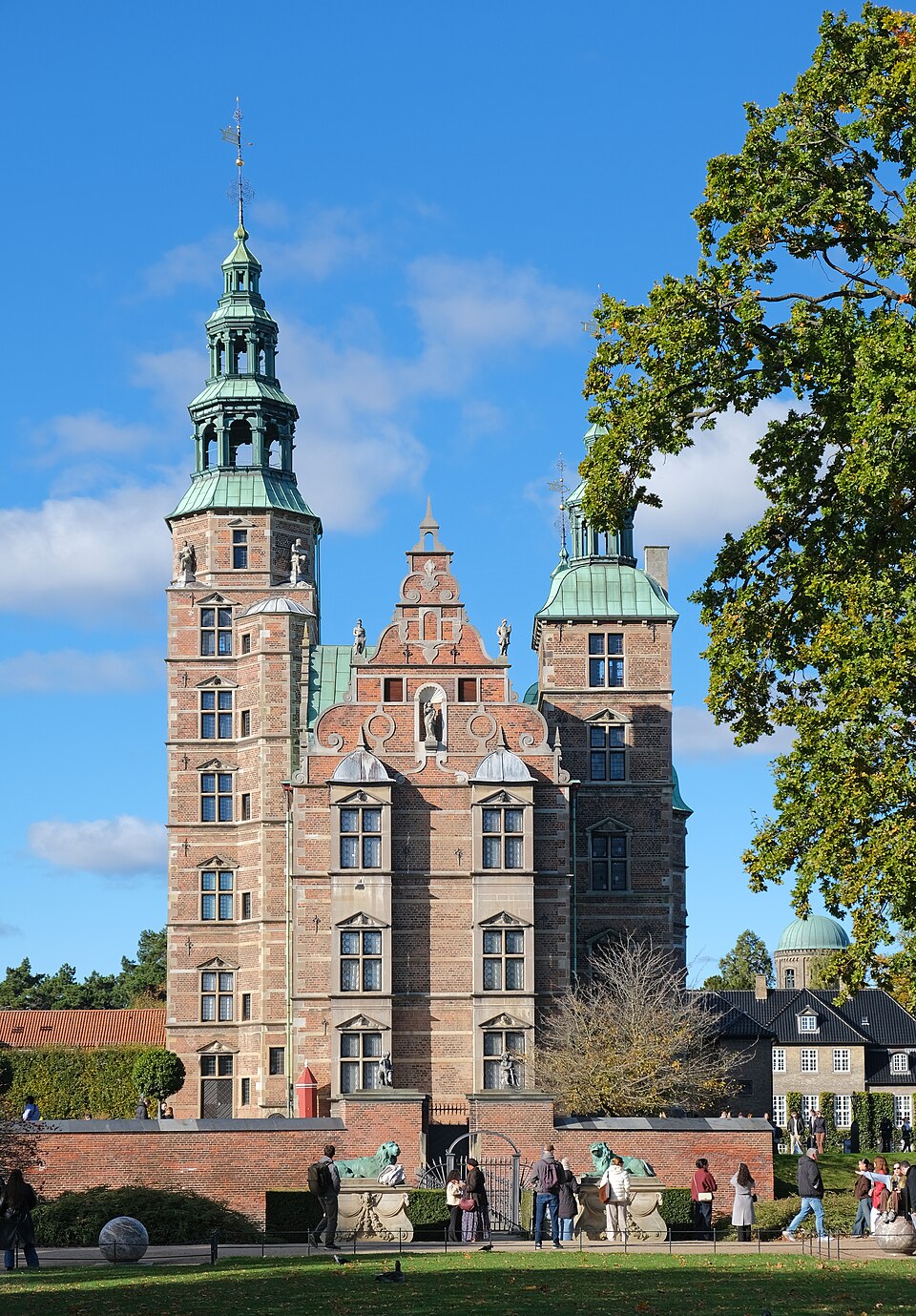
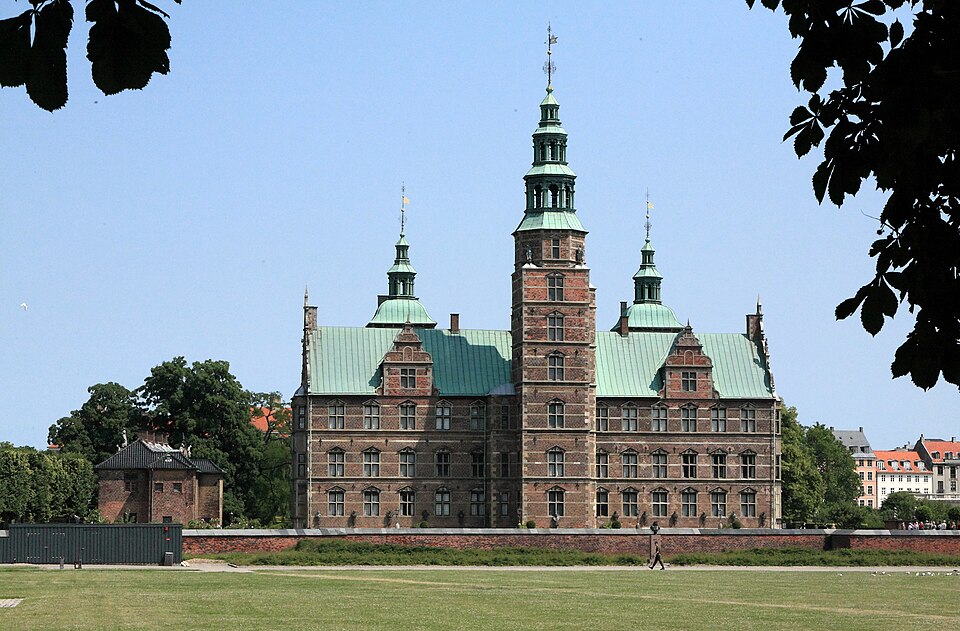
Rosenborg is a small Renaissance castle standing in the King's Garden, Kongens Have, a few streets north of the medieval centre of Copenhagen. Christian IV bought land outside the city walls in 1606 to lay out a private garden, put up a two-storey pleasure house there in 1611, doubled its length in 1615 and added a third floor carrying the Knights' Hall in 1624, at which point he began calling it his great house in the garden. He died in the castle in February 1648, in the bedchamber that is still shown. Only four kings ever lived here: Christian IV, Frederik III, Christian V and Frederik IV. The rest of the Oldenburg line got a room named after them when the building was turned into a museum in the mid-1800s. It is run today by the Royal Danish Collection, which also runs the Amalienborg Museum and Christiansborg Palace. The castle keeps the Danish crown jewels and the regalia in a vaulted Treasury under the building, and those jewels are not retired museum pieces: tradition allows the sitting queen to wear them, inside Denmark only, a few times a year. Expect a dense, low-ceilinged, richly furnished house rather than a grand palace of state rooms.
Checked 2026-08-26 · Source
The route is numbered, room 1 to room 24 above ground and rooms A to I in the basement, and it runs in one direction through spaces that were never designed to hold a crowd. The ground floor holds Christian IV's own quarters: the Winter Room, his writing room, the bedchamber where he died, his toilet, the Dark Room, the Marble Room decorated after 1660 to suit an absolute ruler, and Christian V's Hall. Upstairs are Frederik IV's corridor and hall, the Princess's lacquer chamber, the Mirror Cabinet, the Rose, and rooms named for each later king. The top floor is the Knights' Hall, hung with the twelve tapestries Christian V commissioned between 1685 and 1693 to record his victories in the Scanian War, with the Glass Cabinet beside it. The Porcelain Cabinet, room 23, is listed as closed. The stairs then go down to the Treasury, past weapons and wine, ivory and amber, the Green Cabinet and Ole Rømer's room, into three vaulted chambers holding the regalia and the four sets of crown jewels: the Emerald Set, the Rose-Cut Diamond Set, the Brilliant-Cut Diamond Set and the Pearl-Ruby Set, most of them given their present form for Caroline Amalie between 1840 and 1842.
Checked 2026-08-26 · Source
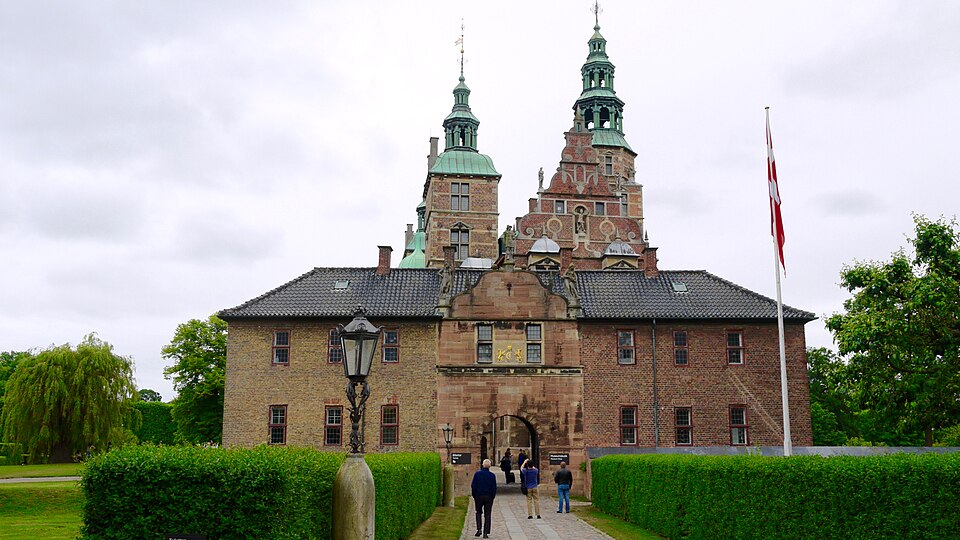
The Royal Danish Collection publishes no recommended visit length for Rosenborg. Its ticket page says only that admission carries a time slot and that a visitor is welcome to stay until closing, and slots are released every ten minutes, so the ticket fixes when a visitor enters and nothing after that. Ninety minutes is a fair working figure for planning. That is roughly an hour for the twenty-odd rooms above ground, where the interest is in the furniture, the panelling and the individual objects rather than in scale, plus half an hour in the basement Treasury, which is where most people slow down. Two hours is realistic for anyone who reads labels properly or joins a public guided tour, and an hour is enough only for a visitor who walks the route once and goes straight down to the crown jewels. The castle is small, but the route is single-file in places and stairs between floors are narrow, so a busy slot moves at the pace of the group in front. Budget separate time for the King's Garden outside, which costs nothing and is a pleasant place to sit afterwards, and remember the shop keeps the castle's hours and can be entered without a ticket.
Checked 2026-08-26 · Source
Rosenborg runs three published schedules. The standard one is daily, ten in the morning to five in the afternoon, with no closed weekday. From 27 June to 30 August the castle opens an hour earlier and runs nine to five, every day. From 2 November to 23 December it closes on Mondays and shortens to ten to four for the rest of the week. Over Christmas 2026 it is shut on 24 and 25 December, open ten to four from 26 to 30 December, ten to two on 31 December, and eleven to four on 1 January 2027. The operator asks visitors to check the current week on its front page before travelling, which is sensible advice for a house that also hosts events. Within the day, the first slots after opening and the last ninety minutes before closing are the quietest, because coach groups and the middle of the afternoon fill the centre of the day. The castle itself warns that in peak season every time slot sells out. The autumn and winter schedule is the one that catches people out: a visitor who arrives on a Monday in late November finds the gate locked.
Checked 2026-08-26 · Source
Adult admission is 140 Danish kroner bought online and 150 kroner bought at the door, so booking ahead saves ten kroner and, more usefully, a place in the queue. Students pay 100 kroner and must bring valid identification. Groups of ten or more pay 130 kroner a head, and a school group pays 175 kroner for up to 28 students under 18 with two teachers. Everyone under 18 enters free but still needs a ticket, and the holder of a companion card from Disabled People's Organisation Denmark brings a carer free, on the same time slot. The Royal Palace Pass costs 345 kroner and covers Rosenborg, the Amalienborg Museum and Christiansborg Palace for 72 hours from the first visit. A private guided tour is 995 kroner plus admission for up to 25 people. The Copenhagen Card is accepted, as are ICOM and ODM cards, but none of the three can book an entry slot online: the holder presents the card at the ticket desk or Museum Shop and is issued a ticket there, which in high season means taking whatever slot is left. An annual pass holder also still needs a ticket, shown alongside the pass.
Checked 2026-08-26 · Source
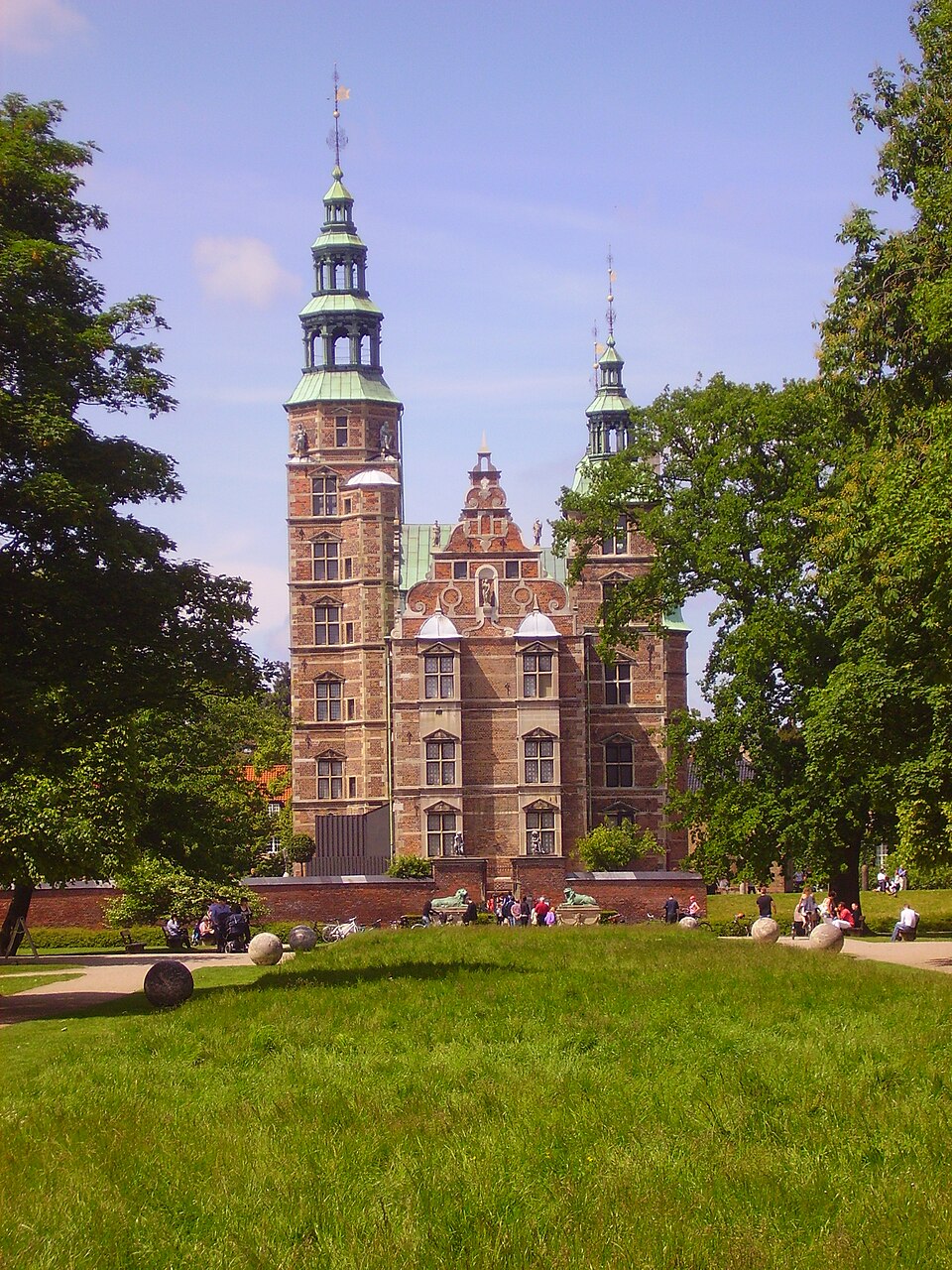
The entrance is at Øster Voldgade 4A, 1350 Copenhagen K, on the eastern edge of the King's Garden. No car is needed and, in practice, no car is possible: the operator states plainly that there is no parking in the castle area or in the street outside the gate, and none for disabled drivers either. Nørreport station is about 200 metres away and is the busiest interchange in the country, served by the Metro, S-trains, regional trains and city buses, so almost any point in greater Copenhagen is one connection from the door. From the station the walk is a few minutes through the garden. From Indre By, the old centre, it is a fifteen-minute walk north; from Nyhavn, about twenty-five. Copenhagen is also a cycling city and the streets around Kongens Have have their own bike lanes, though the castle grounds themselves are for walking. Note that the entrance is inside the garden rather than on the street, so a visitor following a map pin to Øster Voldgade should look for the gate rather than for a door in a facade. Arrive a few minutes before the booked slot, because bag rules are checked at the entrance.
Checked 2026-08-26 · Source

This is a 400-year-old building with many stairs, narrow doorways and no lift, and the operator says so directly. The castle entrance is 96 centimetres wide and the basement entrance 130 centimetres. A wheelchair user can reach the ground level and the Treasury only, and only with a companion to help up and down the steps; a walking frame can go anywhere a visitor can carry it. There are seats in Christian V's Hall and in the Knights' Hall, and an accessible toilet in the castle area. Bag rules are strict for security reasons: backpacks are not allowed at all, a handbag may not exceed 15 by 23 by 15 centimetres and must be worn on the front, larger bags go in free lockers, and suitcases cannot be stored. Lockers cannot be opened after closing, because the whole castle area is locked. Pushchairs and prams stay at the entrance, carry cots and sleep carriers are not allowed inside, and a sling is the recommended way to carry a baby. No food or drink may be brought in; there are picnic tables outside near the shop. Smoking, including e-cigarettes, is banned throughout. A major building project, the Kingdom's Treasury, will rework the moat and add an underground treasury; the castle has not published its dates.
Checked 2026-08-26 · Source
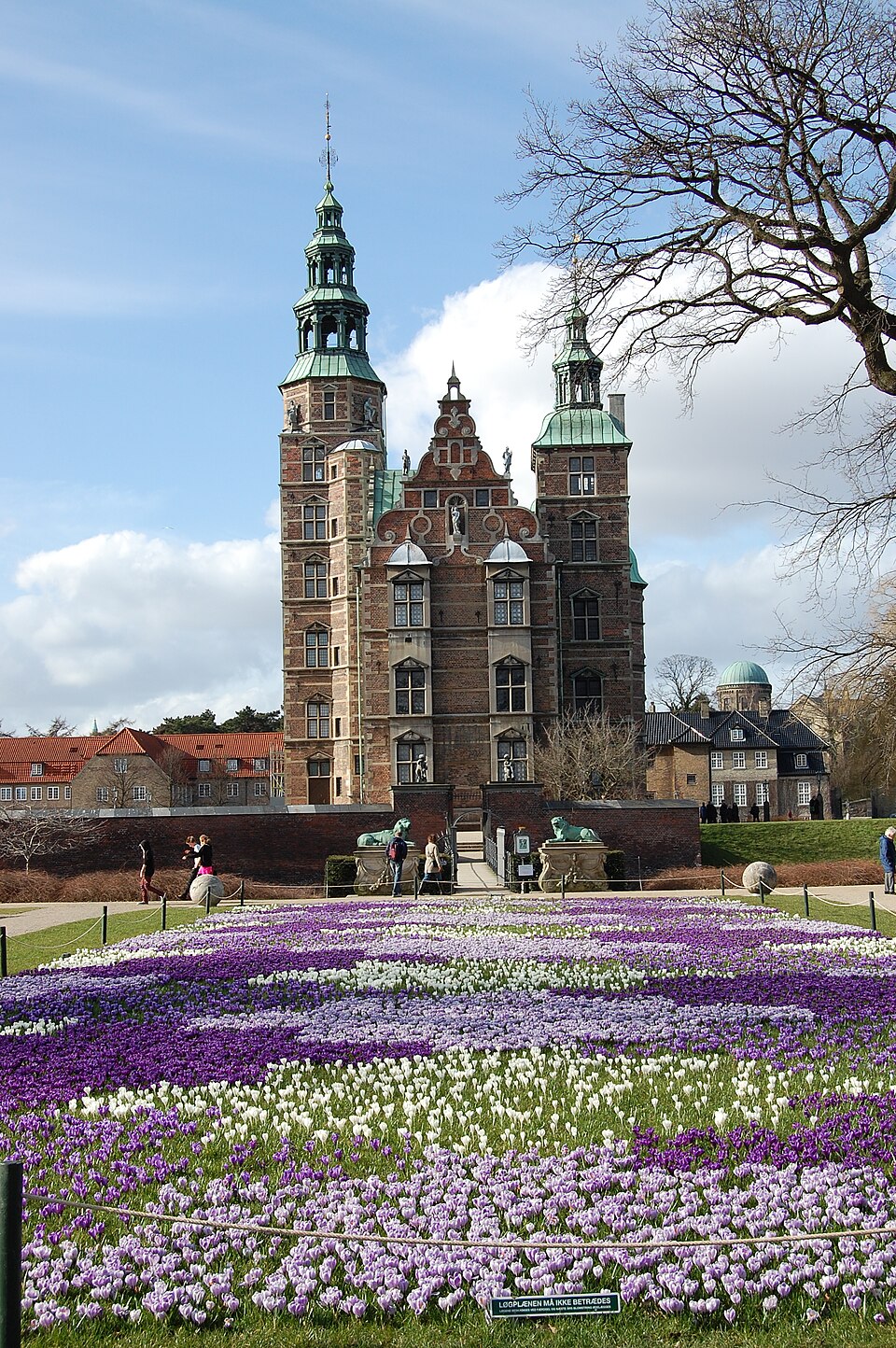
Photography is allowed inside the castle and in the Treasury, but only with handheld equipment: tripods and monopods are refused at the door, which rules out long exposures and means the interiors have to be shot at whatever the available light gives. That light is the real constraint. The rooms are lit for the preservation of textiles, lacquer and painted panelling, not for cameras, and the Treasury is darker still, with the regalia and the four jewel sets behind glass in vaulted chambers. Expect to work at a high sensitivity, brace against a doorframe rather than a case, and shoot at an angle to the glass to keep reflections out. The Knights' Hall on the top floor is the most photogenic interior, long and tall with the Scanian War tapestries running down its walls, and it takes daylight from both sides. Outside, the castle rewards a wider lens from within the King's Garden, where the spired stair tower and the oriel towers read clearly against the sky; the low sun of a Nordic winter afternoon suits the red brick better than flat summer midday. Bear in mind that the moat is being partially reconstructed, so the exterior setting is a building site in places.
Checked 2026-08-26 · Source
Rosenborg opens daily from 10.00 to 17.00 as its standard schedule, with no closed weekday. From 27 June to 30 August it opens earlier, 09.00 to 17.00 every day. From 2 November to 23 December it is closed on Mondays and open 10.00 to 16.00 from Tuesday to Sunday. Over Christmas 2026 it is closed on 24 and 25 December, open 10.00 to 16.00 from 26 to 30 December, 10.00 to 14.00 on 31 December, and 11.00 to 16.00 on 1 January 2027. The castle asks visitors to check the current week on its own front page before travelling.
An adult ticket is 140 Danish kroner online and 150 kroner at the door. Students pay 100 kroner with valid identification, and groups of ten or more pay 130 kroner per person. Everyone under 18 has free admission but still needs a ticket. A companion card holder brings a carer free of charge. The Royal Palace Pass, at 345 kroner, covers Rosenborg, the Amalienborg Museum and Christiansborg Palace for 72 hours from the first visit. A private guided tour is 995 kroner plus admission per person, for a maximum of 25 people.
The Royal Danish Collection does not publish a recommended visit length. Its ticket page states only that admission carries a timed entry slot, that slots are allotted every ten minutes, and that a visitor may stay until closing time. As a planning figure, about 90 minutes covers the roughly two dozen rooms above ground plus the basement Treasury at an unhurried pace. Allow two hours if you read the labels carefully or take a public guided tour, and treat one hour as the minimum for a single pass through the rooms and the crown jewels.
No, and a car is a liability here. The castle states that there is no parking, general or disabled, in the castle area or in the street outside the gate. The entrance at Øster Voldgade 4A sits about 200 metres from Nørreport station, which is served by the Metro, S-trains, regional trains and city buses, so nearly anywhere in greater Copenhagen is one connection away. From the old centre it is a walk of roughly fifteen minutes. The final approach is on foot through the King's Garden, so look for the garden gate rather than a street door.
Only partly, and the operator is explicit about it. The castle is a 400-year-old Renaissance building with many stairs and narrow doorways and it has no lift. A wheelchair user can visit the ground level and the Treasury only, and only with a companion who can help up and down the steps to both. The castle entrance is 96 centimetres wide and the basement entrance 130 centimetres. A walking frame may be taken to every level provided the visitor can carry it up and down the stairs. There are seats in Christian V's Hall and the Knights' Hall, and an accessible toilet in the castle area.
Yes, with handheld equipment only. Tripods and monopods are not allowed inside the castle or the Treasury, so the interiors must be shot at whatever the room light gives. The rooms are lit conservatively to protect textiles, lacquer and painted panelling, and the Treasury is darker still, with the regalia and crown jewels behind glass. Plan for a high sensitivity setting and shoot at an angle to the cases to avoid reflections. The Knights' Hall takes daylight from both sides and is the easiest interior. Note that backpacks are not permitted, so bulky camera bags will have to go in the free lockers.
Loading the interactive map…
The interactive map could not be loaded.
Last updated:
Source: OpenStreetMap contributors, Wikidata ·