
.JPG)
.jpg)
.jpg)
.jpg)
.jpg)
4 min walk
Royal Danish Playhouse
- High
- Art and culture venue
Language · 1 published
Historic monument · Copenhagen
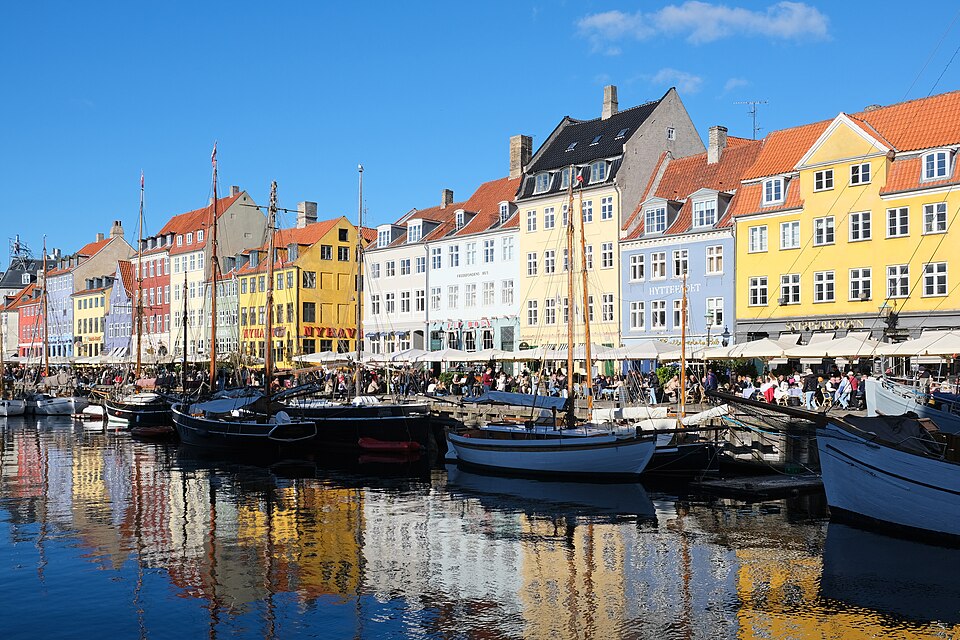
Nyhavn is a canal cut inland from Copenhagen's harbour with a quay down each side, addressed as Nyhavn 1-71, 1051 København K. It is a public street, not an attraction with a door, and understanding that changes how a visit is planned. The official Copenhagen guide describes it as a former working port where sailors from all over the world drank in its pubs and alehouses; the row of brightly painted seventeenth-century houses along the water is what survives of that trade. Those houses now hold cafes and restaurants, canal tour boats leave from the quay, and wooden ships lie moored along the water. The other reason visitors come is literary. Hans Christian Andersen lived in three separate Nyhavn houses, numbers 20, 67 and 18, and wrote The Tinderbox and The Princess and the Pea while living there. The physical scale is small: a few hundred metres of quay on either side of a narrow strip of water, walked end to end in a few minutes, with the colour, the masts and almost all of the crowd concentrated on one side. Kongens Nytorv closes the inland end, the open harbour the other. Nothing here is enclosed or ticketed, so the visit is a walk, a table or a boat, and the rest is looking.
Checked 2026-08-26 · Source
The canal is divided by the Nyhavn bridge, and the two halves are run by different bodies. Inside the bridge, on the landward side, all activity belongs to Nyhavnsforeningen, Nyhavns Skipperlaug, and the official guide is explicit that this stretch of water is a museum and veteran ship harbour: only members of the Association of Wooden Ships, or guests arriving in vessels of special historical interest, are admitted to moor there. Beyond the bridge, towards the open harbour, the water is the business of Copenhagen Harbour Ltd. That rule governs the boats, not the pavement. Anyone can walk both quays and look at the ships from the cobbles; what a visitor cannot do is step aboard the moored wooden fleet as though it were an open-air exhibition. The rest of what fills the street is commercial and seasonal: pavement cafes and restaurants serving Danish food including smørrebrød, open-faced sandwiches, and canal tour boats that depart from the quay for the wider waterways. Live jazz is a regular feature of the outdoor cafes in summer. Three things worth a visitor's time sit within a short walk at the harbour end: Broens Street Food across the water, the Royal Danish Playhouse and the Royal Danish Opera House.
Checked 2026-08-26 · Source
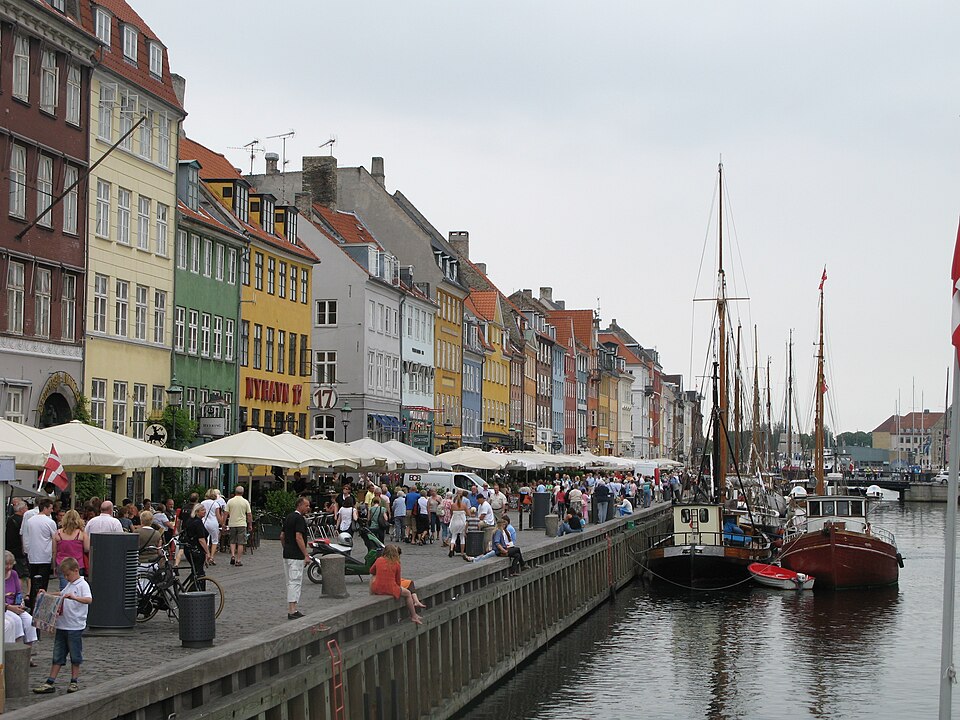
Allow an hour. No official visit duration is published for Nyhavn anywhere on the Copenhagen guide's pages for it, so this figure is the guide's judgement rather than a number read off a source, and it is built from the shape of the place. The quay is a few hundred metres long. Walking one side, crossing at the bridge and returning along the other takes about fifteen minutes at a photographing pace, which means a visitor who came only for the view is finished well inside half an hour. The hour exists to absorb the rest: reading the plaques on the Hans Christian Andersen houses, watching the moored wooden ships, and queuing briefly at the tour boat berths if a canal trip is part of the plan. Add substantially more if anything is booked or ordered. A canal tour departing from the quay is a separate commitment of its own length, and a sit-down meal at one of the pavement cafes is easily two hours in high summer, when the terraces are full and service is slow. A visitor with only twenty minutes between other stops still gets the essential Nyhavn, because the essential Nyhavn is one view.
Checked 2026-08-26

Nyhavn has two distinct seasons and the official guide describes both. In summer the pavement cafes fill, live jazz plays outdoors, and the street is at its busiest and most sociable; the guide's own summary is people enjoying the sun at the many buzzing pavement cafes. In December the cobbled street carries a Christmas market of decorated stalls and lights selling gløgg, mulled wine, and æbleskiver, pancake puffs, along with other Danish holiday food. Those are the two peaks, and they are also the two most crowded periods of the year. Within a day, the practical advice is the guide's own rather than the official guide's, since no source publishes crowd data. The coloured houses stand on the northern quay, which faces south and holds light through the middle of the day, while the opposite quay sits in its own shadow for much of the afternoon. Early morning is the only reliably quiet window: the cafes are not yet seated, the tour boats have not started, and the quay can be walked without weaving. Late evening in summer works too, when Copenhagen's northern latitude keeps usable light long after dinner. A wet weekday in the shoulder months is the emptiest the street ever gets.
Checked 2026-08-26 · Source
There is no admission charge and no ticket, because Nyhavn is a public street rather than a venue. The official Copenhagen guide publishes no price, no opening times and no ticketing information of any kind for it, which is consistent with a quay that has no gate: a visitor walks in from Kongens Nytorv or from the harbour end at any hour and pays nothing to stand there. What costs money at Nyhavn is what happens on it. The canal tours that depart from the quay are commercially operated and ticketed, and the cafes and restaurants along the north side are ordinary paying establishments; the guide names no fares for either, so a visitor should check the price at the berth or the menu on the day rather than trust a figure quoted elsewhere. The one product the official guide does point at is the Copenhagen Card, which it states covers canal tours, museum visits and public transport together. For a visitor whose day already includes a boat from Nyhavn and several paid attractions, that card is the mechanism the destination itself recommends. Nobody needs it to see Nyhavn; it is only relevant to what is done from Nyhavn.
Checked 2026-08-26 · Source
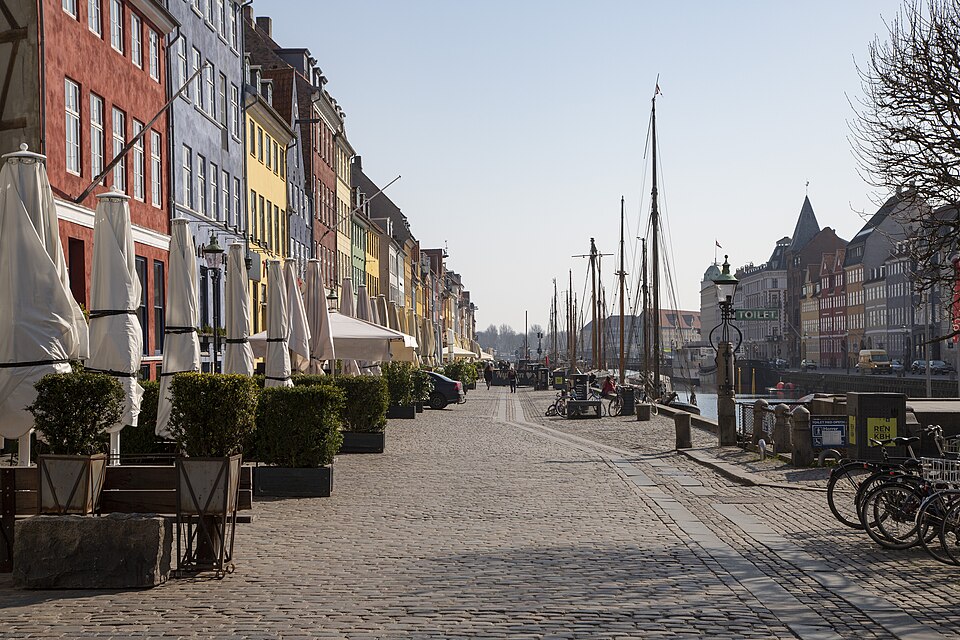
The official guide gives one instruction for arriving: a short walk from Kongens Nytorv Metro station, which sits at the landward end of the canal. That is the whole journey. Copenhagen's metro lines run twenty-four hours a day with no fixed timetable, roughly every one and a half to two minutes in rush hour and every three to six minutes outside it, so arrival time is never constrained by service gaps; after 01:00 on Friday and Saturday nights trains run every seven to fifteen minutes, and after midnight on other nights every twenty. From Copenhagen Airport the train or metro reaches the city centre in about twelve minutes. The yellow harbour buses are the other useful approach and run on an ordinary bus ticket rather than a boat fare: route 991 heads south towards Teglholmen and 992 north towards Orientkaj, zig-zagging between eleven stops on both banks. A car is not needed and is the worst option here, since the quay itself is a cobbled pedestrian street. Drivers who insist have several garages within walking distance, including Q-Park Illum and Q-Park Magasin under the department stores at Kongens Nytorv, and Jeudan's car parks at Sankt Annæ Plads and Dronningens Tværgade.
Checked 2026-08-26 · Source
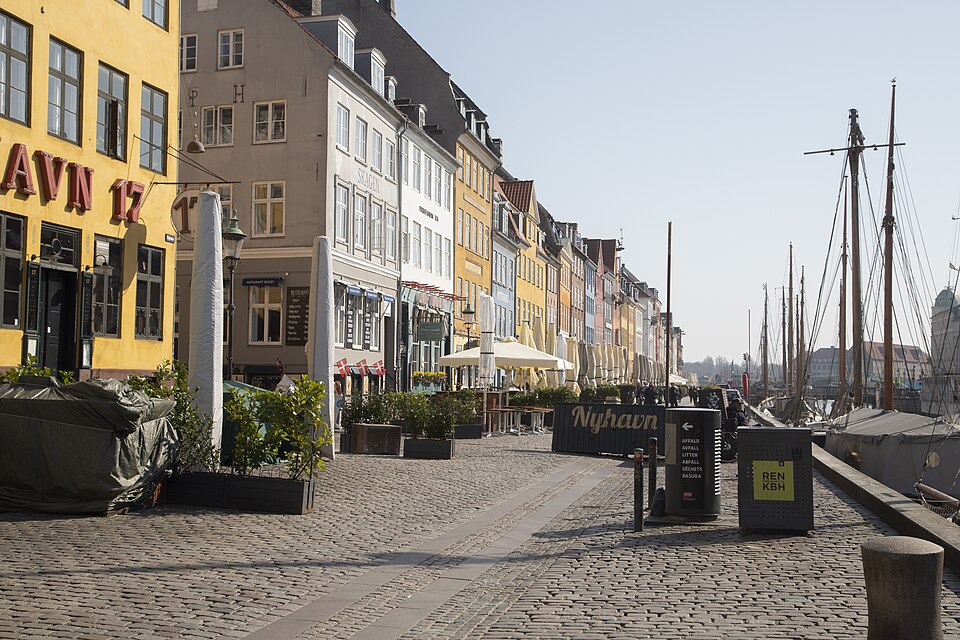
The single most common misreading of Nyhavn is treating it as an attraction that can be entered. The wooden ships along the inner basin are a working veteran harbour with a membership rule, not a floating museum with a gangway, so a visitor who expects to board one will be disappointed. The second is price. The terraces facing the coloured houses are the most photographed seats in Denmark and are priced accordingly; a beer or a plate of smørrebrød on that quay is not a Copenhagen average, and a walk of two minutes in almost any direction finds the same thing cheaper. Check the menu before sitting rather than after. The surface underfoot is old cobble the length of the quay, which is unkind to wheeled luggage, to heels and to anyone unsteady; the quayside has no railing along much of its length and the drop to the water is real, which matters with small children. Copenhagen is a cycling city and the streets feeding Nyhavn carry fast, busy cycle lanes that pedestrians step into without looking. Look for the painted lane before crossing. Finally, expect the crowd: the north quay in July or December is slow-moving and shoulder to shoulder, and no amount of planning thins it except the hour chosen.
Checked 2026-08-26
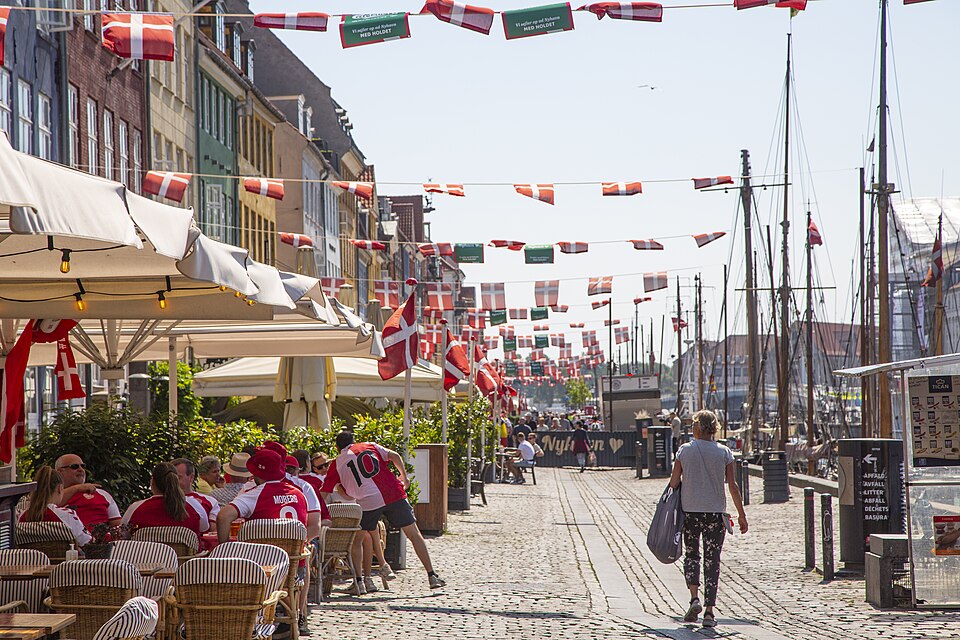
The picture everyone comes for is the row of painted facades with masts in front of them, and it is taken from the opposite quay or from the bridge, not from among the houses themselves. Standing on the south side gives the full row across the water with the moored wooden ships in the foreground; standing on the bridge at the harbour end and looking inland compresses the canal, the boats and both terraces into one frame. Both are short-lens views, and a wide angle is more useful here than a long one. Light decides the result. The coloured houses face south across the water, so they hold direct sun through the middle of the day and glow strongest in the late afternoon, while the quay a photographer stands on is in shade by then, which is an easier exposure than it sounds. Early morning is the compromise worth making: softer light on the facades, but an empty quay and undisturbed reflections in the canal, which are impossible once the tour boats start moving. In December the Christmas stalls and their lights make the street a night subject rather than a day one, and the blue half hour after sunset gives the only version of Nyhavn where the windows and the lights read at the same time as the sky.
Checked 2026-08-26
No. Nyhavn is a public street and quay, and the official Copenhagen guide publishes no admission price or ticketing information for it. Walking both sides of the canal and looking at the moored ships costs nothing at any hour. What costs money is what a visitor does there: the canal tours that depart from the quay are commercially ticketed, and the cafes and restaurants along the north side are ordinary paying establishments. The guide names no fares for either.
None are published, and none exist. Nyhavn is a street with no gate and no operator controlling access to the quay, so the official Copenhagen guide lists no opening times for it. The cafes, restaurants and canal tour boats along it each keep their own hours and should be checked individually. The quay itself can be walked at any time of day or night, and Copenhagen's metro runs twenty-four hours a day, so late arrival is practical.
Allow an hour. No official visit duration is published for Nyhavn, so this is the guide's editorial judgement: about fifteen minutes covers walking one quay, crossing at the bridge and returning along the other at a photographing pace, and the remaining time absorbs the Hans Christian Andersen houses, the moored ships and a pause on the water. A meal or a canal tour is a separate commitment on top of that hour.
The official guide's instruction is a short walk from Kongens Nytorv Metro station, at the landward end of the canal. Copenhagen's metro lines run twenty-four hours a day, every one and a half to two minutes in rush hour and every three to six minutes outside it, and the train or metro from Copenhagen Airport reaches the city centre in about twelve minutes. The yellow harbour buses, routes 991 and 992, also serve the harbour on an ordinary bus ticket. A car is not needed.
In three different houses on the street: numbers 20, 67 and 18. The official Copenhagen guide records that he wrote The Tinderbox and The Princess and the Pea while living in Nyhavn. The buildings are private and are not open to visitors, so the association is something to note in passing from the quay rather than a house museum to plan a visit around.
No. The stretch of water inside the Nyhavn bridge is a museum and veteran ship harbour run by Nyhavnsforeningen, Nyhavns Skipperlaug, and the official guide states that only members of the Association of Wooden Ships, or guests arriving with vessels of special historical interest, are admitted there. The water beyond the bridge is the business of Copenhagen Harbour Ltd. The ships are to be looked at from the quay, which anyone may walk.
Loading the interactive map…
The interactive map could not be loaded.
Last updated:
Source: OpenStreetMap contributors, Wikidata ·