.JPG)

.jpg)


5 min walk
Kastellet
- Must see · Heritage site
- Historic monument
Language · 1 published
Art and culture venue · Copenhagen
Den lille Havfrue

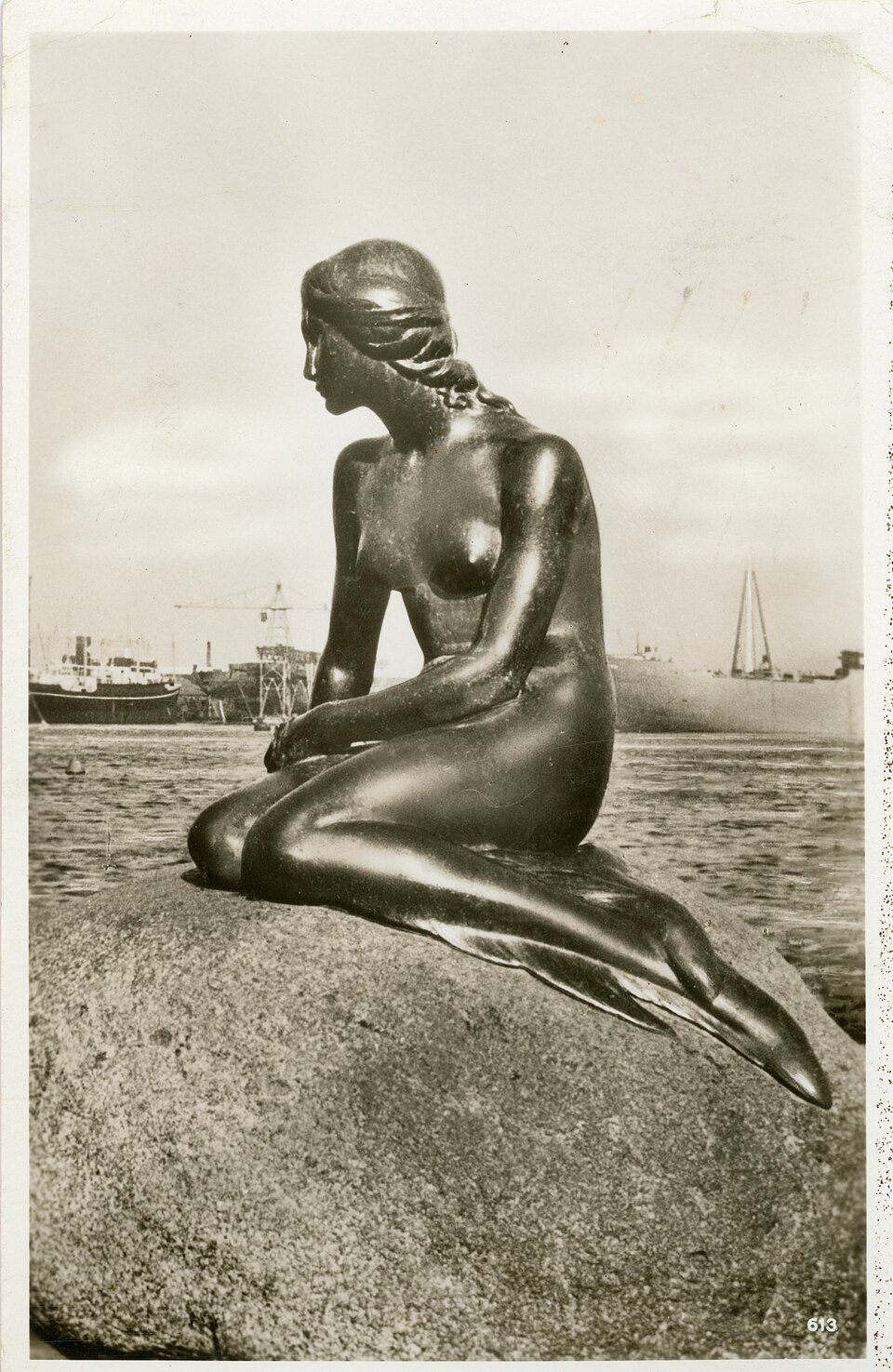
Den lille Havfrue is a bronze figure of a mermaid half-turned into a woman, set on a granite boulder in the water at the edge of the Langelinie promenade. She is 1.25 metres tall and weighs 175 kilograms, and the single most useful thing to know before walking out there is that number. Almost every photograph of her is taken close and tight, so first-time visitors arrive expecting something monumental and find a figure roughly the size of a seated child, a few metres offshore, with a working harbour behind her.
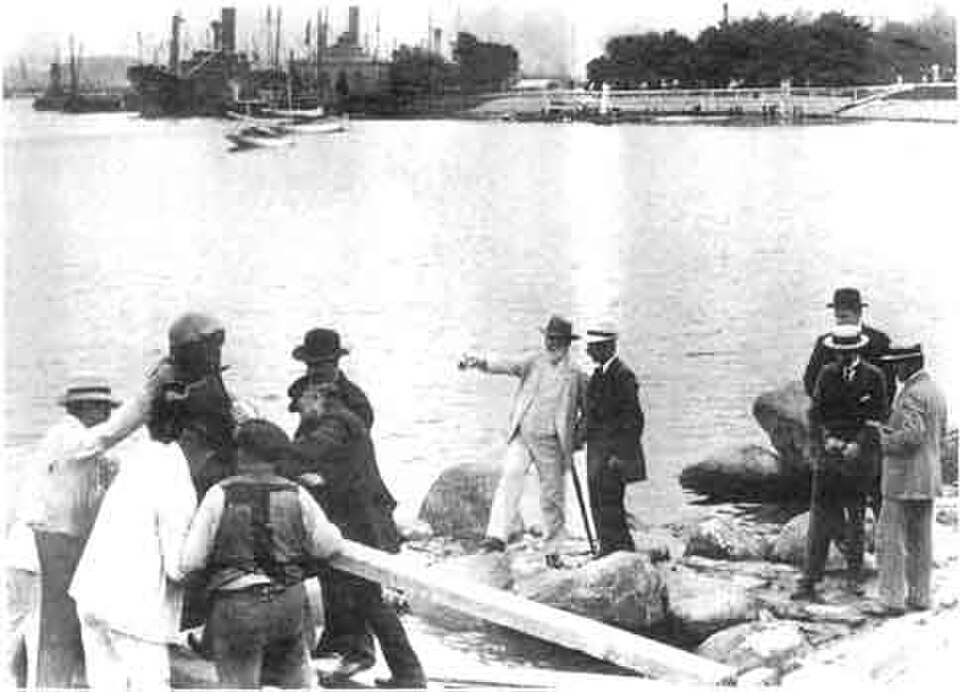
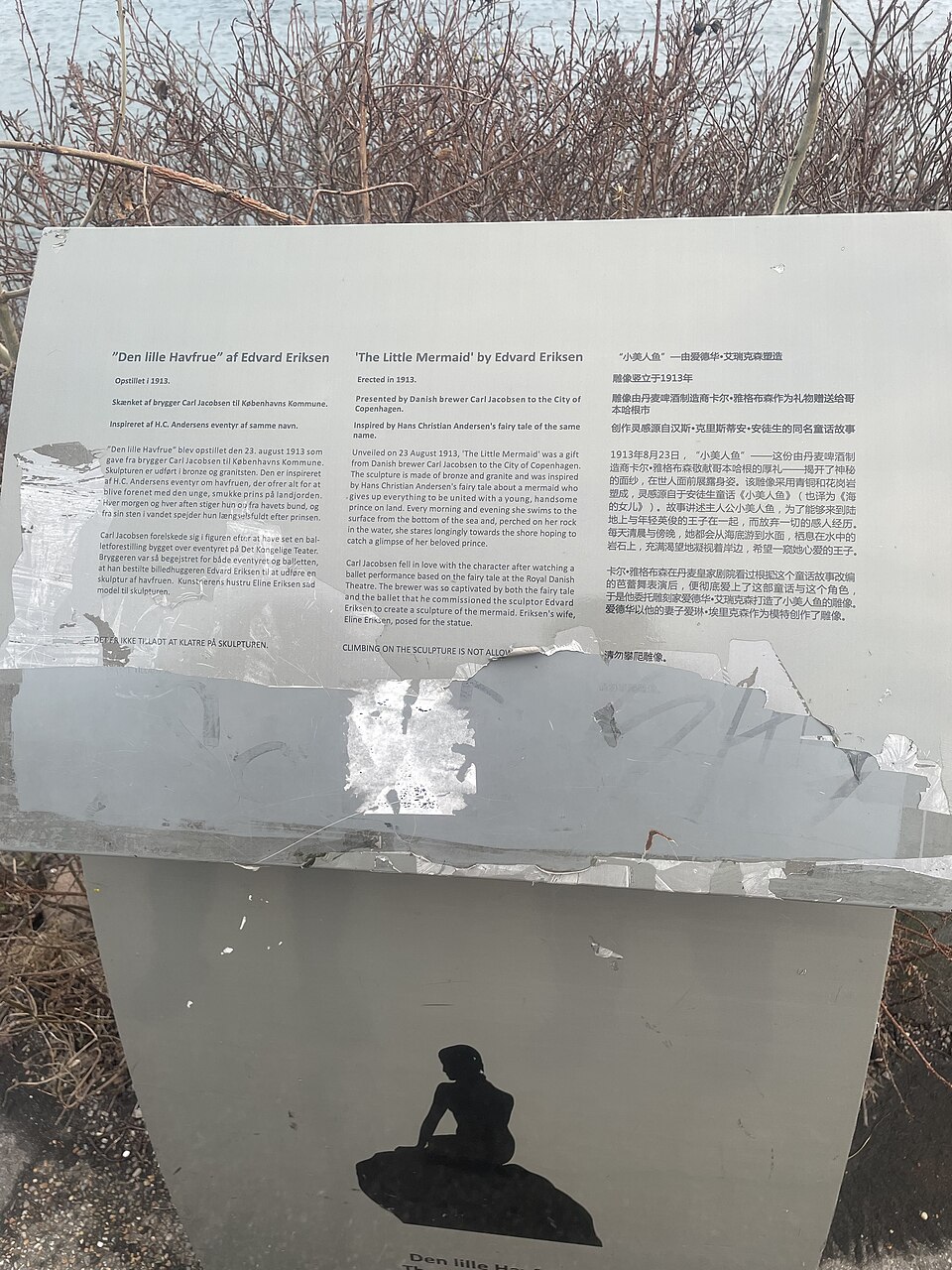
Carl Jacobsen, son of the founder of Carlsberg, commissioned the piece in 1909 after seeing a ballet of Hans Christian Andersen's 1837 fairy tale at Copenhagen's Royal Theatre. The sculptor Edvard Eriksen delivered it four years later and it was unveiled on 23 August 1913 as a gift to the City of Copenhagen, which still owns it. The subject is the moment in Andersen's story of exchange and loss rather than any Disney version of it: she is looking landward from the sea she gave up, not out towards adventure.
What stands on the rock today is itself a replica, the original having been recast after decades of theft, decapitation and repair.
Checked 2026-08-26 · Source
There is no interior, no gate and no visitor centre. The sight is the figure, the boulder she sits on and the stretch of open quay behind her, and a visit is a walk along a waterfront rather than an admission to anything.
That makes the surroundings the substance of the trip. VisitCopenhagen names Kastellet, the star-shaped seventeenth-century citadel with its grass ramparts and moat, and the National Gallery of Denmark as the neighbours worth folding into the same outing; Kastellet is the natural one, since the path from it comes out almost at the statue. A few hundred metres along Langelinie Allé, by the Dahlerups Pakhus warehouse, is Bjørn Nørgaard's sculpture group The Genetically Modified Paradise: a granite square with a 400-square-metre fountain, a forty-tonne triumphal arch carrying a nine-metre genetically modified Madonna, and figures of Adam, Eve, Christ, Mary Magdalene, the Tripartite Capital and the Pregnant Man. One of them, a genetically modified little mermaid, sits on her own small island in the basin and is the deliberate counterpart to her older sister down the quay.
Langelinie itself is a long green promenade along the harbour, and the operator's own suggestion is to combine the statue with a harbour tour, which passes her from the water side.
Checked 2026-08-26 · Source
Twenty minutes is recorded for this entry, and that is an honest figure rather than a cautious one. No operator publishes a suggested visit duration for the statue: VisitCopenhagen's page for her carries no time estimate at all, so the twenty minutes is practical judgement, not a sourced number.
The visit itself is about five minutes of looking. The rest is queueing for position. There is one spot on the quay from which she reads in profile against open water rather than against the container cranes, and in the middle of the day a line of people forms at it, each waiting to take the same photograph. Twenty minutes covers the walk out along the water, the wait, the photographs and the walk back to the path.
The trip that contains it is the thing to budget for. From Østerport station it is a fifteen-minute walk each way, so the statue alone is an hour of a day for five minutes of statue. That is the arithmetic that makes people call the visit disappointing. Combined with Kastellet, the Genetically Modified Paradise group and the length of the Langelinie promenade, the same walk becomes a comfortable half-morning and the statue becomes one stop in it rather than the whole point.
Checked 2026-08-26
Early. The statue stands on an open quay with no opening time to wait for, and the difference between eight in the morning and noon is the difference between standing alone at the railing and standing eighth in a queue. Copenhagen's cruise berths and the coach drop-off are both on Langelinie, and the traffic they generate concentrates between mid-morning and mid-afternoon; before nine and after six the promenade belongs to runners and to people walking dogs.
Light works against the early start, and it is worth knowing the trade before choosing. She sits in the water facing the shore, so a visitor on the quay looks east across the harbour. Morning sun rises behind her and backlights her into a silhouette; the light that falls on her face comes from over the city later in the day, which is also when the promenade is fullest. Early means an empty quay and a dark bronze against a bright sky. Late afternoon means her face lit and a queue behind it. In June and July the Danish sun is up before four and still high at eight in the evening, so both windows are long; in December the useful hours shrink to the few around midday, which is when everyone else comes too.
Winter is worth considering anyway. The quay is bleak, exposed and often wet, and a February morning gives grey water, no queue and a figure that looks the way Andersen's story sounds. Bring a windproof layer; there is nothing between the North Sea and that railing.
Checked 2026-08-26
No admission is recorded for The Little Mermaid, and nothing is charged for standing on the quay in front of her. That statement needs a qualification, because it comes from an absence rather than from a printed price.
VisitCopenhagen's product page for the statue publishes no entry charge. Its content system has fields for both prices and opening hours — the same template shows them for ticketed attractions elsewhere on the site — and for this entry both are empty. The OpenStreetMap record for the statue likewise carries no fee tag and no opening-hours tag. So no operator has published a price, and rather than write one from inference this entry records none. There is no ticket office, no barrier and no turnstile on the quay to pay at.
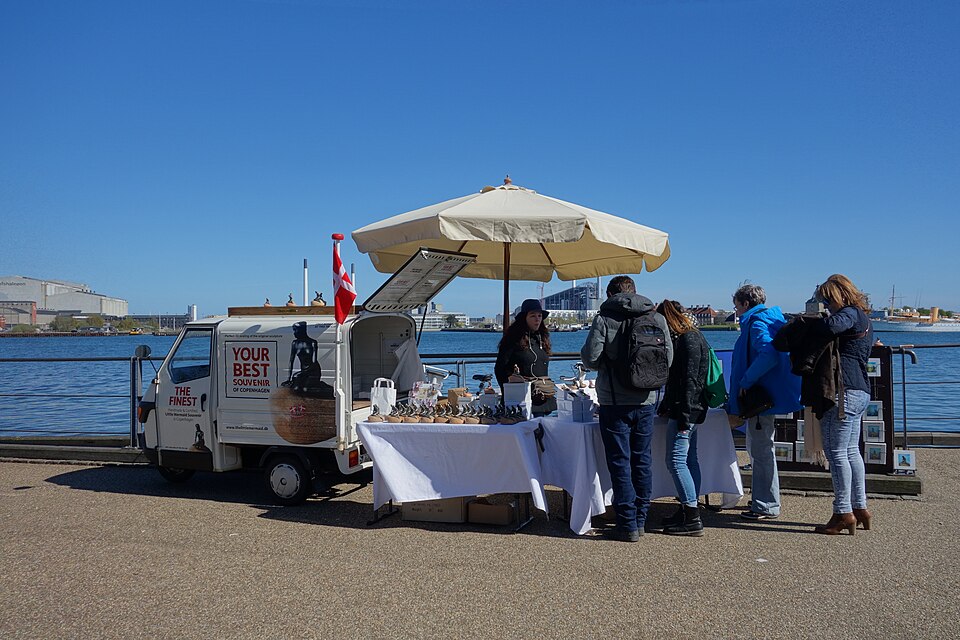
What can cost money is the way a visitor chooses to arrive. A harbour tour that passes her from the water is a commercial boat ticket bought from its own operator, a hop-on bus is priced by its operator, and the Copenhagen Card covers transport and a list of attractions rather than access to a public quayside. None of those prices were read from an operator page for this entry, so none are recorded here. Walking to her from Østerport costs a local transport fare or nothing at all.
Checked 2026-08-26 · Source
The address is Langelinie, 2100 København Ø, on the harbour side of the Kastellet fortifications, and no car is needed or wanted — there is no visitor parking at the statue and the promenade in front of her is closed to traffic.
VisitCopenhagen gives the route in one line: a fifteen-minute walk from Østerport station, which is reached by metro or S-train from anywhere in the city. Coming out of Østerport, the walk goes east towards the water, through or around Kastellet, and comes out on the promenade a short distance south of the rock; following the waterfront north from the Amalienborg palaces and Nordre Toldbod is the longer and better version of the same approach, a quayside walk of roughly half an hour from Nyhavn.
The operator's other suggestion is to arrive by water and take a harbour tour, which passes the statue and gives the view from the seaward side that the quay cannot.
The approach is level and paved the whole way and OpenStreetMap records the statue as wheelchair accessible. The viewing is done from the quay edge and from a low, uneven apron of rocks below it; the quay path itself is flat, the rocks are not, and nothing about the closer position is required to see her.
Checked 2026-08-26 · Source
Scale is the first thing. A figure of 1.25 metres photographs far larger than it looks, and visitors who have only seen close-cropped images consistently describe the real thing as smaller than expected. Knowing the number in advance removes most of the disappointment.
The second is that she may not be herself when you arrive. The statue has been damaged and defaced repeatedly since the mid-1960s: the head was sawn off and stolen in 1964 and again in 1998, the right arm was cut off in 1984, an attempt in 1990 left an eighteen-centimetre cut in the neck, and in 2003 she was blasted off her base with explosives and recovered from the harbour. Paint has been poured over her many times, most recently in a run of political protests, and she has been dressed in a burqa, a headscarf and football shirts. Restoration or cleaning can put her behind screens without notice.
The third is the water. She sits on a rock offshore and the boulders between the quay and her are wet, algae-covered and unfenced. Climbing out to her is what the city has spent decades trying to discourage — moving the statue further into the harbour has been considered for exactly that reason — and the rocks are more slippery than they look. There is no lifeguard and no railing at the rock line.
Checked 2026-08-26 · Source
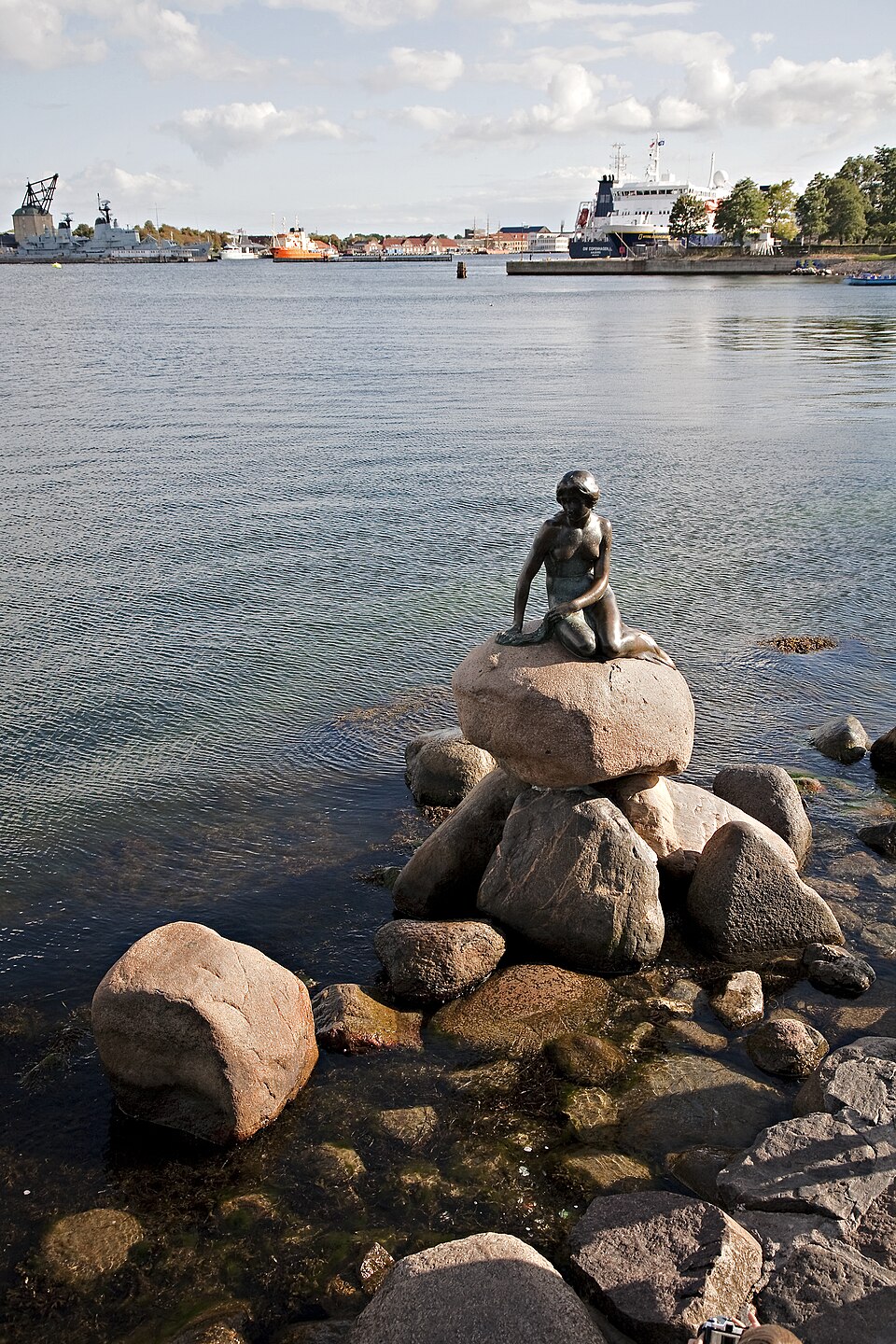
The postcard shot is not taken from the obvious place. Standing directly behind her on the quay gives the back of a bronze head against a working port. The picture people are actually queueing for is a three-quarter view taken from the quay off to one side, which sets her against open water and keeps the harbour works out of the frame. A short telephoto, roughly 70 to 135 millimetres, isolates her; a wide lens turns a 1.25-metre figure into a speck on a rock and is the reason so many visitors' photographs disappoint them.
Light and crowds pull in opposite directions here. She faces the shore across an eastward-looking harbour, so early morning gives an empty quay and a backlit silhouette, and the sun only reaches her face from over the city in the afternoon, by which time the queue has formed. An overcast day removes the choice and is not the worst outcome for a dark bronze. From the water, on a harbour tour, she reads front-on from a distance the quay cannot give.
One caution that is not aesthetic. The sculpture remains in copyright until 1 January 2030, seventy years after Edvard Eriksen's death, and his heirs have historically enforced that right in Danish courts. Every press photograph of her on VisitCopenhagen's own page carries the line "© Billedhuggeren Edvard Eriksens Arvinger". Personal snapshots are not the issue; publishing or selling an image in which she is the main subject can be.
Checked 2026-08-26
No admission is recorded for this entry, and there is no ticket office, barrier or turnstile at the statue. The reason it is put that way is that no operator publishes a price: VisitCopenhagen's page for the sculpture leaves its price field empty and the OpenStreetMap record carries no fee tag, so rather than infer a figure this entry records none. A visitor stands on a public quay and looks at her. Boat tours, sightseeing buses and city cards that include the statue on a route are separately priced by their own operators and are not recorded here.
None are published. VisitCopenhagen's page for the statue leaves its opening-hours field empty, and the OpenStreetMap record for the sculpture carries no opening-hours tag either, so this entry records no hours rather than inventing a span. The sculpture is an open-air bronze on a rock at the edge of the Langelinie promenade, with no building, no gate and no staff; there is nothing to open or close. The practical limit on a visit is daylight, since the statue is not lit for viewing and a winter evening leaves nothing to see.
Twenty minutes is recorded, and no operator publishes a suggested duration to check that against, so it is practical judgement rather than a sourced figure. Looking at her takes about five minutes; the rest is waiting for the one position on the quay from which she reads in profile against open water. Budget for the trip rather than the stop: from Østerport station it is a fifteen-minute walk each way, so an hour of the day buys five minutes of statue unless the walk is combined with Kastellet and the Langelinie promenade, which is how it is worth doing.
VisitCopenhagen gives it as a fifteen-minute walk from Østerport station, which is served by both the metro and the S-train. From the station the route runs east towards the harbour, past or through the Kastellet citadel, and comes out on the Langelinie promenade. Walking north along the waterfront from Nyhavn and the Amalienborg palaces takes roughly half an hour and is the better version of the approach. The address is Langelinie, 2100 København Ø. No car is needed; there is no visitor parking at the statue and the promenade in front of it is closed to traffic.
She is 1.25 metres tall and weighs 175 kilograms — roughly the size of a seated child. Almost every published photograph is cropped tight, so she arrives in most visitors' heads as a monument and turns out to be a small bronze on a boulder a few metres offshore, with a container port behind her. Nothing is wrong with the statue; the mismatch is between the image and the object. Visitors who know the measurement before they walk out along the quay generally report the opposite reaction, because the figure itself is a fine piece of modelling at the scale it was made for.
Not without care. The sculpture is under copyright until 1 January 2030, seventy years after Edvard Eriksen's death, and the Eriksen heirs have pursued the right through the Danish courts; a newspaper was ordered to pay 285,000 kroner in 2020 over parody images, a ruling the Supreme Court overturned on parody grounds in May 2023. The photographs on VisitCopenhagen's own page for the statue are credited to the heirs. Taking a personal photograph and sharing it is not what the rights holders have acted against; publishing or selling an image in which the sculpture is the main subject is where permission has been demanded.
Loading the interactive map…
The interactive map could not be loaded.
Last updated:
Source: OpenStreetMap contributors, Wikidata ·