22 min walk
永兴坊
- Must see
- Historic monument
Language · 11 published
Nature site · Xi'an
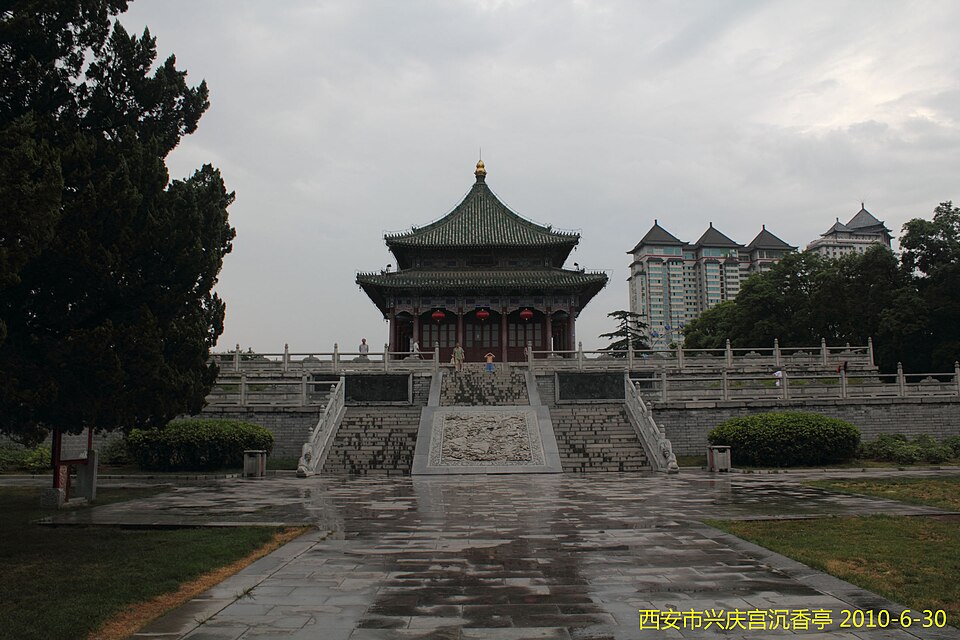
Xingqing Palace Park is a public park in Xi'an, China, developed on the site of the historic Xingqing Palace. The original palace served as a political and residential center during the Tang dynasty. The modern park preserves this heritage through reconstructed architecture and landscaped grounds. It functions as both a recreational space for residents and a cultural destination for visitors interested in Tang dynasty history. The park occupies a significant area in the eastern part of Xi'an. A flexible visit lets travellers connect Xingqing Palace Park with the rest of the day without treating one room, viewpoint or photograph as the whole experience. The useful pace depends on personal interest and conditions on arrival.
Checked 2026-08-26
The park contains reconstructed palace buildings, pavilions, and landscaped gardens that evoke Tang dynasty aesthetics. A central lake features prominently in the design, reflecting traditional Chinese garden principles. Historical monuments and steles commemorate the site's imperial past. Mature trees and seasonal plantings provide shade and visual interest throughout the grounds. Pathways connect various architectural features, allowing visitors to explore at leisure. The combination of water, architecture, and vegetation creates a classical Chinese garden atmosphere. Xingqing Palace Park also earns time in a xian itinerary because A distinct xian visitor place retained in the breadth-first top 100; production has no city POI pool for an exact match. Its value becomes clearer when the stop is compared with the surrounding streets and the other ranked places nearby.
Checked 2026-08-26
Visitors typically allocate two to three hours for a comprehensive exploration of Xingqing Palace Park. A casual stroll through the main areas requires approximately ninety minutes. Those interested in photography, detailed examination of architectural features, or extended relaxation by the lake may prefer three to four hours. The park's size permits flexible visit durations depending on personal interest in historical interpretation versus simple recreation. Morning or afternoon visits allow adequate time without rushing through the principal attractions.
Checked 2026-08-26
Operator-confirmed hours are Not recorded pending review. Visitors should verify current opening times before travel. Seasonal considerations affect the experience: spring brings flowering trees, summer offers lush greenery though with potential heat, autumn provides comfortable temperatures and fall colors, and winter presents quieter conditions with bare architectural lines. Early morning visits typically encounter fewer visitors and active local residents practicing tai chi. Late afternoon light enhances photography of buildings and water features. Weekend crowds exceed weekday levels significantly.
Checked 2026-08-26
Operator-confirmed prices are Not recorded pending review. Visitors should verify current admission policies before travel. Many Chinese municipal parks operate with free entry or nominal fees, though this varies by location and management changes. Some parks implement differentiated pricing for special exhibitions or events. International visitors should carry identification. Payment methods in Chinese parks increasingly favor mobile platforms; cash acceptance varies. Group rates, if available, typically require advance arrangement. Annual passes may exist for local residents but rarely benefit short-term visitors.
Checked 2026-08-26
Xingqing Palace Park occupies a location in eastern Xi'an accessible by public transportation. The Xi'an metro system serves the general area, with connections requiring walking or short taxi rides. Bus routes pass nearby, though specific line numbers require local verification. Taxis and ride-hailing services provide direct access from accommodations or other attractions. Cycling represents a viable option for those comfortable navigating Xi'an traffic. From the city center, travel time typically ranges twenty to forty minutes depending on mode and traffic conditions. Signage in Chinese assists navigation.
Checked 2026-08-26

Visitor vigilance applies regarding personal belongings in any crowded public space. Weather protection remains essential during summer heat and winter cold. Pathways near water features may become slippery; appropriate footwear prevents incidents. Limited English signage necessitates preparation or translation assistance. Peak visitation periods create congestion at popular photo locations. Food and beverage options within the park may be limited or seasonal; carrying water proves prudent. Restroom facilities vary in maintenance standards. Construction or renovation may affect access to certain areas without advance notice.
Checked 2026-08-26
The reconstructed Tang architecture and lake reflections offer compelling photographic subjects. Early morning and late afternoon provide optimal natural lighting with reduced contrast. Traditional buildings framed against sky or water create classic compositions. Seasonal variations dramatically alter the visual character: spring blossoms, summer verdancy, autumn foliage, and winter starkness each present distinct opportunities. Tripod use may attract security attention; discretion advised. Interior photography depends on specific building access policies. Panoramic views from elevated positions within the park capture the relationship between architecture and landscape design.
Checked 2026-08-26
The original Xingqing Palace served as an important political and residential center during the Tang dynasty, one of China's most culturally significant imperial periods.
The open spaces, pathways, and water features provide recreational appeal for families, though standard supervision applies near water and during crowded conditions.
Not recorded. Visitors should inquire locally about tour services or rely on self-guided exploration with advance research on Tang dynasty history.
Xingqing Palace Park offers garden and architectural heritage distinct from Xi'an's more famous terracotta warriors or city wall, appealing to visitors seeking classical Chinese landscape design.
English proficiency among staff and signage availability are not recorded. Visitors should prepare translation tools or basic Chinese phrases for practical needs.
Specific restaurant information is not recorded. Urban parks in Chinese cities typically have surrounding commercial areas with food options, though quality and variety vary.
Loading the interactive map…
The interactive map could not be loaded.
Last updated:
Source: OpenStreetMap contributors ·